Choosing among mesh Wi-Fi systems with 10GbE backhaul can be challenging when Wi-Fi 7, 10GbE ports, multi-gigabit internet, and whole-home coverage all matter. The right system should match your internet plan, home layout, wired network, and performance expectations.
Our roundup compares ten strong options, including premium Wi-Fi 7 systems and value-focused Wi-Fi 6E alternatives, so you can narrow the list based on speed, expandability, coverage, and ease of management.
Best 10 Mesh Wifi Systems with 10gbe Backhaul Picks for 2026
Best Balanced Wi-Fi 7 Mesh

- Tri-band Wi-Fi 7 with 10G WAN/LAN
- Up to 5,800 sq. ft. and 200+ devices
- Four 2.5G ports plus USB 3.0
Best For: Homes needing flexible high-speed wired and wireless networking
Best for Large Connected Homes
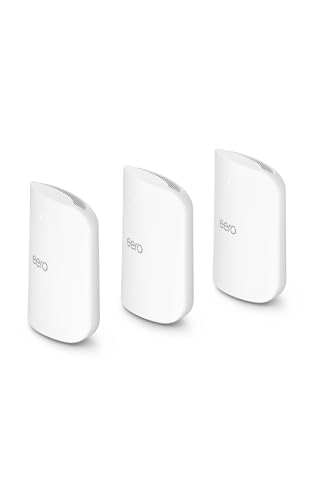
- Two 10GbE ports per unit
- Up to 7,500 sq. ft. and 750+ devices
- Wi-Fi 7 with TrueMesh software
Best For: Large, device-heavy homes with multi-gigabit internet
Best Subscription-Free Security

- Dual 10G WAN/LAN ports
- Up to 6,000 sq. ft. of Wi-Fi 7 coverage
- Included security and network segmentation
Best For: Smart homes and home offices wanting flexible 10G networking
Best for Maximum Coverage

- Up to 10,000 sq. ft. of coverage
- Quad-band Wi-Fi 7 up to 27 Gbps
- 10G internet, LAN, and 2.5G ports
Best For: Large properties with demanding wired and wireless networks
Best Balanced 10GbE Mesh

- 10 Gbps WAN/LAN port on every unit
- Wi-Fi 7 tri-band performance
- Up to 6,300 sq. ft. coverage
Best For: Multi-gig homes seeking strong coverage and flexible ports
Best for Large Homes

- Coverage up to 8,000 sq. ft.
- Wi-Fi 7 speeds up to 11 Gbps
- 2.5Gbps LAN bandwidth listed
Best For: Large homes prioritizing coverage and easy setup over 10GbE
Best High-End 10GbE Mesh

- Two 10G WAN/LAN ports
- SFP+/RJ45 combo connectivity
- Simultaneous wired and wireless backhaul
Best For: Fiber, multi-gig, and performance-focused home networks
Best WiFi 7 Coverage
- WiFi 7 tri-band mesh
- Up to 8,000 sq. ft. coverage
- 2.5Gbps ports, not 10GbE
Best For: Large homes wanting broad WiFi 7 coverage
Best Value 6E Mesh

- WiFi 6E tri-band design
- 6GHz wireless backhaul
- 2.5Gbps WAN/LAN port
Best For: Homes with 2.5Gbps internet and many devices
Best 10GbE Wired Option

- 10Gbps port on each unit
- 6GHz wireless backhaul
- 16-stream WiFi 6E capacity
Best For: Multi-gig homes needing 10Gbps wired connectivity
Best Balanced Wi-Fi 7 Mesh – TP-Link Deco BE63
The TP-Link Deco BE63 is a practical choice for shoppers comparing mesh wifi systems with 10gbe backhaul. Its tri-band Wi-Fi 7 design, 5,800-square-foot coverage rating, and 10G WAN/LAN port support fast whole-home networking, while four 2.5G ports add useful wired flexibility.
Best For: Homes that want strong Wi-Fi 7 performance, broad coverage, and a flexible mix of 10G and 2.5G wired connections.
Pros:
- Tri-band Wi-Fi 7 supports high-speed streaming, gaming, and connected-device use.
- Two-pack is rated for up to 5,800 square feet and more than 200 devices.
- Includes a 10G WAN/LAN port, four 2.5G ports, and USB 3.0.
- App-based management includes roaming, parental controls, IoT security, and VPN support.
Cons:
- Actual wireless speeds and coverage depend on distance, walls, and other conditions.
- A separate modem is required.
- 10G backhaul requires at least two Deco units and compatible cabling or network hardware.
The BE63 is a well-rounded option for performance-focused households that want Wi-Fi 7 without giving up multiple high-speed Ethernet ports. Its combination of 10G connectivity, 2.5G expansion, and straightforward app controls makes it especially versatile.
Best for Large Connected Homes – eero Max 7
The three-pack eero Max 7 is built for large homes and busy networks, making it a strong contender among mesh wifi systems with 10gbe backhaul. It supports internet plans up to 10 Gbps, offers two 10 Gigabit Ethernet ports per unit, and is rated to connect more than 750 devices across up to 7,500 square feet.
Best For: Large households with many connected devices, multi-gigabit internet, and demanding gaming, streaming, or smart-home workloads.
Pros:
- Two 10 Gigabit Ethernet ports provide wired speeds up to 9.4 Gbps.
- Wi-Fi 7 supports higher capacity, lower latency, and improved efficiency over Wi-Fi 6.
- Three-pack coverage is rated up to 7,500 square feet with support for 750+ devices.
- TrueMesh, TrueRoam, and TrueChannel software help maintain reliable connections.
Cons:
- eero Plus security features require an optional subscription.
- Real-world speeds vary with connected devices and the internet plan.
- Its larger capacity may be more than smaller homes need.
The eero Max 7 stands out when device count and coverage matter as much as peak speed. Its dual 10GbE ports and mesh-management software make it a compelling fit for high-demand homes, especially those already invested in eero’s app-based ecosystem.
Best Subscription-Free Security – ASUS ZenWiFi BT10
The two-pack ASUS ZenWiFi BT10 combines tri-band Wi-Fi 7 with dual 10G WAN/LAN ports, making it a particularly capable choice among mesh wifi systems with 10gbe backhaul. It is rated for up to 6,000 square feet and adds network segmentation, parental controls, and security features without requiring a subscription.
Best For: Smart-home users who want dual 10G connectivity, configurable network segments, and included security and parental-control tools.
Pros:
- Wi-Fi 7 supports aggregate speeds up to 18 Gbps and coverage up to 6,000 square feet.
- Dual 10 Gigabit Ethernet ports support high-speed WAN and LAN connections.
- Smart Home Master enables up to three SSIDs for IoT management, VPN access, and parental controls.
- AiMesh compatibility allows expansion with compatible ASUS routers.
Cons:
- Its advanced controls may be more involved than basic mesh systems.
- Coverage and wireless performance vary with home layout, walls, and device placement.
- Some listed capabilities depend on compatible devices and network equipment.
The BT10 is a strong match for users who want maximum wired flexibility from a two-node system. Dual 10G ports, Ethernet backhaul support, and subscription-free security make it appealing for smart homes, home offices, and thick-wall layouts.
Best for Maximum Coverage – NETGEAR Orbi 970
The three-pack NETGEAR Orbi 970 is designed for expansive properties and high-bandwidth networks. As one of the more feature-rich mesh wifi systems with 10gbe backhaul, it combines quad-band Wi-Fi 7, a dedicated backhaul design, a 10G internet port, and 10G and 2.5G LAN ports across the system.
Best For: Large homes needing extensive coverage, dedicated satellite connectivity, and fast wired links for NAS devices, gaming PCs, and home offices.
Pros:
- Router and two satellites are rated to cover up to 10,000 square feet and support up to 200 devices.
- Quad-band Wi-Fi 7 offers speeds up to 27 Gbps with a dedicated backhaul lane.
- 10G internet, 10G LAN, and 2.5G LAN connectivity support high-speed wired equipment.
- Includes guided setup, automatic firmware updates, and built-in router protection features.
Cons:
- NETGEAR Armor security features require a separate subscription.
- Actual coverage depends on construction materials, layout, and satellite placement.
- The system may be excessive for smaller homes or modest internet plans.
The Orbi 970 is the strongest fit here for very large spaces and demanding wired networks. Its dedicated backhaul and broad selection of multi-gigabit ports make it especially attractive when consistent performance across multiple floors matters.
Best Balanced 10GbE Mesh – TP-Link Deco 7 Pro
The TP-Link Deco 7 Pro is a strong all-around choice among mesh wifi systems with 10gbe backhaul. Its tri-band Wi-Fi 7 design, 10 Gbps WAN/LAN port on every unit, and coverage for up to 6,300 square feet make it suitable for fast multi-gig internet and busy connected homes.
Best For: Homeowners who want Wi-Fi 7 performance, broad coverage, and flexible 10GbE connectivity without stepping up to the highest-end Deco model.
Pros:
- Each unit includes a 10 Gbps WAN/LAN port, plus 2.5G and 1G LAN ports.
- Tri-band Wi-Fi 7 supports up to 17,000 Mbps of combined advertised throughput.
- Covers up to 6,300 square feet and supports more than 200 devices.
- Deco units can use wired and wireless backhaul, with management through the Deco app.
Cons:
- Wired backhaul requires at least two Deco units.
- A separate modem is required.
- Actual wireless performance varies with distance, walls, device capability, and network conditions.
Choose the Deco 7 Pro if you want a future-ready 10GbE mesh platform with useful extra ports and straightforward app control. It balances high-end connectivity with practical whole-home coverage.
Best for Large Homes – NETGEAR Orbi 770 Series
The NETGEAR Orbi 770 Series is designed for expansive homes that need consistent coverage across multiple floors and outdoor-adjacent areas. It belongs on a shortlist of mesh wifi systems with 10gbe backhaul alternatives, though its supplied specifications list 2.5Gbps LAN bandwidth rather than a 10GbE port.
Best For: Large or multistory homes prioritizing up to 8,000 square feet of coverage, simple setup, and Wi-Fi 7 performance for up to 100 devices.
Pros:
- The three-piece system covers up to 8,000 square feet.
- Tri-band Wi-Fi 7 with Enhanced Backhaul is rated for speeds up to 11 Gbps.
- Supports up to 100 devices and works with Wi-Fi 6 and Wi-Fi 5 devices.
- The Orbi app provides guided setup and network management.
Cons:
- The supplied details specify 2.5Gbps LAN bandwidth, not 10GbE.
- It is intended for use in the United States only.
- NETGEAR Armor security requires a separate subscription after the trial.
The Orbi 770 is a practical coverage-first option, but it is not the closest match for buyers specifically requiring 10GbE backhaul. Consider it when area coverage and easy deployment matter more than 10-gigabit wired connectivity.
Best High-End 10GbE Mesh – TP-Link Deco 7 Elite BE85
The TP-Link Deco 7 Elite BE85 is the most connectivity-focused option here for buyers comparing mesh wifi systems with 10gbe backhaul. It combines two 10G WAN/LAN ports—including an SFP+/RJ45 combo port—with Wi-Fi 7 and simultaneous wired and wireless backhaul support.
Best For: Performance-focused homes with fiber or copper multi-gig networking, demanding Wi-Fi 7 devices, and a need for flexible 10GbE expansion.
Pros:
- Provides two 10G WAN/LAN ports, including an SFP+/RJ45 combo port.
- Supports wireless and wired backhaul simultaneously.
- Wi-Fi 7 is rated for up to 22 Gbps of combined throughput and more than 200 devices.
- Includes two 2.5G ports, USB 3.0, VPN support, and app-based management.
Cons:
- Its advanced connectivity may be more than a basic home network needs.
- A modem is required for most internet service providers.
- Advertised wireless speeds depend on compatible devices and real-world conditions.
For a home network built around 10GbE fiber, high-speed storage, or multi-gig internet, the Deco 7 Elite BE85 offers the most capable port selection in this group. Its combination of SFP+/RJ45 flexibility and hybrid backhaul makes it the strongest fit for performance-oriented installations.
Best WiFi 7 Coverage – NETGEAR Orbi RBE773
If you want mesh wifi systems with 10gbe backhaul, note that the Orbi RBE773 emphasizes enhanced tri-band backhaul rather than a stated 10GbE port. Its WiFi 7 platform, 2.5Gbps networking, and broad three-unit coverage make it a strong option for large homes with newer and older devices.
Best For: Large homes seeking WiFi 7 coverage, simple security features, and strong wireless mesh performance.
Pros:
- WiFi 7 speeds rated up to 11Gbps with backward compatibility.
- Three-unit system covers up to 8,000 square feet.
- Enhanced backhaul, automatic firmware updates, WPA3, parental controls, and VPN support.
Cons:
- Its listed LAN port bandwidth is 2.5Gbps, not 10Gbps.
- Renewed product with a 90-day limited warranty.
- Made for use in the U.S. only.
The RBE773 is a practical choice when whole-home reach and WiFi 7 features matter more than a wired 10GbE backhaul. Confirm that its 2.5Gbps ports match your internet plan and wired-network needs.
Best Value 6E Mesh – TP-Link Deco XE75 Pro
The Deco XE75 Pro is worth considering among mesh wifi systems with 10gbe backhaul, although this three-pack does not provide 10GbE ports. Instead, it uses a dedicated 6GHz band for default wireless backhaul and includes one 2.5Gbps WAN/LAN port per unit.
Best For: Homes needing wide WiFi 6E coverage, a dedicated wireless backhaul band, and support for internet plans up to 2.5Gbps.
Pros:
- Three-band WiFi 6E with a 6GHz band that can serve as backhaul.
- Coverage up to 7,200 square feet and support for up to 200 devices.
- Each unit includes one 2.5Gbps port plus two 1Gbps LAN ports.
Cons:
- No stated 10GbE port or 10Gbps wired backhaul.
- Requires a separate modem.
- Some HomeShield security and control features are premium services.
With its 6GHz backhaul option and multi-gig port, the XE75 Pro offers a balanced approach for busy households. It is better suited to 2.5Gbps-class networking than to a true 10GbE setup.
Best 10GbE Wired Option – TP-Link Deco XE200
For shoppers comparing mesh wifi systems with 10gbe backhaul, the Deco XE200 is the clearest match in this group. Each unit has a 10Gbps port alongside two gigabit ports, while the 6GHz band serves as the default wireless backhaul between nodes.
Best For: Multi-gig households and device-heavy networks that need 10Gbps wired connectivity and high WiFi 6E capacity.
Pros:
- One 10Gbps port per unit supports broadband speeds up to 10Gbps.
- Dedicated 6GHz band provides default wireless backhaul.
- 16 internal antennas and 16 simultaneous data streams target busy networks.
- Deco app management, Alexa support, access point mode, and guest WiFi.
Cons:
- Only two units are included, so placement may require more planning in larger homes.
- Two additional ports per unit are limited to gigabit speeds.
- Requires a separate modem for most internet providers.
The XE200 is the strongest fit here for a wired 10GbE requirement, while its 6GHz backhaul also supports a fast wireless link between nodes. It makes the most sense when your broadband, switch, and client devices can use multi-gig speeds.
How We Picked the Best Mesh Wifi Systems with 10gbe Backhaul
We focused on systems that offer at least one 10GbE-capable port or a clearly stated 10GbE networking feature, since wired backhaul can reduce wireless congestion and preserve performance between mesh nodes. We also considered Wi-Fi generation, band configuration, coverage claims, multi-gigabit internet support, Ethernet flexibility, security tools, app quality, and expansion options.
Manufacturer coverage figures are best treated as estimates. Building materials, interference, floor plans, client devices, and node placement can significantly change real-world results. A system with fewer, better-placed nodes may outperform a larger kit in a crowded or unusually shaped home.
Quick Comparison
| Best For | What to Prioritize | Shortlist Examples |
|---|---|---|
| Maximum performance | Wi-Fi 7, 10GbE ports, and strong wired backhaul | TP-Link Deco BE85, ASUS ZenWiFi BT10, eero Max 7 |
| Large homes | Broad node coverage and easy expansion | NETGEAR Orbi 970, Orbi 770, Orbi RBE773 |
| High-value Wi-Fi 7 | Multi-gigabit ports without flagship pricing | TP-Link Deco BE63, Deco BE17000 |
| Wi-Fi 6E value | 6GHz access and wired multi-gigabit networking | TP-Link Deco XE75 Pro, Deco XE200 |
Key Buying Factors for Mesh Wi-Fi Systems with 10GbE Backhaul
Port Layout and Backhaul Design
Check whether 10GbE is available on every node or only the main router. If you plan to use Ethernet backhaul, verify that each satellite has suitable ports and that your switch, cabling, and client devices support the intended speed. Cat6 or better cabling is generally appropriate for modern multi-gigabit links, depending on distance and installation quality.
Wireless Standard and Client Support
Wi-Fi 7 systems can improve throughput and responsiveness with compatible devices, but older phones and laptops will not receive every benefit. Wi-Fi 6E remains a practical choice when you want access to the 6GHz band and your client devices support it. Consider the number of high-bandwidth devices you actually own rather than paying solely for a specification.
Coverage, Placement, and Capacity
Use the fewest nodes that provide consistent coverage. Placing satellites too far apart weakens the mesh link, while placing them too close wastes capacity. Homes with thick walls or multiple floors may benefit from Ethernet backhaul, additional nodes, or a system with dedicated wireless backhaul capacity.
Software, Security, and Expansion
Compare parental controls, automatic updates, guest networking, threat protection, subscription requirements, and the quality of the management app. Also confirm whether future satellites must come from the same product family and whether mixed-generation operation is supported.
Who Should Buy Which Mesh Wifi Systems with 10gbe Backhaul?
Choose a flagship Wi-Fi 7 system such as the Deco BE85, ASUS ZenWiFi BT10, or eero Max 7 if you have a multi-gigabit connection, modern Wi-Fi 7 clients, or a demanding wired network. These are the strongest fits for users who want maximum headroom and are willing to pay for advanced hardware.
The Deco BE63 and BE17000, along with the Orbi 770, are better suited to buyers who want Wi-Fi 7 performance and broad coverage without automatically choosing the most expensive tier. Orbi systems are particularly appealing when simple expansion and large-home coverage are priorities.
Consider the Deco XE75 Pro or XE200 if your devices support Wi-Fi 6E and you want fast 6GHz connectivity at a potentially lower cost. They remain capable choices for streaming, gaming, work-from-home setups, and multi-gigabit wired networks, even though they lack some newer Wi-Fi 7 features.