Finding the right USB duplicator under $300 means balancing copy speed, drive capacity, standalone operation, and the number of devices you need to process at once. The options in this roundup range from compact flash-drive copiers to multi-bay hard-drive cloning docks.
Use the comparison and buying advice below to match your workflow, media type, and budget with a duplicator that can copy, clone, erase, or distribute data reliably.
Best 10 USB Duplicators Under 300 Picks for 2026
Best USB Flash Drive Duplicator

- Standalone copying to two USB targets
- Quick Copy and bit-for-bit modes
- LCD controls plus testing and erase tools
Best For: Portable USB flash-drive duplication without a computer
Best SATA Drive Duplicator
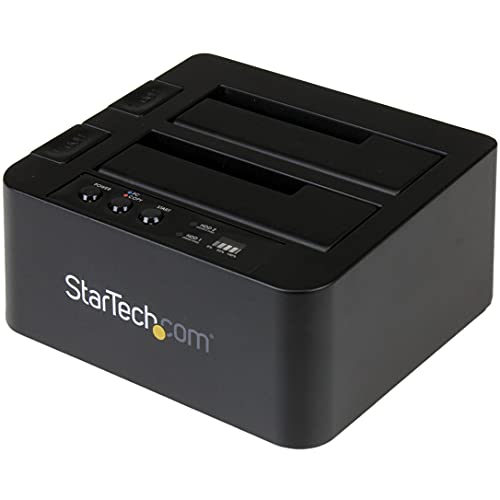
- Standalone cloning for SATA HDDs and SSDs
- Supports 2.5-inch and 3.5-inch drives
- Up to 28 GB/min sector-by-sector copying
Best For: Drive cloning, upgrades, and IT maintenance
Best USB Sharing Hub

- Shares four USB devices with four computers
- USB 2.0 speeds up to 480 Mbps
- Button switching with LED status indicators
Best For: Sharing peripherals between multiple computers
Best SD Card Duplicator

- Standalone duplication to three SD or microSD targets
- Smart Copy and raw bit-by-bit modes
- Error skipping and secure erase functions
Best For: SD and microSD duplication, deployment, and recovery
Best Dual-Bay Cloner

- Offline cloning for 2.5- and 3.5-inch SATA drives
- Dual-bay design with LED status indicators
- USB 3.0, UASP, and tool-free operation
Best For: SATA drive cloning and PC-connected storage transfers
Best Standalone USB Unit
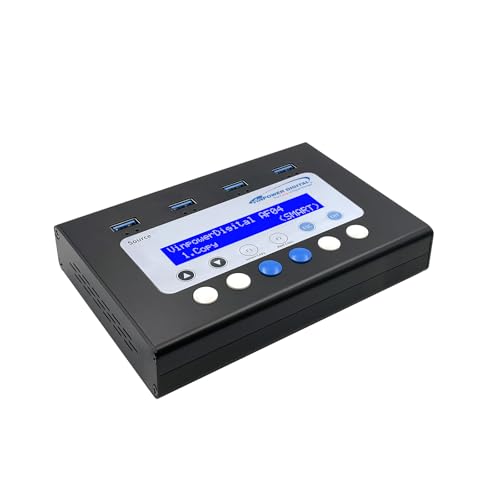
- Standalone USB duplication without a PC
- Smart and Raw Copy modes
- DoD erasing and read-error skipping
Best For: Business and organizational USB flash-drive workflows
Best Simple SATA Dock
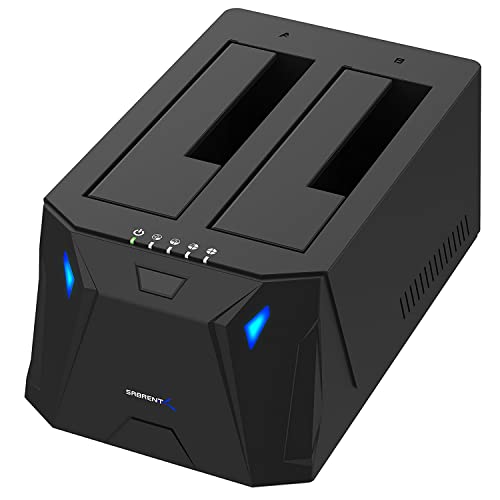
- Dual-bay SATA HDD and SSD support
- Offline cloning without a computer
- Plug-and-play USB 3.0 connectivity
Best For: Straightforward home and technician drive cloning
Best Multi-Drive Standalone Pick
EZ Dupe Mini USB Plus MK III 1-to-7

- Copies up to seven USB drives at once
- Standalone operation needs no computer
- Supports USB 1.0, 2.0, and 3.0 media
Best For: Standalone, high-volume USB flash drive duplication
Best HDD/SSD Docking Station
StarTech USB Duplicator and Cloner Dock

- Copies or erases two USB drives without a PC
- Docks 2.5- and 3.5-inch SATA drives
- Includes multiple copy and erase modes
Best For: Mixed USB duplication, drive cloning, and sanitizing
Best Computer-Connected Option
DupliM Mini USB 1-to-10 Duplicator

- Duplicates up to ten USB drives simultaneously
- Supports images, drives, files, and folders
- Works with Windows and Mac software
Best For: Computer-controlled batch USB duplication
Best USB Flash Drive Duplicator – BestDuplicator UB300 1:2
For straightforward USB duplicators under 300, the BestDuplicator UB300 is a practical standalone choice. It copies one USB flash drive to two targets simultaneously without a computer and offers both data-only and bit-for-bit duplication modes.
Best For: IT departments, schools, businesses, technicians, and field deployments that need portable USB flash-drive duplication.
Pros:
- Duplicates one source drive to two targets without a computer
- Supports Quick Copy and Whole Media Copy modes
- Includes erase, capacity-check, device-information, and speed-test functions
- Compact design with LCD navigation and individual port indicators
Cons:
- Designed for USB 1.1 and USB 2.0 media rather than newer USB standards
- SD, microSD, CF, and other card formats require a compatible USB card reader
- Best performance requires source and target media with similar capacities
The UB300 is a focused USB duplicator for repeatable two-drive jobs. Its standalone operation and verification tools make it more useful for deployment and maintenance than a basic copying setup.
Best SATA Drive Duplicator – StarTech Dual-Bay SATA Dock
Among USB duplicators under 300, the StarTech SDOCK2U313R is the better fit for users duplicating SATA hard drives and SSDs. Its standalone sector-by-sector cloning works without a computer, while the dock can also provide USB access to installed drives.
Best For: IT professionals, drive upgrades, recovery work, and cloning 2.5-inch or 3.5-inch SATA HDDs and SSDs.
Pros:
- Clones SATA drives standalone without requiring a computer
- Supports 2.5-inch and 3.5-inch SATA HDDs and SSDs of any capacity
- Sector-by-sector copying works with any file format and reaches up to 28 GB/min
- Tool-less dual-bay dock includes USB 3.2 Gen 2 connectivity, TRIM, and 4Kn support
Cons:
- The target drive must be equal to or larger than the source
- IDE drives require a separately sold adapter
- Copies the entire drive, including empty sectors, in standalone mode
This is not a USB flash duplicator, but it is a strong drive-cloning option for SATA media. The dual-bay design adds everyday docking utility beyond standalone duplication.
Best USB Sharing Hub – IOGEAR GUS404 4×4 Switch
The IOGEAR GUS404 is not a USB duplicator, but it may appear in searches for USB duplicators under 300 because it manages several USB connections. It lets four computers share up to four USB peripherals and switches the active computer at the press of a button.
Best For: Workstations that need to share keyboards, printers, scanners, storage devices, or other USB peripherals among four computers.
Pros:
- Connects four computers to as many as four shared USB devices
- USB 2.0 support provides transfer rates up to 480 Mbps
- LED indicators show the active computer and over-current protection is included
- Supports hot-plugging and charging for mobile devices on USB device ports
Cons:
- Does not duplicate USB drives or clone data
- USB 2.0 is slower than newer USB standards
- Requires switching between computers rather than simultaneous computer access
Choose the GUS404 only if your goal is peripheral sharing rather than drive duplication. For copying USB media, a dedicated standalone duplicator such as the BestDuplicator UB300 is the appropriate category.
Best SD Card Duplicator – Vinpower SDMiniDup 1:3
Vinpower SDMiniDup 1 to 3 Standalone SD/MicroSD Card Flash Memory Drive Duplicator Copier
Check Price On AmazonFor buyers comparing USB duplicators under 300 and needing memory-card support, the Vinpower SDMiniDup provides standalone SD and microSD duplication. It copies to three cards at once and offers both accessible-data copying and raw, bit-by-bit duplication.
Best For: Field technicians, content deployment, card recovery, and users duplicating SD or microSD media without a PC.
Pros:
- Duplicates one SD or microSD card to three targets without a computer
- Smart Copy and Raw Mode cover accessible-data and bit-by-bit duplication
- Read Error Skip can continue copying around bad sectors
- Secure erase is designed to remove stored data using a DoD 5220.22-M-style process
Cons:
- Designed for SD and microSD cards rather than USB flash drives
- Standalone operation requires access to electricity
- Includes a one-year warranty
The SDMiniDup is a specialized card duplicator with useful recovery-oriented features. Its three-target layout suits repeated SD or microSD production and field work better than general-purpose USB copying.
Best Dual-Bay Cloner – SSK DK103 SATA Dock
For shoppers comparing usb duplicators under 300, the SSK DK103 is a versatile dual-bay SATA dock that can clone one hard drive to another without a computer. Its manual mode switch helps separate offline cloning from PC transfer, while the aluminum housing supports heat dissipation during use.
Best For: Users who need an offline duplicator for 2.5- or 3.5-inch SATA HDDs and SSDs.
Pros:
- Clones SATA drives offline without connecting to a computer.
- Supports two 2.5- or 3.5-inch SATA drives simultaneously, with up to 20TB per drive according to the supplied details.
- Includes LED indicators for power, drive position, and cloning progress.
- Supports USB 3.0, UASP, plug-and-play operation, and no required drivers.
Cons:
- Does not support hot-plugging.
- Designed for SATA drives rather than USB flash-drive duplication.
- No warranty is listed in the supplied product details.
The DK103 is a practical choice when your duplication work involves internal SATA storage rather than thumb drives. Its switchable operating modes, independent dual-drive transfers, and stable aluminum design make it especially useful for home labs, upgrades, and routine drive maintenance.
Best Standalone USB Unit – Vinpower 1-to-3 Duplicator
Among usb duplicators under 300, the Vinpower USBMiniDup stands out as a dedicated standalone unit for copying USB flash drives without a PC. It combines Smart Copy and Raw Copy modes with secure erasing, making it suited to both routine distribution and data-management tasks.
Best For: Businesses, IT teams, schools, and organizations duplicating or erasing USB flash drives in batches.
Pros:
- Duplicates USB drives without requiring a computer.
- Provides three USB ports for 1-to-3 duplication.
- Offers Smart Copy for accessible files and Raw Copy for bit-by-bit cloning.
- Includes DoD 5220.22-M erasing and Read Error Skip for damaged sectors.
Cons:
- Its supplied specifications do not list a transfer speed.
- Focused on USB flash drives rather than SATA hard drives or SSDs.
- Specific supported capacities are not provided in the supplied details.
This is the most purpose-built option in the group for repeat USB media work. Smart Copy can help with quicker file duplication, while Raw Copy and secure erasing add useful flexibility for bootable media, software distribution, reuse, and disposal workflows.
Best Simple SATA Dock – SABRENT EC-HD2B Cloner
The SABRENT EC-HD2B is a straightforward option for shoppers seeking usb duplicators under 300 for standard SATA hard drives and SSDs. Its dual-bay layout supports offline cloning, while USB 3.0 connectivity also lets it function as a plug-and-play drive dock.
Best For: Home users and technicians who want an uncomplicated dual-bay SATA cloner for 2.5- or 3.5-inch drives.
Pros:
- Supports both 2.5-inch and 3.5-inch SATA HDDs and SSDs.
- Performs offline cloning without requiring a computer.
- Plug-and-play operation requires no drivers.
- Includes USB 3.0 support with listed transfer speeds up to 5Gbps.
Cons:
- Offline cloning is listed at up to 60Mbps, which is slower than its USB 3.0 interface rating.
- Supplied notes specify support for hard drives up to 10TB, despite a separate 20TB capacity detail.
- It has fewer advanced duplication features than the dedicated Vinpower USB unit.
The EC-HD2B keeps the process simple: insert compatible SATA drives, connect the dock when needed, or clone offline. It is a sensible pick for occasional drive upgrades and backups, especially when broad SATA form-factor support matters more than advanced copy or erasure modes.
Best Multi-Drive Standalone Pick – EZ Dupe Mini USB Plus MK III 1-to-7
If you need usb duplicators under 300 that can work without a computer, the EZ Dupe Mini USB Plus MK III is a practical choice for copying up to seven USB flash drives at once. Its standalone, asynchronous operation is designed for straightforward plug-and-use duplication.
Best For: Users who need standalone duplication for multiple USB flash drives.
Pros:
- Copies up to seven USB drives simultaneously.
- Standalone operation requires no computer.
- Updated version supports up to 2TB capacity with compatible externally powered storage.
- Supports USB 1.0, 2.0, and 3.0 flash drives.
Cons:
- External USB hard drives require their own power source.
- Actual speed depends on the connected drives.
Choose this model when convenience and multi-drive throughput matter more than computer-based file selection. Its asynchronous mode also lets you start additional copies as completed drives are removed.
Best HDD/SSD Docking Station – StarTech USB Duplicator and Cloner Dock
Among usb duplicators under 300, this StarTech model stands out for combining USB drive duplication with a dual-bay SATA docking station. It can copy or erase two USB drives without a PC and also dock 2.5- or 3.5-inch SATA HDDs and SSDs.
Best For: Teams that need USB duplication, drive cloning, erasure, and SATA drive access in one device.
Pros:
- Duplicates and erases two USB drives without a computer.
- Supports sector-by-sector, file/system copy, quick erase, and DoD 3-pass overwrite modes.
- Dual-bay dock supports 2.5- and 3.5-inch SATA HDDs and SSDs.
- LCD displays drive details, speeds, and error scans.
Cons:
- USB duplication is limited to two drives at a time.
- Its broader docking and erase features may be unnecessary for basic flash-drive copying.
This is the more versatile option for mixed storage workflows. The LCD controls, erase modes, and SATA compatibility make it useful for IT teams and users who need more than simple USB cloning.
Best Computer-Connected Option – DupliM Mini USB 1-to-10 Duplicator
For buyers comparing usb duplicators under 300, the DupliM Mini USB Duplicator is a strong computer-connected option. It can duplicate up to ten USB 3.0 or 2.0 drives simultaneously and supports source images, flash drives, or selected files and folders.
Best For: Windows and Mac users who want software-controlled duplication across many USB drives.
Pros:
- Duplicates up to ten USB drives at the same time.
- Works with image files, flash drives, or selected computer files and folders.
- Supports Windows and Mac OS systems listed by the manufacturer.
- Includes software, power adapter, and USB 3.0 cable.
Cons:
- Requires a connected computer for operation.
- Requires compatible Windows or Mac hardware and operating systems.
This model makes sense when you want control over the source content rather than a fully standalone workflow. Its ten-drive capacity is particularly useful for preparing batches of USB media from files, folders, or disk images.
How We Picked the Best USB Duplicators Under 300
We focused on practical features that affect real-world copying: supported media, source-to-target capacity, standalone operation, transfer standards, drive-bay design, erase functions, and ease of use. We also considered whether each unit is better suited to occasional home backups, IT work, classroom or office deployment, or repeated production-style duplication.
Because “USB duplicator” can describe several different device types, this list includes dedicated flash-media copiers, SD-card duplicators, USB-sharing hardware, and SATA docking stations with cloning support. Always confirm the product’s port layout and compatibility before buying.
Quick Comparison
| Best For | Recommended Type | What to Prioritize |
|---|---|---|
| Occasional flash-drive copies | Standalone USB duplicator | Simple controls and 1-to-2 or 1-to-3 copying |
| Many copies at once | Multi-target USB duplicator | Higher target count and independent copy handling |
| Hard-drive or SSD cloning | Dual-bay SATA dock | Drive-size support, offline cloning, and USB 3.0 |
| SD or microSD distribution | Card duplicator | Card-format support and target capacity matching |
| Shared peripherals | USB switching hub | Computer/device switching rather than data duplication |
Key Buying Factors for USB Duplicators Under 300
Media and Capacity Compatibility
Choose a unit designed for the media you actually use. USB flash duplicators are not automatically suitable for SATA hard drives, SSDs, SD cards, or microSD cards. For cloning, the target drive generally needs equal or greater usable capacity than the source, even when the source does not contain much data.
Copy Speed and Connection Standard
USB 3.0 models can reduce transfer times compared with USB 2.0, but actual performance depends on the source drive, target drives, file sizes, and controller. A standalone copier may be convenient, while a computer-connected model can offer more flexible management.
Standalone Operation and Controls
Standalone units work without a computer, which is useful for repeatable deployments and cleaner workflows. Look for clear status indicators, LCD feedback, straightforward copy controls, and verification or comparison modes if data accuracy is important.
Erase and Sanitation Features
If you reuse drives, an erasure function can be as valuable as duplication. Check whether the device offers quick, full, or multi-pass erase modes, and do not assume every “erase” feature meets a particular organizational or regulatory standard.
Who Should Buy Which USB Duplicators Under 300?
Choose a compact standalone USB copier if you need simple flash-drive duplication without connecting a computer. These models are convenient for small batches, installers, presentations, and routine office distribution.
Choose a higher-port-count duplicator if you regularly make several identical USB drives at once. The extra targets can improve throughput, provided your source and destination media are consistent.
Choose a dual-bay SATA docking station for hard-drive or SSD cloning, upgrades, and local backups. These are more versatile than flash-only duplicators but require careful attention to drive interface, physical size, and destination capacity.
Choose an SD or microSD duplicator for cameras, embedded systems, navigation devices, or other projects that distribute memory cards. For switching several computers between shared USB peripherals, select a switching hub instead; it is not a true data duplicator.