The best portable multitrack recorders make it easier to capture rehearsals, demos, interviews, and complete song ideas without carrying a full computer-based studio. This roundup covers compact handheld units, tabletop recorders, and larger portastudios for different workflows and budgets.
We focused on track count, input flexibility, recording quality, portability, ease of use, and features that matter during real-world sessions.
Best 10 Portable Multitrack Recorders Picks for 2026
Versatile Field Studio

- Four XLR/TRS inputs with individual controls
- Includes XY and MS microphone capsules
- USB interface plus SD-card recording
Best For: Mobile video, podcasting, and music recording
High-Resolution Touchscreen Recorder

- Up to 192kHz/32-bit float recording
- 3.5-inch color touchscreen interface
- Four locking XLR/TRS inputs and detachable mics
Best For: Field recording, podcasts, interviews, and music
Portable Songwriting Workstation

- Eight-track recording with touchscreen editing
- Built-in drum loops, synths, effects, and MIDI
- Hi-Z guitar input and USB-C interface
Best For: Portable songwriting, demos, and musician-focused production
Compact Battery-Powered Studio

- Eight-track WAV recording
- Built-in stereo microphones
- Includes 2GB SD card and runs on four AA batteries
Best For: Portable songwriting and computer-free idea capture
Best All-in-One Option
- Up to 16-track recording
- Six XLR inputs for larger setups
- Touchscreen editing and built-in effects
Best For: Computer-free recording and full music projects
Best Classic Standalone Recorder

- Eight simultaneous playback tracks
- Built-in stereo microphones
- Effects, drum machine, and battery operation
Best For: Battery-powered songwriting and guitar recording
Best Lightweight Idea-Capture Recorder

- 32-bit float recording helps prevent clipping
- Four-track recording with bounce track
- Battery-powered with built-in microphones
Best For: Mobile songwriting, layering, and quick demos
Flexible Field Recording
- Four-track simultaneous recording
- Interchangeable input capsule system
- USB interface and battery operation
Best For: Musicians and filmmakers needing flexible, portable recording
Camera-Ready Multitrack Audio
- Four balanced XLR inputs
- Camera-mountable compact format
- Dual Recording safety copy
Best For: Videographers and production crews recording multiple microphones
Large-Format Project Recording

- 24-track digital recording
- Eight XLR inputs
- Effects, mastering, and color screen
Best For: Project studios needing extensive tracks and hands-on controls
Versatile Field Studio – Zoom H6
The Zoom H6 is a flexible choice among portable multitrack recorders for users who need interchangeable microphones, multiple inputs, and direct SD-card recording. Its four XLR/TRS inputs include individual gain controls, pads, and phantom power, while recording reaches up to 24-bit/96kHz in WAV or MP3 formats.
Best For: Video creators, podcasters, musicians, and mobile setups that need a recorder that can also function as a USB audio interface.
Pros:
- Records directly to SD cards up to 128GB.
- Includes XY and MS microphone capsules for flexible stereo recording.
- Offers four XLR/TRS inputs with per-input controls and phantom power.
- Works as a multichannel or stereo USB audio interface for PC, Mac, and iPad.
Cons:
- Requires four AA batteries.
- The included 2-inch display is smaller than the touchscreen displays on some newer recorders.
The H6 balances hands-on controls with strong connectivity and interchangeable microphone options. It is a practical all-rounder for recording several sources in the field without giving up computer-based workflow options.
High-Resolution Touchscreen Recorder – Tascam Portacapture X8
The Tascam Portacapture X8 is a feature-rich option among portable multitrack recorders, combining an intuitive 3.5-inch color touchscreen with up to eight-channel recording. It supports up to 192kHz/32-bit float recording and includes four locking XLR/TRS inputs with individual 24V/48V phantom power.
Best For: Field recording, interviews, podcasts, music, ASMR, and other applications where high-resolution capture and guided touchscreen operation are priorities.
Pros:
- Supports up to 192kHz/32-bit float point recording.
- Features a 3.5-inch color touchscreen and Launcher system.
- Includes detachable large-diaphragm condenser microphones in A-B and X-Y configurations.
- Provides four locking XLR/TRS inputs with individual phantom power.
Cons:
- At 1.6 pounds, it is heavier than some compact portable recorders.
- Its wireless adapter compatibility is limited to the AK-BT1 adapter.
The Portacapture X8 is built for users who want advanced recording specifications without navigating a tiny interface. Its touchscreen, detachable microphones, and multiple locking inputs make it especially capable for demanding field and production work.
Portable Songwriting Workstation – Zoom R12
The Zoom R12 takes a workstation-style approach to portable multitrack recorders, offering up to eight tracks, a color touchscreen, and DAW-style editing without requiring a computer. It also adds built-in effects, drum loops, FM synth instruments, MIDI support, and USB-C connectivity for musicians developing complete arrangements on the go.
Best For: Musicians and songwriters who want portable multitrack recording with onboard editing, rhythm parts, synth sounds, and direct instrument connectivity.
Pros:
- Records up to eight tracks with touchscreen editing and mixing tools.
- Includes 150 drum loops and 18 FM synth instruments.
- Both inputs provide 48V phantom power, while input 1 includes Hi-Z for guitar and bass.
- Functions as a stereo USB-C audio interface and DAW control surface.
Cons:
- Has two XLR/TRS combo inputs rather than four or more.
- Battery life is rated at up to five hours on four AA batteries.
The R12 is less focused on interchangeable microphones or general-purpose field capture and more focused on composing and arranging. Its touchscreen workflow and built-in musical tools make it a strong fit for portable demo production and songwriting.
Compact Battery-Powered Studio – Tascam DP-008EX
The Tascam DP-008EX is a straightforward option among portable multitrack recorders for songwriting and basic standalone production. This eight-track digital Pocketstudio includes built-in stereo microphones, records WAV files, operates on four AA batteries, and comes with a 2GB SD card.
Best For: Songwriters and musicians who want a battery-operated eight-track recorder with built-in microphones and a simple, computer-free workflow.
Pros:
- Provides eight-track digital recording in a compact Pocketstudio format.
- Includes built-in stereo microphones for quick idea capture.
- Runs on four AA batteries for portable use.
- Includes a 2GB SD card and USB cable.
Cons:
- Included storage is limited to 2GB.
- Its approximately 6.5-hour digital recording time is more limited than some newer options.
- The 610-gram weight is relatively substantial for a compact recorder.
The DP-008EX focuses on uncomplicated, self-contained recording rather than extensive modern connectivity or touchscreen control. It remains a useful choice for capturing song ideas and arranging up to eight tracks away from a computer.
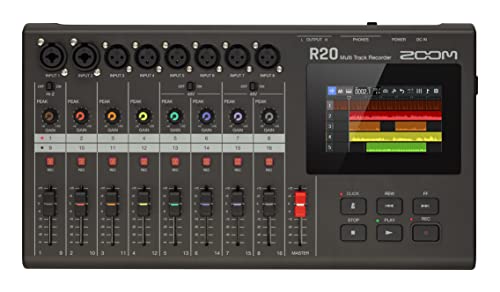
Best All-in-One Option – Zoom R20
The Zoom R20 is a strong choice for musicians who want portable multitrack recorders that can handle larger projects without a computer. Its touchscreen workflow, six XLR inputs, and support for up to 16 tracks make it practical for demos, rehearsals, and full song production.
Best For: Musicians who want hands-on, computer-free recording with plenty of inputs and tracks.
Pros:
- Records up to 16 tracks, with up to eight recorded simultaneously.
- Six XLR inputs, including two XLR/TRS combo inputs, support varied setups.
- Touchscreen editing, onboard effects, rhythms, and synth sounds support complete projects.
Cons:
- At 4.3 pounds, it is less lightweight than more compact portable recorders.
- Its maximum sample rate is 44.1 kHz.
The R20 is the most capable option here for multi-input sessions and computer-free production. Choose it when track count and direct editing matter more than minimum size.
Best Classic Standalone Recorder – Boss BR-600
The Boss BR-600 remains a practical pick among portable multitrack recorders for musicians who value standalone operation. It combines eight simultaneous playback tracks, built-in stereo microphones, effects, a drum machine, and battery power in a compact recording system.
Best For: Guitarists and songwriters who want battery-powered recording with built-in microphones and effects.
Pros:
- Provides eight simultaneous playback tracks and 64 V-Tracks.
- Built-in stereo microphones allow recording without an external microphone.
- Includes guitar and vocal effects, pitch correction, and a velocity-sensitive drum machine.
Cons:
- Uses CompactFlash media and includes only a 128MB card.
- Requires four 9V batteries for battery-powered operation.
- Its listed digital recording time is 2 hours and 16 minutes.
The BR-600 is a good fit if you prefer an established, self-contained recorder with useful musical tools. Its older storage format and limited included capacity are worth considering before buying.
Best Lightweight Idea-Capture Recorder – Zoom R4
The Zoom R4 is one of the most portable multitrack recorders for quick songwriting, layering, and mobile sessions. Its two XLR/TRS combo inputs, 32-bit float recording, built-in microphones, and battery operation make it easy to capture ideas without complicated gain setup.
Best For: Mobile musicians who want simple four-track recording, overdubbing, and clip-resistant capture.
Pros:
- 32-bit float recording is designed to avoid clipping without manual gain adjustments.
- Supports four tracks with bouncing to a dedicated bounce track for additional layers.
- Runs on four AA batteries or USB-C and also works as a 2-in/2-out USB audio interface.
- Includes built-in stereo microphones, effects, and more than 80 rhythm patterns.
Cons:
- Four-track recording is less suited to large ensemble projects.
- It has two XLR/TRS combo inputs rather than the higher input count of the R20.
The R4 is the easiest choice for spontaneous recording and portable overdubbing. Pick it when low weight, flexible power, and simple layering are more important than extensive track capacity.
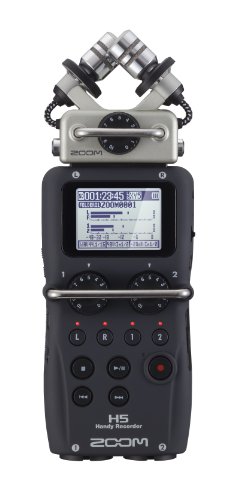
Flexible Field Recording – Zoom H5
The Zoom H5 is a compact choice among portable multitrack recorders for musicians, filmmakers, and mobile creators. It records up to four tracks at once, accepts interchangeable input capsules, and runs on two AA batteries for recording directly to SD or SDHC cards up to 32GB.
Best For: Musicians and filmmakers who need a lightweight, flexible recorder with interchangeable microphones and USB interface functionality.
Pros:
- Supports four-track simultaneous recording.
- Includes a detachable shock-mounted X/Y capsule designed to reduce handling noise.
- Two XLR/TRS combo inputs offer selectable phantom power and a -20dB pad.
- Works as a multichannel or stereo USB audio interface with PC, Mac, or iPad.
Cons:
- Recording storage is limited to SD or SDHC cards up to 32GB.
- Battery operation requires two AA batteries.
The H5 stands out when portability and input flexibility matter more than a high track count. Its capsule system and USB connectivity also make it useful beyond standalone field recording.
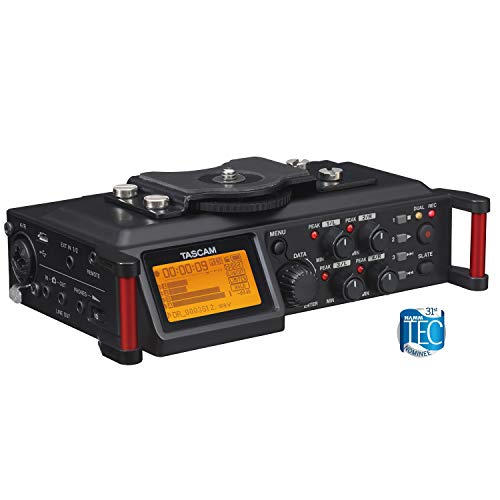
Camera-Ready Multitrack Audio – TASCAM DR-70D
The TASCAM DR-70D is a practical option among portable multitrack recorders for videographers and production crews. It provides four balanced XLR inputs with phantom power, built-in microphones, and a compact design that can mount above or below a camera.
Best For: Videographers, documentarians, and DSLR shooters who need four-input production audio with onboard level-control features.
Pros:
- Four balanced XLR microphone inputs include phantom power and individual gain controls.
- Built-in microphones provide an additional way to capture on-set sound.
- Dual Recording mode creates a lower-level safety copy to help prevent distorted takes.
- Supports SD, SDHC, and SDXC cards up to 128GB.
Cons:
- At 1.2 pounds, it is heavier than smaller handheld recorders.
- Requires four AA batteries.
With four XLR inputs, 64dB of preamp gain, and camera-mounting flexibility, the DR-70D is tailored to production sound. Its safety-recording mode is especially useful when unpredictable levels could otherwise ruin a take.
Large-Format Project Recording – TASCAM DP-24SD
The TASCAM DP-24SD is a desktop-style choice among portable multitrack recorders, offering 24-track recording with eight XLR inputs, onboard effects, mastering, and a color screen. Its larger 13.7-pound chassis is better suited to a project studio or transportable recording setup than handheld use.
Best For: Musicians and project studios that need many tracks, multiple XLR inputs, effects, and built-in mastering tools.
Pros:
- Provides 24-track digital recording.
- Includes eight XLR inputs for connecting multiple sources.
- Offers onboard effects, mastering, and a color screen.
- Includes USB 2.0 connectivity and supports up to 32GB of memory storage.
Cons:
- Its 13.7-pound weight and large dimensions limit handheld portability.
- The supplied details identify a built-in microphone and 3.5mm headphone jack but do not specify battery-powered operation.
The DP-24SD is the most capable option here for arranging and managing a larger multitrack project. Choose it when track count and studio-style controls are more important than a compact field-recorder footprint.
How We Picked the Best Portable Multitrack Recorders
We compared these Portable Multitrack Recorders by looking at the features most likely to affect day-to-day recording: available inputs, simultaneous track capacity, microphone quality, storage, battery operation, monitoring, effects, editing, and computer connectivity. We also considered the intended workflow. A handheld recorder for location work has different strengths from a tabletop unit designed for overdubbing or a full portastudio built around multitrack song production.
Track counts can be misleading, so check how many inputs can record at once. A recorder may offer many virtual or playback tracks but fewer physical inputs for simultaneous sources. Likewise, built-in microphones are convenient, while XLR/TRS inputs provide more flexibility for microphones, instruments, and line-level gear.
Quick Comparison
| Best For | What to Prioritize | Recommended Type |
|---|---|---|
| Field recording and video | Low-noise preamps, compact size, safety features | Handheld or camera-mounted recorder |
| Solo songwriting | Overdubbing, built-in effects, simple controls | Compact multitrack or tabletop recorder |
| Band rehearsals | Multiple simultaneous inputs and reliable monitoring | Four- to eight-input recorder |
| Home-studio production | High track count, editing, mixing, and mastering tools | Tabletop portastudio |
Key Buying Factors for Portable Multitrack Recorders
Inputs and Simultaneous Recording
Count the microphone and instrument inputs you need today, then add some room for expansion. Combo XLR/TRS sockets are especially useful because they can accommodate microphones, balanced line sources, and instruments depending on the recorder’s design. Phantom power is important for condenser microphones, while high-impedance instrument inputs help guitar and bass pickups sound their best.
Track Capacity and Workflow
More tracks are helpful for layered arrangements, but a simple interface may be more valuable than a large track count. Look for dedicated controls, touchscreen editing, or physical faders based on how you prefer to work. Built-in drum patterns, effects, bouncing, and punch-in recording can speed up songwriting without requiring a computer.
Audio Quality and Protection
Higher-resolution recording can preserve detail, but practical features matter just as much. 32-bit float recording can provide additional protection against unexpected level changes on compatible models, particularly for field work. Limiters, low-cut filters, headphone monitoring, and independent level controls are useful safeguards in unpredictable environments.
Power, Storage, and Connectivity
Battery operation is valuable for location sessions, while USB connectivity can turn some models into audio interfaces. Confirm the required SD card or other media, expected battery life, file formats, and whether the recorder transfers multitrack files or only a stereo mix. A clear display and accessible controls can make setup faster when working away from a desk.
Who Should Buy Which Portable Multitrack Recorders?
Choose a compact handheld recorder if portability, built-in microphones, and fast setup are your priorities. These models suit filmmakers, journalists, rehearsal capture, and musicians sketching ideas on location. A small multitrack recorder is a better fit for solo artists who want overdubbing and effects in a battery-powered format.
Choose a tabletop recorder when you need more physical inputs, easier mixing, and a workflow closer to a dedicated studio. These units are well suited to bands, producers, and home-recording setups. A larger portastudio makes the most sense for users who want extensive track capacity, multiple microphone inputs, and onboard editing or mastering tools without relying entirely on a computer.