The Shure SM7B is a renowned dynamic microphone, but its low output often demands more gain than a basic audio interface can provide. The right preamp can raise the signal cleanly, reduce the need for extreme interface gain, and help you get consistent results for podcasts, streaming, vocals, and recording.
This roundup compares 10 options, including inline gain boosters, dedicated microphone preamps, and an audio interface with a built-in Class A preamp. The best choice depends on your available phantom power, desired gain, noise tolerance, and whether you need a standalone adapter or a complete recording solution.
Best 10 Microphone Preamp for Sm7b Picks for 2026
Best Overall

- Up to 25 dB of clean gain
- Uses phantom power without passing it to passive mics
- Suitable for podcasting, streaming, and studio work
Best For: Passive dynamic and ribbon microphones
Low-Noise Pick
- Low-noise Class-A JFET amplifier
- Shielded enclosure for inline use
- Compact 2.72-ounce design
Best For: Compact microphone gain setups
Value Gain Booster

- Delivers 25 dB of clean gain
- Supports dynamic and ribbon microphones
- Built for studio, broadcast, and live use
Best For: SM7B users needing extra interface gain
All-in-One Interface

- Class-A console microphone preamp
- USB-C connectivity with up to 96 kHz operation
- Two headphone outputs and monitor mixing
Best For: Home recording and monitoring setups
Best High-Gain Pick

- Adds up to 29 dB of clean gain
- Built for dynamic and ribbon microphones
- Compact metal XLR design
Best For: SM7B users who need substantial extra gain
Best for Everyday Use
- Provides 28 dB of clean gain
- Designed for dynamic and ribbon microphones
- Compact aluminum housing
Best For: Streamers and podcasters seeking a discreet inline booster
Best Compact Studio Pick

- Adds 25 dB of dynamic-mic gain
- Balanced XLR input and output
- Compact metal chassis with shielding
Best For: Home studios and live setups needing a durable compact booster
Best Inline Gain Booster

- Adds up to 28 dB of clean gain
- Compact inline XLR form factor
- Built for dynamic and passive ribbon mics
Best For: Compact, no-frills gain for dynamic microphones
Best Flexible Studio Preamp

- Adjustable 0–72 dB gain range
- -120 dBV EIN ultra-low-noise specification
- Includes mic, instrument, 48V, and USB-C support
Best For: Flexible studio, podcast, streaming, and instrument setups
Best Budget Low-Noise Preamp

- Offers 19–66 dB of practical gain
- Rated at -120 dBV EIN
- Includes XLR/TRS/TS outputs and Type-C power
Best For: Budget-conscious vocal recording with a suitable TRS line input
Best Overall – Cloudlifter CL-1
If you need a microphone preamp for SM7B, the Cloudlifter CL-1 is a straightforward inline gain solution. It uses 48V phantom power to add up to 25 dB of gain to passive microphones without passing phantom power through to the microphone.
Best For: Podcasting, streaming, broadcast, and studio recording with passive dynamic or ribbon microphones.
Pros:
- Adds up to 25 dB of ultra-clean gain.
- Helps improve signal strength and microphone clarity.
- Compatible with standard microphone inputs that provide phantom power.
- Designed and manufactured in the USA with a stainless-steel enclosure.
Cons:
- Requires phantom power from an interface or other source.
- Provides one channel.
For an SM7B setup that needs extra gain without replacing the existing interface, the CL-1 is a proven, purpose-built option. Its passive-microphone compatibility also makes it useful with other low-output microphones.
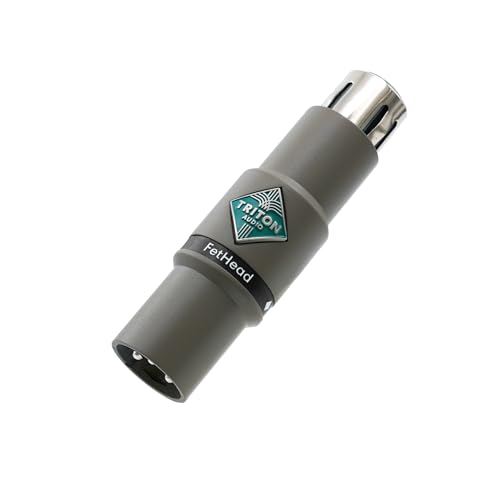
Low-Noise Pick – Triton Audio FetHead
The Triton Audio FetHead is an inline microphone preamp for SM7B users who want additional gain in a compact format. Its low-noise Class-A JFET amplifier, shielded enclosure, and matched JFET design focus on strengthening the microphone signal while keeping the unit portable.
Best For: Users seeking a compact inline gain booster with a Class-A amplifier design.
Pros:
- Uses a low-noise Class-A JFET amplifier.
- Features a shielded enclosure.
- Uses four matched JFETs.
- Compact and lightweight at 2.72 ounces.
Cons:
- The supplied notes do not specify the exact gain amount.
- The supplied notes do not identify included cables or additional controls.
The FetHead is a focused choice for a clean, unobtrusive inline setup. Its compact construction and amplifier design make it appealing when you want to add gain without introducing a larger desktop device.
Value Gain Booster – FC-1 Dynamic Mic Preamp
The FC-1 is a practical microphone preamp for SM7B setups that need an additional 25 dB of gain. It draws 48V phantom power from an audio interface or external supply, boosts dynamic and ribbon microphones, and is designed for podcasting, live sound, broadcasting, and recording.
Best For: Dynamic-microphone users who need clean gain for podcasting, live events, or studio work.
Pros:
- Provides 25 dB of clean gain.
- Designed to reduce line noise over long cable runs.
- Suitable for studio, broadcast, podcast, streaming, and live applications.
- Compatible with dynamic and ribbon microphones, including the SM7B.
Cons:
- Requires 48V phantom power from another device.
- Not compatible with condenser microphones.
- The supplied notes do not specify additional controls or connectivity details.
The FC-1 covers the core job of an inline booster while emphasizing versatility across studio and live environments. It is a sensible fit when your microphone is dynamic and your interface needs more available input gain.
All-in-One Interface – Audient iD4 MKII
Rather than adding only an inline booster, the Audient iD4 MKII provides a complete USB recording interface with a Class-A console microphone preamp. For a microphone preamp for SM7B, it offers a broader desktop solution with USB-C connectivity, monitor mixing, two headphone outputs, and compatibility with Mac, PC, and iOS devices.
Best For: Home recordists who want an interface with an integrated Class-A microphone preamp and monitoring features.
Pros:
- Includes a Class-A microphone preamp based on Audient’s ASP8024 console design.
- Uses a high-speed USB-C connection.
- Provides monitor mix and monitor panning functions.
- Includes two headphone outputs and supports up to 96 kHz operation.
Cons:
- It is a full audio interface rather than a small inline gain booster.
- The supplied notes do not specify the maximum microphone-preamp gain.
- Requires a computer or compatible iOS device for its USB-based workflow.
The iD4 MKII makes the most sense when you need both microphone preamp capability and an interface for recording or monitoring. Its feature set is more extensive than a dedicated inline activator, making it a stronger foundation for a home setup.
Best High-Gain Pick – StudioMan DPM1
If your SM7B or another low-output dynamic microphone leaves your interface gain nearly maxed out, the StudioMan DPM1 is a practical microphone preamp for SM7B setups. It adds up to 29 dB of gain and is designed to improve signal strength before the interface, while its compact metal housing fits easily into an existing XLR chain.
Best For: Podcasters, streamers, and studio users with dynamic or ribbon microphones who need substantial extra gain.
Pros:
- Provides up to 29 dB of clean, transparent gain.
- Designed for low-output dynamic and ribbon microphones.
- Compact metal construction helps with durability and interference shielding.
- Plug-and-play XLR design with a one-year warranty and technical support.
Cons:
- Requires 48V phantom power from an interface or mixer; it is not included.
- Not suitable for condenser microphones.
The DPM1 is a strong choice when an SM7B needs more usable headroom without replacing the rest of your recording setup. Confirm that your interface supplies phantom power before buying.
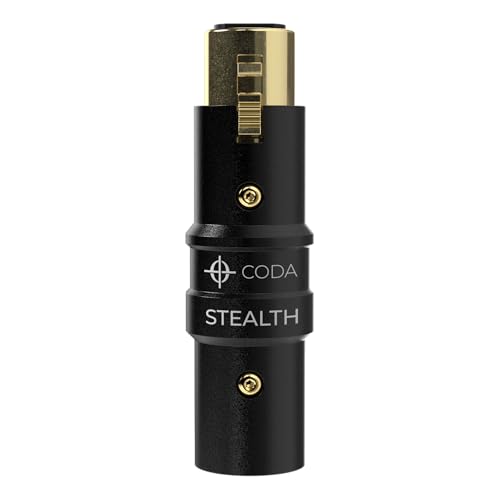
Best for Everyday Use – Coda MB-Stealth
The Coda MB-Stealth is a compact microphone preamp for SM7B and other dynamic microphones that need additional level from an interface. Its 28 dB gain boost and stated -70 dB noise rating make it a suitable option for podcasting, livestreaming, and recording where keeping added hiss and hum under control matters.
Best For: Creators who want a discreet, matte-black inline booster for dynamic or ribbon microphones.
Pros:
- Delivers 28 dB of ultra-clean gain using 48V phantom power.
- Designed to reduce unwanted hiss, hum, and noise.
- Compact aluminum housing suits streamlined microphone setups.
- Offers a 20 Hz–20 kHz frequency response.
Cons:
- Requires 48V phantom power from the connected interface or mixer.
- Does not work with condenser microphones.
With its compact form and published noise specifications, the MB-Stealth is a sensible fit for an SM7B chain that needs more gain without a bulky standalone preamp.
Best Compact Studio Pick – StudioMan CL-100
The StudioMan CL-100 is a practical microphone preamp for SM7B users who want a 25 dB boost in a compact desktop enclosure. It uses balanced XLR input and output for connection to an interface, mixer, or recording device, making it suitable for home studios, live sound, and streaming setups.
Best For: Home-studio and live-sound users who want a compact, durable dynamic-mic signal booster.
Pros:
- Adds 25 dB of gain for dynamic and passive ribbon microphones.
- Uses standard balanced XLR input and output connectors.
- Compact metal chassis provides EMI/RFI shielding and portability.
- Includes a one-year warranty and technical support.
Cons:
- Requires phantom power compatibility from the connected equipment.
- Provides less stated gain than the 28 dB and 29 dB alternatives in this roundup.
- The supplied notes do not specify that it is suitable for condenser microphones.
The CL-100 offers a straightforward balance of gain, XLR compatibility, and rugged construction. It is worth considering when 25 dB is sufficient and a desk-friendly metal unit fits your setup.
Best Inline Gain Booster – sE Electronics DM1 Dynamite
The sE Electronics DM1 Dynamite is a straightforward microphone preamp for SM7B users who need additional clean gain without adding a bulky desktop unit. Its inline XLR design supplies up to 28 dB of gain for dynamic and passive ribbon microphones, making it a practical fit for compatible podcasting, recording, and live-sound setups.
Best For: Dynamic-microphone users who want compact, transparent gain in an XLR signal chain.
Pros:
- Provides up to 28 dB of clean, transparent gain.
- Ultra-slim 80 g metal design adds minimal bulk.
- Gold-plated XLR connectors and transformerless FET circuitry support a clean signal path.
- Designed for dynamic and passive ribbon microphones.
Cons:
- Offers a fixed 28 dB of gain rather than adjustable gain control.
- Requires a compatible powered XLR setup; the supplied details do not indicate standalone USB operation.
The DM1 is best when simplicity and portability matter more than extensive routing or controls. It can be an efficient gain solution for an SM7B-style dynamic microphone, provided the rest of your interface or mixer setup can power the inline preamp.
Best Flexible Studio Preamp – RO-04 Adjustable Mic Preamp
The RO-04 is a versatile microphone preamp for SM7B setups that need more gain range and connection flexibility than a basic inline booster. Its adjustable 0–72 dB gain control, ultra-low-noise specification, and separate mic and instrument inputs make it suitable for studio, podcast, streaming, and instrument applications.
Best For: Users building a flexible desktop or mobile recording and streaming setup around dynamic microphones and instruments.
Pros:
- Offers adjustable gain from 0 to 72 dB for low-output microphones such as the SM7B.
- Lists an exceptionally low -120 dBV EIN for a low-noise signal path.
- Includes dedicated microphone and 1 MΩ instrument inputs.
- Supports 48V phantom power and USB-C power-bank operation.
Cons:
- Its 2.42-pound desktop format is less compact than an inline preamp.
- Multiple outputs and controls may be more than needed for a simple single-microphone chain.
- Phantom power should be used appropriately for the connected microphone.
Choose the RO-04 when your microphone preamp for SM7B needs extend beyond adding gain. Its broad gain range, dual output approach, USB-C power support, and instrument input make it the most adaptable option here, although it requires more desk space and setup decisions.
Best Budget Low-Noise Preamp – Rodyweil RO03 Mic Preamp
The Rodyweil RO03 is a practical microphone preamp for SM7B users seeking substantial gain and a low-noise design at a budget-oriented price point. It provides 19–66 dB of usable gain, a stated -120 dBV EIN, and XLR/TRS/TS connectivity, with Type-C power for more portable recording setups.
Best For: Budget-conscious vocal and instrument recordists who can connect the preamp to an audio interface’s TRS line input.
Pros:
- Provides a practical 19–66 dB gain range for demanding dynamic microphones.
- Uses an updated design rated at -120 dBV EIN for a low noise floor.
- Offers XLR, TRS, and TS connections plus +4 dBu and -10 dBV output options.
- Type-C power input improves portability and power compatibility.
Cons:
- The microphone and instrument inputs cannot operate simultaneously.
- The supplied guidance recommends a TRS line input for the lowest noise, which may require a suitable cable and interface.
- Its gain range starts at 19 dB rather than zero.
The RO03 is a strong fit when you want more control than a fixed inline booster and plan to integrate it carefully with an audio interface. For an SM7B chain, following the recommended TRS line-input connection is especially important when minimizing noise is a priority.
How We Picked the Best Microphone Preamp for Sm7b Options
We focused on products that address the SM7B’s high-gain requirements while covering different budgets and workflows. The selection includes inline activators, compact XLR boosters, standalone preamps with more controls, and the Audient iD4 MKII for buyers who need an interface as well as additional preamp capability.
Key considerations included advertised gain, noise performance, power requirements, connector design, build quality, and compatibility with dynamic or ribbon microphones. Because specifications and real-world results can vary by interface, cable, microphone distance, and room noise, treat stated gain and noise figures as useful reference points rather than guarantees.
Quick Comparison
- Simple inline gain: Cloudlifter CL-1, Triton Audio FetHead, Coda MB-Stealth, SE Electronics DM1 Dynamite, StudioMan CL-100, and FC-1.
- More gain or control: RO-04 and RO03 offer adjustable gain and additional features for more involved setups.
- Complete recording setup: The Audient iD4 MKII combines a USB audio interface with a Class A microphone preamp.
- Budget-focused booster: StudioMan DPM1 provides a straightforward 29 dB gain boost in a compact metal adapter.
Key Buying Factors for a Microphone Preamp for Sm7b
Gain and Noise
Look for enough clean gain to let your interface operate comfortably rather than near its maximum. Around 20 to 30 dB of additional gain is often useful, but the exact amount depends on your voice, speaking distance, recording level, and interface. Low self-noise matters because boosting a weak signal can also make hiss more noticeable.
Phantom-Power Requirements
Most inline boosters draw power from 48V phantom power while passing that power safely to dynamic microphones. Confirm that your interface or mixer can provide phantom power. If you use a passive ribbon microphone, verify the booster’s compatibility before connecting it.
Form Factor and Connections
An inline preamp is convenient and minimizes desk clutter, but it adds another connection between the microphone and interface. Check whether its XLR orientation will fit your microphone, boom arm, mixer, or cable layout. A standalone preamp may offer better access to controls, while an interface can reduce the number of separate devices you need.
Features Beyond Basic Gain
Adjustable gain, high-pass filtering, phase controls, Hi-Z inputs, monitoring, and USB connectivity can justify choosing a more advanced unit. If you only need extra level for an SM7B, additional controls may add cost without improving your workflow.
Who Should Buy Which Microphone Preamp for Sm7b?
Choose a compact inline booster if you already own a reliable interface and want a simple, cable-level solution. The Cloudlifter, FetHead, DM1 Dynamite, Coda, FC-1, and StudioMan models fit this category.
Choose the RO-04 or RO03 if you want adjustable gain and more studio-style flexibility for multiple microphones or instruments.
Choose the Audient iD4 MKII if you need a quality USB interface, headphone monitoring, and microphone preamp in one unit rather than an add-on booster.
Before buying, check your interface’s available gain, phantom-power capability, input noise, and connector clearance. The best Microphone Preamp for Sm7b is the one that supplies clean headroom without adding unnecessary complexity to your signal chain.