Choosing the right microphone preamp with optical output can simplify a karaoke rig, recording setup, or live vocal system. The best option depends on more than gain: optical connectivity, phantom power, noise performance, inputs, effects, and monitoring features all affect compatibility and sound quality.
We compared 10 selected models across studio, home-recording, karaoke, and multi-input use cases so you can narrow the field quickly and match the preamp to your equipment and workflow.
Best 10 Microphone Preamp with Optical Output Picks for 2026
Best All-in-One Karaoke Pick

- DSP vocal processing with feedback suppression
- Optical, Bluetooth, USB, coaxial, and AUX inputs
- XLR, RCA, and subwoofer outputs
Best For: Karaoke, events, studios, and flexible home audio systems
Best Compact Mic Gain Booster

- Up to 75dB clean microphone gain
- 48V phantom power for condenser microphones
- Balanced XLR and dual 3.5mm outputs
Best For: Vocal recording and low-output dynamic microphones
Best KTV Processor with Optical Connectivity

- Optical, Bluetooth 5.3, RCA, and USB connectivity
- Independent mic and music EQ controls
- Feedback suppression with balanced XLR outputs
Best For: KTV, stage, church, wedding, and performance systems
Best Multichannel ADAT Expansion

- Eight Midas microphone preamplifier channels
- ADAT optical input and output
- 24-bit conversion at 44.1/48kHz
Best For: Studio recording systems needing eight additional inputs
KTV Optical Preamp
KT150 Digital Karaoke Processor

- Optical, USB, Bluetooth, and AUX connectivity
- Built-in echo, reverb, EQ, and anti-howling controls
- XLR and 1/4-inch microphone inputs
Best For: Karaoke and event audio systems
Low-Noise Mic Preamp

- 0–72 dB adjustable microphone gain
- Stated -120 dBV EIN for low-noise operation
- 48V phantom power and USB-C power-bank support
Best For: Streaming, podcasting, and portable recording
Mobile Class-A Preamp

- 24-bit/96 kHz digital audio conversion
- XLR input with true 48V phantom power
- Direct headphone monitoring for mobile recording
Best For: Mobile recording and portable podcasting
Low-Noise Choice

- -120dBV EIN specification
- 19–66dB practical gain range
- XLR, TRS, TS, and Type-C power
Best For: Low-noise vocal and instrument recording with analog line inputs
Simple 48V Booster

- 20dB balanced gain
- 48V power for condenser microphones
- Compact black metal housing
Best For: Basic analog XLR setups for home recording and streaming
Flexible Output Option
VBESTLIFE 60dB Mic Gain Booster
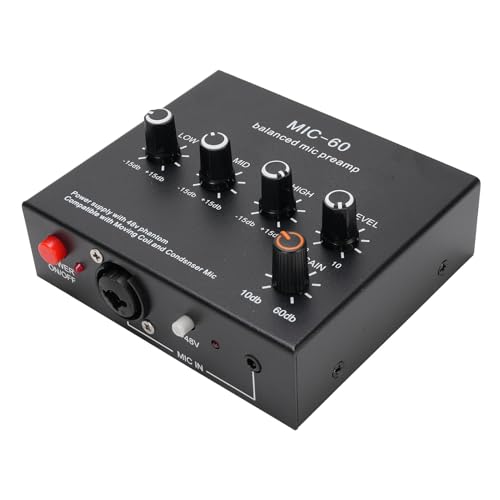
- Up to +60dB of gain
- 48V power and three inputs
- XLR, 3.5mm, and 6.35mm outputs
Best For: Multi-output analog recording, podcasting, and live streaming
Best All-in-One Karaoke Pick – DSP-11 Digital Karaoke Mixer
If you need a microphone preamp with optical output for karaoke, home entertainment, or event audio, this DSP-11 combines source switching, vocal effects, feedback suppression, and multiple outputs in one rack-style unit. Its optical input complements Bluetooth, USB, coaxial, and AUX connectivity.
Best For: Home karaoke systems, live events, studios, and setups needing extensive vocal processing and flexible connections.
Pros:
- DSP processing with echo, reverb, key shifting, and 13-band EQ.
- One-touch vocal enhancement, mic priority, and feedback suppression.
- Optical input plus USB, Bluetooth, coaxial, and AUX sources.
- Includes RCA, subwoofer, and four XLR outputs.
Cons:
- Designed more as a karaoke processor than a simple standalone mic preamp.
- The many controls and functions may require setup time.
This is a feature-rich choice when vocal effects and system connectivity matter as much as microphone gain. The LCD display and remote make day-to-day adjustments more convenient.
Best Compact Mic Gain Booster – MIC-1 75dB Mic Preamp
This MIC-1 is a practical microphone preamp with optical output shoppers may compare alongside digital processors, although its listed outputs are balanced XLR and 3.5mm rather than optical. It focuses on clean gain, low noise, phantom power, and convenient connections for recording or portable audio.
Best For: Vocal recording with dynamic or condenser microphones, especially low-output models requiring substantial clean gain.
Pros:
- Provides up to 75dB of gain and a stated -120dB EIN noise performance.
- 48V phantom power supports compatible condenser microphones.
- Balanced XLR output and separate 3.5mm mic and line outputs.
- Compact metal housing and a stated three-year warranty.
Cons:
- It does not list an optical output.
- The two input ports cannot be used simultaneously.
- It offers direct mic-preamp functionality rather than built-in DSP effects.
Choose this model when microphone gain and flexible analog outputs are the priority. For an optical-output system, you would need additional conversion or interface equipment.
Best KTV Processor with Optical Connectivity – QST K-1 Digital Preamp
The QST K-1 suits buyers seeking a microphone preamp with optical output for karaoke, stage, church, wedding, and performance systems. It pairs optical connectivity with Bluetooth 5.3, microphone and music EQ, feedback suppression, and balanced outputs.
Best For: KTV and live-performance setups that need independent microphone and music control with advanced routing options.
Pros:
- Supports optical, Bluetooth, RCA, and USB connectivity.
- Provides independent microphone and music controls with multiband parametric EQ.
- Built-in feedback suppression and amplifier protection features.
- Offers 5.1-channel balanced XLR and 3.1 RCA outputs.
Cons:
- Listed as compatible only with 120V power.
- Its rack-style design and advanced controls may be more than casual users need.
- It is marketed primarily for KTV and performance audio rather than basic recording.
With optical input, wireless playback, and extensive sound management, the K-1 is a strong fit for a dedicated entertainment or performance rack. PC software adds further configuration options.
Best Multichannel ADAT Expansion – Behringer ADA8200
Behringer ADA8200 Audiophile 8 In/8 Out ADAT Audio Interface with Midas Mic Preamplifiers
Check Price On AmazonThe Behringer ADA8200 is a strong option for buyers who need a microphone preamp with optical output in a recording or studio expansion setup. It provides eight Midas microphone preamps and ADAT optical input and output through 24-bit conversion at 44.1 or 48kHz.
Best For: Expanding a compatible audio interface or digital recording system with eight additional microphone inputs and ADAT connectivity.
Pros:
- Provides eight microphone preamplifier channels.
- Includes ADAT optical output for digital system expansion.
- Uses 24-bit AD/DA conversion at 44.1/48kHz.
- Designed as an 8-in/8-out audio interface-style unit.
Cons:
- ADAT connectivity requires compatible equipment.
- Its maximum listed sample rate is 48kHz.
- It is less suited to karaoke-focused effects and vocal processing.
This is the most studio-oriented choice in the group. Its value comes from adding eight channels over ADAT, making it practical for multitrack recording rather than standalone entertainment use.
KTV Optical Preamp – KT150 Digital Karaoke Processor
The KT150 is a feature-heavy choice for shoppers seeking a microphone preamp with optical output for karaoke, events, and home entertainment. It combines microphone tone controls, echo and reverb effects, Bluetooth, USB, and optical-fiber connectivity in a metal-bodied processor.
Best For: Karaoke rooms, family entertainment, weddings, bars, and live event setups that need vocal effects and flexible source switching.
Pros:
- Supports optical fiber, USB, Bluetooth, AUX, and other audio inputs.
- Provides microphone volume, bass, treble, delay, and repeat controls.
- Includes anti-howling technology and both XLR and 1/4-inch microphone connections.
- Offers subwoofer, recording, and XLR outputs for broader system integration.
Cons:
- Its optical connection requires a source or output device with a compatible optical interface.
- The karaoke-focused effects and controls may be excessive for straightforward studio recording.
The KT150 stands out when optical connectivity and built-in vocal processing matter more than minimalist studio design. Its multiple inputs, outputs, and anti-feedback tools make it particularly practical for entertainment systems.
Low-Noise Mic Preamp – RO-04 72 dB Gain Booster
The RO-04 is a dedicated microphone preamp with optical output considerations for buyers building a broader digital recording chain, although the supplied specifications emphasize its analog preamp and dual-output design rather than an optical port. Its 0–72 dB gain range and very low stated EIN target clean gain for demanding microphones.
Best For: Podcasters, streamers, vocalists, and mobile recording users who need clean gain, phantom power, and flexible power options.
Pros:
- Offers 0–72 dB of adjustable gain for low-output dynamic microphones and other sources.
- Provides a stated -120 dBV EIN for a low-noise recording signal.
- Includes 48V phantom power and separate microphone and high-impedance instrument inputs.
- Supports USB-C power, including operation from a power bank.
Cons:
- The supplied notes do not identify an optical output.
- Its dual-output approach may require level matching with the rest of a recording or streaming system.
The RO-04 is best viewed as a clean, portable analog gain stage rather than a confirmed optical-output interface. Verify the connection requirements of your audio interface or converter before choosing it for an optical-based setup.
Mobile Class-A Preamp – iRig Pre HD USB Interface
The iRig Pre HD is a compact XLR microphone preamp and USB audio interface for mobile and computer recording. For shoppers comparing a microphone preamp with optical output, it is important to note that the supplied specifications describe USB connectivity and do not list an optical output; its strengths are portable digital recording, phantom power, and direct monitoring.
Best For: Musicians, podcasters, broadcasters, and mobile creators recording with iPhone, iPad, Android, Mac, or PC.
Pros:
- Uses a Class-A preamp with adjustable gain and 24-bit/96 kHz conversion.
- Provides true +48V phantom power for condenser microphones.
- Includes direct headphone monitoring to help reduce latency and echo.
- Works with mobile devices, computers, cameras, and apps such as Zoom and Instagram.
Cons:
- The supplied notes do not list an optical output.
- It has one XLR input, limiting simultaneous microphone connections.
- Its compact mobile design offers fewer routing features than larger processors.
The iRig Pre HD is a strong portable option when USB recording and device compatibility are the priority. Choose a different model or add an appropriate converter if your setup specifically requires optical output.
Low-Noise Choice – RO03 66dB Mic Preamp
If you need a microphone preamp with optical output, note that the RO03 does not list an optical connection. It instead focuses on very low noise, up to 66dB of practical gain, and XLR, TRS, and TS connectivity for microphones and instruments.
Best For: Home recording, vocal work, instrument recording, and portable setups that use an audio interface’s TRS line input.
Pros:
- Updated design specifies a -120dBV EIN and a 19–66dB gain range.
- Supports dynamic, condenser, and ribbon microphones, plus instruments.
- Offers XLR, TRS, and TS outputs, with Type-C power for portability.
- Raises instrument input impedance to 1MΩ for improved DI performance.
Cons:
- No optical output is listed.
- The two input ports cannot be used simultaneously.
- The manufacturer recommends TRS rather than XLR line input connections for the lowest noise.
The RO03 is the strongest fit here for buyers prioritizing gain range and noise performance, but it is not an optical-output preamp. Confirm that your interface or mixer accepts its analog connections before buying.
Simple 48V Booster – Compact XLR Mic Preamplifier
For shoppers searching for a microphone preamp with optical output, this compact unit is worth checking only if analog XLR output meets your needs, since no optical connection is specified. It provides 20dB of clean gain and 48V power in a lightweight metal enclosure.
Best For: Basic home-studio, podcasting, recording, and live-streaming setups using dynamic or condenser microphones.
Pros:
- Provides 20dB of balanced gain for boosting microphone signals.
- Includes 48V power for compatible condenser microphones.
- Fully balanced circuitry is designed for low-noise, transparent operation.
- Compact 8.8-ounce design is easy to carry and store.
Cons:
- No optical output is listed.
- Offers less gain than the other preamps in this roundup.
- The supplied details do not identify additional output formats beyond XLR.
This is a straightforward analog booster rather than a digital or optical interface. Choose it for a simple XLR-based signal path and modest gain needs, not for optical connectivity or extensive routing.
Flexible Output Option – VBESTLIFE 60dB Mic Gain Booster
This microphone preamp with optical output search result offers several analog output choices instead, including balanced XLR, 3.5mm, and 6.35mm connections. It reaches up to 60dB of gain and includes 48V power, making it suited to multi-device recording and streaming setups.
Best For: Vocal recording, podcasting, live streaming, and systems that need multiple analog outputs for interfaces, mixers, consoles, or speakers.
Pros:
- Offers up to +60dB of gain with low-distortion, low-latency operation.
- Supports dynamic and condenser microphones, including examples such as the SM7B and 55SH.
- Provides XLR balanced, 3.5mm, and 6.35mm microphone or line outputs.
- Compact metal housing is designed to reduce interference.
Cons:
- No optical output is listed.
- The supplied specifications do not explain independent control of the three inputs or outputs.
- Warranty information is limited to 90 days.
The VBESTLIFE model is the most connectivity-focused option of the three, especially where multiple analog formats are useful. If optical output is essential, however, you will need a separate digital converter or a different preamp.
How We Picked the Best Microphone Preamp with Optical Output
We focused on the features that matter most when choosing a Microphone Preamp with Optical Output: available gain, noise specifications, phantom-power support, input and output formats, digital connectivity, controls, and intended use. The selection includes dedicated mic preamps, compact interfaces, karaoke processors, and multi-channel converters because “optical output” can serve very different systems.
We also considered practical compatibility. A preamp must match your microphone type, amplifier or interface inputs, cable requirements, and desired signal path. Product descriptions can use terms such as optical, fiber optic, ADAT, or digital output differently, so verify the exact connector and signal format before buying.
Quick Comparison
- For karaoke and vocal effects: Digital processors with echo, anti-feedback, Bluetooth, USB, or remote control are the most convenient.
- For expanding an interface: The Behringer ADA8200 is designed around multi-channel ADAT conversion and eight mic inputs.
- For portable recording: Compact interfaces such as the iRig Pre HD prioritize computer or mobile connectivity.
- For simple gain boosting: Dedicated one- or multi-input preamps can be more straightforward than full karaoke processors.
Key Buying Factors for a Microphone Preamp with Optical Output
Optical Format and Compatibility
Confirm whether the unit provides ADAT optical, S/PDIF optical, or another fiber connection. These formats are not interchangeable in every setup. Check channel count, sample-rate support, direction of the connection, and whether your receiving device has the matching optical input.
Gain, Noise, and Microphone Support
Dynamic and ribbon microphones may need substantial clean gain, while condenser microphones require reliable 48V phantom power. A low EIN rating generally indicates quieter preamplification, but the complete signal chain—including cables, room noise, and the following device—still matters.
Inputs, Outputs, and Controls
Count the XLR inputs you actually need and check for Hi-Z instrument inputs, balanced outputs, headphone monitoring, and independent gain controls. Karaoke users may value echo, equalization, anti-howling, Bluetooth, and remote operation more than studio-style specifications.
Workflow and Installation
Choose a compact interface for mobile or desktop recording, a rack-style converter for permanent studio expansion, or a processor with dedicated controls for live vocal use. Make sure the power requirements, connectors, and included accessories fit your setup.
Who Should Buy Which Microphone Preamp with Optical Output?
Home karaoke users should prioritize vocal effects, feedback control, Bluetooth, USB, and simple connections. Project-studio owners should focus on clean gain, phantom power, low noise, monitoring, and digital format compatibility. Engineers expanding an existing interface should consider channel count and ADAT support first. Mobile creators will benefit from a compact preamp/interface with suitable computer or phone connectivity. If you only need more level from one microphone, select a focused mic preamp rather than paying for karaoke processing or unnecessary channels.