The right desktop microphone preamp can give a quiet dynamic microphone the clean gain it needs, add useful tube character, or provide flexible connections for a compact studio. The best choice depends on your microphone type, available inputs, noise requirements, and whether you need phantom power or instrument support.
We compared 10 desktop-friendly options ranging from single-channel studio preamps to affordable inline boosters and multi-input units. Use the guide below to narrow the field by performance, features, and setup compatibility.
Best 10 Desktop Microphone Preamps Picks for 2026
Best Transformer-Balanced Choice

- Single-channel mic and instrument preamp
- Ultra-high-speed input stage
- Transformer-balanced output
Best For: Home studios needing one dedicated preamp channel
Best Tube-Color Option

- 12AX7 tube and XMAX solid-state stages
- Adjustable tube-drive saturation
- Mic, instrument, phantom power, pad, and HP filter support
Best For: Home recording and DI setups needing flexible tone control
Best High-Gain Low-Noise Pick

- 0–72 dB adjustable gain
- -120 dBV EIN ultra-low-noise specification
- USB-C, power-bank, mic, and instrument support
Best For: Podcasts, streaming, and low-output microphones
Best Two-Channel Mic Booster

- Two channels with +25 dB clean gain
- Supports dynamic and passive ribbon mics
- Balanced XLR I/O with phantom-power operation
Best For: Two-mic setups using dynamic or passive ribbon microphones
Best Multi-Output Desktop Preamp
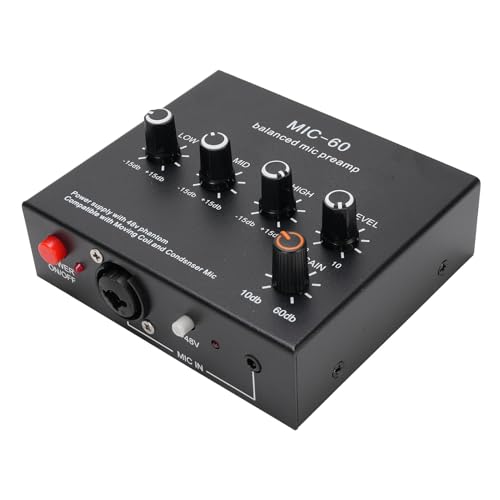
- Up to +60dB gain
- 48V support for dynamic and condenser mics
- XLR, 3.5mm, and 6.35mm connections
Best For: Multi-source recording and live streaming setups
Best Dedicated Dynamic-Mic Booster

- 25dB clean gain
- Balanced XLR input and output
- Compact metal chassis with EMI/RFI shielding
Best For: Dynamic and passive ribbon microphones
Best Compact Low-Noise Option

- 20dB balanced gain
- 48V support for dynamic and condenser mics
- Compact low-noise metal case
Best For: Simple vocal, podcasting, and streaming chains
Best Dynamic-Mic Booster

- Adds 29dB of gain
- Metal, interference-shielding body
- Requires 48V phantom power
Best For: Dynamic and ribbon microphones
Best Low-Noise Versatile Preamp

- 19–66dB variable gain
- Stated -120dBV EIN
- XLR, TRS, and TS outputs
Best For: Multi-mic and instrument recording
Best High-Gain Connectivity

- Up to 75dB of gain
- Supports 48V phantom power
- Balanced XLR and 3.5mm outputs
Best For: Vocal recording and flexible home studios
Best Transformer-Balanced Choice – Black Lion Audio Auteur DT
The Black Lion Audio Auteur DT is a focused option for buyers comparing desktop microphone preamps and needing one channel for microphone or instrument recording. Its ultra-high-speed input stage and transformer-balanced output point toward a straightforward, purpose-built signal path.
Best For: Home-studio users who need a single-channel mic or instrument preamp.
Pros:
- Handles microphone and instrument sources.
- Uses an ultra-high-speed input stage.
- Transformer-balanced output is suited to balanced studio connections.
- Compact desktop-oriented form factor at 5.1 pounds.
Cons:
- Only one channel is provided.
- The supplied notes do not specify features such as phantom power, padding, or filtering.
- Its listed dimensions may require a dedicated amount of desktop space.
The Auteur DT makes the most sense when a single, dedicated channel and transformer-balanced output are more important than a broad set of built-in controls.
Best Tube-Color Option – PreSonus TubePre v2
The PreSonus TubePre v2 is a versatile pick among desktop microphone preamps for users who want tube-based coloration alongside practical recording controls. It combines a 12AX7 tube circuit with a solid-state XMAX input stage and includes separate mic and instrument inputs.
Best For: Vocalists, instrumentalists, and home recordists wanting adjustable tube drive and DI functionality.
Pros:
- 12AX7 tube preamp with separate tube-drive saturation control.
- XMAX solid-state input stage and low-noise dual-servo gain stage.
- Separate instrument and microphone inputs.
- Includes phantom power, high-pass filter, -20 dB pad, and polarity reverse.
Cons:
- It is a single-channel unit.
- The listed frequency-response detail is limited to 20 kHz.
- A one-year warranty is specified.
With its tube-drive control and useful signal-shaping options, the TubePre v2 is a flexible choice when you want more than clean gain from a compact one-channel preamp.
Best High-Gain Low-Noise Pick – RO-04 Mic Preamp
The RO-04 is designed for buyers comparing desktop microphone preamps that need substantial, clean gain. Its adjustable 0–72 dB range, -120 dBV EIN rating, and separate mic and instrument inputs make it suitable for quiet sources, dynamic microphones, instruments, and streaming setups.
Best For: Podcasters, streamers, and recordists using low-output microphones or mobile and desktop rigs.
Pros:
- Wide 0–72 dB adjustable gain range.
- Specified -120 dBV EIN for an exceptionally low noise floor.
- Dedicated microphone and 1 MΩ instrument inputs.
- Supports 48V phantom power, high-pass filtering, phase control, USB-C power, and power-bank operation.
Cons:
- The product is limited to the features and connections described in the supplied notes.
- Its 2.42-pound weight and compact dimensions may not suit users seeking a rack-style unit.
- Power-bank use still requires a suitable USB-C power source.
The RO-04 stands out for flexible gain and connectivity, particularly when a setup must accommodate low-output microphones, instruments, and both computer-based and mobile streaming.
Best Two-Channel Mic Booster – StudioMan CL-200
The StudioMan CL-200 is a practical choice among desktop microphone preamps when the main task is adding clean gain to two dynamic or passive ribbon microphones. It uses balanced XLR input and output, draws power from 48V phantom power, and is housed in a compact metal enclosure.
Best For: Dual-microphone recording, podcasting, live streaming, and stage setups using dynamic or passive ribbon microphones.
Pros:
- Two channels with a stated +25 dB clean gain boost.
- Designed for dynamic and passive ribbon microphones.
- Balanced XLR connections support longer output cable runs.
- Compact metal housing and phantom-power operation require no separate adapter.
Cons:
- It cannot pass phantom power to condenser microphones.
- It is not intended as a general-purpose instrument preamp.
- The mic-to-booster cable is recommended to be shorter than 30 feet.
The CL-200 is best viewed as a focused two-channel activator rather than a full-featured preamp, especially for passive microphones that need a clean signal boost before reaching a mixer or interface.
Best Multi-Output Desktop Preamp – 3-Input Mic Gain Booster
For desktop microphone preamps that need to handle several sources, this VBESTLIFE model combines up to 60dB of gain with three-channel input support. Its 48V power and broad connector selection make it flexible for home recording, streaming, and small mixing setups.
Best For: Users who need multiple microphone and line-output options in a compact desktop unit.
Pros:
- Up to +60dB of gain for low-level dynamic microphones.
- Supports dynamic and condenser microphones with 48V power.
- Offers XLR, 3.5mm, and 6.35mm connections for flexible routing.
- Compact metal housing helps reduce interference and is easy to carry.
Cons:
- The extensive connection layout may be more than a basic single-mic setup requires.
- The listed manufacturer warranty is 90 days.
This is the most versatile option of the three for buyers who value input and output flexibility. It is especially practical for live streaming or recording workflows that connect to several types of audio equipment.
Best Dedicated Dynamic-Mic Booster – StudioMan CL-100 XLR Preamp
The StudioMan CL-100 is a focused choice among desktop microphone preamps, providing 25dB of clean gain for dynamic and passive ribbon microphones. Its dual XLR design is straightforward to place between a microphone and an interface, mixer, or recorder.
Best For: Dynamic microphone users who want a simple, desk-friendly XLR signal booster.
Pros:
- Designed specifically for dynamic and passive ribbon microphones.
- Provides 25dB of clean gain with a low-noise circuit.
- Dual balanced XLR input and output support easy integration.
- Compact metal housing offers EMI/RFI shielding and portability.
Cons:
- It offers less gain than the 60dB model in this roundup.
- Its XLR-only layout is less flexible for devices using 3.5mm or 6.35mm connections.
Choose the CL-100 when your setup centers on a dynamic microphone and balanced XLR cabling. Its dedicated design keeps the signal path simple, while the one-year warranty and technical support add practical reassurance.
Best Compact Low-Noise Option – 20dB Mic Preamp
This compact microphone preamp is a straightforward option for desktop microphone preamps, adding 20dB of balanced gain in a small black metal enclosure. It supports both dynamic and condenser microphones and is intended for recording, podcasting, streaming, and studio use.
Best For: Buyers seeking a lightweight, low-noise preamp for a simple vocal or podcasting chain.
Pros:
- Delivers 20dB of clean, transparent gain.
- 48V power supports compatible dynamic and condenser microphone setups.
- Fully balanced circuitry is designed for low noise and minimal coloration.
- Lightweight metal case helps reduce electromagnetic interference.
Cons:
- Its 20dB gain level is lower than the other listed options.
- The notes specify an XLR output but do not list the same range of connections as the multi-output model.
This model makes sense when low noise and a small footprint matter more than maximum gain or extensive routing. It is a practical fit for a focused home-studio, vocal, podcast, or live-streaming setup.
Best Dynamic-Mic Booster – StudioMan DPM1 XLR Preamp
The StudioMan DPM1 is a compact choice for desktop microphone preamps when you need more level from a low-output dynamic or ribbon microphone. It adds up to 29dB of gain and is designed to sit between the microphone and an interface or mixer.
Best For: Podcasters, streamers, and live or studio users with compatible dynamic or ribbon microphones and an interface that supplies 48V phantom power.
Pros:
- Adds up to 29dB of clean gain to low-output dynamic and ribbon microphones.
- Metal housing helps with durability and interference shielding.
- Compact, plug-and-play XLR design with a one-year warranty.
Cons:
- Not intended for condenser microphones.
- Requires 48V phantom power, which is not included and does not pass power to the microphone.
If your interface becomes noisy when its gain is turned up for an SM7B, SM58, or similar microphone, the DPM1 offers a straightforward signal-boosting solution. Its main limitation is the need for the correct microphone type and phantom-power setup.
Best Low-Noise Versatile Preamp – RO03 Mic Preamp
The RO03 stands out among desktop microphone preamps for its broad input and output support, adjustable 19–66dB gain, and stated -120dB EIN noise performance. Its Type-C power input also suits more portable recording setups.
Best For: Users recording dynamic, condenser, ribbon, or instrument sources who need flexible connections and practical gain control.
Pros:
- Supports dynamic, condenser, and ribbon microphones plus instruments.
- Offers 19–66dB variable gain and a stated -120dBV EIN.
- Provides XLR, TRS, and TS output options with Type-C power.
Cons:
- The two input ports cannot operate simultaneously.
- The manufacturer recommends using an interface’s TRS line input for the lowest noise.
The RO03 is a flexible pick when a single-purpose inline booster is not enough. Its connection guidance matters: pairing it with a suitable TRS line input may help achieve the lowest-noise results described in the product notes.
Best High-Gain Connectivity – JCANOL MIC-1 Preamp
The JCANOL MIC-1 is a versatile option for desktop microphone preamps, combining up to 75dB of gain with a stated -120dB EIN. It also adds 48V phantom power, a high-impedance instrument input, and both balanced XLR and 3.5mm outputs.
Best For: Vocal recordists and home-studio users who need high gain, condenser-microphone support, and connections for both studio and compact portable equipment.
Pros:
- Provides up to 75dB of gain and stated -120dB EIN performance.
- Supports dynamic and condenser microphones with 48V phantom power.
- Includes balanced XLR plus separate 3.5mm mic and line outputs.
Cons:
- The two input ports cannot be used simultaneously.
- Its broad output selection may be unnecessary for a simple single-connection setup.
With its high gain range and multiple output formats, the MIC-1 is suited to setups that connect more than just a standard interface. The 1MΩ instrument input further expands its usefulness for DI-style instrument recording, while the metal enclosure supports portable use.
How We Picked These Desktop Microphone Preamps
We focused on practical features that affect everyday recording: available gain, noise performance, input and output formats, phantom-power support, controls, build quality, and ease of installation. The lineup includes dedicated studio preamps, inline gain boosters, tube-based designs, and compact units for podcasters, musicians, streamers, and home-recording users.
Because microphone output levels vary widely, we also considered compatibility with low-output dynamic and ribbon microphones, condenser microphones requiring 48V phantom power, and setups that need an instrument or DI input. Published specifications are useful, but real-world results also depend on cable quality, interface gain, microphone sensitivity, and room noise.
Quick Comparison
| Best For | Look For | Typical Advantage |
|---|---|---|
| Low-output dynamic microphones | High clean gain and low EIN | More usable level without excessive hiss |
| Condenser microphones | 48V phantom power and balanced XLR connections | Direct compatibility with studio microphones |
| Tube coloration | Tube gain stage and tone controls | Warmer, more characterful sound |
| Multiple microphones | Two or more channels | Convenient simultaneous recording |
| Portable or compact rigs | Inline design and simple power requirements | Fast installation with minimal desk space |
Key Buying Factors for Desktop Microphone Preamps
Gain and Noise
Choose enough gain to bring your microphone to a healthy recording level without forcing your audio interface to its maximum. Dynamic and ribbon microphones often benefit from more gain than condensers. A low equivalent input noise, or EIN, is especially important when adding substantial amplification to quiet sources.
Phantom Power and Compatibility
Condenser microphones generally require 48V phantom power, while passive ribbon microphones should be connected carefully and according to the manufacturer’s instructions. Balanced XLR inputs and outputs are preferable for longer cable runs and better resistance to interference. If you record guitar or bass, an integrated Hi-Z or DI input can make one preamp more versatile.
Connections and Controls
Check whether the unit uses XLR, 1/4-inch, 3.5mm, or a combination of outputs that matches your interface, mixer, camera, or computer setup. Gain controls, high-pass filtering, phase reversal, metering, and pad switches can be valuable when recording vocals, instruments, or multiple sources.
Form Factor and Power
Desktop units are easy to reach and usually offer more controls than inline boosters, but they occupy valuable workspace. Confirm the required power supply and whether the preamp is intended to sit between a microphone and interface, connect directly to powered equipment, or operate as a complete recording front end.
Who Should Buy Which Desktop Microphone Preamps?
For Clean Gain on a Dynamic Mic
Choose a high-gain, low-noise inline booster or single-channel preamp. This is the simplest route for broadcast-style dynamic microphones that sound too quiet through an audio interface.
For Home Studios and Vocal Recording
A desktop preamp with balanced XLR connectivity, phantom power, and useful filtering offers the best flexibility. Look for enough headroom and straightforward controls rather than choosing solely by maximum gain.
For Tube Character
A tube-based model is worth considering if you want a warmer, more colored signal before it reaches your interface. It may be less neutral than a clean solid-state design, so it is best for buyers who specifically value tonal shaping.
For Two-Microphone Setups
Choose a two-channel unit when recording interviews, stereo sources, or two performers. Two channels can also simplify a growing setup and avoid buying a second preamp later.
Before purchasing, verify the microphone’s output type, the preamp’s power requirements, and the connector path to your interface. Matching those details will usually matter more than choosing the model with the highest advertised gain.