A microphone preamp with compressor combines two essential recording tools: clean input gain and level control. The right unit can add clarity, shape dynamics, and help vocals or instruments sit more consistently in a mix.
This roundup covers compact inline designs, tube channel strips, 500 Series modules, and multi-channel studio hardware. Use the buying guide below to match features, connectivity, and sonic character to your setup.
Best 10 Microphone Preamp with Compressor Picks for 2026
Versatile Channel Strip

- Built-in compressor and four independent processors
- XLR and 1/4-inch inputs with loop-out
- Rack-mountable single-channel design
Best For: Vocal, podcast, and project-studio processing
Tube Character

- Tube preamp with variable valve voicing
- Automatically handles instrument or microphone inputs
- Includes output protection limiter and metering
Best For: Warm guitar and microphone preamp applications
Multi-Channel Powerhouse
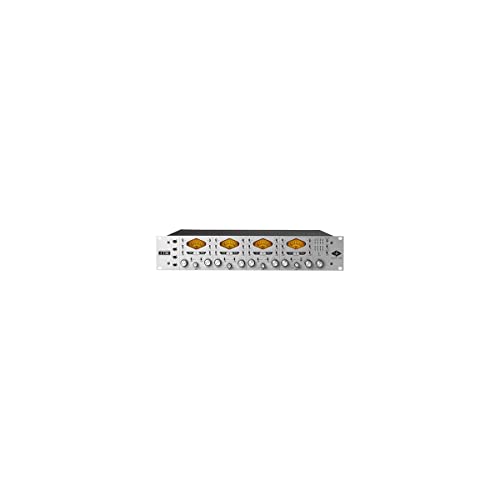
- Four microphone preamp and compressor channels
- Tube/FET tone blending for flexible character
- 8-channel 24-bit/192kHz A/D conversion
Best For: Multi-microphone studio recording
Complete Channel Strip

- Class A tube preamp with variable VCA compressor
- Three-band EQ with flexible midrange control
- Mic, instrument, and line inputs
Best For: Studio vocal and instrument channel shaping
Compact Dynamic-Mic Control
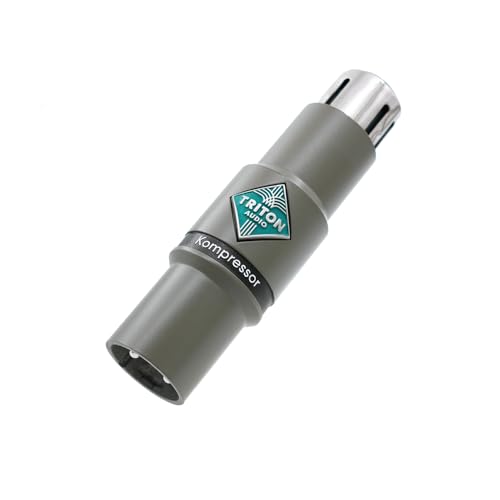
- 25 dB gain plus FET-OPTO compression
- One-knob control for simple leveling
- Blocks phantom power from ribbon mics
Best For: Low-output dynamic and ribbon microphones
500-Series Channel Strip
Solid State Logic SiX Channel Strip
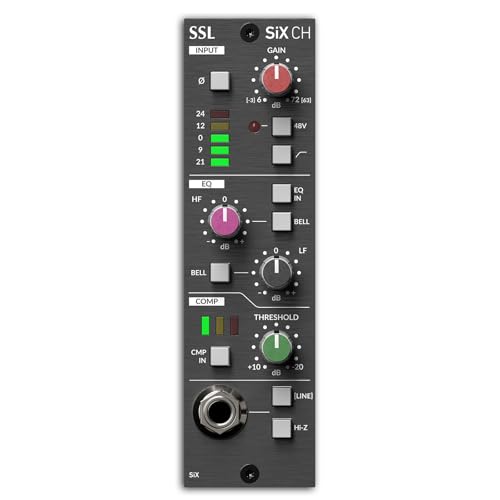
- Mic preamp, EQ, and compressor in one module
- Includes 75 Hz high-pass filter
- Adds TRS line and Hi-Z input options
Best For: 500 Series studio front ends
Warm Tube Dynamics

- Tube microphone preamp with opto compression
- Warm, vintage sound profile
- Aluminum and rubber enclosure
Best For: Tube-style warmth and optical compression
Classic FET Dynamics

- FET-style compression modeled after the 1176LN
- Discrete path with Class-A output amplifier
- Selectable ratios from 4:1 to 20:1
Best For: Classic compressor character in a separate rack-based recording chain
Tube Channel Control
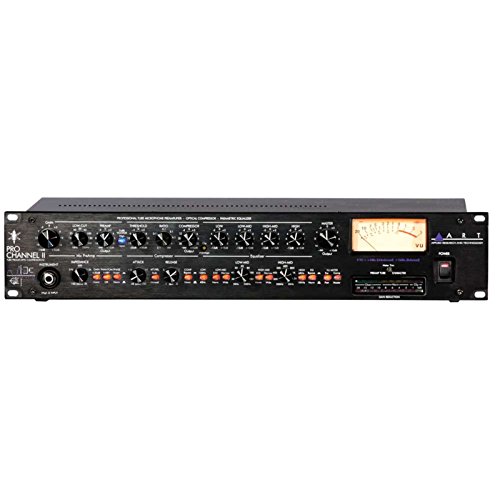
- Tube mic pre, compressor, and EQ in one channel
- Switchable optical/tube compression
- Selectable VU metering across three points
Best For: Integrated tube processing for vocals and instruments
Flexible Tube Channel Strip
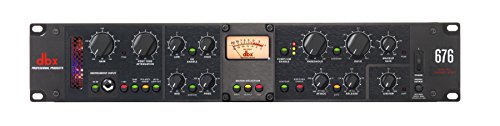
- 250-volt Class-A tube microphone preamp
- Compressor/limiter with side-chain insert
- 3-band parametric EQ with sweepable mids
Best For: Detailed tube-based recording and live signal shaping
Versatile Channel Strip – dbx 286s Microphone Preamp
The dbx 286s is a practical microphone preamp with compressor for vocals, instruments, and project or live setups. Its compression, de-esser, enhancer, and expander/gate provide useful control in one rack-mountable unit.
Best For: Vocalists, streamers, podcasters, and home-studio users who want several channel-processing tools in one device.
Pros:
- Combines microphone preamp, compressor, de-esser, enhancer, and expander/gate.
- Accepts XLR microphone and 1/4-inch line or instrument connections.
- Includes status LEDs, loop-out capability, and a rack-mountable 1U design.
Cons:
- It is a single-channel unit.
- Uses corded electric power and is designed for rack installation.
The 286s is a strong all-in-one choice when straightforward vocal shaping matters more than tube coloration or multi-channel operation.
Tube Character – ART TPS II Tube Preamplifier
The ART TPS II is a tube preamplifier system for users seeking a warm sound and flexible input handling. It also includes an output protection limiter, making it a consideration for setups looking for preamp dynamics control.
Best For: Guitarists and recording users who want tube-based microphone or instrument preamplification with variable voicing.
Pros:
- Uses ART tube technology with variable valve voicing.
- Automatically switches between instrument and microphone preamp modes.
- Provides variable input impedance, LED metering, and an output protection limiter.
Cons:
- It offers one output channel.
- The limiter is described as output protection rather than a full compressor section.
Choose the TPS II when warm tube character and input flexibility are priorities; users needing dedicated compressor controls may prefer a channel strip built specifically around compression.
Multi-Channel Powerhouse – Universal Audio 4-710d Preamp
The Universal Audio 4-710d combines four microphone preamp channels with compression and tube/FET tone blending. It is aimed at larger recording setups that need multiple inputs and onboard digital conversion.
Best For: Studios recording several microphones or instruments at once and users who want tube/FET tonal flexibility.
Pros:
- Provides four microphone preamp and compressor channels.
- Combines tube and FET preamp character with a tone-blending knob.
- Includes 8-channel 24-bit/192kHz A/D conversion.
Cons:
- Its four-channel format may be more than a small setup requires.
- The supplied notes do not specify detailed compressor controls or connectivity beyond the listed conversion features.
The 4-710d stands out for channel count and tonal flexibility, making it a better fit for multi-mic recording than a basic single-channel microphone preamp with compressor.
Complete Channel Strip – PreSonus StudioChannel
The PreSonus StudioChannel is a microphone preamp with compressor that adds a three-band EQ for detailed shaping. Its Class A tube preamp, variable VCA compressor, and multiple input types make it useful for vocals, instruments, keyboards, and synths.
Best For: Project and professional studios needing tube preamplification, compression, and EQ in one 1U rack unit.
Pros:
- Combines a high-voltage Class A 12AX7 tube preamp and variable VCA compressor.
- Offers three-band EQ with variable-Q midrange and shelving or peak options.
- Includes mic, instrument, and line inputs plus phantom power, polarity reverse, pad, and high-pass filter.
Cons:
- Its extensive controls may be more involved than a basic preamp.
- It is a 1U rack-mount unit rather than a compact desktop design.
For users who want one device to handle preamp gain, compression, and tonal shaping, the StudioChannel offers a particularly complete channel-strip layout.
Compact Dynamic-Mic Control – Triton Audio Kompressor
If you need a microphone preamp with compressor for a low-output dynamic or ribbon microphone, the Triton Audio Kompressor combines up to 25 dB of gain with simple, source-level dynamics control. Its compact XLR-barrel design is especially practical for streamlined podcasting and recording setups.
Best For: Dynamic and ribbon microphones, including applications using low-output mics such as the Shure SM7B.
Pros:
- Combines a 25 dB microphone preamp with an in-line FET-OPTO compressor.
- Single knob provides straightforward control from “Less” to “More.”
- Blocks phantom power from reaching the microphone while operating from 48V phantom power.
Cons:
- Single-knob compression offers less adjustment than a multi-control compressor.
- Designed for XLR microphone setups rather than broad studio routing.
The Kompressor is a focused solution when you want clean gain and consistent dynamics without adding a larger rack or desktop unit. Its compact format and simple controls favor convenience over extensive sound-shaping options.
500-Series Channel Strip – Solid State Logic SiX Channel Strip
Solid State Logic SiX Channel Strip 500 Series | Mic-Pre, EQ, and Single Knob Compressor
Check Price On AmazonThe Solid State Logic SiX Channel Strip is a 500 Series microphone preamp with compressor that adds filtering and EQ flexibility to a single-channel rack setup. It suits users who want more front-panel shaping than a compact in-line unit provides.
Best For: 500 Series users who want microphone preamplification, filtering, EQ, and single-knob compression in one channel.
Pros:
- Combines a mic preamp, EQ, and single-knob channel compressor.
- Includes switchable 12 dB/octave, 75 Hz high-pass filtering.
- Offers +48V phantom power and a front-panel TRS line input with a 1MΩ Hi-Z switch.
Cons:
- Requires a compatible 500 Series power system or chassis.
- Compression uses a single knob with variable threshold rather than a full multi-parameter control set.
This channel strip is a better fit than a minimalist preamp when you need multiple front-end tools in one 500 Series slot. Its added HPF, EQ, and Hi-Z options make it more adaptable for varied recording sources.
Warm Tube Dynamics – ART Tube MP/C
The ART Tube MP/C is a microphone preamp with compressor for users who want tube-based amplification paired with opto compression. Its listed sound profile combines a warm, vintage character with modern dynamics control in a compact unit.
Best For: Recording setups seeking tube-style warmth alongside optical compression.
Pros:
- Combines a tube microphone preamp with an opto compressor.
- Designed around a warm, vintage sound profile with modern dynamics.
- Uses an aluminum and rubber enclosure.
Cons:
- The supplied details do not specify the available gain range or compressor controls.
- At 1.4 kg, it is less lightweight than the Triton in-line unit.
The Tube MP/C is the most character-focused option of the three, prioritizing tube amplification and opto compression over an ultra-compact XLR format. Consider it when tonal warmth is as important as basic front-end dynamics control.
Classic FET Dynamics – 76-KT Compressor
The Klark Teknik 76-KT is primarily a FET-style compressor with a Class-A line-level amplifier, making it a focused option for recording setups that need assertive dynamics control and transformer-based character. It is not a complete microphone preamp channel strip, so pair it with a separate mic preamp when building a full microphone preamp with compressor chain.
Best For: Engineers who want classic FET-style compression, discrete circuitry, and selectable compression ratios in a rack setup.
Pros:
- Classic FET-style design modeled after the 1176LN.
- Completely discrete signal path with a Class-A line-level output amplifier.
- Custom-built MIDAS input and output transformers.
- Push-button 4:1, 8:1, 12:1, and 20:1 compression ratios, plus all-button mode.
Cons:
- Does not provide a dedicated microphone preamp section.
- Its specialized compressor design may require additional equipment for a complete recording channel.
The 76-KT makes the most sense when compression character is the priority. Its adjustable attack and release controls and broad ratio selection provide useful shaping options, while the transformer-coupled Class-A design supports a traditional studio-oriented signal path.
Tube Channel Control – ART Pro Channel II
ART Pro Channel II Microphone Preamp/Compressor/EQ Professional Tube Based Selectable VU Metering
Check Price On AmazonThe ART Pro Channel II combines a tube microphone preamp, compressor, and EQ in one recording channel. For shoppers seeking a microphone preamp with compressor, its three-module layout is especially practical when you want preamp gain, dynamics control, and tonal shaping without assembling separate units.
Best For: Home and project studios needing an all-in-one tube-based vocal or instrument recording channel.
Pros:
- Combines a tube mic pre, switchable optical/tube compressor, and tube EQ.
- Offers warm, smooth, and silky tube-oriented sound shaping.
- Selectable VU metering can monitor mic pre output, compressor output, or main output.
- Includes XLR, 1/4-inch TRS, and 1/4-inch TS connectivity.
Cons:
- Provides one channel.
- Its 13.4-pound, 22.3-inch-wide chassis requires suitable rack or studio space.
With its integrated processing sections and selectable metering, the Pro Channel II is a straightforward choice for shaping a source from input to output. It is more comprehensive than a standalone compressor, particularly for users who want tube-based preamp and EQ options in the same unit.
Flexible Tube Channel Strip – dbx 676FX Tube Mic Preamp
The dbx 676FX is a 2U tube microphone preamp channel strip with a compressor/limiter and 3-band parametric EQ. It suits buyers who want a microphone preamp with compressor plus detailed frequency shaping, with both XLR and 1/4-inch connectivity for studio or live integration.
Best For: Serious hobbyists and professional users who need tube preamp color, compression, limiting, and sweepable-mid EQ in one rack unit.
Pros:
- High-voltage 250-volt Class-A tube preamp supports warm, clear, or dirty tones.
- Includes compressor/limiter with a side-chain insert for frequency-conscious control.
- 3-band parametric EQ features sweepable mids.
- Provides front-panel instrument input, XLR and 1/4-inch connections, and an analog VU meter.
Cons:
- Its 2U rack format requires more space than a compact single-channel unit.
- At 13 pounds, it is relatively substantial for a channel strip.
The 676FX is the most complete option here for users who want extensive control after the preamp stage. Its tube circuit, compressor/limiter, side-chain insert, and sweepable-mid EQ make it well suited to shaping sources before they reach the rest of the recording chain.
How We Picked the Best Microphone Preamp with Compressor
We focused on units that provide genuine microphone preamplification and useful compression in one signal path, rather than devices that merely offer line-level dynamics processing. The selection spans budget-friendly channel strips, compact tools for dynamic and ribbon microphones, tube-based designs, 500 Series modules, and multi-channel preamps for larger recording systems.
We also considered gain range, compressor control, input and output connectivity, metering, format, expandability, and practical studio use. Because “best” depends on the source and workflow, the list includes both transparent and character-focused options.
Quick Comparison
| Best For | What to Prioritize | Useful Format |
|---|---|---|
| Voiceover and streaming | Simple controls, gate, de-esser, and reliable metering | Desktop or single-channel strip |
| Vocals and bass | Broad gain range and flexible compression | Tube or solid-state channel strip |
| Ribbon microphones | High, clean gain and suitable input impedance | Inline or dedicated preamp |
| Project studios | Balanced inputs, EQ, and comprehensive routing | Rackmount channel strip |
| Multi-microphone recording | Several matched preamp and compressor channels | Multi-channel rack unit |
| Modular setups | 500 Series compatibility and adequate rack power | 500 Series module |
Key Buying Factors for a Microphone Preamp with Compressor
Gain and Microphone Compatibility
Dynamic and ribbon microphones may need substantially more gain than active condensers. Check the maximum clean gain, phantom-power availability, input impedance, and whether the unit is designed for low-output microphones. A compact inline preamp can be convenient, but it may require phantom power from the mixer or interface.
Compressor Controls
At minimum, look for threshold, ratio, attack, release, and output or makeup gain. Simple opto compressors can sound smooth and forgiving, while FET-style circuits often offer faster, more assertive control. A limiter, sidechain filter, or automatic gain feature can be valuable, but only if it suits your workflow.
Tube Character, Noise, and Headroom
Tube circuitry can add warmth or saturation, but it is not automatically better for every source. Compare the unit’s noise performance and headroom with your recording environment. Clean gain is usually more important than coloration when capturing delicate acoustic instruments or already-bright microphones.
Connectivity and Format
Confirm whether you need XLR microphone input, line input, instrument input, balanced output, insert points, or a loop-out. Rack units suit permanent installations, while desktop and inline models are easier to move. A 500 Series module also requires a compatible powered chassis.
Who Should Buy Which Microphone Preamp with Compressor?
Choose a compact inline model if you need more gain for a dynamic or ribbon microphone without adding a full rack unit. A channel strip with gate, de-esser, and enhancer is a practical choice for spoken-word recording, streaming, and vocal tracking. Tube preamps are suited to buyers who want adjustable harmonic color as well as dynamics control.
For serious project studios, prioritize a full channel strip with EQ, metering, and insert or routing options. Multi-channel hardware makes more sense when recording drums, ensembles, or several performers at once. If you already own a 500 Series rack, a modular compressor-preamp can add focused processing without taking up another full rack space. Before buying, verify the available gain, I/O, phantom-power behavior, and whether the compressor can be bypassed when you want an unprocessed recording.