Choosing the right compressor can make vocals more consistent, protect speakers from unexpected peaks, and help a live mix sound controlled without feeling lifeless.
This roundup compares 10 options across rackmount processors, channel strips, stereo compressors, and single-channel studio-style units so you can match features, workflow, and budget to your setup.
Best 10 Audio Compressors for Live Sound Picks for 2026
Tour-Ready Dynamics Control

- 1U analog compressor and gate
- Adaptive gating with smooth release
- Dedicated LED setup displays
Best For: Portable, touring, and live rack systems
Dual-Channel Stage Processing

- Two-channel dynamics processor
- Includes compressor, limiter, and gate
- Suitable for live and studio workflows
Best For: Multi-channel live sound and production setups
500-Series Precision Compression

- Compact one-slot 500 Series design
- Selectable OverEasy and Hard Knee curves
- LED input, output, and gain-reduction monitoring
Best For: Dense analog racks, touring, broadcast, and studio use
Vocal-Focused Dynamics Bundle
Behringer MDX2600 with XLR Cable

- Two-channel compressor, expander, and gate
- Integrated male/female voice de-esser modes
- Includes 10-foot XLR microphone cable
Best For: Live vocal processing and immediate microphone setup
Flexible Rack Control
ART SCL2 Dual/Stereo Compressor
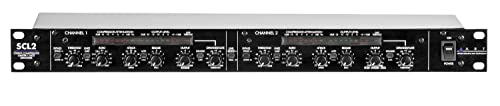
- Dual-channel or linked-stereo operation
- Compression, limiting, expansion, and gating
- Balanced XLR/TRS connections with LED metering
Best For: Live rigs needing flexible stereo dynamics control
Feature-Packed Stage Processor

- Dual-channel compression with peak limiting
- Built-in noise gate and feedback suppression
- XLR/TRS connectivity in a 1U rackmount design
Best For: Vocal-oriented stage systems needing integrated processing
Classic Single-Channel Character

- Fully discrete signal path
- Custom CineMag USA transformers
- Supports the “all buttons in” setting
Best For: Single-channel classic-style compression with character
Best All-in-One Channel Strip
dbx 286s Mic Preamp and Processor

- Compression, de-esser, enhancer, and expander/gate
- XLR and 1/4-inch inputs with loop-out
- 1U rackmount design with LED monitoring
Best For: Vocal and instrument processing with integrated channel-strip functions
Best Dual-Channel Vocal Control
Professional Rackmount Compressor/Limiter

- Two channels with Overeasy compression
- Noise gate, LED metering, and sidechain insert
- XLR/TRS I/O for mixers and PA systems
Best For: Live vocals, streaming, and flexible two-channel dynamics control
Best Compact Black Rack Unit
Dual-Channel Dynamic Processor

- Overeasy compression with auto attack/release
- Noise gate, LED indicators, and sidechain insert
- XLR/TRS connectivity in a 1U chassis
Best For: Compact live, streaming, and vocal-processing racks
Tour-Ready Dynamics Control – dbx 266xs Compressor/Gate
The dbx 266xs is a practical choice among audio compressors for live sound when you need straightforward control over uneven levels, instrument sustain, drum impact, and overall mix tightness. Its compressor and gate are housed in a 1U rack unit, with separate LED displays to help speed setup during live work.
Best For: Portable rigs, touring setups, and live engineers who want compressor-and-gate processing with quick visual monitoring.
Pros:
- Combines compression and gating in one 1U processor.
- Program-adaptive expander/gates use smooth release characteristics.
- Separate LED displays show gain reduction, compression threshold, and gate threshold.
- Designed to smooth levels, add sustain, fatten drums, or tighten mixes.
Cons:
- Uses a full 1U rack space rather than a compact 500 Series slot.
- Its signal format is analog, so it is not a digital plug-in solution.
Choose the 266xs if hands-on controls, visible metering, and combined compression/gate functionality matter more than minimizing rack space.
Dual-Channel Stage Processing – Behringer MDX2600 Compressor
The Behringer Composer Pro-XL MDX2600 is a two-channel compressor, limiter, and gate for audio compressors for live sound applications. Its independent channel format can suit setups that need dynamics processing across multiple sources, while its portable design and corded power support rack-based production workflows.
Best For: Live sound and audio production setups needing two-channel compressor, limiter, and gate processing.
Pros:
- Provides two channels of compressor, limiter, and gate processing.
- Supports audio production, mixing, and mastering uses in addition to live sound.
- Portable design and corded electric operation fit fixed or mobile systems.
Cons:
- The supplied notes provide limited detail about its controls and metering.
- Its listed specifications contain mixed product-description fields, so verify configuration before purchase.
The MDX2600 is worth considering when two-channel dynamics processing is the priority, but buyers who need specific sidechain, metering, or control details should confirm those features before ordering.
500-Series Precision Compression – dbx DBX560A Stereo Compressor
The dbx DBX560A is a compact 500 Series stereo compressor/limiter for audio compressors for live sound, broadcast, touring, and studio applications. Its analog VCA design offers selectable OverEasy and Hard Knee curves, while wide-ranging controls and RMS detection support both subtle vocal smoothing and more assertive peak limiting.
Best For: 500 Series users who need compact stereo compression, from gentle vocal control to hard-hitting drum processing.
Pros:
- Fits one 500 Series rack slot and weighs 11.2 ounces.
- Offers switchable OverEasy and Hard Knee compression curves.
- Can cover subtle compression through brick-wall peak limiting.
- Provides LED monitoring for input, output, and gain reduction.
Cons:
- Requires a compatible 500 Series rack or enclosure.
- Its compact format may provide less front-panel space than a full 1U processor.
The DBX560A is a strong fit when rack density and flexible analog compression matter. Confirm that your system supports 500 Series modules before choosing it for a live rig.
Vocal-Focused Dynamics Bundle – Behringer MDX2600 with XLR Cable
This Behringer Composer Pro-XL MDX2600 bundle combines a two-channel compressor, expander, and gate with a 10-foot XLR microphone cable. For audio compressors for live sound, it adds vocal-oriented tools such as a de-esser, plus peak limiting, sidechain connections, and stereo-link or independent processing options.
Best For: Live vocal chains and small systems that need flexible dynamics processing plus a ready-to-use XLR cable.
Pros:
- Provides independent or stereo-linked two-channel processing.
- Integrated de-esser includes male and female voice detection modes.
- Includes tube simulation, dynamic enhancement, and interactive-knee processing.
- Sidechain input/output supports ducking and frequency-dependent compression.
Cons:
- The included cable is only 10 feet long.
- Its broader feature set may require more setup than a basic compressor.
- The supplied notes list a one-year limited warranty.
The bundle is especially useful when vocal control and connectivity are both priorities. Its de-esser, limiter, and sidechain options provide room to tailor live sources beyond basic level smoothing.
Flexible Rack Control – ART SCL2 Dual/Stereo Compressor
The ART SCL2 is a versatile choice among audio compressors for live sound, combining compression, limiting, expansion, and gating in a dual-channel rackmount design. Balanced XLR and 1/4-inch TRS connections support straightforward integration with professional signal chains.
Best For: Live rigs and installed systems needing dual-channel or linked-stereo dynamics control.
Pros:
- Supports dual-channel or linked-stereo operation.
- Includes compression, limiting, expansion, and gate functions.
- Offers selectable automatic or manual attack and release controls.
- Provides precise LED level meters and balanced XLR/TRS connectivity.
Cons:
- Its broad feature set may require more setup time than a dedicated compressor.
- It is a full-size 1U rackmount unit rather than a compact processor.
With stereo linking, flexible timing controls, and clear metering, the SCL2 is a practical all-around dynamics processor for live sound systems that need more than compression alone.
Feature-Packed Stage Processor – 2-Channel Audio Compressor
This 2-channel processor is designed for audio compressors for live sound applications where compression, peak limiting, and noise reduction are needed in one 1U rackmount unit. XLR and 1/4-inch TRS connectivity makes it suitable for stage, streaming, and studio signal paths.
Best For: Vocal-focused live setups that want compression alongside noise gating, feedback suppression, and DSP processing.
Pros:
- Provides dual-channel compression and peak limiting.
- Includes a built-in noise gate for reducing unwanted background noise.
- Offers feedback suppression, anti-howling processing, and DSP reverb.
- Uses XLR and 1/4-inch TRS inputs and outputs for flexible routing.
Cons:
- The many processing features may be more than a simple compression-only setup requires.
- The supplied notes do not specify detailed attack, release, or ratio controls.
This unit stands out as a multifunction stage processor, especially when vocal clarity, feedback management, and peak control are priorities in a live system.
Classic Single-Channel Character – Warm Audio WA76 Compressor
The Warm Audio WA76 takes a focused approach to audio compressors for live sound and professional audio applications, providing a single discrete compression channel in a classic-style metal chassis. Its transformer-coupled design and famous “all buttons in” setting emphasize character as well as dynamics control.
Best For: Engineers who want one dedicated compressor channel with a classic 1176-inspired design and discrete signal path.
Pros:
- Uses a fully discrete signal path.
- Includes custom CineMag USA transformers.
- Supports the distinctive “all buttons in” ratio setting.
- Maintains a classic ’76-style design and performance approach.
Cons:
- Provides only one compressor channel.
- It is less suited to systems requiring stereo or multiple-channel processing from one unit.
- The supplied notes identify a DC power supply rather than a broad range of power options.
The WA76 is a specialized choice for adding a classic discrete compressor design to a signal chain, but buyers needing stereo control or integrated gating should look elsewhere.
Best All-in-One Channel Strip – dbx 286s Mic Preamp and Processor
For buyers comparing audio compressors for live sound, the dbx 286s combines microphone or instrument preamplification with compression, de-essing, enhancement, and expander/gate functions. Its rackmount design, status LEDs, and XLR and 1/4-inch connectivity make it a practical front-end processor for vocals and electronic instruments.
Best For: Vocalists, presenters, and live-sound setups needing compression plus several channel-strip tools in one 1U unit.
Pros:
- Combines compression, de-esser, enhancer, and expander/gate processing.
- Accepts XLR microphone and 1/4-inch TRS line inputs.
- LED status monitoring and loop-out support simplify setup and expansion.
- Rackmountable 1U chassis includes rack screws and washers.
Cons:
- Provides one channel.
- Its broad channel-strip feature set may be more than needed if compression alone is required.
The dbx 286s is a strong choice when vocal control, de-essing, and tone enhancement matter as much as compression. Choose it over a dedicated dual-channel unit when you want an integrated mic-preamp workflow.
Best Dual-Channel Vocal Control – Professional Rackmount Compressor/Limiter
This dual-channel unit is a flexible option among audio compressors for live sound, with XLR/TRS connectivity for mixers, PA systems, and interfaces. Overeasy compression, adjustable attack and release, LED metering, a noise gate, and a sidechain insert support both straightforward level control and more targeted dynamic shaping.
Best For: Live vocalists, streaming setups, and small professional systems that need two channels of compression with gating and sidechain control.
Pros:
- Dual-channel design handles vocals, guitars, drums, and other sources.
- Adjustable attack and release allow detailed dynamic control.
- Includes a noise gate, LED metering, and sidechain insert.
- XLR and 1/4-inch TRS inputs and outputs integrate with common audio hardware.
Cons:
- The supplied specifications do not identify the unit’s brand or model name.
- Its 1U rackmount format requires suitable rack or surface space.
With two channels and a useful set of routing and monitoring features, this compressor suits users who want more flexibility than a single-channel processor. The two-year warranty is an additional consideration for buyers building a longer-term rack setup.
Best Compact Black Rack Unit – Dual-Channel Dynamic Processor
For audio compressors for live sound, this compact 1U dual-channel processor offers Overeasy compression, auto attack/release settings, noise gating, and sidechain capability. XLR and 1/4-inch TRS connections make it suitable for integrating with a live mixer, PA, or recording setup.
Best For: Buyers wanting a compact black rackmount compressor with automatic timing options and vocal-focused VCA processing.
Pros:
- Dual-channel design supports multiple sound sources.
- Auto attack/release settings provide a simpler starting point for dynamics control.
- Includes independent LED indicators, noise gate, and sidechain insert.
- Classic VCA circuitry is designed to enhance vocal warmth and detail.
Cons:
- The supplied details do not specify individual channel-linking functions.
- Its compact rackmount format still occupies a full 1U of rack space.
This model is a practical fit for live and streaming rigs that value straightforward controls, visual feedback, and automatic timing. Its sidechain and gate functions also give it useful flexibility beyond basic compression.
How We Picked the Best Audio Compressors for Live Sound
We focused on the features that matter during rehearsals, performances, and system setup: reliable gain control, intuitive metering, useful attack and release ranges, flexible connectivity, and practical channel configurations. We also considered whether each unit is better suited to vocals, instruments, subgroups, front-of-house duties, monitors, or mobile rigs.
Because live systems vary widely, the list includes simple compressors as well as models with gates, de-essers, expanders, limiters, sidechain inserts, and microphone preamps. These additions can reduce the need for separate processors, but they may also add controls you do not need.
Quick Comparison
- Best for portable rack systems: Compact 1U dual-channel compressors with balanced XLR/TRS connections.
- Best for vocal channels: Channel strips or compressors with de-essing, gating, and straightforward metering.
- Best for stereo sources: Dual-channel units with stereo-link controls and consistent channel matching.
- Best for detailed control: Professional compressors offering sidechain inserts, variable timing controls, and broad threshold and ratio ranges.
- Best for analog character: Single-channel discrete compressors designed around classic recording workflows.
Key Buying Factors for Audio Compressors for Live Sound
Channel Count and Stereo Linking
A two-channel unit is usually the most flexible choice for a small rack because it can process two independent sources or a stereo bus. Confirm that the compressor supports stereo linking if you plan to use it on keyboards, playback, or a main mix.
Controls and Metering
Look for threshold, ratio, attack, release, makeup gain, and bypass controls at minimum. LED gain-reduction meters make it easier to set consistent compression under changing stage conditions. Automatic timing can be convenient, while manual controls offer more precision.
Gates, Expanders, and De-Essers
A gate or expander can reduce stage bleed on drums and microphones. A de-esser is useful for harsh vocal sibilance, but it is not essential for every source. Extra processing is valuable when it replaces another rack unit without making operation confusing.
Connections and Installation
Check for balanced XLR and TRS inputs and outputs, sidechain inserts, and rack compatibility. Sidechain access is especially useful for frequency-conscious compression, such as reducing bass-driven pumping on a vocal or ducking a signal from an external trigger.
Compression Style and Headroom
For live sound, predictable control and clean headroom generally matter more than extreme coloration. A studio-style single-channel compressor can work well on featured vocals or instruments, while a transparent dual-channel processor is often more practical for general system duties.
Who Should Buy Which Audio Compressors for Live Sound?
Choose a dual-channel rack compressor if you need flexible processing for vocals, instruments, monitors, or stereo sources in a portable system. Choose a channel strip if one microphone or instrument needs compression plus gating, de-essing, enhancement, or preamp control in one unit.
Choose a single-channel discrete compressor when tone and hands-on control are priorities for a lead vocal, bass, or featured instrument. Choose a basic compressor/limiter when you want dependable peak management without paying for advanced routing or extra effects.
Before buying, verify the unit’s rack space, connector format, operating workflow, and available headroom. The best compressor is the one your team can set quickly, monitor confidently, and integrate cleanly into the signal chain.