Compact mesh WiFi systems make it easier to eliminate dead zones without filling your home with bulky networking equipment. The right kit can deliver steadier coverage, simpler management, and enough capacity for today’s connected devices.
We compare 10 options across WiFi generations, coverage, device capacity, Ethernet features, and pack sizes so you can choose a system that fits your floor plan and internet plan.
Best 10 Compact Mesh Wifi Systems Picks for 2026
Best Budget Coverage

- Covers up to 3,500 square feet
- Supports up to 80 connected devices
- Simple app setup and mesh management
Best For: Budget-focused homes needing straightforward whole-home coverage
Best All-Around Wi-Fi 6

- Covers up to 6,500 square feet
- Supports up to 150 devices
- Three Gigabit ports per unit
Best For: Large, device-heavy homes wanting flexible Wi-Fi 6 coverage
Best for Easy Gigabit Networking
Amazon eero 6+ Mesh Wi-Fi 3-Pack

- Supports internet plans up to a gigabit
- Covers up to 4,500 square feet
- Includes Thread and Zigbee smart-home hub
Best For: Households wanting simple setup and integrated smart-home connectivity
Best for Wi-Fi 6E Performance
TP-Link Deco XE75 Wi-Fi 6E 3-Pack

- Tri-band Wi-Fi 6E with 6 GHz support
- Covers up to 7,200 square feet
- Supports up to 200 connected devices
Best For: Large, high-traffic homes with Wi-Fi 6E-compatible devices
Best Single-Unit Pick

- Covers up to 2,200 square feet
- Dual-band Wi-Fi 5 connectivity
- Compact single-router design
Best For: Smaller homes and apartments
Best Wi-Fi 6 Value
TP-Link Deco X15 AX1500 2-Pack

- Wi-Fi 6 AX1500 dual-band system
- Covers up to 3,900 square feet
- Supports up to 120 devices
Best For: Busy medium-to-large homes
Best Whole-Home Coverage
- Covers up to 5,500 square feet
- Three-unit seamless mesh network
- Six Gigabit Ethernet ports
Best For: Large homes needing broad coverage
Best for Large Homes
- Wi-Fi 6 AX1500 dual-band mesh
- Covers up to 5,600 square feet
- Six Gigabit ports with wired backhaul
Best For: Larger homes and busy connected households
Best Performance Pick

- Wi-Fi 6 AX3000 dual-band performance
- Supports up to 150 devices
- Six Gigabit ports across two units
Best For: Device-heavy homes and faster wireless networking
Best Budget-Friendly Choice

- Wi-Fi 5 AC1900 mesh networking
- Covers up to 3,800 square feet
- Simple roaming and parental controls
Best For: Smaller homes seeking straightforward mesh coverage
Best Budget Coverage – Tenda Nova MW5G 3-Pack
For shoppers seeking compact mesh wifi systems on a budget, the Tenda Nova MW5G 3-pack offers straightforward whole-home coverage with Wi-Fi 5 performance. It covers up to 3,500 square feet, supports up to 80 devices, and uses one network name for easier roaming between nodes.
Best For: Budget-minded households that want simple coverage expansion and basic mesh management.
Pros:
- Up to 3,500 square feet of dual-band coverage
- Gigabit Ethernet ports and support for wired devices
- App-based setup, monitoring, and network management
- MU-MIMO, beamforming, guest networking, and WPA2-PSK security
Cons:
- Uses older Wi-Fi 5 technology rather than Wi-Fi 6 or 6E
- Basic firewall security may be less robust than newer alternatives
- Advertised coverage and device capacity depend on home layout and network conditions
The MW5G is a practical pick when affordability and uncomplicated coverage matter more than the latest wireless standards. Its compact three-node format and simple app controls make it a sensible option for smaller or medium-sized homes.
Best All-Around Wi-Fi 6 – TP-Link Deco X55 3-Pack
The TP-Link Deco X55 is one of the most versatile compact mesh wifi systems for busy homes. Its Wi-Fi 6 AX3000 platform covers up to 6,500 square feet, supports up to 150 devices, and includes three Gigabit Ethernet ports on each unit.
Best For: Larger households with many connected devices, wired backhaul needs, and an interest in current-generation Wi-Fi 6.
Pros:
- Up to 6,500 square feet of Wi-Fi 6 coverage
- Supports up to 150 devices
- Three Gigabit Ethernet ports per unit
- Includes wired Ethernet backhaul, app control, and basic HomeShield features
Cons:
- Modem required for most internet service providers
- Some advanced HomeShield features may require a subscription
- Three-unit coverage can be more than needed for smaller homes
With generous coverage, high device capacity, and flexible Ethernet connectivity, the Deco X55 is a strong middle-ground choice. It suits households that want more headroom than entry-level mesh kits without moving to tri-band Wi-Fi 6E.
Best for Easy Gigabit Networking – Amazon eero 6+ Mesh Wi-Fi 3-Pack
The Amazon eero 6+ is a streamlined choice among compact mesh wifi systems, supporting internet plans up to a gigabit and covering up to 4,500 square feet with a three-pack. Its app-led setup and automatic TrueMesh routing focus on making reliable home networking easy to manage.
Best For: Families and smart-home users who prioritize simple setup, dependable roaming, and broad device compatibility.
Pros:
- Supports gigabit internet plans
- Up to 4,500 square feet of coverage
- Supports more than 75 connected devices
- Built-in Thread and Zigbee smart-home hub with Alexa compatibility
Cons:
- Online security and additional management tools require a separate subscription
- Does not state a three-band radio design in the supplied specifications
- Modem or internet gateway requirements depend on the service setup
The eero 6+ emphasizes convenience rather than extensive manual configuration. It is particularly appealing if you want an app-guided system that can also serve as a hub for compatible Thread and Zigbee smart-home devices.
Best for Wi-Fi 6E Performance – TP-Link Deco XE75 Wi-Fi 6E 3-Pack
For buyers who want forward-looking performance from compact mesh wifi systems, the TP-Link Deco XE75 adds a dedicated 6 GHz band to its tri-band design. The three-pack covers up to 7,200 square feet, offers combined speeds up to 5,400 Mbps, and supports up to 200 devices.
Best For: Large homes with compatible Wi-Fi 6E devices, heavy traffic, and a need for additional wireless capacity.
Pros:
- Tri-band Wi-Fi 6E with a new 6 GHz band
- Up to 7,200 square feet of coverage
- Supports up to 200 devices
- 6 GHz can provide wireless backhaul or serve compatible client devices
Cons:
- The benefits of 6 GHz require compatible Wi-Fi 6E devices
- Each unit uses Gigabit Ethernet ports rather than faster multi-gigabit ports
- Modem required for most internet service providers
The Deco XE75 is the most performance-focused option in this group, especially for newer Wi-Fi 6E clients and large, busy networks. Its 6 GHz band can also help node-to-node connections, though older devices will continue using the 2.4 GHz and 5 GHz bands.
Best Single-Unit Pick – Google Nest Wifi AC2200
Google Nest Wifi - AC2200 - Mesh WiFi System - Wifi Router - 2200 Sq Ft Coverage - 1 pack
Check Price On AmazonThe Google Nest Wifi AC2200 is a straightforward option for shoppers seeking compact mesh wifi systems for a smaller home or apartment. This single router provides up to 2,200 square feet of coverage and uses dual-band Wi-Fi 5 connectivity.
Best For: Smaller homes, apartments, and buyers who want a simple single-unit mesh router.
Pros:
- Up to 2,200 square feet of coverage from one router
- Dual-band 2.4GHz and 5GHz connectivity
- Supports WPA2-Enterprise and WPA3 security protocols
- Compact 4.33-inch square design with internal antennas
Cons:
- Single-unit package is less suited to larger homes
- Uses Wi-Fi 5 rather than Wi-Fi 6
- Only one listed port
Choose the Nest Wifi when uncomplicated coverage matters more than the latest wireless standard or extensive wired connectivity. Additional Nest Wifi routers can expand coverage to up to 4,400 square feet.
Best Wi-Fi 6 Value – TP-Link Deco X15 AX1500 2-Pack
The TP-Link Deco X15 2-pack is a practical choice among compact mesh wifi systems when you want newer Wi-Fi 6 performance and broader coverage. The two-unit system covers up to 3,900 square feet, supports up to 120 devices, and offers dynamic backhaul.
Best For: Medium-to-large homes with many connected devices and a preference for Wi-Fi 6.
Pros:
- Wi-Fi 6 AX1500 dual-band performance
- Coverage of up to 3,900 square feet
- Supports up to 120 devices
- Four Gigabit Ethernet ports across the two-pack, with wired backhaul support
Cons:
- Two-unit system may be more than a small apartment needs
- Some advanced security and control features are part of the premium service
- Requires a modem for most internet service providers
The Deco X15 stands out for combining compact mesh coverage with Wi-Fi 6, app management, parental controls, guest networking, and Alexa or Google Assistant support. It is the stronger fit when capacity and expansion flexibility are priorities.
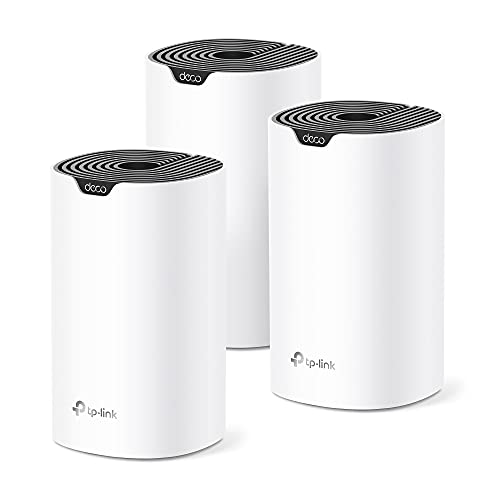
Best Whole-Home Coverage – TP-Link Deco S4 AC1900 3-Pack
The TP-Link Deco S4 3-pack is designed for shoppers who need extensive coverage from compact mesh wifi systems. Its three units create one network across up to 5,500 square feet, with automatic roaming and support for up to 100 devices.
Best For: Large homes that need broad coverage, seamless roaming, and multiple wired connection points.
Pros:
- Three-unit system covers up to 5,500 square feet
- AC1900 speeds support up to 100 connected devices
- Seamless roaming uses one network name and password
- Six Gigabit Ethernet ports and wired backhaul support
Cons:
- Uses Wi-Fi 5 rather than Wi-Fi 6
- Three units may be excessive for smaller spaces
- Requires a modem for most internet providers
The Deco S4 is a sensible coverage-first option, especially for larger layouts with dead zones. Its app-based setup, parental controls, Alexa support, and wired backhaul add useful flexibility without requiring separate extender networks.
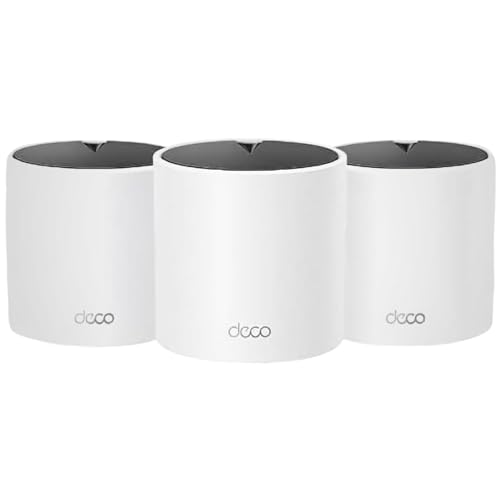
Best for Large Homes – TP-Link Deco X15 3-Pack
For shoppers comparing compact mesh wifi systems, the TP-Link Deco X15 3-Pack is a practical choice when you need broad coverage from a three-unit setup. Its Wi-Fi 6 dual-band design covers up to 5,600 square feet, supports up to 120 devices, and uses a single network name for seamless roaming.
Best For: Larger homes, busy households, and users who want wired backhaul flexibility.
Pros:
- Up to 5,600 square feet of coverage from the three-pack.
- Wi-Fi 6 speeds up to AX1500 and support for up to 120 devices.
- Six Gigabit Ethernet ports total, with wired Ethernet backhaul support.
- Deco app setup, parental controls, guest networking, and voice-assistant support.
Cons:
- Its dual-band AX1500 design is less capable than the faster X55 system.
- A modem is required for most internet service providers.
The X15 stands out for coverage and expandability rather than peak throughput. It is a sensible compact mesh wifi system for spreading reliable Wi-Fi throughout a larger home, especially if you can use Ethernet backhaul.
Best Performance Pick – TP-Link Deco X55 2-Pack
The TP-Link Deco X55 2-Pack is a strong option among compact mesh wifi systems when speed and device capacity matter. Its Wi-Fi 6 AX3000 hardware covers up to 4,500 square feet, supports up to 150 devices, and includes three Gigabit ports on each unit.
Best For: Homes with many connected devices, streaming users, and households seeking faster Wi-Fi 6 performance.
Pros:
- AX3000 Wi-Fi 6 performance with up to 2,402 Mbps on 5 GHz and 574 Mbps on 2.4 GHz.
- Supports up to 150 devices and covers up to 4,500 square feet.
- Six Gigabit Ethernet ports total and wired Ethernet backhaul support.
- Includes AI-driven mesh management, app-based setup, and basic HomeShield features.
Cons:
- The two-pack has less stated coverage than the three-unit Deco X15 package.
- Advanced HomeShield features may require additional service beyond the no-cost features.
Choose the X55 if you prioritize higher stated wireless capacity and support for more devices than the X15. It offers a capable two-unit layout with useful wired networking options for performance-focused homes.
Best Budget-Friendly Choice – TP-Link Deco S4 2-Pack
The TP-Link Deco S4 2-Pack is a straightforward choice for shoppers seeking compact mesh wifi systems without moving to Wi-Fi 6. Its Wi-Fi 5 AC1900 mesh covers up to 3,800 square feet, provides one network name for roaming, and supports up to 75 devices.
Best For: Smaller homes, basic streaming and browsing, and buyers who want simple mesh coverage with parental controls.
Pros:
- Two-unit mesh coverage of up to 3,800 square feet.
- AC1900 Wi-Fi 5 performance supports up to 75 devices.
- Seamless roaming under one network name and password.
- Two Gigabit Ethernet ports per unit and wired backhaul support.
Cons:
- Uses Wi-Fi 5 rather than the newer Wi-Fi 6 standard.
- Supports fewer devices and offers less coverage than the X15 and X55 systems.
The Deco S4 is best viewed as a simple coverage upgrade rather than a high-capacity performance system. It makes sense when your home is moderately sized and your priority is eliminating dead zones with easy setup and basic family controls.
How We Picked These Compact Mesh Wifi Systems
We selected systems that balance coverage, performance, installation simplicity, and value in a relatively compact multi-node design. The lineup includes affordable WiFi 5 models, newer WiFi 6 systems, and a WiFi 6E option for buyers who want access to the less-congested 6GHz band. We also considered two- and three-pack configurations because node count can matter as much as advertised square footage.
Advertised coverage is a useful starting point, not a guarantee. Walls, floors, interference, node placement, and internet speed all affect real-world results.
Quick Comparison
| Best For | Recommended Type | Why It Stands Out |
|---|---|---|
| Small homes and budgets | WiFi 5 dual-band | Lower cost and straightforward coverage |
| Busy households | WiFi 6 | Better efficiency with many connected devices |
| Gigabit internet | WiFi 6 or WiFi 6E | More capacity for fast plans and demanding use |
| Large or multi-floor homes | Three-pack system | More flexible node placement |
Key Buying Factors for Compact Mesh Wifi Systems
WiFi Standard and Speed
WiFi 5 systems can be a sensible value for modest broadband plans, streaming, and everyday browsing. WiFi 6 is generally the better all-around choice for newer phones, laptops, smart-home devices, and households with simultaneous traffic. WiFi 6E adds 6GHz support, but compatible client devices are required to benefit from it.
Coverage and Pack Size
Choose the number of nodes based on your layout rather than simply buying the largest advertised coverage figure. A two-pack often suits an apartment or smaller home, while a three-pack provides more placement flexibility in a larger or multi-level space. Avoid placing nodes in dead zones; each satellite needs a strong connection to the network.
Backhaul, Ethernet, and Ports
Dual-band systems share wireless capacity between client devices and mesh communication. Tri-band models can provide an additional band for backhaul, which may help maintain performance when nodes are connected wirelessly. Gigabit Ethernet ports are useful for wired backhaul, desktop computers, smart TVs, and game consoles.
Management and Compatibility
Check the companion app, parental-control features, guest networking, security tools, and support for your existing modem or router. A mesh system normally replaces the router function, although bridge or access-point modes may be available for specialized setups.
Who Should Buy Which Compact Mesh Wifi Systems?
Choose a two-pack WiFi 6 system for a compact home or apartment that needs better coverage and modern device efficiency. Choose a three-pack WiFi 6 kit for a family home with several rooms, floors, or many simultaneous users. A WiFi 6E system makes the most sense for buyers with compatible 6GHz devices, a fast internet plan, and a preference for longer-term networking hardware. Choose a WiFi 5 system when affordability is the priority and your broadband plan and devices do not justify newer standards.