A well-placed attic antenna can deliver free local channels without the weather exposure, roof work, or visible hardware of an outdoor installation. The best setup depends on your distance from broadcast towers, building materials, and the number of TVs you want to connect.
We compared 10 attic-capable TV antennas across reception design, claimed range, mounting flexibility, signal distribution, and support for current high-definition broadcasts. Use the guide below to narrow the list to the right fit for your home.
Best 10 Attic TV Antennas Picks for 2026
Best Long-Range Pick
Five Star 200-Mile HDTV Antenna
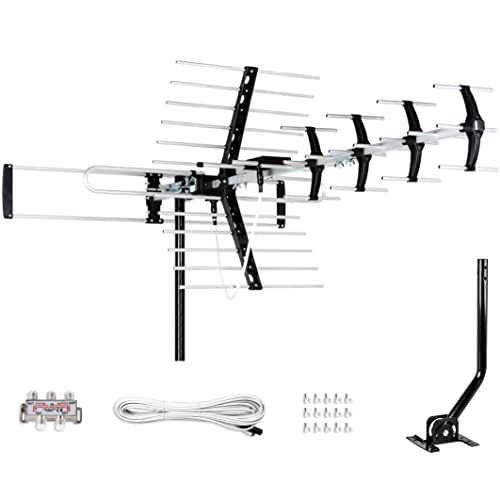
- VHF/UHF reception with 4K and ATSC 3.0 support
- Includes J-pole, splitter, bracket, and instructions
- Suitable for attic, roof, or outdoor installation
Best For: Households needing a long-range, multi-TV antenna setup
Best Durable Design
Antennas Direct ClearStream 4V
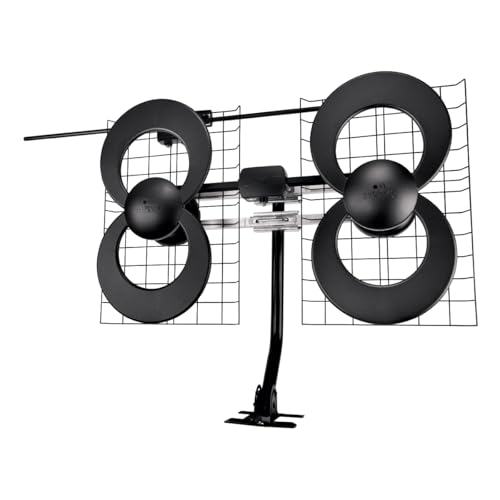
- Four loops, Hi-VHF elements, and reflectors
- Supports NEXTGEN TV, 4K, 8K, and 1080p
- Includes pivoting mast and lifetime warranty
Best For: Users prioritizing durable construction and focused reception
Best Yagi-Style Option
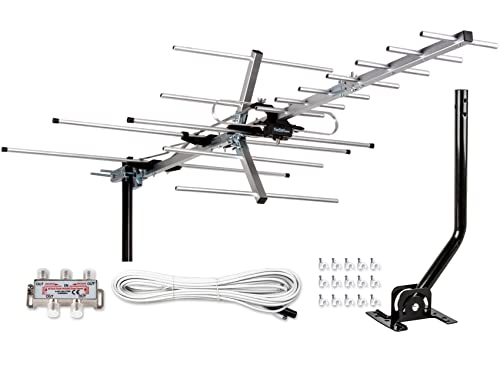
- VHF/UHF antenna with 4K and HD support
- Includes 40-foot cable, J-pole, splitter, and clips
- Weather-resistant design with FM compatibility
Best For: DIY multi-TV installations needing a complete accessory kit
Best Easy-Install Option

- Omnidirectional VHF/UHF reception without rotating
- Built-in preamplifier and 4G LTE filter
- Includes 32-foot RG6U coaxial cable
Best For: Single-TV attic or RV setups needing simple placement
Best for Easy Setup
GE Outdoor HD Digital TV Antenna

- Up to 70+ miles of stated VHF/UHF reception
- Attic or outdoor mounting with included J mount
- Supports 4K, 8K, and ATSC 3.0 broadcasts
Best For: Homes needing a versatile, weather-resistant long-range antenna
Best Rotating Setup
PIBIDI Amplified Attic/Outdoor Antenna
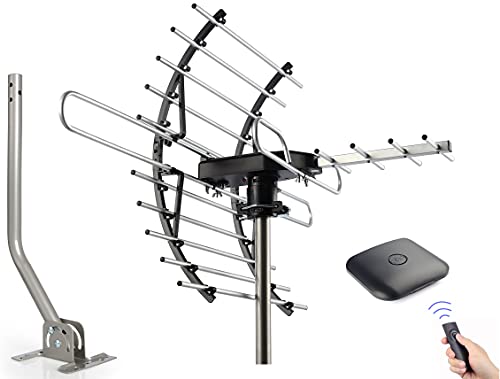
- Remote-controlled 360° rotation for aiming adjustments
- Amplifier and LTE filter for signal processing
- Includes 40-foot RG6 cable and mounting pole
Best For: Attics where broadcast towers require frequent directional adjustment
Best Multi-Directional Design
Antennas Direct ClearStream 2V

- Multi-directional UHF and Hi-VHF reception
- Reflector helps focus signals and limit interference
- Pivoting 20-inch mast supports attic or outdoor mounting
Best For: Suburban and rural homes needing flexible multi-directional reception
Long-Range Yagi Pick
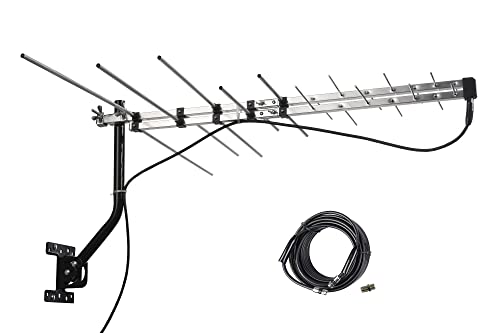
- VHF/UHF reception support
- Compatible with 4K and HD broadcasts
- Mostly pre-assembled, weather resistant
Best For: Attic or outdoor VHF/UHF installations
Multi-Directional Performance Pick

- Eight-element multi-directional bowtie design
- 17.4 dB listed gain and 70+ mile range
- Includes mounting hardware and lifetime warranty
Best For: UHF reception in rural or suburban locations
Complete Installation Bundle
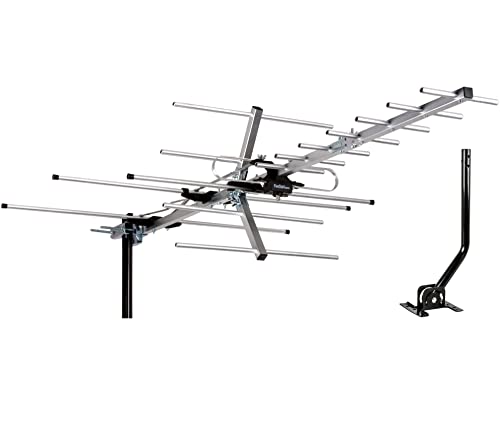
- VHF/UHF Yagi reception
- Includes 40-foot coax cable and pole
- Weather-proof design for flexible mounting
Best For: DIY attic installations needing included accessories
Best Long-Range Pick – Five Star 200-Mile HDTV Antenna
If you want attic TV antennas with broad VHF and UHF coverage, this Five Star model is a feature-rich option. It supports 4K and 1080p reception, includes a J-pole and splitter, and can be installed in an attic, on a roof, or in other outdoor locations. Actual reception depends on tower distance, trees, building materials, and other obstructions.
Best For: Households seeking a long-range antenna with included hardware for multiple TVs.
Pros:
- Supports VHF and UHF signals, 4K, 1080p, and ATSC 3.0.
- Includes a mounting bracket, J-pole, TV splitter, and installation instructions.
- Designed for attic, roof, chimney, eave, mast, or exterior installation.
Cons:
- The advertised 200-mile range varies significantly with local conditions.
- Its large 46-inch length may require more attic installation space.
- A channel scan is required after setup and periodically when channels are lost.
This is a practical choice when you need a sizable attic TV antenna and want the flexibility to distribute reception to multiple televisions. Plan placement carefully, since antenna size and local obstructions can affect results.
Best Durable Design – Antennas Direct ClearStream 4V
The ClearStream 4V is a strong candidate among attic TV antennas for shoppers who prioritize signal-focused design and durable construction. Its four loops, Hi-VHF elements, reflectors, and pivoting mast support indoor attic or outdoor installation, while the 43-degree reception pattern is designed to capture signals from multiple directions.
Best For: Viewers who want a durable, reflector-equipped antenna with flexible mounting options and a lifetime manufacturer warranty.
Pros:
- Supports UHF and Hi-VHF reception, including NEXTGEN TV, 4K, 8K, and 1080p.
- Reflectors help focus reception and protect against interference that can cause pixelation.
- Includes a 20-inch mast, mounting hardware, adjustable clamp, and lifetime manufacturer warranty.
Cons:
- The listed maximum range is 70 miles, less than some competing models.
- Reception depends on tower location, distance, trees, and building materials.
- The directional reception pattern may require more careful placement than an omnidirectional antenna.
With its compact profile and included mounting components, the ClearStream 4V offers a well-rounded setup for an attic or exterior location. It is especially appealing when interference control and build quality matter more than the largest advertised range.
Best Yagi-Style Option – Five Star Yagi HD Antenna
This Five Star Yagi is worth considering if you want attic TV antennas with a traditional extended-element design and a generous installation kit. It receives VHF and UHF channels, supports 4K and HD formats, and includes a 40-foot coaxial cable, J-pole, splitter, and mounting accessories for a flexible attic or roof setup.
Best For: DIY installers who need a Yagi-style antenna and cable accessories for serving several TVs.
Pros:
- Supports VHF and UHF reception with 4K, 1080p, 1080i, and 720p channels.
- Includes a 40-foot coaxial cable, 20-inch J-pole, four-way splitter, and cable clips.
- Weather-resistant design is described as suitable for wind, rain, and outdoor installation.
- Compatible with radio/FM reception.
Cons:
- The advertised 200-mile range depends on tower distance and obstructions.
- Full assembly is required, even though some parts arrive pre-assembled.
- A splitter can reduce signal strength available to each connected TV.
This model makes sense for shoppers who want a complete, cable-inclusive installation package. Its Yagi format and extended elements may require thoughtful positioning, but the included accessories simplify planning a multi-TV setup.
Best Easy-Install Option – 1byone 360° Amplified Antenna
For shoppers comparing compact attic TV antennas, the 1byone 360° model emphasizes simple placement rather than a large traditional antenna frame. Its omnidirectional design receives VHF and UHF signals from all directions, while the built-in preamplifier and 4G LTE filter are intended to improve reliability and reduce interference.
Best For: Single-TV setups in attics, RVs, or other locations where easy installation and no manual rotation are priorities.
Pros:
- 360-degree reception eliminates the need to rotate the antenna.
- Built-in preamplifier and 4G LTE filter help address signal loss and interference.
- Includes a 32-foot RG6U coaxial cable and accessories for straightforward installation.
- Moisture-proof and flame-retardant materials support outdoor use.
Cons:
- Designed to support one TV; splitting the signal may reduce available channels.
- The listed range is up to 100 miles and varies with local broadcast conditions.
- Amplification does not eliminate problems caused by towers, obstructions, or poor placement.
This is the most convenient option in the group for a single television because it does not require directional aiming. Choose it when compact installation and broad directional coverage are more important than distributing one antenna to multiple TVs.
Best for Easy Setup – GE Outdoor HD Digital TV Antenna
For shoppers comparing attic tv antennas, the GE Outdoor HD Digital TV Antenna is a practical long-range option designed for hidden attic installation or outdoor mounting. It supports VHF and UHF reception, 4K and 8K Ultra HD broadcasts, and includes a J mount for setup flexibility.
Best For: Homes that want a weather-resistant attic or outdoor antenna with up to 70+ miles of stated reception range.
Pros:
- Supports VHF and UHF signals with a stated range of up to 70+ miles.
- Designed for hidden attic installation as well as outdoor mounting.
- Works with standard coax connections on TVs and converter boxes.
- Includes ATSC 3.0 support and a limited-lifetime replacement pledge.
Cons:
- Its larger 29-by-15-by-20.5-inch design may require careful attic placement.
- Reception will still depend on local broadcast towers and building obstructions.
The GE is a strong all-around choice when range, installation flexibility, and long-term support matter. Its weather-resistant construction also makes it suitable for shoppers who may later move the antenna outdoors.
Best Rotating Setup – PIBIDI Amplified Attic/Outdoor Antenna
The PIBIDI amplified antenna stands out among attic tv antennas for its remote-controlled 360° rotation. Its amplifier, LTE filter, mounting pole, and included 40-foot RG6 cable make it a convenient option for fine-tuning reception from inside the home.
Best For: Attic installations where broadcast towers may sit in different directions and remote repositioning would be useful.
Pros:
- 360° remote rotation lets you adjust aiming without returning to the attic or roof.
- Automatic gain control, a low-noise amplifier, and LTE filtering help process the signal.
- Includes a mounting pole, control box, power adapter, remote, and 40-foot RG6 cable.
- Supports VHF and UHF reception along with available 4K and 1080p broadcasts.
Cons:
- The powered amplifier and rotating system add more components than a basic antenna.
- The product has a one-year warranty, shorter than some competing options.
Choose the PIBIDI when aiming convenience is a priority. The remote rotation and complete accessory kit can simplify attic setup, particularly where signal direction requires experimentation.
Best Multi-Directional Design – Antennas Direct ClearStream 2V
The Antennas Direct ClearStream 2V is a multi-directional choice for attic tv antennas, combining UHF and Hi-VHF elements with a reflector designed to focus incoming signals. Its pivoting 20-inch mast supports indoor, attic, or outdoor installation.
Best For: Suburban or rural homes seeking a multi-directional antenna with flexible mounting and a reflector for focused reception.
Pros:
- Multi-directional design covers UHF and Hi-VHF broadcast elements.
- Reflector helps focus the antenna toward incoming signals and reduce interference.
- Includes a pivoting mast base for vertical or horizontal installation.
- Supports NEXTGEN TV, 4K, 8K UHD, and Full HD 1080p broadcasts.
Cons:
- Its 31.4-inch width may be challenging in smaller attic spaces.
- It cannot provide cable channels, and reception depends on tower distance and obstructions.
- Accessory coverage is limited to a 90-day warranty, although the antenna has a lifetime warranty.
The ClearStream 2V is a solid fit when multi-directional reception and installation flexibility are more important than a compact footprint. Its reflector and lifetime antenna warranty add useful reassurance for a permanent setup.
Long-Range Yagi Pick – McDuory UHD-3968
If you want attic tv antennas with broad VHF/UHF coverage, the McDuory UHD-3968 is a practical option to consider. Its Yagi design supports HDTV formats up to 4K and is supplied mostly pre-assembled, which can simplify installation in an attic or on a roof.
Best For: Homes seeking a weather-resistant VHF/UHF antenna for attic or outdoor mounting.
Pros:
- Supports VHF and UHF signals across the listed operating frequencies.
- Compatible with 720p, 1080i, 1080p, and 4K broadcasts.
- Mostly pre-assembled and designed for straightforward installation.
- Weather-resistant construction with lightning protection.
Cons:
- The stated reception distance depends on tower location and obstructions.
- Its passive design does not include a built-in amplifier.
The McDuory is a sensible choice when you want one antenna that can handle both VHF and UHF signals while remaining suitable for attic or roof installation. Treat the advertised range as an estimate rather than a guarantee for every location.
Multi-Directional Performance Pick – Antennas Direct DB8e
Among attic tv antennas, the Antennas Direct DB8e stands out for its multi-directional bowtie layout and substantial size. Its adjustable elements can target towers in different directions, making it worth considering for homes dealing with varied tower locations, foliage, or roofing materials.
Best For: Rural and suburban homes needing a high-gain UHF antenna for challenging attic or outdoor installations.
Pros:
- Multi-directional eight-element bowtie design helps target transmitting towers.
- Listed 17.4 dB gain and a 70+ mile range.
- Supports NEXTGEN TV, 4K, 8K UHD, and Full HD 1080p broadcasts.
- Includes all-weather mounting hardware and a lifetime manufacturer warranty.
Cons:
- Its approximately 36.8-by-50-by-10-inch profile requires substantial installation space.
- It is a UHF antenna, so it may not suit locations that depend on VHF channels.
- Reception still depends on tower distance, trees, and building materials.
The DB8e is the most specialized option here for UHF reception and multiple tower directions. Its large footprint and UHF-only design should be checked against your attic space and local channel requirements before buying.
Complete Installation Bundle – Five Star FSA-5812
The Five Star FSA-5812 is a convenient contender among attic tv antennas because it includes a mounting pole and 40-foot coaxial cable. It receives both VHF and UHF signals, supports common HD formats up to 4K, and can be installed in an attic, on a roof, or in several other mounting locations.
Best For: Buyers who want a versatile Yagi antenna with included cable and mounting hardware.
Pros:
- Supports VHF and UHF reception for local digital broadcasts.
- Compatible with 4K, 1080p, 1080i, and 720p HD channels.
- Includes a 40-foot coaxial cable and 20-inch mounting pole.
- Weather-proof, lightning-protected design suitable for multiple mounting locations.
Cons:
- Full assembly is required, despite some pre-assembled parts.
- The advertised 200-mile range depends on tower distance and obstructions.
- Reception performance can vary without a clear line of sight.
For shoppers prioritizing included accessories, the Five Star bundle reduces the need to source a separate cable and pole. Its flexible mounting options are useful, but installation and local signal conditions will still determine actual results.
How We Picked the Best Attic TV Antennas
We evaluated these Attic TV Antennas based on practical installation and reception factors rather than advertised mileage alone. The comparison considers directional versus multidirectional designs, VHF and UHF support, amplification or signal distribution options, mounting hardware, rotation features, and compatibility with 4K, 8K, and NEXTGEN TV broadcasts. Because real-world range varies with terrain, tower location, walls, roofing materials, and cable length, claimed distances should be treated as estimates—not guarantees.
We also favored antennas that can support common attic or roof-mount setups and serve homes with one or several televisions. A strong antenna is only part of the system; coax quality, a properly aimed unit, and a clear installation location can have an equally important effect.
Quick Comparison
| Design | Best for | Main consideration |
|---|---|---|
| Directional Yagi | Homes receiving towers from one general direction | Usually requires careful aiming |
| Multidirectional or bowtie | Signals arriving from multiple directions | May trade peak range for flexibility |
| Amplified or rotating | Long cable runs or difficult placements | Needs power and does not fix poor tower alignment |
| Multi-TV models | Homes distributing one antenna signal | Splitters and cable loss can reduce signal strength |
Key Buying Factors for Attic TV Antennas
Location and Tower Direction
Check local broadcast maps before buying. If most stations are in one direction, a directional Yagi or similar antenna may provide stronger reception. If stations surround your home, a multidirectional model can reduce the need for frequent repositioning.
VHF and UHF Support
Choose an antenna that covers both VHF and UHF when possible. Local station frequencies vary, and an antenna optimized for only one band may miss channels even when its advertised range looks impressive.
Amplification and Distribution
An amplifier can help compensate for long coax runs, splitters, or moderate signal loss, but it cannot create a missing broadcast signal. Too much amplification may also overload a strong signal. For several TVs, use a quality splitter and keep cable runs short and well-connected.
Attic Construction and Installation
Metal roofing, foil-backed insulation, ductwork, solar equipment, and reinforced walls can block or distort signals. Place the antenna as high and unobstructed as practical, away from large metal objects. Confirm that the included mount fits your rafters or support structure.
Weather and Maintenance
Attic installation protects hardware from rain and wind, but it can make access harder. Outdoor-rated construction is still useful for hot, humid, or dusty attic spaces. Plan the coax route and power access before mounting.
Who Should Buy Which Attic TV Antennas?
- Choose a directional Yagi if your home is far from towers or most stations come from one direction and you can aim the antenna carefully.
- Choose a multidirectional model if towers are spread across different directions or you want a simpler installation with less repositioning.
- Choose an amplified or rotating antenna if the attic location, cable length, or tower alignment makes fine-tuning difficult—but verify that power is available.
- Choose a multi-TV-ready antenna if you plan to distribute one signal throughout the house. Budget for a suitable splitter and quality coaxial cable.
Before ordering, check your local tower map, count connected TVs, measure the cable route, and confirm whether your attic has metal or foil barriers. Those details are more reliable predictors of success than a maximum-mileage claim by itself.