The best network audio players with headphone output combine convenient streaming with a direct way to enjoy music privately. They can modernize an existing stereo system while supporting services, wireless playback, and high-resolution formats.
This roundup compares 10 options ranging from compact, affordable streamers to touchscreen models and premium all-in-one players. Consider your headphones, amplifier, streaming services, and desired level of control before choosing.
Best 10 Network Audio Players with Headphone Output Picks for 2026
Premium Headphone Streaming
Naim Uniti Atom Headphone Edition

- Dedicated 3.5mm headphone output
- Spotify, Tidal, Bluetooth, and multiroom support
- Colour display with album and artist information
Best For: High-end personal listening and flexible streaming setups
Connected Hi-Res Hub

- SABRE32 Reference DAC for hi-res playback
- Spotify, TIDAL, Qobuz, and Deezer built in
- HDMI eARC, AirPlay 2, Chromecast, and Bluetooth
Best For: Modern hi-fi and TV-connected streaming systems
Flagship Headphone Control

- Dual-mono ESS DAC design
- THX AAA amplifier with 1/4-inch headphone jacks
- BluOS multiroom, AirPlay 2, Bluetooth, and HDMI eARC
Best For: Audiophile headphone listening and multiroom systems
Streaming System Receiver
Yamaha R-N600A Network Receiver
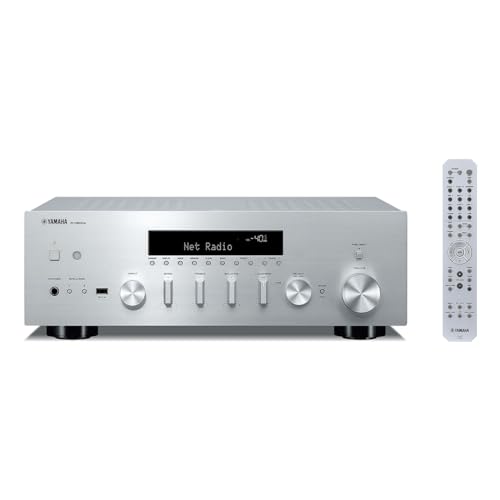
- ESS SABRE DAC with high-resolution playback
- 3.5mm jack, phono, optical TV, Bluetooth, and network inputs
- 80-watt stereo receiver for speaker systems
Best For: All-in-one stereo systems with streaming and vinyl
Best All-Rounder

- 24-bit/192 kHz high-resolution playback
- AirPlay 2, Google Cast, and major music services
- Ethernet, Wi-Fi, Bluetooth, RCA, optical, and coaxial
Best For: Connected stereo systems needing broad streaming and multiroom support
Best Headphone-Centered System
FiiO R9 Android Media Streamer

- Integrated DAC, headphone amplifier, and network player
- Up to 7300mW per channel under 32 ohms
- 6-inch touchscreen with Android streaming apps
Best For: Desktop headphone setups requiring high power and broad connectivity
Best Compact Streamer
WiiM Mini Wi-Fi Music Streamer

- Compact Wi-Fi streamer with 24-bit/192 kHz support
- AirPlay 2, Spotify Connect, and TIDAL Connect
- Analog and optical outputs with multiroom support
Best For: Space-conscious stereo systems needing simple wireless streaming
Best Portable Audiophile Pick

- Dual ESS DAC design with DSD512 playback
- 4.4mm balanced output up to 500mW at 32 ohms
- Wi-Fi, LDAC, Spotify, Tidal, and up to 1TB storage
Best For: Portable headphone-focused listening and high-resolution music
Best Large-Screen Streaming Hub

- Android 14 platform with 8GB RAM and 64GB storage
- Wi-Fi 6, Bluetooth 5.4, NAS, cloud, and DLNA playback
- 5.5-inch touchscreen with support for SSD expansion up to 4TB
Best For: Home streaming, library management, and amplifier-based systems
Best All-in-One Home Pick
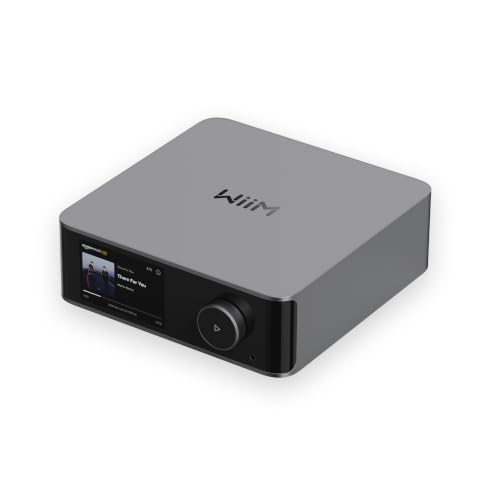
- Dedicated headphone output plus HDMI ARC, phono, RCA, USB, and digital connections
- ESS ES9038 Q2M DAC with up to 24-bit/192kHz streaming
- Room correction, multiroom control, and broad streaming-service support
Best For: Flexible home systems combining headphones, speakers, TV, and vinyl
Premium Headphone Streaming – Naim Uniti Atom Headphone Edition
The Naim Uniti Atom Headphone Edition is a premium choice among network audio players with headphone output. It combines app-controlled streaming, multiroom support, Spotify and Tidal compatibility, and a dedicated 3.5mm headphone connection in a compact all-in-one player.
Best For: Headphone listeners who want a polished, high-end streaming system with flexible analogue connectivity.
Pros:
- Dedicated headphone-focused design with a 3.5mm jack.
- Supports Spotify, Tidal, Bluetooth, and multiroom playback.
- Full-colour display shows album artwork and artist information.
- Dual-band 2.4 GHz and 5 GHz Wi-Fi support.
Cons:
- Its premium construction and 20.8-pound weight may be more than casual listeners need.
- Internet-service support listed in the specifications is limited to Pandora, alongside the highlighted Spotify and Tidal compatibility.
With its custom transformer, interactive proximity sensor, and broad analogue connections—including RCA and XLR—the Atom is built for listeners who value both presentation and system flexibility.
Connected Hi-Res Hub – Cambridge Audio CXN100 SE
The Cambridge Audio CXN100 SE is a versatile network audio player with headphone output for listeners building a modern hi-fi system. Its SABRE32 Reference DAC, StreamMagic platform, HDMI eARC, and wide selection of wired and wireless inputs make it useful for both music and TV audio.
Best For: Hi-fi users who want broad streaming-service support and easy integration with a television or existing stereo system.
Pros:
- ESS ES9028Q2M SABRE32 Reference DAC is designed for detailed, high-resolution playback.
- Built-in Spotify Connect, TIDAL Connect, Qobuz Connect, and Deezer support.
- Includes HDMI eARC, USB audio, coaxial, TOSLINK, Chromecast, AirPlay 2, and Bluetooth connectivity.
- Large high-resolution colour display and mobile-app control.
Cons:
- The supplied specifications identify headphone compatibility but do not clearly specify the headphone-output connector.
- Its extensive connectivity may be unnecessary for a simpler streaming setup.
The CXN100 SE stands out as a system-oriented streamer, particularly if you want one component to handle high-resolution music services, local digital sources, wireless playback, and TV sound.
Flagship Headphone Control – Bluesound NODE ICON
The Bluesound NODE ICON is a feature-rich network audio player with headphone output, designed for listeners who want advanced digital conversion, multiroom control, and serious personal listening. Its dual-mono DAC architecture, BluOS platform, and THX AAA headphone amplifier give it a strong focus on both system playback and headphones.
Best For: Audiophile listeners who want high-end headphone performance alongside multiroom streaming and home-theater connectivity.
Pros:
- Dual ESS SABRE DACs and QRONO d2a technology target low-distortion, precise conversion.
- THX AAA headphone amplification with full-size 1/4-inch headphone jacks.
- Supports BluOS multiroom, AirPlay 2, aptX Adaptive Bluetooth, and HDMI eARC.
- Includes a 5-inch colour display and optional Dirac Live room correction.
Cons:
- Dirac Live requires an upgrade and a separate calibration kit with microphone.
- Its advanced features and connections may be excessive for basic headphone streaming.
- The supplied notes do not provide a complete output specification.
The NODE ICON is one of the most headphone-focused options in this group, while remaining capable of serving as a central source for a BluOS multiroom system or HDMI-connected television.
Streaming System Receiver – Yamaha R-N600A Network Receiver
The Yamaha R-N600A is a network receiver that suits buyers who want streaming and headphone connectivity in a traditional stereo component. It combines Wi-Fi and Ethernet networking with an ESS SABRE DAC, Spotify support, a 3.5mm jack, phono input, and amplification for speakers.
Best For: Listeners who need one stereo receiver for network music, vinyl, TV audio, speakers, and personal listening.
Pros:
- ESS SABRE ES9010K2M DAC supports high-resolution digital playback.
- Supports native DSD playback up to 11.2 MHz and playback up to 384 kHz.
- Includes a 3.5mm jack, phono input, optical TV input, Bluetooth, Wi-Fi, and Ethernet.
- Provides 80 watts of output for a conventional stereo speaker system.
Cons:
- It is a full-size receiver rather than a compact, headphone-only network player.
- The listed streaming-service support specifically names Spotify, offering less service detail than some dedicated streamers.
- The specifications describe a 3.5mm jack but do not clearly identify its exact output function.
The R-N600A is a practical choice when headphone listening is only part of the setup. Its integrated amplification, phono stage, and TV input reduce the need for additional components.
Best All-Rounder – WiiM Pro Plus
The WiiM Pro Plus is a flexible choice among network audio players with headphone output when you want to upgrade an existing stereo system with broad streaming support. It offers Wi-Fi, Ethernet, Bluetooth, AirPlay 2, Google Cast, Spotify Connect, TIDAL Connect, and high-resolution output through its analog and digital connections.
Best For: Listeners building a connected, multiroom stereo system around streaming services and existing amplifiers.
Pros:
- Supports up to 24-bit/192 kHz playback through analog and digital outputs.
- Works with AirPlay 2, Google Cast, Alexa, Siri, Spotify Connect, TIDAL Connect, Qobuz Connect, and Roon Ready systems.
- Offers Ethernet, Wi-Fi, Bluetooth, RCA, optical, coaxial, and USB Type-C connectivity.
- Supports multiroom playback with compatible AirPlay 2, Google Home, Alexa, and WiiM devices.
Cons:
- It is an AirPlay receiver only and cannot transmit AirPlay to other AirPlay-enabled devices.
- The supplied notes do not identify a dedicated headphone output, so headphone users may need a connected amplifier or DAC.
The Pro Plus stands out for platform coverage and connection flexibility. It is a strong fit for a traditional stereo setup, though shoppers specifically requiring a built-in headphone connection should verify the output configuration before buying.
Best Headphone-Centered System – FiiO R9 Android Media Streamer
The FiiO R9 is the most purpose-built option here for anyone comparing network audio players with headphone output. This desktop streamer combines Android playback, network streaming, a USB DAC, decoding, and a headphone amplifier, with support for third-party apps such as Amazon Music, Apple Music, Tidal, and Spotify.
Best For: Headphone listeners who want a high-powered all-in-one streamer, DAC, and amplifier with a touchscreen.
Pros:
- Combines a network player, Android media streamer, DAC, preamplifier, and headphone amplifier.
- Provides up to 7300mW per channel under 32 ohms according to the supplied specifications.
- Supports DSD512, PCM up to 768 kHz/32-bit, HDMI decoding, HDMI ARC, DLNA, AirPlay, and Roon Ready playback.
- Includes a 6-inch FHD touchscreen, 64GB of storage, and a remote control.
Cons:
- Its large desktop design and extensive feature set may be more than needed for a simple stereo streaming upgrade.
- The supplied notes do not specify the exact headphone output connectors.
With its integrated headphone amplification and extensive decoding capability, the R9 is the clearest match for private listening. Its HDMI and preamp functions also make it suitable for a broader desktop or entertainment system.
Best Compact Streamer – WiiM Mini Wi-Fi Music Streamer
The WiiM Mini is a compact, affordable-style upgrade for existing audio equipment and a practical option among network audio players with headphone output when space is limited. It streams over Wi-Fi and supports AirPlay 2, Spotify Connect, TIDAL Connect, Alexa, Siri, and high-resolution analog or optical output.
Best For: Small stereo systems needing simple wireless streaming, AirPlay support, and multiroom compatibility.
Pros:
- Streams up to 24-bit/192 kHz through its analog and digital outputs with gapless playback.
- Supports AirPlay 2, Spotify Connect, TIDAL Connect, Alexa, Siri, NAS, DLNA, and home media servers.
- Works with compatible AirPlay 2, Alexa, Echo, HomePod, and WiiM multiroom setups.
- Offers Wi-Fi, Bluetooth, USB Type-C, auxiliary, and optical connections in a compact design.
Cons:
- It does not support Google Cast.
- It is an AirPlay receiver only and cannot transmit AirPlay to other AirPlay-enabled devices.
- The supplied notes do not identify a dedicated headphone output, so headphones may require a separate connected device.
The WiiM Mini is well suited to straightforward wireless upgrades and compact systems. Its limitations are important for Google Cast users and anyone seeking a dedicated headphone connection, but its service support remains broad for everyday streaming.
Best Portable Audiophile Pick – Surfans F20 Pro
For listeners seeking network audio players with headphone output in a portable format, the Surfans F20 Pro combines Wi-Fi streaming, Bluetooth LDAC, high-resolution playback, and powerful wired headphone connections. Its balanced output and expandable storage make it especially suited to personal listening on the go.
Best For: Audiophiles who want a compact streaming DAP with balanced headphone power and expandable storage.
Pros:
- Dual ESS9018K2M DACs and OPA1612 op-amps support detailed, low-distortion playback.
- 4.4mm balanced output delivers up to 500mW at 32 ohms, while 3.5mm suits sensitive IEMs.
- Dual-band Wi-Fi, Bluetooth LDAC, Spotify, and Tidal support provide flexible streaming.
- MicroSD expansion up to 1TB gives room for a large high-resolution library.
Cons:
- The 2.7-inch display is relatively small for browsing streaming services.
- Its portable design is less suited to a fixed home stereo system than a dedicated desktop streamer.
The F20 Pro is a strong choice when headphone listening is the priority. Its 4.4mm balanced output, DSD512 support, and wireless connectivity offer a capable combination for serious listeners who also want portability.
Best Large-Screen Streaming Hub – HYFIOO DM100 Music Streamer
The HYFIOO DM100 is designed as a network audio player for a home system, with Wi-Fi 6, Bluetooth 5.4, NAS and cloud playback, and a large touchscreen. It can organize extensive libraries and feed an amplifier or active speakers, though buyers should note that the supplied notes do not specify a dedicated headphone output.
Best For: Home listeners who want a touchscreen network transport for streaming services, local libraries, and external audio equipment.
Pros:
- Android 14, 8GB RAM, and 64GB storage support smooth operation and third-party app installation.
- Dual-band Wi-Fi 6 and Bluetooth 5.4 support stable wireless streaming.
- Works with NAS, cloud storage, AirPlay, DLNA, and formats including DSD, FLAC, WAV, and MQA.
- 5.5-inch display and music-library management make browsing and organization convenient.
Cons:
- No GMS services are available, so apps that require GMS may not work.
- The supplied notes do not confirm a dedicated headphone output.
- Expansion is limited to SSDs up to 4TB.
The DM100 is more of a flexible home streaming transport than a clearly headphone-centered player. Its large display, broad source support, and system-integration options are appealing, but headphone buyers should verify the output configuration before purchasing.
Best All-in-One Home Pick – WiiM Ultra Music Streamer
The WiiM Ultra is a versatile choice among network audio players with headphone output, pairing an ESS ES9038 Q2M DAC with a dedicated headphone jack and extensive home-audio connectivity. It supports high-resolution streaming, room correction, multiroom playback, and connections for both digital and analog sources.
Best For: Home listeners who want one network streamer for headphones, speakers, phono sources, TV audio, and multiroom control.
Pros:
- Dedicated headphone output complements RCA, optical, coaxial, USB, HDMI ARC, and phono connectivity.
- ESS DAC supports streaming up to 24-bit/192kHz with strong stated noise and distortion figures.
- Wi-Fi 6, Bluetooth 5.3, Spotify Connect, TIDAL Connect, Qobuz Connect, Roon Ready, NAS, and DLNA support offer broad compatibility.
- Touchscreen, app control, room correction, EQ, and subwoofer output simplify system customization.
Cons:
- It is incompatible with AirPlay and cannot function as an AirPlay receiver.
- Its feature-rich home design may be more than needed for listeners seeking a simple headphone-only player.
The WiiM Ultra is the most complete home-system option in this group. Its dedicated headphone output is backed by unusually broad connectivity and software features, making it a practical bridge between private listening and a full stereo or home-theater setup.
How We Picked the Best Network Audio Players with Headphone Output
We selected models across several budgets and use cases, focusing on dependable network playback, headphone connectivity, audio support, and compatibility with modern listening setups. We considered Wi-Fi and wired networking, streaming platforms, app or touchscreen control, DAC capabilities, multi-room features, and connections for existing amplifiers or powered speakers.
Because headphone implementations vary, buyers should check whether a model offers a standard 3.5mm or 6.35mm output, a balanced connection, adjustable volume, or a headphone amplifier designed for demanding headphones. Some products are dedicated streamers, while others add Android functionality, displays, amplification, phono support, or broader source connectivity.
Quick Comparison
| Best For | Look For | Models To Consider |
|---|---|---|
| Premium headphone listening | Powerful headphone stage, refined DAC, broad format support | Naim Uniti Atom Headphone Edition, FiiO R9 |
| Flexible hi-fi streaming | Strong app support, high-resolution playback, digital outputs | Cambridge Audio CXN100 SE, Bluesound Node Icon |
| Affordable stereo upgrades | Simple setup, compact design, AirPlay 2 or Spotify Connect | WiiM Mini, WiiM Pro |
| All-in-one control | Touchscreen, DAC, streaming, and versatile connectivity | WiiM Ultra, DM100, FiiO R9 |
Key Buying Factors for Network Audio Players with Headphone Output
Headphone Output and Amplification
Confirm the connector type and output power before buying. Efficient headphones may work well with nearly any model, while high-impedance or planar designs benefit from a stronger headphone amplifier. Balanced outputs can be useful when your headphones and cable support them, but they are not automatically better for every listener.
Streaming and Network Compatibility
Check support for your preferred services, including Spotify Connect, Tidal, Qobuz, Chromecast, and AirPlay 2. Ethernet can provide a more stable connection, while dual-band Wi-Fi is more convenient. A well-supported control app is important if the player lacks a touchscreen.
Connections and System Matching
Review analog and digital outputs, USB ports, HDMI, Bluetooth, phono inputs, and amplifier functionality. A dedicated streamer may need an external amplifier, whereas a network receiver or all-in-one player can simplify a complete system. Also verify whether volume control is suitable for direct connection to powered speakers.
Resolution, Formats, and Future Use
Higher specifications matter most when they match your library and headphones. Look for support for your preferred PCM, DSD, MQA, or Bluetooth codecs, but prioritize reliable software and useful connections over numbers alone.
Who Should Buy Which Network Audio Players with Headphone Output?
Choose the Naim or FiiO when headphone listening is central and you want a more specialized, feature-rich experience. Cambridge Audio and Bluesound are strong choices for listeners building a polished hi-fi streaming system with broad platform support. WiiM models suit buyers who want an inexpensive, easy stereo upgrade, while the WiiM Ultra adds a more complete interface and connectivity package.
Consider the Yamaha network receiver if you want streaming combined with amplification, phono capability, and traditional system inputs. The Surfans F20 Pro, DM100, or FiiO R9 may appeal to users who value local files, Android-style controls, a display, or portable-player features. Before ordering, confirm headphone compatibility, output requirements, service support, and whether the player fits your existing amplifier or speaker setup.