Reliable power is essential in live sound, where a sudden outage or unstable voltage can interrupt a performance, corrupt settings, or damage expensive rack equipment. The right uninterruptible power supply can provide short-term backup, voltage regulation, and orderly shutdown protection in a standard rack format.
This roundup compares 10 rack UPS options across capacity, rack height, waveform quality, runtime potential, monitoring, and installation needs. Whether you are building a mobile rig, venue rack, installed system, or broadcast-style setup, the guide below will help you narrow the choices.
Best 10 Rack Ups Systems for Live Sound Picks for 2026
Extended-Run Protection
Eaton Tripp Lite SMART1500LCDXL

- 1500VA/900W capacity with eight outlets
- 2U rack or tower installation
- Supports an optional external battery pack
Best For: Live sound racks needing flexible runtime and monitoring
Compact Sine-Wave Backup

- 1500VA/1000W pure sine-wave output
- 10.5-inch short-depth 2U chassis
- Eight outlets and AVR protection
Best For: Compact live sound racks with active PFC equipment
Space-Saving Essentials
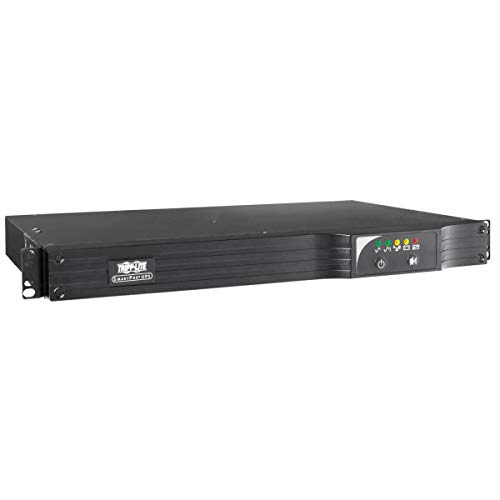
- Compact 1U rack/tower design
- 300W capacity with AVR
- USB, RS232, EPO, and optional network management
Best For: Low-power audio racks with limited rack space
Connected Rack Monitoring

- 1500VA/900W pure sine-wave output
- SmartConnect remote monitoring
- Includes 2U rack-mount support rails
Best For: Managed, installed live sound racks requiring remote visibility
High-Capacity Protection

- Online 2,000VA / 1,400W capacity
- Five outlets and RS-232 connectivity
- Heavy-duty rack-mount metal chassis
Best For: High-demand live sound racks and installed audio systems
Compact Rack Backup

- Space-saving 1U rackmount design
- 500VA / 300W capacity with AVR
- LCD status panel and six outlets
Best For: Small, low-wattage live sound and networked audio racks
Network-Ready Rack Power

- 1,440VA / 1,000W load capacity
- Eight outlets with four battery-backed
- Ethernet management and RJ45 surge ports
Best For: Networked venue racks and remotely monitored live sound systems
High-Capacity Rack Protection
Liebert PSI5 1500VA 1U Rack UPS

- 1350W pure sinewave output with 0.9 power factor
- 1U chassis with AVR and programmable outlets
- USB monitoring; optional remote management
Best For: Higher-demand live-sound racks and installed production systems
Lightweight Cloud-Managed Backup
Eaton Tripp Lite 500VA Lithium 1U UPS

- 400W lithium-ion UPS weighs 5.5 pounds
- Cloud monitoring and outlet-bank control
- Up to 14 minutes at half load
Best For: Portable, lower-power live-sound racks needing remote monitoring
Flexible Sinewave Rack Backup
CyberPower PR500LCDRT1U 500VA UPS

- 400W sinewave output for active-PFC equipment
- Seven outlets with six battery-backed connections
- AVR, LCD panel, and EMI/RFI filtering
Best For: Compact mixer, control, telecom, and VoIP racks
Extended-Run Protection – Eaton Tripp Lite SMART1500LCDXL
For live sound racks that need dependable battery backup and flexible installation, the Eaton Tripp Lite SMART1500LCDXL combines 1500VA/900W capacity with AVR, eight outlets, and rack-or-tower mounting. Its LCD provides at-a-glance information about load, runtime, voltage, battery status, and operating mode.
Best For: Live sound racks needing extended-runtime options, replaceable batteries, and a 2U rack or tower configuration.
Pros:
- Eight battery-backed and surge-protected NEMA 5-15R outlets
- AVR corrects brownouts and overvoltages without using battery power
- Optional external battery pack can add runtime
- Rotatable LCD and user-replaceable internal batteries
Cons:
- Uses modified sine wave output while operating on battery
- Requires 2U of rack space
- At 30 pounds, it is relatively heavy for a portable setup
With its external-battery support and clear front-panel monitoring, this is a practical choice when runtime flexibility matters more than minimizing rack height or weight.
Compact Sine-Wave Backup – CyberPower CP1500PFCRM2U
The CyberPower CP1500PFCRM2U is a short-depth option for live sound rack ups systems for live sound, offering 1500VA/1000W capacity, sine-wave output, AVR, and eight outlets in a 10.5-inch-deep chassis. Its color LCD makes power and battery conditions easy to check.
Best For: Short-depth audio racks and installations using active PFC power supplies or other equipment that benefits from sine-wave output.
Pros:
- Pure sine-wave output supports active PFC and conventional power supplies
- Short-depth 2U rackmount design fits space-constrained installations
- Eight NEMA 5-15R outlets with battery backup and surge protection
- Three-year warranty includes the battery
Cons:
- Listed runtime is only three minutes
- Requires 2U of rack space
- Lead-acid battery recharge time is eight hours
This model is especially well suited to compact racks where sine-wave output and shallow depth are more important than long battery runtime.
Space-Saving Essentials – Eaton Tripp Lite SMART500RT1U
For smaller live sound racks, the Eaton Tripp Lite SMART500RT1U delivers basic line-interactive battery protection in a compact 1U chassis. It provides 300W of capacity, AVR, six UPS outlets, monitoring connections, and an installed depth of only 11.8 inches.
Best For: Low-power mixers, networking gear, control equipment, and compact audio racks with limited vertical space.
Pros:
- Compact 1U rack/tower form factor
- AVR corrects brownouts without draining the battery
- USB, RS232, EPO, and optional SNMP/Web monitoring support
- Individually controllable outlet enables load shedding
Cons:
- 300W capacity is unsuitable for higher-power rack loads
- Listed runtime is approximately three minutes
- Only six outlets receive UPS protection; one additional outlet is surge-only
This is a sensible fit when rack space and remote management matter more than high wattage or extended runtime.
Connected Rack Monitoring – APC Smart-UPS SMC1500-2UC
The APC Smart-UPS SMC1500-2UC gives live sound racks 1500VA/900W of pure sine-wave battery backup in a 2U rackmount design. It includes AVR, six NEMA 5-15R outlets, rack rails, and SmartConnect remote monitoring for notifications and firmware-related support features.
Best For: Installed audio racks where pure sine-wave output, rack-rail installation, and remote power visibility are priorities.
Pros:
- 1500VA/900W pure sine-wave UPS output
- AVR adjusts high and low voltages without immediately using battery power
- SmartConnect enables remote monitoring and notifications
- Includes rack-mount support rails and a two-year battery warranty
Cons:
- Only six output outlets are provided
- 2U chassis is relatively deep at 17.3 inches
- SmartConnect remote features include a six-month free trial for qualifying newer registrations
APC’s combination of sine-wave output, included rails, and connected monitoring makes this a strong choice for permanent or managed live sound installations.
High-Capacity Protection – SurgeX UPS-2000-OL
For demanding rack ups systems for live sound, the SurgeX UPS-2000-OL offers online battery backup with up to 1,400 watts of output capacity. Its 120V design, metal enclosure, five outlets, and RS-232 connectivity make it suited to larger installed or touring racks where continuous power protection matters.
Best For: High-demand live sound racks, installed audio systems, and equipment loads requiring up to 1,400 watts.
Pros:
- Online UPS design with 2,000VA capacity and 1,400W maximum output
- Rack-mountable metal enclosure for organized equipment protection
- Five standard power outlets plus RS-232 connectivity
- UL and FCC specifications listed
Cons:
- Heavy 58-pound chassis may be difficult to install or transport
- Three-unit rack height requires substantial rack space
- Designed for 120V power systems
The SurgeX is the strongest-capacity option in this group, making it a practical choice when a live sound rack carries multiple power-hungry components. Its size and weight are tradeoffs for that higher capacity.
Compact Rack Backup – CyberPower OR500LCDRM1U
The CyberPower OR500LCDRM1U is a compact choice for rack ups systems for live sound when the connected load is modest. This 1U unit supplies 500VA/300W, includes AVR, and provides an LCD panel for checking runtime, battery status, and power conditions.
Best For: Small live sound racks, networked audio equipment, and low-wattage systems where 1U rack space is important.
Pros:
- Compact 1U rackmount form factor
- Six outlets, including four battery-backup outlets and two surge-only outlets
- LCD panel displays runtime, battery status, and power conditions
- Automatic voltage regulation helps address minor power fluctuations
Cons:
- 300W maximum output limits use with power-hungry audio racks
- Listed runtime is three minutes
- Simulated sine wave output is specified for equipment without Active PFC power supplies
Choose the CyberPower when space and basic monitoring matter more than high capacity. Its 1U profile and LCD make it convenient for smaller control, networking, or auxiliary racks.
Network-Ready Rack Power – Ubiquiti 2U Rackmount UPS
The Ubiquiti 2U Rackmount UPS combines substantial capacity with network-oriented monitoring, making it a useful option among rack ups systems for live sound. It supports up to 1,000 watts or 1,440VA and provides eight outlets divided between battery backup and surge-only protection.
Best For: Networked live sound racks, venue equipment rooms, and systems needing remote management and surge-protected Ethernet connections.
Pros:
- Supports up to 1,000W / 1,440VA of load capacity
- Eight NEMA 5-15R outlets, with four battery-backed and four surge-only
- Ethernet management port supports remote monitoring and device management
- Two RJ45 Gigabit Ethernet surge in/out ports
Cons:
- Two-unit rack height uses more space than a 1U UPS
- Runtime is listed as up to eight minutes at half load
- Lead-acid batteries require six to eight hours to recharge to 90 percent
The Ubiquiti stands out when a live sound rack includes network infrastructure or remotely managed equipment. Its outlet layout is flexible, though users should match the expected load to the stated runtime.
High-Capacity Rack Protection – Liebert PSI5 1500VA 1U Rack UPS
For rack ups systems for live sound, the Vertiv Liebert PSI5-1500RM1201U is a strong choice when your rack includes higher-power amplifiers, digital mixers, networking gear, or storage equipment. Its 1U design preserves rack space while delivering 1350W, pure sinewave output, AVR, and programmable battery-backed outlets.
Best For: Larger live-sound racks and critical production equipment that need substantial usable power and voltage correction.
Pros:
- 1350W output with a 0.9 power factor supports higher-demand equipment.
- Pure sinewave output and AVR help provide clean, stable power.
- Compact 1U rack design includes five battery-backed outlets and two programmable outlets.
- LCD status display, USB monitoring, and optional remote management add visibility.
Cons:
- At 50 pounds, it is substantially heavier than the lithium-ion alternatives.
- The listed runtime is approximately six minutes.
- Remote management requires the optional RDU120 communication card.
The Liebert stands out when capacity and rack efficiency matter more than portability. It is a particularly practical fit for installed or touring racks with several power-hungry devices, provided its weight and short runtime match your setup.
Lightweight Cloud-Managed Backup – Eaton Tripp Lite 500VA Lithium 1U UPS
Among rack ups systems for live sound, the Eaton Tripp Lite BC500RT1ULNC is suited to compact racks where low weight and remote oversight are priorities. This 1U lithium-ion UPS provides 400W, six protected outlets, cloud monitoring, and switchable outlet banks for managing loads during an extended outage.
Best For: Portable or hard-to-access live-sound racks with modest power requirements and a need for remote alerts.
Pros:
- Lightweight 5.5-pound lithium-ion design simplifies rack installation.
- Provides up to 14 minutes at half load and three minutes at full 400W load.
- Cloud portal and Brightlayer app support alerts, monitoring, and outlet-bank control.
- Six outlets include switchable banks for load shedding during prolonged outages.
Cons:
- 400W capacity is intended for lower-power racks rather than large amplifiers.
- It offers less surge protection than the CyberPower model, at 158 joules.
- Cloud and app features may be unnecessary for simple local setups.
This Eaton model is compelling for mobile production rigs, remote venues, and networked audio systems where installation weight and visibility matter. Confirm your rack’s total draw before choosing it, since its compact size comes with a lower power ceiling.
Flexible Sinewave Rack Backup – CyberPower PR500LCDRT1U 500VA UPS
The CyberPower PR500LCDRT1U is a practical option for rack ups systems for live sound when clean sinewave power, AVR, and flexible mounting are more important than high wattage. Its 400W capacity, seven outlets, EMI/RFI filtering, and rack/tower form factor suit smaller mixer, telecom, VoIP, and control-system racks.
Best For: Compact live-sound control racks with active-PFC equipment and moderate power needs.
Pros:
- Sinewave output supports active-PFC and conventional power supplies.
- AVR corrects minor voltage fluctuations without using battery power.
- Seven outlets include six battery-backed connections and one surge-only outlet.
- LCD panel, EMI/RFI filtering, and a 10-foot power cord improve usability.
Cons:
- 400W capacity limits use with power-hungry live-sound equipment.
- Listed runtime is approximately three minutes.
- Remote monitoring requires the separately sold RMCARD205.
With its sinewave output and rack/tower flexibility, the CyberPower is a well-rounded choice for smaller digital-audio and communications racks. Its high 1030-joule surge rating is useful, but buyers should plan around the modest capacity and short runtime.
How We Picked These Rack Ups Systems for Live Sound
We selected models that suit common professional audio racks, prioritizing rack-mount compatibility, published power capacity, voltage regulation, battery-backup performance, and practical monitoring features. We also considered 1U, 2U, and 3U form factors, since rack space is often limited in touring cases and installed systems.
Pure power capacity is not the only consideration. A UPS should match the connected load, provide appropriate outlets, and offer enough runtime to ride through brief interruptions or shut down equipment safely. Models with sinewave output can be especially useful with modern power-factor-corrected supplies and sensitive digital equipment.
Quick Comparison
| Priority | What to look for | Best fit |
|---|---|---|
| Compact rack | 1U chassis and efficient installation | Small mixers, processors, wireless systems, and network gear |
| Higher capacity | 900W or more and larger battery reserves | Large digital consoles, amplifiers with modest draw, and integrated racks |
| Clean output | Pure or sinewave output | Modern switching power supplies and sensitive digital equipment |
| Remote oversight | LCD, USB, serial, network, or cloud monitoring | Unattended venues, installed systems, and technical racks |
| Longer runtime | Extended-run support or expandable batteries | Critical systems that need more time during an outage |
Key Buying Factors for Rack Ups Systems for Live Sound
Capacity and Headroom
Estimate the actual wattage of every connected device, then choose a UPS with comfortable reserve capacity. Avoid sizing solely by VA because watts determine the practical load. Headroom also reduces overload alarms and leaves room for future equipment.
Output Waveform and Voltage Regulation
Line-interactive AVR models can correct moderate voltage dips and surges without using the battery. Sinewave output is generally the safer choice for sensitive digital equipment or devices with active power-factor correction, while less demanding analog and network gear may work well with more basic output designs.
Runtime, Outlets, and Rack Depth
UPS runtime decreases as load rises. Check the manufacturer’s runtime charts rather than assuming a large VA rating guarantees long operation. Confirm outlet types, plug orientation, rack depth, rail requirements, ventilation, and the location of the battery-access panel before installation.
Monitoring and Shutdown
An LCD is useful for local status checks, while USB, serial, network, or cloud connectivity can enable alerts and automatic shutdown. This matters most for remote venues and racks containing computers, servers, recording systems, or networked control equipment.
Who Should Buy Which Rack Ups Systems for Live Sound?
Choose a compact 1U model when rack space and portability matter most, especially for a small mobile system or a rack built around a console, wireless receivers, and signal processors. A higher-capacity 1U or 2U unit is better for a dense digital rack or a venue installation with several networked devices.
Buy a sinewave model when compatibility with modern power supplies and sensitive digital hardware is a priority. Choose an extended-run-capable unit when the UPS must support controlled shutdowns or maintain communications during longer outages. For unattended installations, prioritize monitoring, alerts, and automatic shutdown over maximum headline capacity.
Finally, remember that a UPS is not a substitute for proper distribution, grounding, surge protection, or load planning. Leave adequate ventilation around the rack, test battery health periodically, and verify the complete system under realistic operating load before relying on it during a performance.