Standalone USB duplicators make it easier to copy, verify, or erase multiple flash drives without tying up a computer. They range from compact two-target units to high-capacity systems built for production workflows.
Our 2026 roundup compares target count, transfer speed, media compatibility, verification features, and overall practicality so you can choose the right duplicator for your workload.
Best 10 Standalone USB Duplicators Picks for 2026
Best Compact USB Workstation

- Copies to two USB drives without a computer
- Offers sector, file, and secure erase modes
- Includes LCD monitoring and Copy & Compare verification
Best For: Technicians handling small USB duplication and sanitization jobs
Best High-Volume USB Station
1:15 Standalone USB Duplicator

- Creates up to 15 target copies from one master
- Requires no PC or software
- Provides LCD status feedback and asynchronous copying
Best For: Teams distributing small USB-based content batches
Best 1:7 USB Production Unit

- Copies one USB source to seven targets
- Supports synchronous and asynchronous modes
- Includes hot-swap capability and extended support coverage
Best For: Users needing recurring seven-drive duplication on a desktop
Best Portable Card Copier

- Copies SD and microSD cards without a computer
- Offers smart, raw, and read-error-skip modes
- Includes secure erase and a compact portable design
Best For: Field work involving SD or microSD duplication and recovery
High-Volume Pick
USB131SA 1 to 31 Standalone USB Duplicator
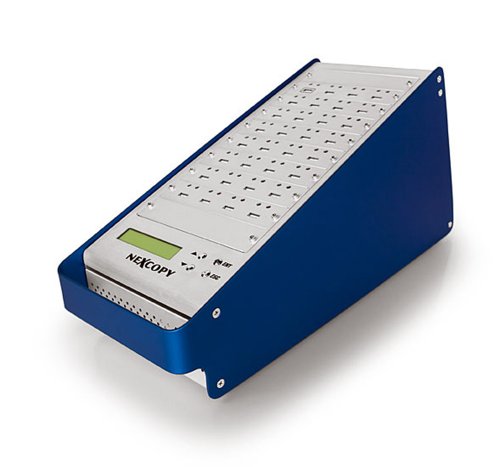
- Duplicates one master to 31 targets
- No PC or software required
- LCD status feedback and high stated speed
Best For: Large-scale USB duplication workflows
Computer-Connected Choice
DupliM Mini 1 to 10 USB Duplicator

- Duplicates up to 10 USB drives
- Supports Windows and Mac
- Copies from images, drives, or folders
Best For: Flexible file-based duplication on Mac or PC
Portable Budget Option
BestDuplicator UB300 1 to 2 USB Duplicator

- Copies one drive to two targets
- Standalone LCD and button operation
- Includes cloning, erase, and test functions
Best For: Small batches and portable field deployment
Best All-Around Security Pick
Vinpower Flash Memory USB Duplicator
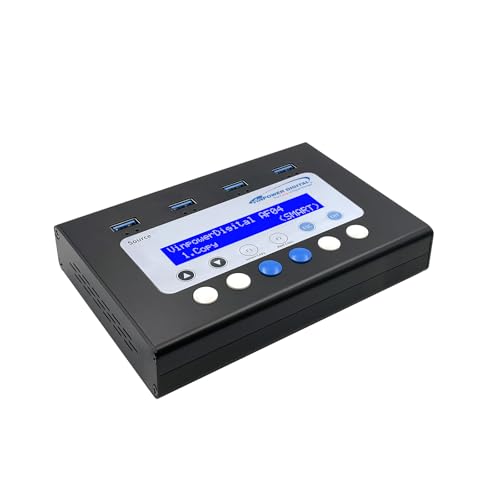
- Standalone 1-to-3 USB duplication
- Smart and Raw copy modes
- DoD erase and error skipping
Best For: Professional users needing secure, flexible USB duplication
Best Compact High-Volume Value
EZ Dupe 1-to-7 Mini USB Plus MK III

- Duplicates up to seven USB drives
- Asynchronous copying for ongoing batches
- Supports USB 1.0, 2.0, and 3.0
Best For: Larger USB batches in a compact standalone unit
Best Seven-Target Professional Model
Vinpower Digital USBShark Standalone Duplicator
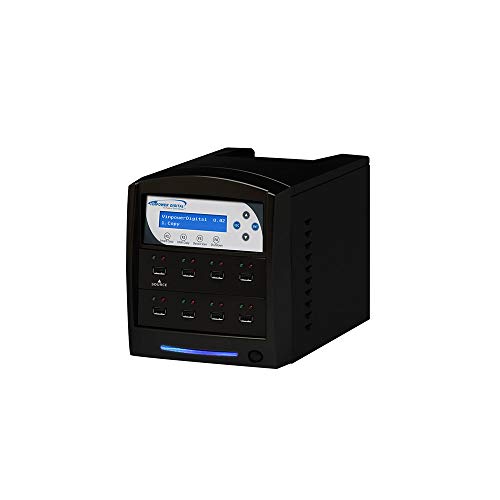
- Seven-target standalone duplication
- Smart, bit-by-bit, and secure erase modes
- Prescans for physical read errors
Best For: Repeat professional duplication with media checking
Best Compact USB Workstation – 1:2 USB Duplicator and Eraser
For technicians who need flexible standalone USB duplicators, the StarTech USBDUP12 combines 1:2 copying with several erase options in a compact desktop unit. It works without a computer and supports common USB 3.0 and 2.0 flash media, with system/file and sector-by-sector copy modes.
Best For: IT professionals managing boot drives, USB sharing, drive sanitization, and small-batch duplication.
Pros:
- Copies to two target drives at up to 1.5 GB per minute.
- Supports system/file copy, sector-by-sector duplication, quick erase, and single- or three-pass overwrite.
- LCD menu, activity/error LEDs, error scanning, and Copy & Compare verification provide useful status checks.
- Asynchronous mode can use 64 MB of internal memory for repeated copying.
Cons:
- Asynchronous copying is limited to source content under 64 MB.
- External USB devices may need their own power source.
- Its two-target capacity is smaller than higher-volume duplicators.
This is a practical choice when erase and verification features matter as much as duplication. Its 1:2 layout suits smaller jobs, while the upgradeable firmware and included international power plugs add flexibility.
Best High-Volume USB Station – 1:15 Standalone USB Duplicator
The Nexcopy USB115SA is one of the more capacity-focused standalone USB duplicators for producing many copies at once. Its 1 Master, 15 Target configuration operates without a PC or software and includes asynchronous duplication for masters up to 256 MB.
Best For: Organizations that need to distribute the same USB content across up to 15 target drives.
Pros:
- Supports a 1-to-15 master-and-target configuration.
- Runs independently without a computer or software.
- Asynchronous duplication supports masters up to 256 MB.
- LCD feedback reports real-time performance and status, while copied sticks are immediately enumerated.
Cons:
- The supplied notes do not specify copying speed or erase functions.
- Its larger multi-port setup may be more equipment than small jobs require.
- Port specifications in the supplied details are inconsistent, so buyers should confirm the exact configuration.
The USB115SA is aimed at throughput rather than broad sanitization features. If your priority is creating many copies from a relatively small master without tying up a computer, its 15-target design is the key advantage.
Best 1:7 USB Production Unit – USB Duplicator and Sanitizer
For buyers comparing standalone USB duplicators by output capacity, the Systor SYS-USBD-7 offers seven target ports and standalone operation. It performs bit-by-bit copying at up to 2 GB per minute and supports both synchronous and asynchronous modes.
Best For: Business and personal users who need repeatable seven-drive duplication with optional sanitizing capabilities.
Pros:
- Copies one source to seven target USB drives.
- Uses bit-by-bit duplication for source-to-target replication.
- Supports both synchronous and asynchronous copy modes.
- Offers hot-swappable operation and a stated 3-year labor, 1-year parts warranty with lifetime technical support.
Cons:
- The listed transfer rate is up to 2 GB per minute, or 33 MB per second, which may be slower than some higher-speed systems.
- The unit weighs 10 pounds, making it less portable than compact models.
- The supplied notes do not detail the available sanitizing or erase methods.
The SYS-USBD-7 balances moderate production capacity with a sturdier desktop form factor. Its warranty and lifetime technical support are useful additions for recurring duplication work, especially where seven simultaneous targets are sufficient.
Best Portable Card Copier – 1:3 SD and microSD Duplicator
Vinpower SDMiniDup 1 to 3 Standalone SD/MicroSD Card Flash Memory Drive Duplicator Copier
Check Price On AmazonAlthough many standalone USB duplicators focus on thumb drives, the Vinpower SDMiniDup is designed for SD and microSD cards. It copies to three cards without a PC, offers smart and raw modes, and includes read-error skipping for recovering as much usable content as possible from problematic media.
Best For: Field technicians, photographers, and users duplicating or recovering SD and microSD card data away from a computer.
Pros:
- Operates standalone and copies to three SD or microSD cards.
- Smart Copy transfers accessible data, while Raw Mode performs bit-by-bit duplication.
- Read Error Skip can continue copying when bad sectors are encountered.
- Secure Erase is designed to remove stored data using a process like DoD 5220.22-M.
Cons:
- It is intended for SD and microSD media rather than standard USB flash-drive duplication.
- The supplied specifications list a one-year warranty.
- Read-error skipping may preserve accessible data, but it cannot restore corrupted sectors.
The SDMiniDup is a specialized alternative for buyers whose media workflow centers on memory cards. Its compact 1.2-pound design and recovery-oriented error handling make it particularly useful for mobile or field-based jobs.
High-Volume Pick – USB131SA 1 to 31 Standalone USB Duplicator
For large deployment batches, this standalone USB duplicator provides a 1-to-31 master-to-target configuration without requiring a PC or software. Its asynchronous operation and LCD status feedback make it suited to repetitive duplication work.
Best For: Businesses, IT teams, and organizations duplicating many USB drives at once.
Pros:
- Copies one master to 31 target ports simultaneously.
- Operates independently without a computer or software.
- Offers stated copy speeds above 1800 MB/s per port.
- LCD provides real-time performance and status feedback.
Cons:
- At 18 pounds, it is less portable than compact duplicators.
- The large 31-target capacity may be excessive for small batches.
This is the strongest choice in the group when throughput and scale matter most. Choose it for production-style duplication rather than occasional, low-volume copying.
Computer-Connected Choice – DupliM Mini 1 to 10 USB Duplicator
The DupliM Mini takes a computer-connected approach to standalone USB duplicators, using included software on Windows or Mac. It can duplicate up to 10 USB 3.0 or 2.0 drives from image files, connected media, or selected files and folders.
Best For: Mac and PC users who want flexible, software-based duplication in a compact unit.
Pros:
- Duplicates up to 10 USB drives simultaneously.
- Supports image files, flash drives, and selected hard-drive files or folders.
- Works with Windows and Mac OS through the included DupliM Software Suite.
- Includes a USB 3.0 cable, power adapter, and one-year parts-and-labor warranty.
Cons:
- Requires a computer rather than operating independently.
- Requires a compatible operating system, processor, and RAM configuration.
Its software workflow makes this a versatile option when source content may come from files as well as USB media. It is less appropriate for users specifically seeking a no-computer duplicator.
Portable Budget Option – BestDuplicator UB300 1 to 2 USB Duplicator
For smaller jobs, the UB300 is a compact standalone USB duplicator that copies one drive to two targets without a computer. It supports quick data copying, whole-media cloning, verification tools, and simple LCD-guided operation.
Best For: Technicians, schools, and small IT teams handling occasional two-drive duplication tasks.
Pros:
- Duplicates one USB drive to two targets simultaneously.
- Works without Windows or Mac software.
- Supports both data-only copying and bit-for-bit whole-media cloning.
- Includes media tests, erase functions, LCD navigation, and port status LEDs.
Cons:
- USB 2.0 design is slower and lower-capacity than larger duplicators.
- Only two target ports are available.
- Additional card formats require a compatible USB card reader sold separately.
The UB300 is a practical field-friendly pick when portability and independent operation outweigh batch size. Its testing and cloning modes add useful control for smaller deployments and backups.
Best All-Around Security Pick – Vinpower Flash Memory USB Duplicator
For buyers comparing standalone USB duplicators, the Vinpower USBMiniDup combines PC-free duplication with flexible copying and secure erasing. Its 1-to-3 design suits organizations that need a compact tool for recurring USB distribution and data-management tasks.
Best For: IT teams, offices, schools, healthcare organizations, and businesses needing duplication plus secure USB erasure.
Pros:
- Operates standalone without a computer, reducing exposure to viruses and ransomware.
- Offers Smart Copy for accessible files and Raw Copy for bit-by-bit duplication.
- Includes DoD 5220.22-M secure erase and Read Error Skip for damaged media.
- Compact, lightweight design with three target ports.
Cons:
- Duplicates up to three USB drives at a time, fewer than the seven-target models.
- Its broader professional feature set may be more than occasional users need.
This is a strong choice when secure erasure and recovery-friendly copying matter as much as straightforward duplication. Smart and Raw modes also make it adaptable to both file-based and complete-drive projects.
Best Compact High-Volume Value – EZ Dupe 1-to-7 Mini USB Plus MK III
The EZ Dupe Mini USB Plus MK III is one of the more capacity-focused standalone USB duplicators, supporting simultaneous copying to up to seven USB devices. Its plug-and-use operation and asynchronous copying are useful when multiple drives need processing without waiting for an entire batch to finish.
Best For: Users who want a compact, PC-free duplicator for distributing USB flash media in larger batches.
Pros:
- Copies to up to seven USB flash drives simultaneously.
- Advertised copy speed reaches 2.5GB/min or 45MB/second, depending on the drives used.
- Supports USB 1.0, 2.0, and 3.0 flash drives and external storage.
- Asynchronous copying allows new drives to be duplicated as others finish.
Cons:
- External USB storage above 2TB requires its own power source.
- Actual performance depends on the connected flash drives’ read and write speeds.
Choose this model when throughput and target count take priority. It offers seven target ports in a compact package, though users should account for source-media speed and separate power requirements for certain external devices.
Best Seven-Target Professional Model – Vinpower Digital USBShark Standalone Duplicator
Vinpower Digital USBShark Standalone USB Flash Drive Duplicator - 7 Targets (High Speed)
Check Price On AmazonThe Vinpower Digital USBShark is a high-capacity option among standalone USB duplicators, with seven targets and support for USB 3.0, 2.0, and 1.0 devices. It adds Smart Copy, bit-by-bit duplication, secure erase, and source-media error scanning for more controlled duplication workflows.
Best For: Professional environments that regularly duplicate multiple USB devices and need format flexibility with media checks.
Pros:
- Supports seven target USB devices for larger duplication runs.
- Works with USB 3.0, 2.0, and 1.0 devices.
- Provides Smart Copy and bit-by-bit duplication for different data needs.
- Includes secure erase and USB prescan for physical reading errors.
Cons:
- At 10 pounds, it is substantially less portable than compact duplicators.
- The supplied details do not include a manufacturer warranty.
- Its professional seven-target design may be excessive for occasional duplication.
The USBShark is best viewed as a dedicated production-oriented machine rather than a travel-friendly copier. Its seven-target capacity and media-checking features make it appealing for repeat workflows where consistency and device compatibility matter.
How We Picked the Best Standalone USB Duplicators
We evaluated these Standalone USB Duplicators by focusing on the features that matter during repeated media-production and data-management tasks. Key considerations included the number of target ports, stated copying speed, support for USB or SD and microSD media, standalone operation, erasing and sanitizing modes, display controls, and physical size.
We also considered workload fit. A compact two- or three-target unit may be more practical for occasional duplication, while seven-, ten-, or 31-target models can reduce handling time for larger batches. Because advertised speeds can vary by source media and file size, treat throughput ratings as a comparison point rather than a guarantee.
Quick Comparison
| Best For | What to Prioritize | Typical Configuration |
|---|---|---|
| Occasional home or office copying | Simple controls, compact design, low cost | 1 source to 2 or 3 targets |
| Small-batch production | Verification, reliable cooling, faster transfer rates | 1 source to 7 or 10 targets |
| High-volume duplication | Many target ports, sustained performance, workflow controls | 1 source to 31 targets |
| SD or microSD media | Dedicated card-slot compatibility | 1 source to 3 targets |
Key Buying Factors for Standalone USB Duplicators
Target-Port Count
The number of target ports determines how many drives you can copy in one cycle. More ports improve efficiency for batch work, but they also increase the unit’s size, cost, and power requirements. Choose based on your normal workload, not the largest batch you might handle occasionally.
Copy, Verify, and Erase Modes
Look for bit-for-bit or data-only copying options when relevant to your media. Verification helps confirm that target drives match the source, while secure erase or sanitization modes are valuable when drives are being reused or redistributed.
Speed and Media Compatibility
Compare stated transfer rates, but remember that the slowest drive in the chain can limit performance. Confirm whether the duplicator supports the USB generation and drive capacities you use. If your work involves memory cards, choose a model designed for SD or microSD rather than relying on adapters.
Controls and Error Handling
An LCD or clear status interface makes it easier to monitor progress, identify failed targets, and repeat a job. Independent port reporting is especially useful when several drives have different capacities or conditions.
Who Should Buy Which Standalone USB Duplicators?
Choose a compact 1:2 or 1:3 duplicator for occasional backups, classroom distribution, small offices, or light media preparation. A 1:7 or 1:10 model is a better fit for repair shops, IT departments, installers, and small production teams that duplicate drives regularly. High-volume operators should consider a 1:31 system to minimize handling between batches.
For photographers, embedded-device developers, and other users working primarily with removable cards, a dedicated SD or microSD duplicator is the most suitable choice. If drive retirement and reuse are central to your workflow, prioritize models with clearly specified erase or sanitization functions rather than choosing solely by port count.