The right recorder can make a major difference in podcast quality, especially when you use professional XLR microphones. The best models combine dependable preamps, straightforward controls, and flexible monitoring for studio or mobile work.
These 10 options cover compact interview recorders, multitrack podcasting systems, and rugged field units, so you can match features and workflow to the way you actually record.
Best 10 Podcast Recorders with Xlr Inputs Picks for 2026
Best Multi-Person Setup

- Four XLR inputs with phantom power
- Four headphone outputs with individual control
- Mix-minus for phone and remote interviews
Best For: Multi-person podcasts and mobile interviews
Best Compact 32-Bit Option

- Two XLR/TRS inputs for mics or instruments
- 32-bit float recording for clip-free capture
- USB-C and SD-card recording options
Best For: Solo podcasters and mobile creators
Best Ultra-Compact Interview Recorder

- Attaches directly to a handheld XLR microphone
- Dual recording provides a lower-level backup
- Compact mono recorder for field interviews
Best For: Handheld interviews and news gathering
Best for Larger Productions

- Four XLR/TRS inputs plus built-in X/Y mics
- Six-track 32-bit float recording
- USB interface with simultaneous SD backup
Best For: Multi-source podcasts, bands, and live events
Best All-in-One Studio

- Six XLR inputs for multi-person recording
- Touchscreen mixing and onboard editing
- Mix-Minus, sound pads, and USB interface
Best For: Multi-host podcasts and full-featured productions
Best Portable Two-Mic Pick
- Two XLR/TRS combo inputs
- Four-track simultaneous recording
- Interchangeable capsules and USB interface
Best For: Mobile interviews and two-microphone sessions
Best Simple Stereo Recorder
- 32-bit float clip-free recording
- Built-in stereo X/Y microphones
- Simple controls with mono mode
Best For: Solo recording and quick stereo capture
Best for Run-and-Gun Recording

- 32-bit float recording helps prevent clipping
- Two locking XLR/TRS inputs
- Low-noise preamps for field recording
Best For: Filmmakers and field recordists needing reliable external-mic capture
Best for Layered Podcast Production

- Up to four tracks with bounce recording
- Two versatile XLR/TRS combo inputs
- USB interface, effects, and built-in rhythms
Best For: Creators building layered recordings without a full studio setup
Best Compact Choice for Podcasters

- Two XLR/TRS combo inputs
- 32-bit/96kHz recording
- Compact waveform display and SDXC support
Best For: Mobile podcasters and interviewers seeking a lightweight two-channel recorder
Best Multi-Person Setup – Zoom PodTrak P4
For creators comparing podcast recorders with xlr inputs, the Zoom PodTrak P4 is built around four microphone connections and four separate headphone outputs. It also adds phone and USB connectivity for remote interviews, plus battery-powered operation for portable recording.
Best For: Multi-person podcasts, roundtable interviews, and mobile recording sessions.
Pros:
- Four XLR microphone inputs with phantom power.
- Four headphone outputs with individual volume control.
- Automatic mix-minus supports phone and remote interviews.
- Sound pads and multitrack recording add production flexibility.
Cons:
- Battery life is rated at up to 3.5 hours on two AA batteries.
- Its feature set may be more than needed for simple one-person recordings.
The P4 stands out when several guests need microphones and individual monitoring. Its dedicated remote-interview features make it especially practical for podcast workflows involving callers or online guests.
Best Compact 32-Bit Option – Zoom H4 Essential
The Zoom H4 Essential is a compact choice among podcast recorders with xlr inputs, combining built-in stereo microphones with two XLR/TRS inputs. Its 32-bit float recording and USB-C connectivity suit podcasters who also record music, video audio, or field interviews.
Best For: Solo creators and mobile users who need flexible recording for podcasts, interviews, and video.
Pros:
- Two XLR/TRS inputs accept external microphones or instruments.
- 32-bit float recording is designed for clip-free audio capture.
- Can record to an SD card while connecting to a phone, tablet, or computer by USB-C.
- Spoken menu guidance supports more accessible operation.
Cons:
- It has only two XLR/TRS inputs, fewer than larger multitrack models.
- Two AA batteries are required for battery operation.
With built-in stereo microphones and external input flexibility, the H4 Essential is a useful middle ground between a handheld recorder and a small podcast interface. Choose it when portability and clip-resistant recording matter more than a larger input count.
Best Ultra-Compact Interview Recorder – TASCAM DR-10X
The TASCAM DR-10X takes a different approach to podcast recorders with xlr inputs: it attaches directly to a handheld XLR microphone for a compact mono recording setup. Manual and automatic gain, a limiter, and dual recording help protect interview audio in the field.
Best For: Handheld microphone interviews, news gathering, and lightweight mono recording.
Pros:
- Captive XLR connector attaches directly to a handheld microphone.
- Dual Recording creates a lower-level backup copy.
- Limiter and low-cut filter help manage recording levels.
- Supports WAV and MP3 recording to a microSD card.
Cons:
- It records in mono rather than supporting multiple microphone channels.
- It is designed around a handheld microphone, not a multi-guest podcast setup.
- One lithium metal battery is required.
The DR-10X is best viewed as a specialized interview recorder rather than a full podcast hub. Its small form factor and safety-oriented recording features are valuable when the priority is capturing a single handheld microphone reliably.
Best for Larger Productions – Zoom H6 Essential
For larger projects requiring podcast recorders with xlr inputs, the Zoom H6 Essential provides four XLR/TRS combo inputs alongside built-in X/Y microphones. Six-track 32-bit float recording, interchangeable capsules, and USB interface operation make it adaptable for podcasts, music, and live events.
Best For: Multi-source podcasts, bands, live events, and creators who need expandable recording options.
Pros:
- Four XLR/TRS inputs support multiple microphones or instruments.
- Six-track 32-bit float recording helps capture sources without clipping.
- Built-in X/Y microphones capture up to 135 dB SPL.
- Can function as a USB audio interface while recording to an SD card.
Cons:
- Its larger feature set may be excessive for basic two-person podcasts.
- Four AAA batteries are required for portable operation.
- Optional microphone capsules are needed to expand beyond the included configuration.
The H6 Essential is the strongest fit here for creators who expect their recording setup to grow. It combines four external inputs with built-in microphones and capsule flexibility, making it suitable for complex sessions beyond standard spoken-word podcasts.
Best All-in-One Studio – Zoom PodTrak P8
For creators looking for podcast recorders with XLR inputs, the Zoom PodTrak P8 is a full-featured option built around six XLR microphone inputs. Its touchscreen controls, onboard editing, sound pads, and remote-call tools make it well suited to multi-person productions.
Best For: Multi-host podcasts, interview shows, and creators who want recording, mixing, and production controls in one device.
Pros:
- Six XLR inputs and simultaneous recording of up to 13 tracks.
- 4.3-inch touchscreen provides access to preamp, EQ, compression, de-essing, noise reduction, and limiter controls.
- Built-in Mix-Minus helps prevent echo during phone calls and remote interviews.
- Nine sound pads across four banks provide 36 slots for effects, jingles, and prerecorded clips.
Cons:
- Its larger feature set and 1,451-gram weight make it less portable than a basic handheld recorder.
- Battery operation lasts up to two hours on four AA batteries.
The P8 is the strongest choice here for a dedicated podcast setup with several hosts or guests. It also works as a 13-in/2-out USB audio interface, adding flexibility for streaming and computer-based recording.
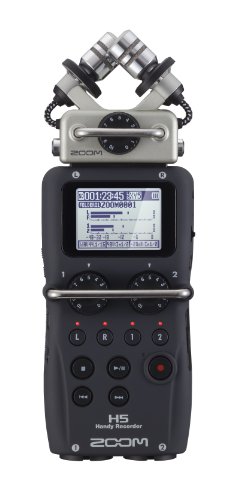
Best Portable Two-Mic Pick – Zoom H5 Handheld Recorder
The Zoom H5 is a compact choice among podcast recorders with XLR inputs, offering two XLR/TRS combo inputs for microphones or line sources. Its interchangeable capsule system and battery-powered design make it practical for mobile interviews, field recording, and smaller podcast setups.
Best For: Portable podcasting, filmmakers, musicians, and two-microphone recordings.
Pros:
- Two XLR/TRS combo inputs include selectable phantom power and a -20 dB pad.
- Records up to four tracks simultaneously.
- Interchangeable input capsules expand recording options beyond the included X/Y capsule.
- Functions as a multichannel or stereo USB audio interface for PC, Mac, and iPad.
Cons:
- Two XLR inputs limit the number of wired microphones compared with larger podcast recorders.
- Its 32GB SD/SDHC card support and two-AA battery power are better suited to smaller mobile sessions.
The H5 balances portability and flexibility well. It is a sensible fit when you need XLR connectivity and dependable field recording without the larger control surface of a dedicated multi-host podcast mixer.
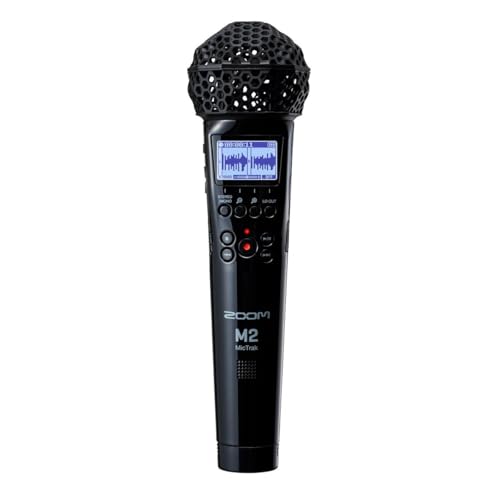
Best Simple Stereo Recorder – Zoom M2 MicTrak
The Zoom M2 MicTrak takes a simpler approach to podcast recording than multi-input mixers. It combines high-quality stereo X/Y microphones with 32-bit float recording, making it a convenient option for creators who prioritize quick setup and clip-free capture over multiple separate XLR channels.
Best For: Solo podcasters, musicians, and ENG-style mono or stereo recording.
Pros:
- 32-bit float recording helps provide clip-free capture without setting gain.
- Built-in high-quality stereo X/Y microphones simplify setup.
- Front-panel controls are designed for straightforward operation.
- Mono mode supports ENG applications.
Cons:
- The supplied notes do not list multiple XLR inputs, so it is less suitable for several wired microphones.
- Its stereo microphone design is less adaptable than a recorder with separate XLR channels.
The M2 is best viewed as a streamlined stereo recorder rather than a conventional multi-mic podcast interface. Choose it when ease of use, built-in microphones, and 32-bit float recording matter more than connecting several XLR sources.
Best for Run-and-Gun Recording – Zoom F3
For podcast recorders with XLR inputs, the Zoom F3 is a focused choice when clean, reliable capture matters more than built-in creative features. Its two locking XLR/TRS inputs, 32-bit float recording, and ultra-low-noise preamps suit field interviews, dialogue, and demanding location work.
Best For: Filmmakers, field recordists, and podcasters who need secure connections and clip-resistant recording in unpredictable environments.
Pros:
- 32-bit float recording helps capture quiet dialogue and sudden peaks without constant level adjustments.
- Dual locking XLR/TRS inputs help keep microphone connections secure.
- Ultra-low-noise preamps support clean recordings in less-controlled conditions.
- Can operate standalone, over USB, or with two AA batteries.
Cons:
- Its design is centered on two external inputs rather than built-in multitrack production features.
- The 3.5mm headphone output may be less suitable for users who prefer larger headphone connections.
The F3 is a practical, professional-minded recorder for capturing dependable audio on location. Choose it when secure XLR connections and flexible 32-bit float recording are your priorities.
Best for Layered Podcast Production – Zoom R4 Multi-Track Recorder
The Zoom R4 combines XLR/TRS recording, multitrack production, and USB interface duties in one portable unit. Among podcast recorders with XLR inputs, it stands out for creators who want to record, layer, bounce, and develop ideas without bringing a full computer-based setup.
Best For: Musicians, podcasters, and creators who want four-track recording, built-in rhythms, effects, and battery-powered flexibility.
Pros:
- Records up to four tracks and supports bouncing to a dedicated bounce track.
- Two XLR/TRS combo inputs accommodate microphones, instruments, and keyboards.
- 32-bit float recording reduces the need for constant gain adjustments.
- Works as a 2-in/2-out USB audio interface and runs on AA batteries or USB-C.
Cons:
- Its four-track workflow may be more capability than needed for simple two-person podcasts.
- The built-in recording time listed is 14 hours, less than some simpler recorders.
The R4 is the most production-oriented option in this roundup. It makes sense for users who want a portable recorder that can also support layering, rhythmic practice, and computer or smartphone recording.
Best Compact Choice for Podcasters – Zoom H1 XLR
The Zoom H1 XLR is a compact two-channel option for straightforward microphone-based recording. It fits the needs of shoppers comparing podcast recorders with XLR inputs by pairing two XLR/TRS combo inputs with 32-bit/96kHz recording, waveform monitoring, and a 3.5mm stereo connection.
Best For: Podcasters, interviewers, musicians, and mobile creators who want a lightweight recorder with flexible input options.
Pros:
- Two XLR/TRS combo inputs support microphones and instruments.
- 32-bit/96kHz recording provides detailed audio capture.
- OLED waveform display makes level monitoring easy at a glance.
- Supports SDXC cards up to 1TB and includes 3.5mm stereo input and headphone output.
Cons:
- It provides two recording channels rather than the R4’s four-track workflow.
- The 0.96-inch screen is compact, so it offers less display area for monitoring.
The H1 XLR is a sensible portable pick for users who want capable external-microphone recording without a larger multitrack feature set. Its small size, waveform display, and broad storage support make it well suited to mobile podcast and interview work.
How We Picked the Best Podcast Recorders with Xlr Inputs
We focused on recorders that accept XLR microphones and offer practical advantages for podcast production, including input count, headphone monitoring, recording quality, portability, and ease of use. We also considered whether each model is better suited to solo creators, guest interviews, multi-person shows, music production, or location recording.
Because these products vary widely, the most expensive or feature-rich option is not automatically the best choice. A compact two-channel recorder may be ideal for a mobile interview, while a larger podcast console can be worthwhile for a recurring show with several hosts and guests.
Quick Comparison
| Best For | What to Prioritize |
|---|---|
| Solo podcasts | Simple controls, reliable XLR input, and easy monitoring |
| Two-person interviews | Two XLR channels, independent gain control, and headphone support |
| Multi-guest shows | Four or more XLR inputs and multiple headphone outputs |
| Outdoor recording | Battery operation, compact size, and durable construction |
| Advanced production | Multitrack recording, 32-bit float, effects, and flexible routing |
Key Buying Factors for Podcast Recorders with Xlr Inputs
Number and Type of Inputs
Count how many microphones you will connect at the same time, then allow room for future guests. XLR/TRS combo inputs can add flexibility for instruments and line-level sources, while dedicated XLR inputs keep the setup focused on microphones.
Headphone Monitoring
Multiple headphone outputs are important for interviews and group podcasts. If a recorder has only one output, check whether you will need a headphone amplifier or an alternate monitoring arrangement.
Recording Format and Backup Protection
Look for WAV recording, suitable bit depth and sample-rate options, and features such as 32-bit float when you record unpredictable sources. Dual recording or easy backup workflows can also protect important interviews from clipping or storage problems.
Portability and Power
Battery-powered handheld units are convenient for travel, news gathering, and location work. Larger podcast recorders may offer better control and connectivity but usually require more desk space and a more deliberate setup.
Computer and Phone Connectivity
If you plan to livestream, record directly into editing software, or bring in remote guests, check for USB audio, phone inputs, Bluetooth support, or other routing options. These features can reduce the need for additional hardware.
Who Should Buy Which Podcast Recorders with Xlr Inputs?
Choose a compact two-channel recorder if you mostly record yourself or one guest and want a lightweight kit. A four-channel model is a stronger fit for regular interviews, co-hosted shows, and small roundtable discussions. Creators running larger in-person podcasts should prioritize six XLR inputs, several headphone outputs, and dedicated sound or routing controls.
For filmmakers, musicians, and journalists who also make podcasts, a handheld field recorder offers broader usefulness than a podcast-specific console. If you record in changing environments or cannot predict input levels, prioritize robust construction, dependable preamps, and 32-bit-float recording. Before buying, list your microphones, number of participants, monitoring needs, and preferred editing workflow; those details will quickly narrow the field.