The right recorder can make business interviews sound polished without turning every conversation into a technical production. The best podcast recorders for business interviews combine dependable audio capture, practical microphone support, easy monitoring, and a workflow that suits your team.
This roundup compares 10 options for remote calls, office interviews, events, and on-location recording. Whether you need a compact two-channel device or a flexible multitrack setup, the selections below cover a range of budgets and production styles.
Best 10 Podcast Recorders for Business Interviews Picks for 2026
Best All-Around Choice

- Four XLR inputs and four headphone outputs
- Mix-minus supports phone and remote guests
- Battery powered with multitrack recording
Best For: Multi-person business interviews with remote call-ins
Best for High-Resolution Recording

- 32-bit float recording up to 192 kHz
- Four combo inputs with phantom power
- Includes detachable condenser microphones
Best For: Teams needing detailed, flexible multitrack capture
Best for Assisted Mixing

- AI tools help reduce noise and balance audio
- Four XLR inputs and four headphone outputs
- Connects to a phone for video recording
Best For: Four-person interviews with a simplified production workflow
Best for One-on-One Mobility
TASCAM DR-10L Lavalier Recorder

- Includes lavalier microphone and windscreen
- Compact wearable design for mobile interviews
- At least 10 hours on one AAA battery
Best For: Single-speaker interviews and discreet field recording
Flexible Field Recording

- 32-bit float recording for clip-free audio
- Built-in mics and two XLR/TRS inputs
- USB-C recording with SD-card backup
Best For: Portable interviews, podcasts, and mixed recording setups
Multi-Guest Podcasting

- Four high-gain XLR microphone inputs
- Four independent headphone outputs
- Includes two ZDM-1 Podcast Pack microphones
Best For: Multi-host and multi-guest business podcast sessions
Upgradeable Interview Recording
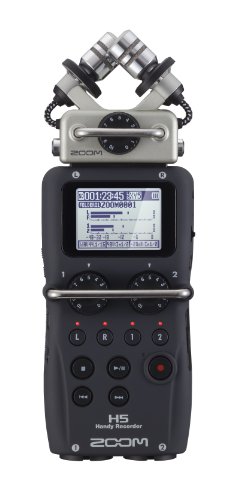
- Interchangeable microphone capsule system
- Four-track simultaneous recording
- Two XLR/TRS inputs with phantom power
Best For: Mobile teams needing adaptable microphones and external inputs
Best Two-Person Setup

- Two USB mic inputs and two headphone outputs
- Mix-Minus reduces echo for remote guests
- AI noise reduction and battery-powered operation
Best For: Two-person interviews and remote guest calls
Best Flexible Field Recorder

- Three microphones with nine recording patterns
- 32-bit float recording avoids manual gain adjustments
- USB microphone mode with simultaneous SD backup
Best For: Portable interviews and adaptable field recording
Best XLR Starter Recorder

- Two locking XLR/TRS combo inputs
- 32-bit float recording with waveform display
- 3.5mm input and headphone output flexibility
Best For: Two-microphone interviews using external XLR or TRS microphones
Best All-Around Choice – Zoom PodTrak P4
For teams comparing podcast recorders for business interviews, the Zoom PodTrak P4 is a practical option for recording up to four microphones while keeping each participant connected to headphones. Its phone and USB connectivity also supports remote guests and call-in conversations.
Best For: Business interview teams recording multiple in-person speakers with occasional remote guests.
Pros:
- Four XLR microphone inputs with phantom power
- Four headphone outputs with individual volume controls
- Automatic mix-minus for phone and remote interviews
- Battery powered and supports multitrack recording
Cons:
- Battery life is listed at up to 3.5 hours
- Requires external microphones for a complete interview setup
The P4 balances useful interview features, flexible connectivity, and a straightforward portable design. It is especially suitable when several people need to hear the conversation during recording.
Best for High-Resolution Recording – TASCAM Portacapture X8
The TASCAM Portacapture X8 is designed for buyers who want advanced audio capture for podcast recorders for business interviews. Its touch-screen workflow, 32-bit float recording, four combo inputs, and included detachable condenser microphones give interview teams considerable recording flexibility.
Best For: Production teams seeking high-resolution, multitrack interview recording and flexible microphone options.
Pros:
- Supports up to 192 kHz/32-bit float recording
- Four XLR/TRS inputs with individual 24V/48V phantom power
- Includes detachable large-diaphragm condenser microphones
- 3.5-inch color touch-screen with dedicated recording applications
Cons:
- More equipment and recording capability than a basic interview setup may require
- Uses a lithium metal battery rather than the simpler AA format found on some recorders
The Portacapture X8 is a strong fit when audio quality and input flexibility matter more than keeping the workflow minimal. Its built-in microphones can also reduce the amount of extra equipment needed for certain sessions.
Best for Assisted Mixing – Zoom PodTrak P4next
For business users who want help producing cleaner interviews, the Zoom PodTrak P4next adds AI noise reduction, tone enhancement, and compression to a four-input podcast recorder. It also connects directly to a phone for capturing audio with video without separate syncing.
Best For: Interviewers who want four-person recording with automated audio-enhancement tools.
Pros:
- AI noise reduction, tone enhancement, and compression
- Four XLR inputs with up to +70 dB of gain
- Four headphone outputs with separate volume controls
- Direct phone connection for audio capture with video
Cons:
- Battery requirements are not specified in the supplied details
- External microphones are needed because the listed inputs are XLR connections
The P4next is well suited to business creators who value a streamlined recording process. Its AI features can reduce manual work, while the input and headphone count supports a small interview panel.
Best for One-on-One Mobility – TASCAM DR-10L Lavalier Recorder
The TASCAM DR-10L is a compact choice for podcast recorders for business interviews when each speaker needs a discreet, wearable setup. It includes a lavalier microphone, records WAV audio at up to 24-bit/48 kHz, and can run for at least 10 hours on one AAA battery.
Best For: Mobile one-person interviews, presentations, and situations where a lavalier recorder is more convenient than a tabletop unit.
Pros:
- Includes a lavalier microphone, clip, and windscreen
- Compact 1.76-ounce recorder for wearable use
- Records 16- or 24-bit WAV/BWF-compatible audio
- At least 10 hours of recording on one AAA battery
Cons:
- Mono recording is intended for a single microphone source
- Does not provide the multiple XLR inputs or headphone outputs of larger interview recorders
The DR-10L is a focused solution rather than a multi-speaker production hub. Its small size, included lavalier, and long stated battery life make it useful for individual interview subjects and mobile recording.
Flexible Field Recording – Zoom H4 Essential
The Zoom H4 Essential is a versatile choice among podcast recorders for business interviews, especially when you need a portable setup that can handle both quiet conversations and louder environments. Its built-in stereo microphones, two XLR/TRS inputs, USB-C connectivity, and 32-bit float recording support flexible recording and backup workflows.
Best For: Interviewers who need a handheld recorder for in-person conversations, podcasts, video audio, and occasional live or music recording.
Pros:
- 32-bit float recording helps provide clip-free audio.
- Built-in stereo microphones plus two XLR/TRS inputs support different setups.
- Can record to a connected device while saving a backup to an SD card.
- Spoken menu guidance can make operation easier for more users.
Cons:
- Uses two AA batteries, so extended sessions may require spares.
- Its broader four-track feature set may be more than needed for simple one-microphone interviews.
Choose the H4 Essential when flexibility and recording insurance matter. It is particularly useful for mobile business interviews where you may alternate between built-in microphones, external mics, and USB-connected recording.
Multi-Guest Podcasting – Zoom PodTrak P4 Bundle
Zoom PodTrak P4 Portable Multitrack Podcast Recorder Bundle with 2X Zoom ZDM-1 Podcast Pack
Check Price On AmazonThe Zoom PodTrak P4 bundle is built for organized, multi-person podcast sessions and business interviews. Four high-gain XLR inputs, four independent headphone outputs, sound pads, and simultaneous TRRS and USB call-ins make it suited to studio-style conversations with several participants.
Best For: Business podcasters recording multiple guests or hosts who need separate microphone and headphone connections.
Pros:
- Four high-gain XLR microphone inputs accommodate larger interview setups.
- Four independent headphone outputs let participants monitor individually.
- Supports simultaneous TRRS and USB call-ins for remote participation.
- Includes two Zoom ZDM-1 Podcast Pack microphones.
Cons:
- The multi-input design may be unnecessary for solo interviews.
- Its listed hardware interface is USB, so users seeking a handheld recorder may prefer another format.
For panel discussions, co-hosted shows, and guest-heavy business podcasts, the PodTrak P4 offers a more structured connection layout than a basic handheld recorder. The included microphones also help create a ready-to-use starting package.
Upgradeable Interview Recording – Zoom H5
The Zoom H5 is a practical option among podcast recorders for business interviews when you want portable four-track recording with room to adapt your microphone setup. It includes a detachable X/Y capsule, two XLR/TRS inputs with phantom power and a -20 dB pad, plus USB audio interface functionality for computer or iPad workflows.
Best For: Mobile interview and video teams that value interchangeable microphone capsules, external inputs, and a portable recorder.
Pros:
- Interchangeable input capsules allow the microphone setup to evolve.
- Records four tracks simultaneously through the detachable X/Y capsule and two inputs.
- XLR/TRS inputs include selectable phantom power and a -20 dB pad.
- Offers multichannel and stereo USB audio interface modes with Loop Back.
Cons:
- Records directly to SD/SDHC cards up to 32GB.
- Its interchangeable-capsule features may be more equipment than a basic interview workflow requires.
- Runs on two AA batteries, requiring attention to battery planning.
The H5 makes sense when your interview work includes changing locations, microphones, or production needs. Its input flexibility and audio safety net can be valuable for teams recording both spoken interviews and audio for video.
Best Two-Person Setup – Zoom PodTrak P2
For business interviews that usually involve two people, the Zoom PodTrak P2 is a straightforward choice among podcast recorders for business interviews. It accepts two USB microphones, provides two headphone outputs, and can record separate tracks to an SD card while streaming to a phone or computer.
Best For: Two-person interviews, remote guest calls, and portable podcast setups that benefit from simple USB microphone connections.
Pros:
- Two USB microphone inputs and two headphone outputs simplify guest interviews.
- Built-in Mix-Minus helps eliminate echo when adding a phone or computer guest.
- AI noise reduction, tone shaping, compression, and de-essing can reduce post-production work.
- Battery, USB bus, and AC power options support recording in different locations.
Cons:
- Its battery life is rated at up to 4 hours on four AA batteries.
- USB microphone inputs may be less flexible than XLR/TRS connections for mixed microphone setups.
The P2 is especially practical when your interviews follow a repeatable two-person format. Its call-in support and onboard processing add useful convenience for live or remote conversations.
Best Flexible Field Recorder – Zoom H2 Essential
The Zoom H2 Essential is a versatile option for business interviews when you need to adapt to different room sizes and recording arrangements. Its three built-in microphones offer nine selectable patterns, while 32-bit float recording helps capture clip-free audio without constant gain adjustments.
Best For: On-location interviews, solo hosts, and teams that want a compact recorder with built-in microphone coverage and USB microphone functionality.
Pros:
- Three built-in microphones and nine patterns support intimate interviews and wider stereo recordings.
- 32-bit float recording is designed to capture clip-free audio without manual gain setting.
- Can operate as a USB microphone while recording simultaneously to an SD card backup.
- Up to 20 hours of battery life supports extended field sessions.
Cons:
- It does not list XLR or TRS microphone inputs for connecting external professional microphones.
- Its built-in microphone design may be less suitable when each participant needs a separate close microphone.
For mobile interview work, the H2 Essential prioritizes flexibility and low setup demands. It is a strong fit when built-in microphones are preferable and recording backups matter.
Best XLR Starter Recorder – Zoom H1 XLR
The Zoom H1 XLR is a compact pick for business interviews that use external microphones. With two locking XLR/TRS combo inputs, 32-bit/96kHz recording, and an OLED waveform display, it gives interview teams a more conventional connection and monitoring setup.
Best For: Interviews using two XLR or TRS microphones, portable production kits, and users who want visible waveform monitoring.
Pros:
- Two locking XLR/TRS inputs accommodate microphones, instruments, and other sources.
- 32-bit float recording supports clip-free audio capture.
- OLED waveform display provides a quick view of recording levels.
- Supports 3.5mm stereo input and headphone monitoring, plus SDXC cards up to 1TB.
Cons:
- It requires two AA batteries, with a listed average battery life of 10 hours.
- The 0.96-inch display is compact, so waveform monitoring may be less spacious than on larger recorders.
The H1 XLR is a sensible choice when your business interview workflow centers on external microphones rather than built-in capture. Its dual combo inputs add connection flexibility while keeping the recorder portable.
How We Picked the Best Podcast Recorders for Business Interviews
We focused on features that matter when recording clients, executives, guests, and panel discussions: input capacity, microphone compatibility, headphone monitoring, recording quality, portability, ease of setup, and support for remote interviews. We also considered whether each recorder fits a repeatable business workflow rather than requiring extensive audio engineering knowledge.
The lineup includes dedicated podcast mixers, handheld field recorders, and compact devices for simple two-person conversations. Models with multitrack recording, USB connectivity, phone inputs, or onboard processing can offer extra flexibility for teams producing regular content.
Quick Comparison
| Best For | Look For | Why It Matters |
|---|---|---|
| Two-person interviews | Two inputs and headphone monitoring | Keeps setup simple while allowing each speaker to be recorded clearly. |
| Small panels | Three or more microphone inputs | Provides room for multiple guests without relying on complex mixing equipment. |
| Remote interviews | USB, phone, or computer connectivity | Helps combine a local microphone with a call or remote audio source. |
| Travel and events | Compact body and battery operation | Makes recording practical away from a desk or studio. |
| Post-production flexibility | Multitrack recording and high-resolution capture | Lets you adjust voices independently after the interview. |
Key Buying Factors for Podcast Recorders for Business Interviews
Inputs and Microphone Compatibility
Count how many people you normally record and check the connector type. XLR inputs suit professional microphones, while USB microphone support can simplify a desktop setup. A recorder with extra inputs gives you flexibility for co-hosts, guests, or room microphones.
Monitoring and Remote Audio
Individual headphone outputs are valuable when several participants need to hear the conversation. For remote interviews, prioritize a phone input, USB interface mode, or another reliable method for routing call audio into the recording.
Recording Quality and File Management
Multitrack files make editing easier because each voice can be balanced separately. Float recording can provide useful protection against unexpected volume changes, while standard WAV recording remains widely compatible with editing software. Confirm the device uses storage media and file formats that fit your existing workflow.
Portability and Controls
For interviews in offices, trade shows, or client locations, battery life, physical gain controls, built-in microphones, and a readable display can matter more than advanced studio features. Simple controls also reduce setup mistakes when time is limited.
Who Should Buy Which Podcast Recorders for Business Interviews?
Choose a dedicated podcast recorder such as a PodTrak-style model if you regularly produce hosted shows, need multiple microphones, or want straightforward control over guests and remote calls. These devices are especially useful for small business media teams.
A handheld recorder is a better fit for journalists, consultants, filmmakers, and event teams that need a portable solution for interviews in changing locations. Look for models with suitable microphone inputs and strong monitoring options.
For a lean two-person setup, a compact two-channel recorder can deliver the essentials without unnecessary complexity. If you expect your production to grow, spending more on additional inputs, multitrack capability, or USB connectivity can reduce the need to replace the recorder later.