The best podcast recorders with sound pads make it easier to produce polished episodes without relying on a complicated computer-based setup. They combine microphone inputs, headphone monitoring, recording controls, and instant sound effects in portable hardware.
This roundup includes compact field recorders, dedicated podcast stations, and mixer-style systems. Whether you record solo shows, interviews, livestreams, or multi-person discussions, the right choice depends on your input needs, workflow, portability, and room to grow.
Best 10 Podcast Recorders with Sound Pads Picks for 2026
Best All-in-One Pick

- Four XLR inputs and four headphone outputs
- Four programmable sound pads
- Automatic mix-minus and battery operation
Best For: Multi-person podcasts and remote interviews
Best Capsule-Based Recorder
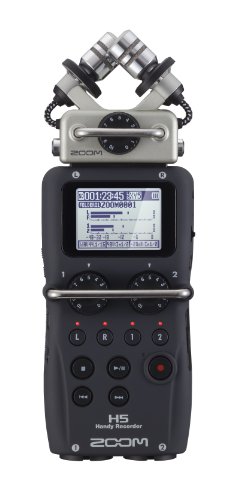
- Interchangeable input capsule system
- Four-track simultaneous recording
- Two XLR/TRS inputs with phantom power
Best For: Filmmakers, musicians, and flexible field recording
Best Touchscreen Workflow

- Eight banks of customizable illuminated sound pads
- Four mic inputs and four headphone outputs
- 14-track SD recording with touchscreen control
Best For: Live podcasts, streaming, and effects-heavy productions
Best for Music and Podcasts

- Eight channels with six preamps
- Four headphone outputs and three monitor mixes
- 12-track SD recording plus simultaneous computer recording
Best For: Podcasts, musicians, rehearsals, and live sessions
Best All-in-One Setup

- Four XLR inputs and four sound pads
- Includes two ZDM-1 podcast microphones
- Four independent headphone outputs
Best For: Multi-person podcasts and interview shows
Best for Flexible Field Recording

- Two XLR/TRS combo inputs
- 32-bit float and 96kHz recording
- Compact 6.4-ounce design
Best For: Portable two-channel recording
Best for AI-Assisted Podcasts

- Four XLR inputs and four headphone outputs
- Sound pads plus AI noise reduction
- Connects to a phone for direct video audio
Best For: Four-person podcasts with streamlined mixing
Best Overall

- Records up to six microphones and 13 tracks to SD
- Six independent headphone mixes for guest monitoring
- Nine assignable sound pads with custom sound support
Best For: Panel podcasts and multi-guest productions
Best Compact Bundle

- Four high-gain XLR inputs with +48V support
- Four sound pads and four independent headphone outputs
- Bundle includes four Zoom ZDM-1 Podcast Packs
Best For: Four-person podcast teams building a complete setup
Best Two-Person Kit
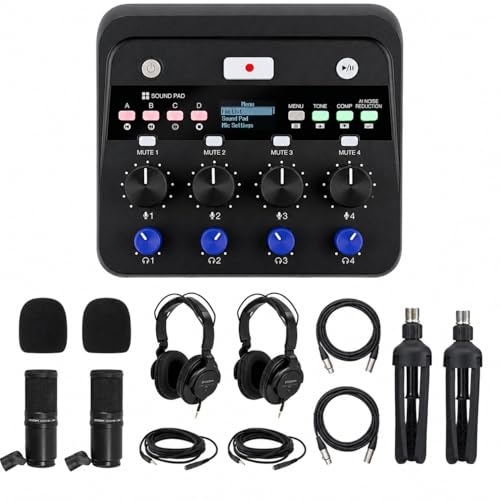
- Includes two microphones, headphones, tripods, and cables
- Four XLR inputs with up to 70 dB of gain
- Built-in noise reduction, tone enhancement, and compression
Best For: Two-person podcasts and interview-style recording
Best All-in-One Pick – Zoom PodTrak P4
The Zoom PodTrak P4 is a practical choice if you need podcast recorders with sound pads for multi-person shows. It combines four XLR microphone inputs, four headphone outputs, remote-interview support, and programmable sound pads in a compact, battery-powered recorder.
Best For: Multi-person podcasts, remote interviews, and portable recording setups.
Pros:
- Four XLR inputs with phantom power support multiple microphones.
- Four individually controlled headphone outputs help each participant monitor audio.
- Four programmable sound pads, automatic mix-minus, and USB interface mode add production flexibility.
- Runs for up to 3.5 hours on two AA batteries.
Cons:
- Battery life is limited to about 3.5 hours.
- The recorder uses a 3.5mm headphone connection rather than a larger headphone jack.
The PodTrak P4 is especially well suited to podcast teams that want dedicated headphone monitoring and simple call-in workflows without carrying a full-size mixer.
Best Capsule-Based Recorder – Zoom H5 Handheld Recorder
The Zoom H5 offers a more traditional handheld approach for creators seeking podcast recorders with sound pads, though its supplied features focus on interchangeable microphones and four-track recording rather than dedicated trigger pads. It is a flexible portable recorder for field production, musicians, and simple podcast setups.
Best For: Filmmakers, musicians, and podcasters who value interchangeable input capsules.
Pros:
- Interchangeable input capsules allow the recording setup to be adapted.
- Two XLR/TRS inputs include selectable phantom power and -20dB pads.
- Four-track simultaneous recording and an audio safety net help protect recordings.
- Can function as a multichannel or stereo USB audio interface.
Cons:
- It does not list dedicated programmable sound pads among the supplied features.
- It provides two XLR inputs rather than four.
- Records to SD/SDHC cards up to 32GB.
The H5 is better viewed as a versatile handheld recorder than a purpose-built sound-pad podcast mixer. Choose it when capsule flexibility and portable four-track recording matter more than integrated pad triggering.
Best Touchscreen Workflow – TASCAM Mixcast 4
The TASCAM Mixcast 4 is designed specifically for creators comparing podcast recorders with sound pads. Its touchscreen workflow, four microphone inputs, four headphone outputs, and eight banks of customizable illuminated pads support live podcast production, streaming, and effects playback.
Best For: Live podcasts, streaming, and creators who want hands-on sound-pad control.
Pros:
- Eight customizable sound-pad banks can trigger effects, music, and prerecorded microphone sounds.
- Four XLR/TRS microphone inputs and four individual headphone outputs suit group productions.
- Supports 14-track recording directly to an SD card.
- Includes Bluetooth, USB, and auxiliary input options, including mix-minus for phone conversations.
Cons:
- Its 2,550g weight makes it less portable than handheld recorders.
- It requires corded electric power.
- The feature-rich production environment may be more than needed for basic recording.
For creators who want sound pads to be central to the show, the Mixcast 4 is the most purpose-built option here. Its larger desktop format is a trade-off for touchscreen control, extensive pad banks, and integrated editing support.
Best for Music and Podcasts – Zoom LiveTrak L-8
The Zoom LiveTrak L-8 is a strong option for buyers considering podcast recorders with sound pads alongside broader mixing needs. It provides eight channels, six preamps, four headphone outputs, multiple monitor mixes, and simultaneous SD-card and computer recording.
Best For: Podcasters, musicians, rehearsals, and live sessions requiring multiple inputs.
Pros:
- Eight channels and six preamps accommodate larger podcast or music setups.
- Four headphone outputs and three independent monitor mixes support performers and guests.
- Records 12 tracks simultaneously at up to 24-bit/96kHz directly to an SD card.
- Can record to an SD card and computer at the same time.
Cons:
- It is a larger mixer/recorder rather than a compact handheld unit.
- The supplied notes identify sound pads but do not specify the number or customization method.
- Its broader mixing features may be unnecessary for a basic two-person podcast.
The L-8 makes the most sense when your podcast setup overlaps with music, live performance, or multitrack session work. It offers substantial routing and monitoring flexibility, but buyers wanting clearly defined, dedicated sound-pad controls may prefer the PodTrak P4 or Mixcast 4.
Best All-in-One Setup – Zoom PodTrak P4 Bundle
Zoom PodTrak P4 Portable Multitrack Podcast Recorder Bundle with 2X Zoom ZDM-1 Podcast Pack
Check Price On AmazonThe Zoom PodTrak P4 Bundle is a strong choice for anyone comparing podcast recorders with sound pads and needing a ready-to-use setup. It combines four high-gain XLR inputs, four sound pads, independent headphone outputs, and two included ZDM-1 podcast microphones.
Best For: Multi-person podcasts, interview shows, and creators who want microphones included.
Pros:
- Four XLR inputs with +48V phantom power support multiple microphones.
- Four sound pads can trigger music and samples during recording.
- Four independent headphone outputs help each participant monitor audio.
- Supports simultaneous TRRS and USB call-ins.
Cons:
- The bundle may be more equipment than solo creators need.
- Its built-in microphone form factor may not suit buyers seeking an integrated handheld recorder.
With two included microphones and room for four participants, this bundle offers a practical starting point for an expanding podcast setup. Its call-in support and sound pads add flexibility for remote guests and live production touches.
Best for Flexible Field Recording – Zoom H1 XLR
The Zoom H1 XLR suits creators who want a compact recorder with flexible inputs, though it is not primarily a sound-pad-focused model. Its two XLR/TRS combo inputs, 32-bit/96kHz recording, waveform display, and 3.5mm connectivity make it useful for podcasts, interviews, and location work.
Best For: Solo podcasters, filmmakers, musicians, and users who prioritize portable two-channel recording.
Pros:
- Two XLR/TRS combo inputs accommodate microphones and instruments.
- 32-bit float recording helps provide clip-free audio.
- OLED waveform display makes level monitoring straightforward.
- Supports SDXC cards up to 1TB.
Cons:
- It has two inputs rather than the four found on larger podcast recorders.
- The supplied notes do not identify built-in sound pads.
- It requires two AA batteries.
The H1 XLR is better suited to streamlined recording than live sound-pad operation. Choose it when portability, high-resolution recording, and adaptable XLR/TRS connectivity matter more than dedicated podcast production controls.
Best for AI-Assisted Podcasts – Zoom PodTrak P4next
The Zoom PodTrak P4next is designed for podcasters comparing podcast recorders with sound pads who also want automated audio assistance. It supports four XLR microphones, four headphone outputs, sound pads, and AI noise reduction with tone enhancement and compression.
Best For: Four-person podcast teams that want sound pads and simpler audio balancing.
Pros:
- Four XLR inputs support multitrack recording for up to four people plus a call-in guest.
- Built-in sound pads add music and sample playback options.
- AI noise reduction, Tone Enhancement, and COMP can help shape the mix.
- Four headphone outputs have separate volume controls.
Cons:
- Its four-input design may be unnecessary for solo or two-person shows.
- The supplied notes list battery requirements as unknown.
- AI processing may be more functionality than users seeking a basic recorder need.
The P4next is the most production-oriented option here, pairing sound pads with AI-assisted processing and generous monitoring. Its phone connection is especially useful for recording polished audio directly into video without later syncing.
Best Overall – Zoom PodTrak P8
For creators comparing podcast recorders with sound pads, the Zoom PodTrak P8 stands out for large, flexible productions. It records up to six microphones and 13 tracks simultaneously to an SD card, while its touchscreen editing and assignable pads support a mostly computer-free workflow.
Best For: Panel podcasts, multi-guest interviews, and creators who want advanced in-device control.
Pros:
- Six XLR inputs with up to 70 dB of gain and selectable phantom power.
- Six independent headphone outputs with separate level controls.
- Nine assignable sound pads with built-in and custom sound support.
- Integrated mix-minus call-ins and touchscreen editing tools.
Cons:
- Its larger feature set and 5.78-pound weight may be more than solo podcasters need.
- The optional BTA-2 receiver is required for Bluetooth call-ins.
The P8 is the strongest choice here when you need several microphones, individualized monitoring, and customizable sound-pad playback in one recorder. Its included memory card and accessories also help create a ready-to-use setup.
Best Compact Bundle – Zoom PodTrak P4
Zoom PodTrak P4 Portable Multitrack Podcast Recorder Bundle with 4X Zoom ZDM-1 Podcast Pack
Check Price On AmazonThe Zoom PodTrak P4 is a practical option for buyers seeking podcast recorders with sound pads without stepping up to a larger multitrack unit. It provides four high-gain XLR inputs, four sound pads, four headphone outputs, and simultaneous TRRS and USB call-ins, while the bundle adds four ZDM-1 podcast microphone packs.
Best For: Four-person podcast setups that need microphones, headphones, and monitoring accessories in one bundle.
Pros:
- Four XLR inputs with +48V support for compatible microphones.
- Four sound pads for music and samples.
- Four independent headphone outputs.
- Supports simultaneous TRRS and USB call-ins.
Cons:
- The supplied notes do not specify the number of tracks recorded simultaneously.
- It requires two AA batteries, and the stated digital recording time is four hours.
This bundle is especially convenient if you are building a multi-person recording kit from scratch. Its four-input layout and included ZDM-1 packs cover the core needs of a small group, while the sound pads add simple live playback.
Best Two-Person Kit – Zoom PodTrak P4next
The Zoom PodTrak P4next bundle is a straightforward starting point for two-person shows looking at podcast recorders with sound pads and bundled microphones. It includes two complete ZDM-1 mic packs, four XLR inputs, four headphone outputs, and audio tools such as AI noise reduction, Tone Enhancement, and compression.
Best For: Two-person podcasts, interviews, and creators who want a ready-to-record microphone and monitoring package.
Pros:
- Includes two dynamic microphones, headphones, tripods, windscreens, and XLR cables.
- Four XLR inputs provide up to 70 dB of gain and support multitrack recording.
- AI noise reduction, Tone Enhancement, and compression are built in.
- Four headphone outputs have separate volume controls.
Cons:
- The supplied notes do not specify the number or customization options of its sound pads.
- The bundle is centered on two included mic packs, so additional speakers may need extra equipment.
Choose the P4next bundle if convenience matters more than assembling components separately. The included ZDM-1 microphones and headphones make it well suited to two speakers, while the built-in processing and phone recording support simplify content creation.
How We Picked the Best Podcast Recorders with Sound Pads
We focused on the features that matter most during real podcast production: microphone input count, headphone outputs, multitrack recording, sound-pad access, remote-call support, portability, and computer connectivity. We also included different types of equipment, from compact handheld recorders to larger touchscreen mixers, so the list works for beginners, mobile creators, musicians, and established podcast teams.
Bundle options were considered separately because included microphones, memory accessories, and other essentials can substantially change the value of a setup. Models with more advanced routing or editing features are useful for growing productions, while simpler recorders may be better for quick interviews and field work.
Quick Comparison
- Best for portable podcasting: Compact PodTrak and handheld recorder options are easier to carry and set up away from a studio.
- Best for multiple guests: Look for four or more microphone inputs and enough independent headphone outputs.
- Best for live production: Touchscreen mixer/recorders offer more hands-on control over routing, effects, and streaming.
- Best for complete starter kits: Microphone bundles can reduce setup costs and simplify compatibility.
- Best for future expansion: Choose multitrack recording, USB connectivity, and flexible input options rather than a basic stereo recorder.
Key Buying Factors for Podcast Recorders with Sound Pads
Inputs and Monitoring
Count both microphone inputs and headphone outputs. Four XLR inputs are useful for roundtable shows, while multiple independent headphone feeds help every guest monitor clearly. Combo XLR/TRS inputs add flexibility for instruments and line-level sources.
Sound Pads and Workflow
Sound pads are valuable for intros, transitions, music beds, sponsor cues, and live effects. Check how many pads are available, whether sounds can be customized, and how easily levels or triggering can be controlled while speaking.
Recording and Connectivity
Multitrack recording gives you more control during editing, while a stereo mix may be faster for simple productions. USB connectivity can turn the recorder into an audio interface for remote calls or computer recording. Phone inputs are especially useful for guest interviews.
Portability and Power
If you record on location, consider weight, battery operation, memory-card support, and how quickly the system can be deployed. Larger touchscreen mixers generally provide more control but require more space and accessories.
Who Should Buy Which Podcast Recorders with Sound Pads?
Choose a compact podcast recorder if you prioritize travel, interviews, and fast setup. A four-input PodTrak-style model suits small teams that need dedicated headphone outputs and accessible sound pads. A larger mixer/recorder is better for livestreamers, multi-person shows, and creators who want hands-on control over routing and production.
Handheld recorders are the most versatile choice for musicians, filmmakers, and podcasters who also capture environmental audio or instruments. Bundles make sense for first-time buyers who need microphones immediately, while an advanced recorder with noise-reduction or expanded controls is a better long-term investment for frequent producers.