Cutting the cord does not mean giving up local news, sports, weather, or major network programming. The right outdoor TV antenna can provide a stronger, more consistent over-the-air signal than many indoor models, especially in rural areas or homes with obstructions.
We compared these 10 outdoor TV antennas by reception design, advertised range, installation flexibility, cable and mounting accessories, signal distribution, and overall practicality for different home setups.
Best 10 Outdoor TV Antennas Picks for 2026
Best All-Around Reception
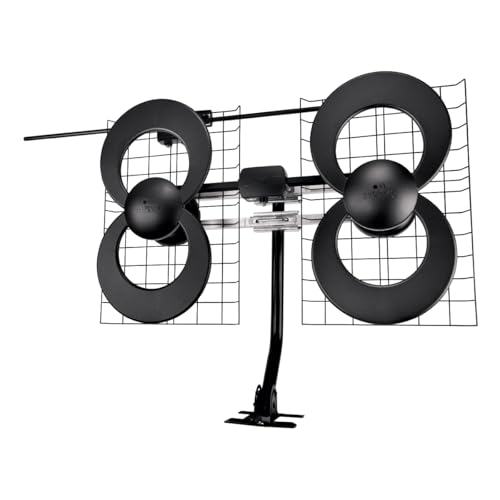
- Reflectors help focus incoming signals
- Supports UHF and Hi-VHF reception
- Includes mast and outdoor mounting hardware
Best For: Suburban and rural homes needing flexible, durable installation
Best for Simple Installation

- Outdoor or hidden attic installation
- Supports VHF, UHF, and NEXTGEN TV
- Includes J-mount and standard coax compatibility
Best For: Households seeking a flexible, easy-to-install local-channel antenna
Best Motorized Option

- Remote-controlled 360-degree rotation
- Amplified high-gain, low-noise design
- Dual TV outputs and 40-foot RG6 cable
Best For: Homes needing directional flexibility and two-TV connectivity
Best for Multi-TV Setups
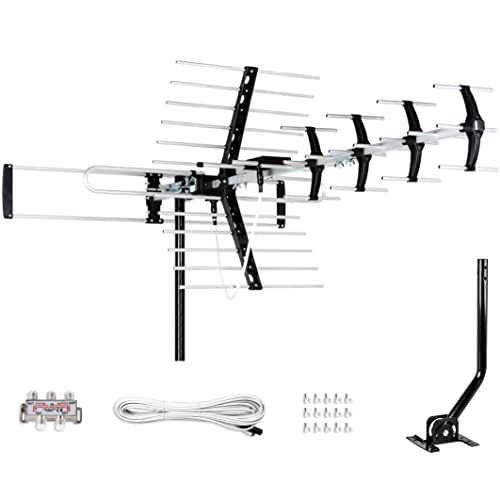
- Includes splitter for multiple TVs
- Large extended VHF/UHF receiving elements
- J-pole and mounting bracket included
Best For: Larger homes with space for a substantial multi-TV antenna
Best Rotating Pick
PBD Amplified Outdoor TV Antenna

- 360° motorized rotation with remote
- 59-foot RG6 cable and grounding block included
- Supports two TVs and ATSC 3.0
Best For: Households needing directional flexibility and dual-TV support
Best Long-Range Yagi
Five Star Outdoor Yagi Antenna
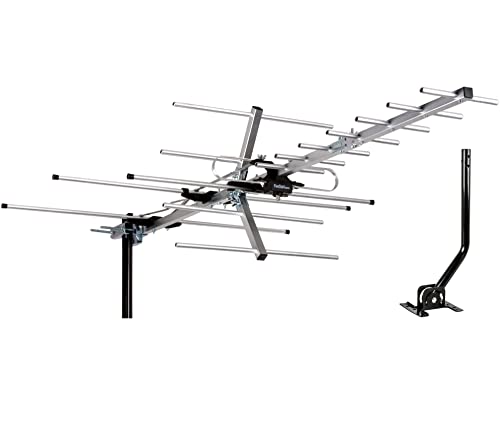
- VHF/UHF reception for local HD channels
- 20-inch pole and 40-foot cable included
- Weather-resistant with lightning protection
Best For: Fixed roof, attic, or mast installations near distant towers
Best Omnidirectional Pick
1byone 360° Outdoor TV Antenna

- Receives UHF/VHF signals from all directions
- Built-in preamplifier and 4G LTE filter
- Simple setup for one TV, RV, or attic
Best For: Single-TV setups needing easy, no-rotation installation
Best Long-Range Pick
GE Outdoor HD Digital TV Antenna

- Up to 80-mile advertised range
- Weather-resistant mounting hardware included
- NEXTGEN TV compatible
Best For: Cord-cutters seeking flexible outdoor or attic installation
Best for Whole-Home Use
UltraPro Outdoor HD Digital Antenna

- Up to 70-mile advertised range
- Supports 4K and 8K TVs
- Can distribute signal to multiple TVs
Best For: Larger households planning a multi-TV setup
Best Simple Pick
McDuory Amplified Outdoor HDTV Antenna
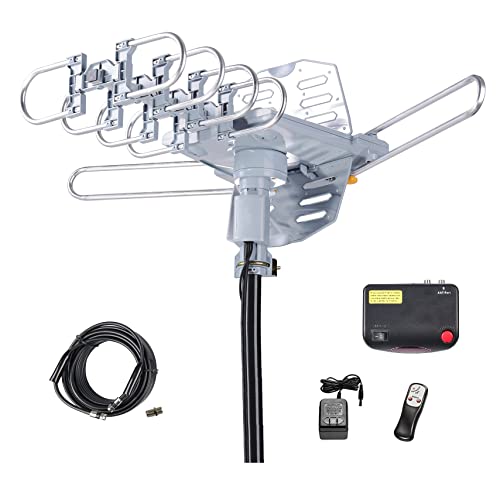
- Advertised 150-mile range
- Remote-controlled 360-degree rotation
- Supports two TVs without a splitter
Best For: Homes needing adjustable, amplified reception
Best All-Around Reception – ClearStream 4V
The Antennas Direct ClearStream 4V is a strong all-around option among outdoor TV antennas, using dedicated UHF and Hi-VHF elements plus reflectors to focus incoming signals. Its multidirectional design and included mounting hardware make it suitable for outdoor, attic, or some indoor installations.
Best For: Suburban and rural households that want a durable antenna with broad signal coverage and flexible mounting options.
Pros:
- Four patented loops, Hi-VHF elements, and reflectors support long-range reception.
- 43-degree horizontal reception pattern helps capture signals from multiple directions.
- Includes a pivoting 20-inch mast, all-weather hardware, and adjustable clamp.
- Supports NEXTGEN TV, 4K, 8K UHD, and Full HD broadcasts.
Cons:
- Reception still depends on tower distance, trees, and building materials.
- Its relatively large 27.8-inch width may require careful placement.
The ClearStream 4V stands out for its signal-focused reflector design and complete installation package. It is a practical choice when you want durable construction and versatile placement rather than a compact antenna.
Best for Simple Installation – GE Outdoor HD Antenna
The GE Outdoor HD Digital TV Antenna is a straightforward pick for viewers seeking local channels without monthly fees. It supports VHF and UHF signals, works with standard coaxial connections, and can be installed outdoors or discreetly in an attic.
Best For: Households wanting a broadly compatible outdoor TV antenna with attic-mounting flexibility and straightforward setup.
Pros:
- Rated for reception from up to 70+ miles away, depending on local conditions.
- Weather-resistant design supports outdoor or hidden attic installation.
- Works with all TV brands and converter boxes using standard coaxial cable.
- Includes a J-mount and supports NEXTGEN TV broadcasts where available.
Cons:
- Actual reception varies with tower location and environmental obstructions.
- The 29-inch length and 20.5-inch height may need substantial mounting space.
With its included J-mount, weather-resistant construction, and universal coax compatibility, this GE antenna keeps installation uncomplicated. It is especially appealing if you prefer to place the antenna in an attic instead of on the roof.
Best Motorized Option – 360-Degree Amplified Antenna
This amplified outdoor TV antenna combines a built-in high-gain, low-noise amplifier with 360-degree motorized rotation. A wireless remote lets you adjust its direction, while dual TV outputs and the included 40-foot RG6 cable make it convenient for multi-screen setups.
Best For: Homes that need remote directional adjustment and want to connect two TVs without an additional splitter.
Pros:
- Motorized 360-degree rotation allows remote signal alignment.
- Built-in amplifier is designed for high-gain, low-noise reception.
- Dual TV outputs support two connected screens without extra equipment.
- Includes a 40-foot RG6 coaxial cable, mounting pole, and hardware.
Cons:
- Amplification and stated range do not eliminate reception issues caused by obstructions.
- Motorized components add setup complexity compared with a fixed antenna.
The remote rotation feature is the main advantage here, particularly when broadcast towers are spread across different directions. Its included cable and dual outputs also make it a practical choice for households with two TVs.
Best for Multi-TV Setups – Five Star 200-Mile Antenna
The Five Star Outdoor HDTV Antenna is built around a large, extended design for VHF and UHF reception. It includes a J-pole, mounting bracket, splitter, and installation instructions, allowing it to be mounted on a roof, attic, chimney, eave, mast, or outside the home.
Best For: Larger homes that want an included splitter and mounting kit for distributing over-the-air programming to multiple TVs.
Pros:
- Supports VHF and UHF signals and is listed as ATSC 3.0 ready.
- Includes a TV splitter for connecting multiple televisions.
- Package includes a J-pole, mounting bracket, and assembly instructions.
- Extended receiving elements are designed for stronger, more stable reception.
Cons:
- Its 46-inch length and 28-inch width require significant installation space.
- The stated 200-mile range can vary substantially with towers, trees, and other obstacles.
- Periodic channel rescans may be needed to keep the lineup current.
This Five Star model is notable for its large receiving structure and multi-TV accessories. Consider it when installation space is available and you want a kit that includes the key hardware for distributing antenna signals around the home.
Best Rotating Pick – PBD Amplified Outdoor TV Antenna
For shoppers comparing outdoor TV antennas, the PBD amplified model combines a motorized 360° rotation system with a high-gain, low-noise amplifier. It includes a long 59-foot RG6 cable and supports two connected TVs without a separate splitter.
Best For: Households that want remote directional adjustment, dual-TV support, and an included installation kit.
Pros:
- 360° motorized rotation with wireless remote control
- Includes 59-foot RG6 coaxial cable and grounding block
- Weatherproof design with dual TV outputs
- ATSC 3.0-ready and backed by a one-year warranty
Cons:
- Motorized rotation requires installation with access to the antenna’s control system
- The advertised 150-mile range depends on local terrain, tower distance, and obstructions
This is a feature-rich option for homes where broadcast towers are not all in the same direction. Its dual outputs and long cable add flexibility, while the included grounding block supports a more complete installation.
Best Long-Range Yagi – Five Star Outdoor Yagi Antenna
This Five Star Yagi is a traditional outdoor TV antenna designed for roof, attic, chimney, eave, or mast installation. It receives VHF and UHF broadcasts, includes a mounting pole and 40-foot coaxial cable, and can also support FM radio reception.
Best For: Rural or suburban installations where a directional Yagi design, mounting flexibility, and long cable are priorities.
Pros:
- Receives VHF and UHF local HD channels
- Includes a 20-inch mounting pole and 40-foot coaxial cable
- Weather-resistant design with lightning protection
- Can be mounted on a roof, attic, chimney, eave, mast, or outside wall
Cons:
- Fully assembled installation is required
- Directional placement may require aiming toward broadcast towers
- The advertised 200-mile range depends on tower distance and obstructions
The Five Star stands out when you want a conventional, mountable antenna for a fixed installation. Its longer receiving elements and included pole suit tower-facing setups, but installation and aiming may take more effort than an omnidirectional design.
Best Omnidirectional Pick – 1byone 360° Outdoor TV Antenna
Among outdoor TV antennas, the 1byone model is a convenient choice for receiving UHF and VHF signals from multiple directions without manual rotation. Its built-in preamplifier and 4G LTE filter are designed to support reception over longer cable runs, and installation requires no tools.
Best For: Homes, RVs, attics, and marine setups that want simple omnidirectional reception for one television.
Pros:
- 360° reception without a rotor or remote
- Built-in preamplifier and 4G LTE interference filter
- Moisture-proof and flame-retardant construction
- Includes RG6U coaxial cable and installation accessories
Cons:
- Designed to support one TV output
- Using a splitter may reduce signal strength and channel availability
- The advertised 100-plus-mile range depends on local conditions and tower placement
This is a practical pick for users who want to avoid aiming a large directional antenna. Its compact, omnidirectional design simplifies setup, though single-TV operation makes it less suitable for multi-screen households.
Best Long-Range Pick – GE Outdoor HD Digital TV Antenna
For shoppers comparing outdoor TV antennas, the GE Outdoor HD Digital TV Antenna stands out with an advertised reception range of up to 80 miles and support for VHF and UHF channels. Its weather-resistant hardware and included mounting pieces make it a practical choice for outdoor or attic installation.
Best For: Cord-cutters who want a long-range antenna with flexible mounting options and NEXTGEN TV compatibility.
Pros:
- Supports local broadcasts in 1080p HD and is 4K Ultra HD-ready.
- Advertised range of up to 80 miles for VHF and UHF signals.
- Includes a weather-resistant bracket, mast clamp, and J-mount.
- Backed by a limited-lifetime replacement pledge and U.S.-based technical support.
Cons:
- Installation hardware is included, but mounting location and setup still require planning.
- Reception depends on local broadcast conditions and antenna placement.
With its strong stated range, rugged construction, and broad TV compatibility, this GE model is a well-rounded option for households prioritizing dependable outdoor or attic reception.
Best for Whole-Home Use – UltraPro Outdoor HD Digital Antenna
The UltraPro is one of the more versatile outdoor TV antennas for households that want free local channels and the option to distribute a signal to multiple televisions. It offers an advertised 70-mile range, weather-resistant installation hardware, and compatibility with current 4K and 8K TVs.
Best For: Larger households that want an outdoor or attic antenna with whole-home distribution potential.
Pros:
- Captures VHF and UHF signals up to an advertised 70 miles.
- Supports 1080p HD broadcasts and is designed for 4K and 8K TVs.
- Includes a mounting bracket, mast clamp, and J-mount.
- Can feed multiple TVs with a separately purchased splitter and coaxial cables.
Cons:
- A splitter and coaxial cables for multi-TV setups are sold separately.
- Its advertised range is shorter than the 80-mile GE model in this roundup.
The UltraPro balances installation flexibility and household-wide connectivity, making it a sensible pick when one antenna may need to serve several TVs.
Best Simple Pick – McDuory Amplified Outdoor HDTV Antenna
Among outdoor TV antennas, the McDuory model is designed for shoppers who want motorized positioning and built-in amplification. Its infrared-controlled 360-degree rotor, included 40-foot coaxial cable, and dual-TV outputs provide useful installation flexibility, though the package does not include a mounting pole.
Best For: Homes that need remote antenna rotation, amplified reception, and direct support for two TVs.
Pros:
- Advertises up to 150 miles of range and supports 720p and 1080p HDTV.
- Built-in 360-degree motor rotor can be controlled with an infrared remote.
- Supports two TVs simultaneously without a splitter.
- Includes a 40-foot outdoor coaxial cable and tools-free snap-on installation.
Cons:
- A mounting pole is not included.
- The advertised 150-mile range may vary with terrain, broadcast conditions, and placement.
- Its listed channel count is 12, lower than the other models here.
This McDuory antenna offers the most feature-focused design in the group, especially for installations where remote rotation and two-TV support are more important than a simple fixed setup.
How We Picked These Outdoor TV Antennas
We focused on antennas designed for exterior, attic, or roof installation and considered the features that affect real-world performance. Key criteria included VHF and UHF support, directional versus omnidirectional reception, included coaxial cable, rotor or remote-control functionality, amplification, multi-TV compatibility, and installation requirements.
Advertised mileage should be treated as a starting point rather than a guarantee. Terrain, broadcast-tower distance, building materials, trees, hills, weather, and cable length all influence reception. We therefore favored products with useful installation options and practical signal-management features rather than relying on range claims alone.
Quick Comparison
| Best For | Look For | Why It Matters |
|---|---|---|
| Suburban homes | VHF/UHF support and moderate amplification | Balances local-channel coverage with manageable installation. |
| Rural locations | Directional design, rotor, and a high-quality coaxial cable | Helps target distant towers and reduce signal loss. |
| Multiple TVs | Multi-TV support or a compatible splitter | Makes one antenna practical for several rooms. |
| Easy setup | Included mount, cable, and tool-free hardware | Reduces extra purchases and installation time. |
Key Buying Factors for Outdoor TV Antennas
Reception Pattern and Location
Directional antennas can deliver strong reception when broadcast towers are concentrated in one direction, but they may require aiming. Omnidirectional models receive signals from multiple directions and can be more convenient when towers surround your home. Use a tower-location map before choosing, and remember that an attic installation may be easier but less effective than a clear roof or exterior mount.
Range Claims and Signal Strength
Range ratings are measured under favorable conditions and should not be compared as exact performance scores. A lower-rated antenna with a clear line of sight can outperform a higher-rated model blocked by trees or terrain. For long cable runs or multiple televisions, a quality amplifier may help, but amplification cannot restore a signal that the antenna never receives.
Installation, Cable, and Weather Resistance
Check whether the package includes a mast, mounting bracket, grounding hardware, power injector, and coaxial cable. Longer included cables can simplify installation, while RG6 cable is generally preferable for outdoor runs. Mount the antenna securely, ground the system appropriately, seal outdoor connections, and follow local safety guidance.
Channel Support and TV Distribution
Choose a model that supports both VHF and UHF broadcasts, since local stations may use either band. If you plan to connect multiple TVs, confirm the antenna’s stated capacity and consider signal loss from splitters. A scan after installation is essential, and rescanning may be useful after repositioning the antenna.
Who Should Buy Which Outdoor TV Antennas?
Choose the Antennas Direct ClearStream 4V for a well-regarded, reception-focused design when signal quality matters more than a bundled remote rotor. GE and UltraPro models are sensible choices for shoppers seeking straightforward outdoor HD antenna setups from familiar product lines.
For homes far from towers or those needing directional adjustment, the Five Star, PBD, and remote-rotation amplified models offer features aimed at challenging installations. The 1byone omnidirectional option may suit locations where towers are spread across different directions. Shoppers connecting two or more TVs should prioritize models that explicitly support multi-TV distribution and plan the cable and splitter layout before mounting.