3D printers can release ultrafine particles, odors, and volatile compounds, making air management an important consideration in classrooms, libraries, and school maker spaces.
We compared dedicated printer filters with larger room air purifiers to help schools choose practical options for enclosed printers, shared workspaces, and varied printing materials.
Best 10 3d Printer Air Purifiers for Schools Picks for 2026
Best Built-In Filter
Bambu Lab H13 HEPA Carbon System

- Triple-layer filtration for particles, fumes, and odors
- Designed for Bambu Lab P1S and X1C
- Quick-swap filters and airflow up to 60 m³/h
Best For: Classrooms using enclosed Bambu Lab printers
Best Multi-Printer Option

- Works with resin and FDM printers
- Six-layer filtration with activated carbon
- 42 dB operation and three fan modes
Best For: Mixed-printer school labs and makerspaces
Best Quiet Integrated Design
3-in-1 Enclosed Printer Filter

- Targets odors, VOCs, and ultrafine particles
- Fits listed Bambu Lab enclosed printers
- Stepless fan control for adjustable airflow
Best For: Quiet enclosed-printer stations in classrooms
Best Enclosure Solution
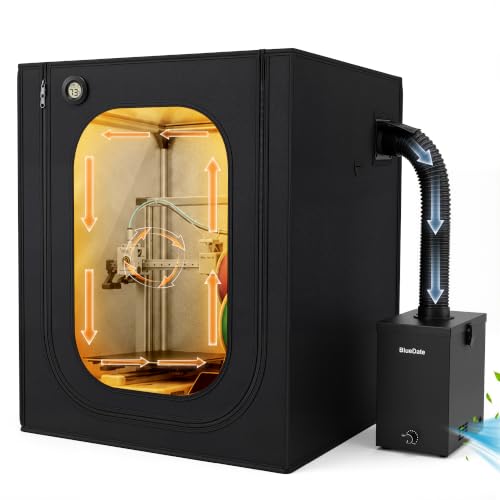
- Combines printer enclosure and fume extraction
- HEPA and activated-carbon multi-stage filtration
- Includes pipe, LED light, and replacement pre-filters
Best For: Open-frame and resin-printer makerspaces
Best Enclosed-Printer Filter

- Three-stage particle and VOC filtration
- Works with common PLA, PETG, ABS, ASA, and PA filaments
- 60 m³/h airflow with included installation accessories
Best For: School makerspaces using enclosed 3D printers
Best for Bambu and ELEGOO

- Five-stage filtration with HEPA and activated carbon
- Stepless speed control and compact metal casing
- Designed for listed Bambu Lab and ELEGOO models
Best For: Compatible school printer labs needing source extraction
Best Room-Wide Option
Coway Mighty AP-1512HH Air Purifier

- Room purifier rated for spaces up to 1,748 square feet
- HEPA, deodorization, and washable pre-filter stages
- Automatic operation with air-quality indicator
Best For: Classrooms and larger makerspaces needing room coverage
Best Printer-Matched Option
BD-60C Fume Extractor for Creality K2

- Four-stage HEPA and activated-carbon filtration
- Variable-speed control with included exhaust accessories
- Designed for Creality K2 and K2 Pro printers
Best For: School makerspaces using Creality K2 or K2 Pro printers
Best Quiet Classroom Pick
Medify MA-25 H13 HEPA Purifier

- Cleans spaces up to 825 square feet in one hour
- Quiet operation with sleep mode and three speeds
- Child lock, timer, and filter replacement indicator
Best For: Small classrooms and offices needing general room filtration
Best Large-Room Choice
Coway Mighty AP-1512HH Air Purifier
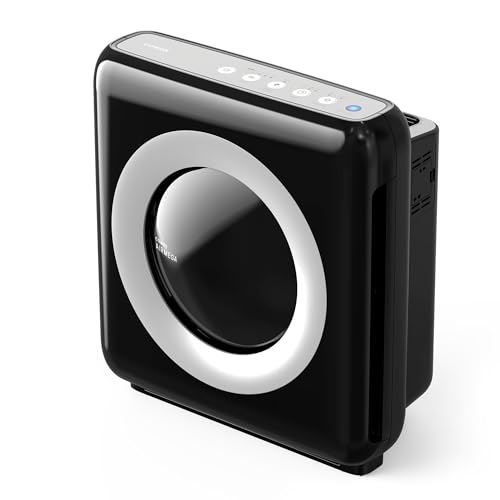
- Rated for spaces up to 1,748 square feet
- Auto mode responds to monitored air quality
- Washable pre-filter plus HEPA and deodorization filtration
Best For: Large classrooms, labs, and shared makerspaces
Best Built-In Filter – Bambu Lab H13 HEPA Carbon System
For schools comparing 3d printer air purifiers for schools, this purpose-built system is a focused option for enclosed Bambu Lab printers. Its pre-filter, H13 HEPA layer, and activated-carbon bed are designed to address particles, odors, and fumes associated with materials such as PLA, PETG, ABS, ASA, and Nylon.
Best For: Classrooms and makerspaces using Bambu Lab P1S or X1C printers that need a compact, printer-connected filtration setup.
Pros:
- Triple-layer design combines debris capture, H13 HEPA filtration, and activated carbon.
- Default connector is ready for Bambu Lab P1S and X1C printers, with adapter options for other enclosed models.
- Tool-free, quick-swap filter modules and airflow up to 60 m³/h.
Cons:
- Compatibility with many other printer models may require an adapter kit or printed connector.
- The supplied information does not specify an operating noise rating.
This is a practical choice when a school wants filtration designed around an enclosed printer rather than a general room purifier. Confirm connector requirements and plan for replacement filters before outfitting multiple stations.
Best Multi-Printer Option – Phrozen Air Purifier Max
The Phrozen Air Purifier Max is a flexible pick for schools seeking 3d printer air purifiers for schools across both resin and FDM workstations. Its six-layer system uses activated carbon for dust, smoke, odors, VOCs, and plastic fumes, while three fan modes help balance purification and classroom noise.
Best For: School labs or makerspaces that use both resin and FDM printers and want a standalone purifier beside the workstation.
Pros:
- Designed for both LCD resin and FDM printing environments.
- Six-layer filtration includes activated-carbon layers for odors, VOCs, and fumes.
- Three-speed control, 42 dB operation, and a slide-out filter with replacement reminder light.
Cons:
- Its approximately 17-inch height and 10 kg weight may require dedicated floor or table space.
- The supplied particle-retention specification is 2.5 microns, so schools should review filtration needs for ultrafine particles.
This model stands out for mixed-printer rooms where one compact unit needs to serve different printing processes. Its quieter setting is useful for instruction, while Power mode is available for higher-emission jobs.
Best Quiet Integrated Design – 3-in-1 Enclosed Printer Filter
Schools looking for 3d printer air purifiers for schools may prefer this integrated filter system for compatible enclosed printers. It uses a 3-in-1 active filter aimed at odors, VOCs, and ultrafine particles, with adjustable vortex-fan speed for quieter classroom operation or stronger exhaust control.
Best For: Enclosed-printer stations where low operating noise, adjustable airflow, and internal installation are priorities.
Pros:
- Compatible with listed Bambu Lab models including P1S, P2S, X1C, and H2D.
- Targets odors, VOCs, and ultrafine particulate matter in one filter element.
- Stepless fan adjustment supports quiet printing or stronger ventilation.
Cons:
- Exact compatibility and installation requirements should be checked for printers outside the listed models.
- The notes do not provide a numeric noise rating, airflow figure, or filter-replacement interval.
This is a good fit for schools that want filtration built into the printer setup without adding a larger external appliance. Its adjustable fan gives staff more control over noise and ventilation during lessons or extended prints.
Best Enclosure Solution – BD-60A Printer Fume Purifier
For schools needing 3d printer air purifiers for schools that also contain the printer, the BD-60A combines a desktop enclosure with fume extraction. Its multi-stage filter uses pre-filters, HEPA filtration, and activated carbon to address particulate matter, smoke, fumes, dust, and odors from many open-style and resin printers.
Best For: School makerspaces using open-frame or resin printers that need an enclosure, noise reduction, and adjustable fume extraction in one setup.
Pros:
- Large 650 × 750 × 800 mm enclosure is designed for broad printer compatibility.
- Multi-stage filtration combines pre-filter, HEPA, and activated-carbon elements.
- Includes fume extractor, smoke pipe, LED light, five pre-filters, and a one-year warranty.
Cons:
- At 20 pounds and roughly 29.5 × 25.6 × 31.5 inches, it requires substantial dedicated space.
- Listed noise level is 55 dB, which may be noticeable in a classroom.
- The enclosure and purifier may be more equipment than needed for already-enclosed printers.
The BD-60A is the most comprehensive containment-oriented option in this group. Its size and included accessories suit a permanent makerspace station, but schools should measure the available area and consider classroom noise before purchasing.
Best Enclosed-Printer Filter – Mintion V1 HEPA H13 System
For schools seeking 3d printer air purifiers for schools, the Mintion V1 is a compact external filtration system for enclosed printers. Its pre-filter, HEPA H13 filter, and activated carbon stage are designed to reduce fine particles, odors, and VOCs from materials such as ABS, ASA, PA, PETG, and PLA.
Best For: Classrooms, makerspaces, and studios using enclosed 3D printers and a range of common filaments.
Pros:
- Three-stage filtration combines a pre-filter, HEPA H13 filter, and activated carbon.
- Supports common filaments, including PLA, PETG, ABS, ASA, and nylon.
- Offers airflow up to 60 m³/h with a compact external design.
- Includes installation hardware, power adapter, tools, and instructions.
Cons:
- It is intended for enclosed 3D printers rather than open-frame models.
- Compatibility with some printer brands may require an optional printed adapter.
The Mintion V1 is a practical choice when a school wants filtration close to the printer without adding a large room unit. Confirm enclosure and adapter compatibility before ordering, and plan for accessible filter replacement.
Best for Bambu and ELEGOO – BD-60B Desktop Smoke Purifier
The BD-60B is a targeted option among 3d printer air purifiers for schools, particularly where Bambu Lab or ELEGOO machines are in use. Its multi-stage filter design combines pre-filtration, HEPA filtration, and activated carbon, while adjustable fan speed lets staff balance extraction and noise.
Best For: School labs with compatible Bambu Lab or ELEGOO printers that need a compact, printer-connected fume extractor.
Pros:
- Five listed filtration stages use pre-filters, HEPA, and activated carbon.
- Adjustable speed control supports different airflow and noise preferences.
- Compact metal housing includes a smoke pipe, pipe joint, magnetic hoods, and power supply.
- Rated to capture 0.3-micron particulate pollutants and odors.
Cons:
- Compatibility is focused on specified Bambu Lab and ELEGOO models.
- The P2S requires a separately printed riser bracket.
- Its listed noise level is 55 dB.
The BD-60B makes the most sense for schools with a matching printer fleet and a preference for source extraction. Verify the exact model and connection requirements before purchasing, especially for the P2S.
Best Room-Wide Option – Coway Mighty AP-1512HH Air Purifier
Unlike printer-mounted extractors, the Coway Mighty is a room air purifier that can supplement 3d printer air purifiers for schools in classrooms or larger makerspaces. It combines a washable pre-filter, deodorization filter, bipolar device, and HEPA filter, with an air-quality sensor that automatically adjusts operation.
Best For: Classrooms and school makerspaces that need broad room coverage and automatic air-quality monitoring.
Pros:
- Designed to clean spaces up to 1,748 square feet in 60 minutes.
- HEPA filtration reduces 99.97% of 0.3-micron particles, according to the supplied specifications.
- Air-quality indicator and Auto Mode provide real-time monitoring and automatic adjustment.
- Washable pre-filter, filter alerts, timer, and Eco Mode support routine maintenance.
Cons:
- It is a general room purifier, not a dedicated printer exhaust or enclosure attachment.
- Its listed noise level is 53.8 dB.
- Filter replacement and pre-filter cleaning remain necessary for continued performance.
The Coway Mighty is a strong complement when several printers operate in one room and broad air circulation matters more than direct source capture. Use its coverage rating as a planning reference and keep up with the filter indicators and pre-filter cleaning.
Best Printer-Matched Option – BD-60C Fume Extractor for Creality K2
BlueDate 3D printer Air Purifier Compatible With CREALITY K2,K2 Pro FDM 3D Printer
Check Price On AmazonFor schools running compatible Creality printers, this dedicated unit is one of the more targeted 3d printer air purifiers for schools. The BD-60C connects to the Creality K2 and K2 Pro, using a flexible exhaust setup to capture printing odors and particulate pollution near the source.
Best For: Classrooms or makerspaces using Creality K2 or K2 Pro FDM printers.
Pros:
- Four-stage filtration combines pre-filters, HEPA filtration, and activated carbon for particles and odors.
- Stepless speed control lets users balance airflow and noise; the listed noise level is 55 dB.
- Includes a smoke pipe, two magnetic suction hoods, spare pre-filters, power supply, and manual.
Cons:
- It is specifically compatible with the Creality K2 and K2 Pro, not the K2 Plus.
- Other printer models require a separately printed exhaust-port adapter.
- At 10.6 pounds, it is less convenient to move than a small room purifier.
This is the most printer-focused choice in the group, particularly when source capture and direct compatibility matter. Verify your printer model before ordering and plan for replacement filters over time.
Best Quiet Classroom Pick – Medify MA-25 H13 HEPA Purifier
The Medify MA-25 is a compact room purifier suited to classrooms, offices, and other school areas where quiet operation is important. Its H13 HEPA filter and activated-carbon filtration address particles, odors, smoke, and VOCs, making it a practical general-air option among 3d printer air purifiers for schools.
Best For: Small classrooms or offices that need a quiet, easy-to-operate room purifier near 3D printers.
Pros:
- Rated to clean spaces up to 825 square feet in one hour.
- Three fan speeds, sleep mode, child lock, timer, and a filter indicator support classroom use.
- Compact 6.5-pound design and low listed noise of 19.8 dB on minimum speed.
Cons:
- It is a room purifier rather than a printer-specific exhaust or source-capture system.
- The listed replacement filter life is about 2,500 hours, or roughly three to four months.
- Coverage and filtration results depend on operating it in the appropriate room size and setting.
This model makes sense when a school wants discreet, portable air cleaning rather than a purifier attached directly to a printer. Place it in the same room as the printers and budget for regular filter replacement.
Best Large-Room Choice – Coway Mighty AP-1512HH Air Purifier
For larger school rooms, the Coway Mighty combines broad stated coverage with automatic airflow adjustment. Its washable pre-filter, deodorization filter, and HEPA filter help address particles, odors, and VOCs, while the air-quality monitor provides a visible way to track room conditions around 3D printing activity.
Best For: Larger classrooms, labs, or makerspaces where automatic operation and air-quality feedback are priorities.
Pros:
- Designed to clean spaces up to 1,748 square feet in 60 minutes.
- Auto mode adjusts fan speed based on the built-in air-quality sensor.
- Includes a washable pre-filter, odor-reduction filter, HEPA filter, air-quality indicator, and filter alerts.
Cons:
- At 12.3 pounds, it is heavier than the Medify MA-25.
- The 77-watt rating is higher than the Medify model’s listed 28 watts.
- Like other room purifiers, it does not connect directly to a printer exhaust port.
The Coway is a strong fit when a school needs one room-level purifier with automated control and clear air-quality feedback. Its broad coverage can be useful in shared spaces, but it should supplement sensible printer placement and ventilation practices.
How We Picked the Best 3d Printer Air Purifiers for Schools
We selected products that address the main air-quality needs of school printing environments: particle filtration, odor and vapor reduction, practical airflow, noise, compatibility, and ease of maintenance. The roundup includes printer-mounted or enclosure-compatible systems as well as standalone HEPA units for classrooms and larger maker spaces.
Dedicated filters can be useful close to the emission source, especially with enclosed FDM or resin printers. Room purifiers may be more suitable when several printers operate together or when the equipment cannot be sealed effectively. No purifier replaces ventilation, enclosure practices, safe material handling, or manufacturer guidance.
Quick Comparison
- Best for enclosed Bambu Lab printers: Choose a model specifically designed for the P1S, P2S, or X1C.
- Best for broad printer compatibility: Look for a universal or brand-compatible filter system with clear connection and mounting details.
- Best for larger rooms: A standalone Coway or Medify unit can circulate and filter air throughout a classroom or lab.
- Best for odors: Prioritize substantial activated carbon alongside HEPA filtration.
- Best for quiet classrooms: Check the published noise rating and whether the unit has a low or sleep mode.
Key Buying Factors for 3d Printer Air Purifiers for Schools
Filtration Design
HEPA H13 or comparable high-efficiency filtration is useful for airborne particles, while activated carbon helps reduce odors and some gaseous compounds. A purifier marketed only for dust may not be enough for materials that produce noticeable fumes or odors.
Coverage and Airflow
Match the unit’s clean-air delivery or stated coverage to the actual room, not just the printer footprint. For multiple printers, consider more than one purifier or a higher-capacity room unit. Place standalone equipment where air can circulate freely.
Compatibility and Installation
Printer-specific systems may provide better fit and source capture, but verify the exact printer model, enclosure design, voltage, hose connections, and replacement-filter availability before ordering.
Noise, Controls, and Maintenance
Classrooms benefit from quiet operation, simple controls, timers, and filter-change indicators. Review replacement costs and service intervals, since a purifier with an inexpensive purchase price can become costly to operate.
Who Should Buy Which 3d Printer Air Purifiers for Schools?
Schools with one enclosed printer should consider a compatible dedicated filter system that captures air near the enclosure. Maker spaces with several printers should pair source capture with a properly sized standalone HEPA-and-carbon purifier. Classrooms sensitive to noise should prioritize low-noise operation and avoid relying on maximum fan speed during instruction. Schools printing ABS, ASA, nylon, resin, or other higher-emission materials should use strong ventilation, closed equipment where appropriate, and a purifier selected for both particles and odors. For any setup, follow local safety requirements and the printer and material manufacturers’ recommendations.