The best trackballs for gaming can reduce desk movement while giving your hand a stable, comfortable control point. They are especially useful for compact desks, multi-monitor setups, and players who prefer precise cursor control without repeatedly lifting a mouse.
This roundup compares 10 options across thumb-operated and finger-operated designs, wired and wireless connectivity, adjustable angles, DPI settings, and customizable features. Use the guide below to narrow the list based on your games, grip preferences, and desk setup.
Best 10 Trackballs for Gaming Picks for 2026
Best Wireless Comfort Pick

- Three-device Bluetooth or USB connectivity
- Four adjustable DPI levels
- Rechargeable ergonomic thumb control
Best For: Right-handed users needing wireless flexibility in tight spaces
Best Ambidextrous Wired Pick
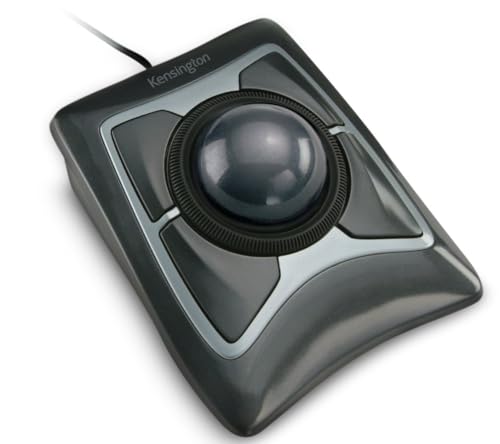
- Large 55mm ball with optical tracking
- Ambidextrous ergonomic design
- Detachable wrist rest and wired USB
Best For: Users seeking stable wired control with either hand
Best RGB Value Pick
PORLEI Wired Ergonomic Trackball

- Five DPI settings up to 1200
- 34mm thumb ball for compact spaces
- RGB lighting with USB-A/USB-C connection
Best For: Right-handed users wanting wired RGB styling and simple DPI control
Best Customizable Pick

- Up to 10 customizable controls
- Bluetooth, wireless, and wired modes
- 500/1000/1500 DPI settings
Best For: Power users who prioritize programmable shortcuts and connectivity options
Best Adjustable Wireless Pick
Ergonomic Rechargeable Trackball

- Adjustable 0° or 18° tilt
- Bluetooth and 2.4GHz for three devices
- 800–4800 DPI with quiet clicks
Best For: Right-handed users wanting adjustable wireless comfort
Best Finger-Controlled Wired Pick

- Large 52mm finger-operated ball
- Eight buttons with horizontal scrolling
- 500/1000/1500 DPI switching
Best For: Right-handed users wanting wired precision and extra controls
Best Silent Ergonomic Pick
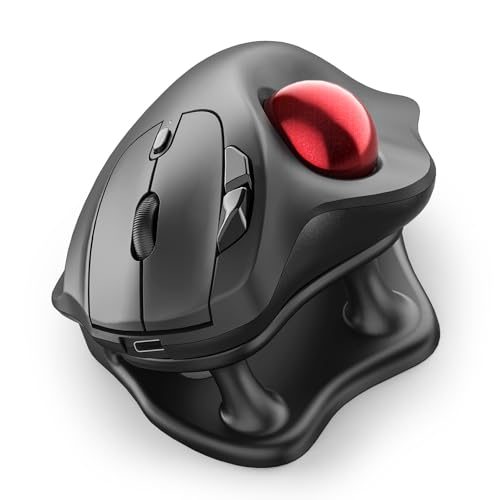
- 21.7° ergonomic tilt stand
- Silent trackball, buttons, and scroll wheel
- Bluetooth and USB receiver for three devices
Best For: Quiet multi-device work and comfortable long sessions
Large-Ball Comfort Pick
ELECOM Huge Wireless Trackball

- 52mm ball with soft palm rest
- Eight buttons and three DPI levels
- 2.4GHz wireless operation
Best For: Right-handed users wanting comfortable, low-movement control
Flexible Connection Pick

- Wired, wireless, and Bluetooth modes
- Eight programmable buttons
- 500–1500 DPI adjustment
Best For: Right-handed users needing versatile connectivity
High-Spec Customization Pick

- 12,000 DPI sensor with 1000Hz reporting
- Three connection modes and six-device pairing
- Ten buttons with swappable bearings
Best For: Users wanting high sensitivity and extensive customization
Best Wireless Comfort Pick – Nulea M501 Wireless Trackball
For shoppers comparing trackballs for gaming and everyday computing, the Nulea M501 emphasizes relaxed thumb control, adjustable sensitivity, and wireless flexibility. Its right-handed ergonomic shape is suited to users who want to reduce large wrist and arm movements, especially in compact workspaces.
Best For: Right-handed users who want a rechargeable wireless trackball for flexible desktop, couch, or small-space use.
Pros:
- Connects with up to three devices through Bluetooth or the included USB receiver.
- Four DPI levels support different cursor-speed preferences.
- Rechargeable battery eliminates the need for disposable cells.
- Six-button layout includes convenient back and forward controls.
Cons:
- Buttons are not programmable.
- Right-handed design does not suit left-handed users.
- Requires the included cable or a standard 5V USB source for charging; fast chargers should not be used.
The M501 is a practical choice when wireless connectivity and reduced desk movement matter more than gaming-specific customization. Its adjustable DPI and compact-surface versatility make it a flexible everyday option.
Best Ambidextrous Wired Pick – Kensington Expert Trackball
Kensington Expert Trackball Mouse (K64325), Black Silver, 5"W x 5-3/4"D x 2-1/2"H
Check Price On AmazonThe Kensington Expert is a strong contender among trackballs for gaming when reliable wired performance and broad hand compatibility are priorities. Its large 55mm ball, optical tracking, and wrist rest focus on controlled cursor movement and extended comfort.
Best For: Users who want an ambidextrous, wired trackball with a large ball and supported customization software.
Pros:
- Large 55mm ball is designed for precise cursor control.
- Ambidextrous shape accommodates either hand.
- Detachable wrist rest supports the hand and wrist.
- Four buttons, scroll speed, and cursor speed can be customized through KensingtonKonnect on supported systems.
Cons:
- Wired USB-A connection limits cable-free setup.
- Customization is not available through KensingtonKonnect on ChromeOS, and Windows ARM-based computers are not currently supported.
- Fewer buttons than some programmable trackball alternatives.
Choose the Kensington Expert if stable USB connectivity, ambidextrous ergonomics, and a large control ball are more important than wireless freedom. It is especially appealing for users who value wrist support during long sessions.
Best RGB Value Pick – PORLEI Wired Ergonomic Trackball
The PORLEI wired trackball adds gaming-style RGB lighting to a compact right-handed design. For shoppers considering trackballs for gaming, its five DPI settings, 34mm thumb ball, and stable USB connection provide straightforward control without requiring drivers.
Best For: Right-handed users who want an affordable wired trackball with RGB lighting and adjustable cursor speed.
Pros:
- Five DPI settings range from 100 to 1200 for slower or faster cursor movement.
- 34mm thumb-controlled ball works well in tight workspaces and on varied surfaces.
- USB-A and USB-C compatibility provides a direct wired connection.
- RGB lighting adds a gaming-oriented desktop accent.
Cons:
- Buttons are not programmable.
- Back and forward buttons are not compatible with macOS.
- Wired 1.8-meter cable does not provide wireless freedom.
The PORLEI is a sensible fit for users who want wired stability, flexible DPI control, and RGB styling without extra software. Its limitations are mainly the fixed button functions and macOS restriction for navigation buttons.
Best Customizable Pick – ELECOM DEFT PRO Trackball
The ELECOM DEFT PRO stands out among trackballs for gaming and productivity with extensive button customization and three connection methods. Its ergonomic right-handed layout, adjustable DPI, and precise trackball control suit users who want to tailor navigation and shortcuts.
Best For: Power users who want programmable controls, multi-device connectivity, and a high degree of navigation flexibility.
Pros:
- Eight physical buttons plus a tilting scroll wheel provide up to 10 customizable controls through Mouse Assistant software.
- Bluetooth, wireless USB, and wired USB connections support different setups.
- Switchable 500, 1000, and 1500 DPI settings accommodate different cursor speeds.
- Large ball and ruby bearings are designed for smooth movement and easier maintenance.
Cons:
- Right-handed design is not ambidextrous.
- Customization depends on supported Windows or macOS software.
- Uses a replaceable AA battery in wireless operation.
The DEFT PRO is the most control-focused option in this group. Its programmable inputs and three connection modes make it compelling for users willing to spend time configuring shortcuts, while wired mode avoids battery concerns.
Best Adjustable Wireless Pick – Ergonomic Rechargeable Trackball
For shoppers comparing trackballs for gaming and everyday computing, this wireless model stands out for its adjustable 0° or 18° tilt, thumb-controlled ball, and flexible connectivity. Five DPI settings, quiet clicks, and rechargeable USB-C power make it practical for extended desk sessions, though first-time trackball users may need an adjustment period.
Best For: Right-handed users who want an adjustable wireless trackball for multi-device work, study, or light gaming.
Pros:
- Adjustable 0° or 18° ergonomic angle supports different wrist positions.
- Connects to up to three devices through Bluetooth and 2.4GHz wireless.
- Offers five DPI levels from 800 to 4800 and quiet-touch buttons.
- Rechargeable USB-C battery and optional ambient backlight add convenience.
Cons:
- Thumb-operated control may take one to two weeks to feel natural for new users.
- The customization driver is not compatible with Mac OS.
- Designed for right-handed use only.
This is a versatile choice if comfort, wireless flexibility, and adjustable sensitivity matter more than gaming-specific features. Its broad compatibility and compact control style also suit tight workspaces.
Best Finger-Controlled Wired Pick – ELECOM HUGE Trackball
Among trackballs for gaming and precision-focused desktop use, the wired ELECOM HUGE emphasizes finger control with a large 52mm ball, optical tracking, and eight physical buttons. Its palm rest and adjustable 500/1000/1500 DPI settings make it well suited to long editing or productivity sessions, while the cable favors a fixed setup.
Best For: Right-handed users who prefer a large finger-operated ball, wired reliability, and extra controls for productivity or creative work.
Pros:
- Large 52mm trackball provides a distinctive finger-operated control experience.
- Eight buttons include scroll-wheel tilting for horizontal scrolling.
- Switchable 500, 1000, and 1500 DPI settings support different cursor speeds.
- Attached palm rest and smooth ruby ball bearings support comfortable operation.
Cons:
- Wired connection offers less flexibility than wireless alternatives.
- Right-handed design limits use for left-handed players.
- Its large 7.2-inch length may require more desk space.
The HUGE is a strong option for users who value control, scrolling, and a stable wired connection. It is especially compelling for office, graphic design, and video or photo editing setups where a larger trackball and multiple buttons can be useful.
Best Silent Ergonomic Pick – Nulea Wireless Trackball
For buyers seeking quiet trackballs for gaming, office work, or late-night use, the Nulea combines thumb control with a 21.7° tilt stand and silent operation. It connects to up to three devices through Bluetooth or a USB receiver and includes four DPI levels, making it a comfortable option for multitasking rather than competitive gaming.
Best For: Right-handed users who prioritize silent operation, an elevated wrist angle, and multi-device wireless convenience.
Pros:
- 21.7° tilt stand promotes a more elevated, natural hand position.
- Trackball, buttons, and scroll wheel are designed for noise-free operation.
- Bluetooth and USB receiver support switching among up to three devices.
- Four DPI settings from 400 to 1600 suit controlled or faster cursor movement.
Cons:
- Buttons are not programmable.
- Maximum sensitivity is 1600 DPI, lower than some competing models.
- Compatibility details list Windows 11 and macOS 14 as minimum versions.
The Nulea is a practical comfort-first pick for shared spaces and long desk sessions. Its silent controls and tilt stand are appealing, but users wanting extensive button customization or higher DPI should consider another model.
Large-Ball Comfort Pick – ELECOM Huge Wireless Trackball
For shoppers comparing trackballs for gaming and extended computer use, the ELECOM Huge emphasizes broad, comfortable control. Its 52mm ball, index-finger operation, adjustable DPI, and 2.4GHz wireless connection make it a practical choice when you want precise movement without repeatedly moving your whole hand.
Best For: Right-handed users who prioritize a large ball and palm support for long sessions.
Pros:
- Large 52mm trackball and soft palm rest support comfortable, low-movement control.
- Eight physical buttons include tilt-wheel inputs for additional shortcuts and horizontal scrolling.
- Switchable 500, 1000, and 1500 DPI settings allow you to adjust cursor speed.
- 2.4GHz wireless connection offers up to 10 meters of range on non-magnetic surfaces.
Cons:
- Its large 7.2-inch length and 9.2-ounce weight may take up substantial desk space.
- The design is right-hand oriented.
- It uses an AA battery rather than a rechargeable internal battery.
The Huge is most appealing if comfort and broad, deliberate cursor control matter more than compact size or very high sensitivity. Its modest 1500 DPI ceiling is better suited to general gaming and productivity than highly sensitivity-dependent competitive play.
Flexible Connection Pick – ELECOM EX-G Pro Trackball
The ELECOM EX-G Pro is a versatile option among trackballs for gaming, offering wired, 2.4GHz wireless, and Bluetooth connectivity. Its thumb-controlled design, eight programmable buttons, and selectable DPI settings give right-handed users multiple ways to configure cursor control across computers and compatible mobile devices.
Best For: Right-handed users who want a compact ergonomic trackball with several connection options.
Pros:
- Supports wired, wireless, and Bluetooth connections for flexible setup.
- Eight buttons can be assigned functions through ELECOM Mouse Assistant software.
- 500, 1000, and 1500 DPI settings provide adjustable cursor speed.
- Removable trackball and large ruby bearings simplify routine cleaning and maintenance.
Cons:
- Its maximum sensitivity is 1500 DPI, which may not suit players seeking very high sensitivity.
- The mouse is designed for right-handed use.
- Battery operation requires an AA battery, although a wired connection is also available.
Choose the EX-G Pro if connection flexibility and programmable controls are central to your setup. It is a balanced choice for gaming, office work, and device switching, but its thumb-control layout and 1500 DPI limit may not appeal to every player.
High-Spec Customization Pick – ELECOM IST PRO Trackball
For buyers seeking advanced trackballs for gaming, the ELECOM IST PRO stands out with a 12,000 DPI PixArt sensor, 1000Hz report rate, and three connection modes. It also supports up to six paired devices, ten programmable buttons, silent switches, and swappable steel or ruby bearings for a more customizable setup.
Best For: Right-handed users who want high sensitivity, extensive customization, and multi-device connectivity.
Pros:
- 12,000 DPI PixArt sensor and 1000Hz report rate provide high-resolution tracking specifications.
- Bluetooth 5.3, USB-C wired, and 2.4GHz wireless connectivity support varied setups.
- Ten programmable buttons plus a tilt wheel offer substantial shortcut customization.
- Swappable bearings, silent switches, and up to 18 months of battery life add flexibility.
Cons:
- The feature-rich design may be more than users need for basic cursor control.
- It is right-hand oriented.
- The listed weight is 156 grams, making it less lightweight than some compact mice.
The IST PRO is the strongest fit here for users who want modern connectivity and gaming-oriented specifications in a trackball format. Its broad feature set is especially useful for people who move between devices or rely on many custom shortcuts.
How We Picked the Best Trackballs for Gaming
We focused on the features that matter most in real-world gaming and everyday desktop use: tracking precision, sensor responsiveness, button layout, ball size, hand support, connectivity, and adjustability. The selection includes thumb-controlled models for a familiar mouse-like feel and finger-operated designs that can offer finer cursor control. We also considered wired reliability, wireless flexibility, rechargeable batteries, DPI adjustment, tilt stands, and compatibility with different desk sizes.
Because trackball comfort is highly personal, no single design is ideal for every player. The right choice depends on whether you prioritize fast repositioning, precise aiming, ergonomic support, portability, or broad device compatibility.
Quick Comparison
- Best for a familiar transition: Thumb-operated models such as the Nulea and ELECOM EX-G Pro generally feel closest to a conventional mouse.
- Best for finger control: The Kensington Expert and ELECOM Huge models place the ball under the fingers for larger, deliberate movements.
- Best for flexible connectivity: The ELECOM IST PRO supports Bluetooth, 2.4GHz wireless, and wired operation.
- Best for compact or mobile desks: Wireless models with rechargeable batteries and adjustable tilt reduce cable clutter and improve positioning freedom.
- Best for dependable low-latency use: Wired options avoid battery concerns and wireless interference, provided your cable setup is convenient.
Key Buying Factors for Trackballs for Gaming
Control Style and Ball Position
Thumb-operated trackballs are usually easier for mouse users to learn, while finger-operated designs shift control to the index and middle fingers. Finger control may suit users who want broader, more gradual movement, but it can require a longer adjustment period.
Tracking and DPI Range
Look for adjustable DPI if you play games that require different sensitivity levels. Higher DPI can speed up desktop navigation, while lower settings may help with careful aiming. A responsive sensor matters more than a headline DPI number, particularly for competitive play.
Connection and Gaming Setup
Wired models are simple and consistent. Wireless models are better for clean desks and multiple devices, but check battery life, charging, receiver storage, and whether Bluetooth or 2.4GHz is supported. Multi-device models are useful if the same trackball will move between a gaming PC, laptop, and tablet.
Shape, Tilt, and Button Placement
Prioritize a palm-rest shape that supports your hand without forcing the wrist upward. Adjustable tilt can improve comfort, but a larger footprint may take more desk space. Extra buttons are useful for shortcuts and productivity, although they should be easy to reach without accidental presses.
Who Should Buy Which Trackballs for Gaming?
Choose a thumb-operated model if you want the quickest transition from a standard mouse. Pick a finger-operated design if precision, a larger control surface, or reduced thumb movement is more important. Wired trackballs suit stationary gaming stations and users who want minimal maintenance; wireless versions better fit flexible or shared setups. If you switch between devices often, prioritize models with multiple connection modes. Finally, players focused on competitive shooters should verify game compatibility and test sensitivity carefully, since a trackball’s stationary control style may feel very different from a conventional gaming mouse.