The best ambient light rejecting projector screens help preserve contrast and image detail when room lighting, windows, or outdoor conditions would wash out a standard white screen.
This roundup compares 10 options across fixed-frame, portable, outdoor, DIY-material, standard-throw, and ultra-short-throw setups, so you can match screen design, gain, size, and installation style to your projector and viewing space.
Best 10 Ambient Light Rejecting Projector Screens Picks for 2026
Best for Long-Throw Daylight Viewing
Valerion 100-inch Fresnel ALR Screen
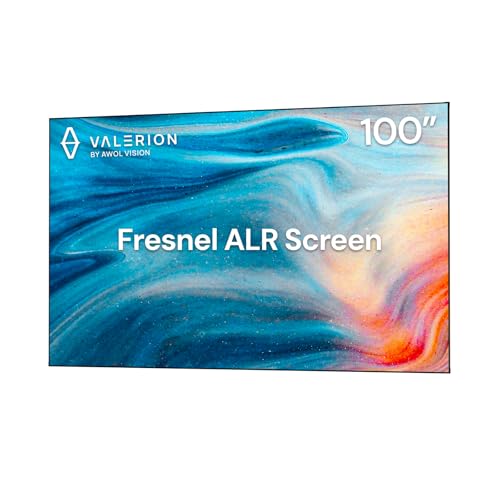
- 1.8 gain for a brighter picture
- Up to 85% overhead and side-light rejection
- Designed for long-throw projectors
Best For: Bright-room home theaters using long-throw projectors
Best Large Fixed-Frame Pick
Elite Screens CineGrey 3D 120-inch

- Large 120-inch 16:9 viewing area
- 1.2 gain CineGrey 3D ALR material
- Includes frame hardware and wall brackets
Best For: Dedicated theaters with standard-throw projectors
Best Quick-Setup Screen
VISULAPEX 80-inch Tripod ALR Screen

- Sets up in about two minutes
- 1.5 gain with claimed over 90% light rejection
- Adjustable tripod and included carry bag
Best For: Portable indoor or outdoor viewing with fast setup
DIY Fixed-Frame ALR Material
Large Grey 130-Inch Screen Fabric

- 69-by-118-inch material for up to 130-inch 16:9 screens
- Three-layer construction with black backing
- Requires fixed-frame DIY installation
Best For: Large front-projection fixed-frame builds
UST Daylight Screen
100-Inch PET Crystal Fixed Frame

- Designed for ultra-short-throw projectors
- Claims up to 85% ambient-light rejection
- Supports 4K UHD and 3D viewing
Best For: Bright-room UST home theaters and presentations
Portable ALR Projection Screen

- Portable 100-inch 16:9 display
- Supports indoor and outdoor use
- Wall, rope, or separate-tripod setup options
Best For: Traveling movie nights and flexible presentations
Best DIY Wall-Mount ALR Screen
SilverMagic 100-Inch Standard-Throw Screen

- Up to 2.6x center-seat brightness gain
- Reduces ambient light and image bleed
- Trim-to-fit installation with wall-safe tape
Best For: DIY standard-throw projector setups
Best UST Fixed-Frame ALR Screen
100-Inch 4K/8K UST Projection Screen

- Designed specifically for UST projectors
- Rigid aluminum frame with spring tension
- Supports 4K, 8K, and 3D projection
Best For: Permanent UST home theater installations
Best for Long-Throw Daylight Viewing – Valerion 100-inch Fresnel ALR Screen
If you need ambient light rejecting projector screens for a bright home cinema, the Valerion 100-inch Fresnel model is designed specifically for long-throw projectors. Its 1.8 gain and Fresnel surface aim to preserve brightness, contrast, and color in rooms with overhead or side lighting.
Best For: Home theater owners using a compatible long-throw projector who want a large, bright image for daytime viewing.
Pros:
- Claims up to 85% rejection of overhead and side ambient light.
- 1.8 gain and a 90-degree viewing angle support bright, detailed images.
- Supports premium 4K and 8K projection and has a scratch-resistant, easy-to-clean surface.
- Rollable design can simplify transport and DIY installation.
Cons:
- Not compatible with ultra-short-throw projectors.
- The 90-degree viewing angle is narrower than the portable alternatives in this roundup.
- At 33 pounds, it is less convenient to move once installed.
This is a strong fit when brightness and a large fixed viewing area matter more than portability. Confirm your projector is long-throw before buying, since the Fresnel design is not intended for UST models.
Best Portable Outdoor Option – AAJK 80-inch Foldable ALR Screen
For flexible indoor and outdoor viewing, this 80-inch model combines a foldable design with an ambient light rejecting surface. It is one of the more adaptable ambient light rejecting projector screens here, supporting short-throw and ultra-short-throw projectors as well as standard setups.
Best For: Movie nights, sports, presentations, and users who need a screen that can move between indoor and outdoor locations.
Pros:
- Foldable construction supports storage, transport, and wall-mounted installation.
- Compatible with short-throw and ultra-short-throw projectors.
- 6-layer PET optical coating offers 4K-level clarity and a claimed 160-degree viewing angle.
- Stain-resistant surface can be wiped clean, and light creases can be reduced with steam.
Cons:
- The supplied warranty description is only 30 days.
- Foldable screens may require crease maintenance despite the wrinkle-resistant material.
- The product information lists both a 160-degree viewing angle and a 50-degree anti-glare angle, so viewing performance may depend on seating and lighting.
This screen makes the most sense when portability and projector compatibility are priorities. Its foldable format is convenient for changing locations, though buyers should be comfortable with occasional crease management.
Best Large Fixed-Frame Pick – Elite Screens CineGrey 3D 120-inch
The Elite Screens CineGrey 3D is a large fixed-frame choice for standard-throw home theaters. Among these ambient light rejecting projector screens, it stands out for its 120-inch 16:9 image, angular-reflective CineGrey 3D material, black velvet frame, and included hardware for creating a flat projection surface.
Best For: Dedicated home theater spaces using standard-throw projectors and needing a large, professionally finished screen.
Pros:
- 120-inch 16:9 viewing area provides an expansive cinema-style image.
- CineGrey 3D material offers 1.2 gain, a 90-degree viewing angle, and ambient light rejection.
- Black velvet frame absorbs overshoot and helps enhance perceived contrast.
- Includes adjustable fix plates, wall brackets, installation hardware, and a two-year manufacturer warranty.
Cons:
- Not compatible with ultra-short-throw, short-throw, or triple-laser projectors.
- The fixed frame requires substantial wall space, with an assembled width of 109.3 inches.
- Its 1.2 gain is lower than the 1.5 and 1.8 gain options in this selection.
Choose this model when you want a large, flat, permanent installation and have a compatible standard-throw projector. Its included mounting system and velvet border make it particularly suited to a dedicated theater rather than a temporary setup.
Best Quick-Setup Screen – VISULAPEX 80-inch Tripod ALR Screen
The VISULAPEX 80-inch screen is built for users who want ambient light rejecting projector screens without a permanent installation. Its tripod, carry bag, adjustable height, and claimed 1.5 gain make it practical for indoor presentations, outdoor movie nights, and temporary home theater use.
Best For: Portable indoor and outdoor viewing where fast setup, adjustable height, and easy transport matter.
Pros:
- Tripod setup can be completed in about two minutes and wall mounting is also supported.
- Claims over 90% ambient light rejection with 1.5 gain and a black backing.
- Adjustable height ranges from 45 to 89 inches to help clear viewing obstacles.
- Includes a carry bag and weighs 4.7 pounds according to the supplied details.
Cons:
- The screen is 80 inches, so it offers less viewing area than the 100- and 120-inch models.
- A tripod requires floor space and may be less stable than a fixed-frame installation.
- The supplied indoor-use note recommends a space wider than 70 inches and taller than 89 inches.
This is the practical pick for flexible setups rather than a permanent theater. The quick assembly and adjustable stand are useful advantages, while the smaller image and need for floor space are trade-offs worth planning for.
DIY Fixed-Frame ALR Material – Large Grey 130-Inch Screen Fabric
This large grey projection fabric is a DIY option for shoppers seeking ambient light rejecting projector screens in a fixed-frame setup. Its three-layer EPPE polymer construction has a black backing, matte finish, 0.85 gain, and a claimed 160-degree viewing angle. It is supplied as material only, so it must be stretched and mounted rather than hung directly.
Best For: DIY builders creating a large 16:9 fixed-frame screen for front projection with a projector rated at least 2000 ANSI lumens.
Pros:
- Large 69-by-118-inch sheet supports up to a claimed 130-inch diagonal 16:9 screen.
- Black backing helps prevent light transmission and reflection interference.
- Matte, diffuse-reflective surface offers a claimed 160-degree viewing angle.
- Designed for high contrast and color saturation under daily ambient light.
Cons:
- Material only; it cannot be hung directly and requires a fixed-frame DIY installation.
- Not suitable for rear, side, ultra-short-throw, or short-throw projection.
- The grey material is not recommended for projectors below 2000 ANSI lumens.
This is a good fit when you want to build a large permanent screen and already have the tools and frame plan. Its projection restrictions and installation requirements make it less suitable for portable or UST systems.
UST Daylight Screen – 100-Inch PET Crystal Fixed Frame
This 100-inch fixed-frame screen is designed specifically for ultra-short-throw projectors and bright-room viewing. Its PET Crystal surface claims up to 85% ambient-light rejection, while the multi-layer construction, black light-absorbing core, and 160-degree viewing angle target high-contrast 4K and 3D images.
Best For: Home theaters, classrooms, and offices using a compatible UST projector in rooms with daylight or other ambient light.
Pros:
- Designed for UST projectors with a 100-inch 16:9 display.
- Claims up to 85% ambient light rejection for brighter-room viewing.
- Supports 4K UHD and 3D content.
- Thin 10mm frame and PET Crystal material are intended to provide a flat, wrinkle-free surface.
Cons:
- UST-specific design may not be the right match for standard-throw projectors.
- Fixed-frame installation is less portable than a pull-down or travel screen.
- The supplied information does not specify a screen gain rating.
Choose this model when projector compatibility and daylight performance are your priorities. The fixed frame suits a dedicated wall installation, while the claimed ambient-light rejection and 160-degree viewing angle support group viewing.
Portable ALR Projection Screen – 100-Inch 16:9 Travel Display
This 100-inch portable screen is aimed at shoppers who want ambient light rejecting projector screens for flexible indoor or outdoor use. Its 16:9 surface is described as suitable for 4K Ultra HD viewing and is designed to reduce the effect of room light while supporting wall, rope, or tripod-style setup.
Best For: Movie nights, presentations, sports, and casual home-theater use where the screen needs to move between rooms or locations.
Pros:
- 100-inch diagonal 16:9 format accommodates group viewing.
- Portable design can be mounted with hooks, hung with rope, or used with a separate tripod.
- Suitable for indoor or outdoor applications.
- Designed to diffuse reflected light and reduce the impact of ambient light.
Cons:
- A tripod is not stated as included, so users may need to supply one.
- Flexible mounting may not provide the uniformly flat surface of a fixed-frame screen.
- The supplied notes do not provide a specific light-rejection percentage or viewing-angle rating.
This screen makes the most sense for convenience and portability rather than a permanently installed theater. It offers several setup options, but buyers wanting precise tensioning or quantified ALR performance may prefer a fixed-frame model.
Best DIY Wall-Mount ALR Screen – SilverMagic 100-Inch Standard-Throw Screen
For a customizable installation, this SilverMagic screen is a practical option among ambient light rejecting projector screens. Its gray surface is designed for standard-throw projectors, boosting center-seat brightness while helping reduce the effects of room lighting.
Best For: DIY home theaters using a standard-throw projector and needing a trim-to-fit wall or frame installation.
Pros:
- Up to 2.6x brightness gain from center seating.
- Suppresses about 30% of ambient light to improve contrast and saturation.
- Wall-safe tape installation takes about 10 minutes, and the material can be trimmed.
- Designed for a flat appearance with neat edges similar to a fixed-frame screen.
Cons:
- Not intended for ultra-short-throw projectors.
- Its listed viewing angle is 30 degrees, so seating placement matters.
- It is a screen material rather than a complete rigid fixed-frame assembly.
This is a strong fit when brightness and installation flexibility matter more than a wide viewing angle. Confirm that your projector is standard throw and plan seating near the center for the most noticeable brightness benefit.
Best Portable Outdoor ALR Screen – AAJK 120-Inch Foldable Screen
The AAJK 120-inch screen is a flexible choice among ambient light rejecting projector screens for viewers who want a large image indoors or outdoors. Its foldable construction, stain-resistant surface, and light-resistant optical coating make it suited to portable movie nights and presentations.
Best For: Indoor and outdoor users who need a portable 120-inch screen for movies, sports, gaming, or presentations.
Pros:
- Foldable design supports storage, transport, and wall-mounted use.
- Six-layer PET optical coating is described as wrinkle-resistant, non-transparent, and easy to wipe clean.
- Provides a 160-degree listed viewing angle and a 50-degree anti-glare angle.
- Compatible with short-throw and ultra-short-throw projectors.
Cons:
- As a foldable screen, it may require light steaming to reduce creases.
- Its 120-inch size requires substantial wall or outdoor setup space.
- The supplied warranty is limited to 30 days.
This screen prioritizes versatility and portability over permanent installation. It is especially appealing for users who want one large screen for changing locations, provided they have room to manage its expansive 16:9 format.
Best UST Fixed-Frame ALR Screen – 100-Inch 4K/8K UST Projection Screen
Built specifically for ultra-short-throw projectors, this 100-inch fixed-frame model is a specialized option among ambient light rejecting projector screens. Its micro-toothed and triangular-grating structure is designed to absorb overhead ambient light while directing projected light toward viewers.
Best For: UST projector owners seeking a permanent wall-mounted screen for home theaters, offices, or classrooms.
Pros:
- UST-specific optical structure helps reject ambient light from above.
- Supports 4K, 8K, and 3D projection with a listed 0.8 gain.
- Aluminum frame and spring-tension system are designed to maintain a flat surface.
- Black backing helps prevent light leakage, while the ultra-narrow bezel offers a streamlined look.
Cons:
- Designed for ultra-short-throw projectors rather than standard-throw models.
- Fixed-frame construction is less portable and flexible than a foldable screen.
- Assembly and wall mounting may require more planning than a simple material-only screen.
This is the most purpose-built choice here for a UST living-room setup. Its rigid frame and UST-oriented surface make it a better match for permanent installation than casual, portable viewing.
How We Picked These Ambient Light Rejecting Projector Screens
We focused on screen options that address real-world projection challenges rather than treating every screen as interchangeable. The selection includes fixed-frame screens for dedicated rooms, portable models for indoor and outdoor use, replacement fabric for DIY installations, and specialized screens designed for ultra-short-throw projectors.
We also considered advertised ambient-light rejection, gain, aspect ratio, screen size, mounting method, portability, and compatibility with common projector types. Because published performance can vary with viewing angle, projector brightness, and room lighting, treat manufacturer specifications as guidance rather than a guarantee of identical results in every space.
Quick Comparison
- Best for dedicated home theaters: Fixed-frame ALR screens provide a taut, clean surface and stable geometry.
- Best for UST projectors: Choose a screen specifically labeled for ultra-short throw projection; its optical pattern is designed for the steep projection angle.
- Best for flexible viewing: Portable screens with stands or foldable designs are easier to move indoors and outdoors.
- Best for DIY installations: ALR screen material lets you build or adapt a frame, but careful tensioning is essential.
- Best for daytime viewing: Prioritize a genuine ALR design, adequate projector brightness, and the ability to control direct light.
Key Buying Factors for Ambient Light Rejecting Projector Screens
Projector Type and Throw Distance
Start with compatibility. Standard-throw projectors generally need a different screen surface from UST models. A UST screen can produce poor results with a conventional projector, while a standard-throw ALR surface may not correctly reflect light from a projector positioned inches from the wall.
Size, Aspect Ratio, and Room Layout
Most options here use a 16:9 format, which suits HDTV and modern streaming content. Measure the available wall width, ceiling height, seating distance, and projector throw range before choosing 80, 100, or 120 inches. A larger screen is not automatically better if it reduces brightness or forces viewers too close.
Gain and Ambient-Light Performance
Gain describes how strongly a screen reflects light toward viewers. Higher gain can improve brightness but may narrow viewing angles or emphasize hotspots. ALR performance depends on the direction and color of incoming light, so these screens work best when lamps and windows are not aimed directly at the viewing surface.
Installation and Surface Tension
Fixed frames usually offer the flattest surface, while portable screens trade some rigidity for convenience. For DIY fabric, plan for a sturdy frame and even tension. Check mounting hardware, screen weight, portability, cleaning guidance, and whether the product supports front projection before ordering.
Who Should Buy Which Ambient Light Rejecting Projector Screens?
Choose a fixed-frame model if you want a permanent, polished setup and watch regularly in a room with moderate ambient light. Pick a UST-specific screen if your projector sits close to the wall. Portable stand-mounted or outdoor screens are better for occasional movie nights, travel, and spaces that cannot accommodate permanent installation. DIY material suits experienced installers who need a custom size or frame. Finally, if your room is brightly lit throughout the day, combine an ALR screen with blackout curtains, strategic lighting, and a sufficiently bright projector for the most consistent image.