Moisture-sensitive filament can cause stringing, bubbling, weak layers, and inconsistent extrusion—especially when spools sit exposed between prints. The right dryer helps stabilize material before and during printing while fitting your Bambu Lab workflow.
We compared AMS heater upgrades and standalone multi-spool dryers across capacity, temperature control, heating design, and printing convenience. The selections below cover compact two-spool solutions, four-spool storage boxes, and dedicated options for drying directly through an AMS setup.
Best 10 Filament Dryer for Bambu Lab Picks for 2026
Best Multi-Material Upgrade
EIBOS Tetras for Bambu Lab AMS
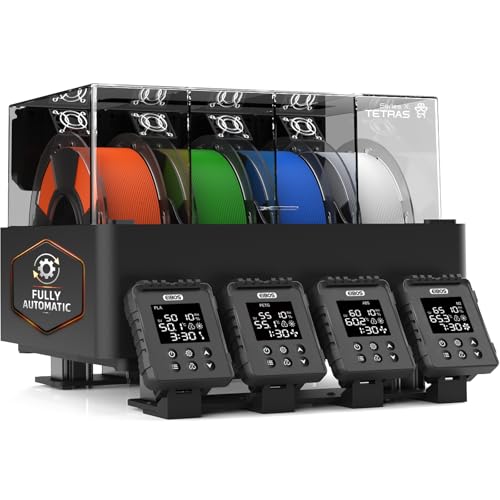
- Four independent drying chambers
- Dries while printing
- Automatic venting and humidity control
Best For: AMS Gen 1 users printing multiple filament types
Best Standalone Four-Spool Dryer

- Fits four 1 kg or two 2 kg spools
- Dual 200W heating chambers
- Up to 85°C with sealed storage
Best For: High-volume users needing external spool capacity
Best Value Pick

- 45–65°C adjustable drying range
- Fits one 1KG spool
- Humidity display and 24-hour timer
Best For: Everyday single-spool filament drying
High-Capacity Choice

- Dries up to four 1KG spools
- Independent dual chambers
- 45–85°C range with automatic mode
Best For: Multi-material and multi-printer workflows
Engineering Filament Pick
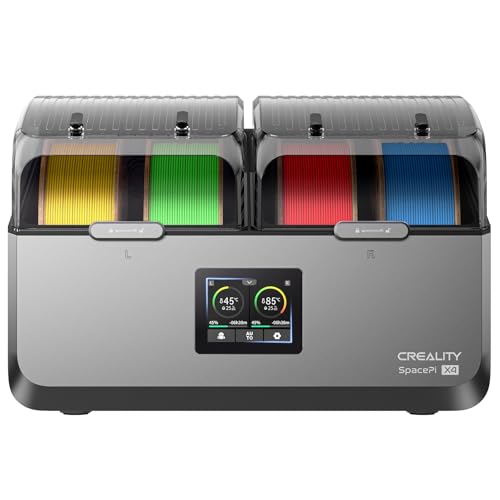
- Four-spool drying and printing
- Dual independent 85°C chambers
- Single-chamber mode saves up to 40% energy
Best For: Multi-printer setups and engineering filaments
Best Value Filament Dryer

- Holds two 1 kg spools
- Supports 1.75 mm and 2.85 mm filament
- 40–50°C adjustable drying with LCD monitoring
Best For: Budget-friendly dual-spool filament storage and basic drying
Best High-Heat Option
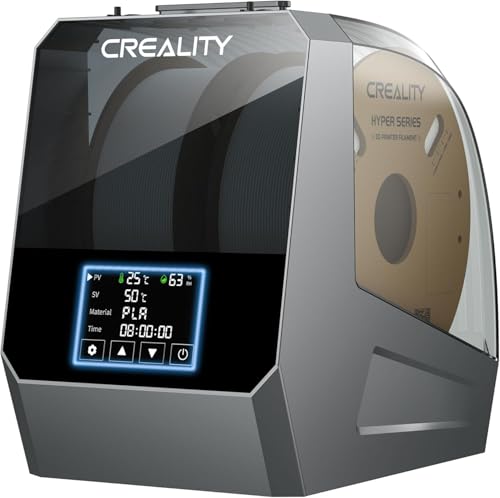
- 160W double-PTC 360° heating
- 45–70°C adjustable temperature range
- Two-spool capacity with presets for 12 filament types
Best For: Multi-material printing with higher-temperature drying needs
Best AMS Upgrade

- Adds two independent drying chambers to AMS Gen 1
- Holds four spools and dries while printing
- Automatic venting, sealing, and humidity control
Best For: Bambu Lab AMS Gen 1 users printing with multiple moisture-sensitive materials
Best Multi-Material Upgrade – EIBOS Tetras for Bambu Lab AMS
If you need a filament dryer for Bambu Lab that can handle different materials at the same time, the EIBOS Tetras is a feature-rich upgrade for Bambu Lab AMS Gen 1. Its four independent chambers let you set separate drying conditions while printing, though the AMS itself is not included.
Best For: Bambu Lab AMS Gen 1 owners printing multiple filament types, including moisture-sensitive nylon, TPU, PETG, or PLA.
Pros:
- Four independent chambers with separate temperature and humidity controls.
- Supports drying while printing, with temperatures from 20°C to 65°C.
- Automatically vents moisture, seals after drying, and monitors humidity for storage.
Cons:
- Compatible with AMS Gen 1 only; AMS is not included.
- Requires a separate power supply and has a heavier 8.8-pound design.
The Tetras is the most flexible option here for users who regularly switch among materials or need continuous moisture control. Its independent settings and storage features make it more capable than a basic heated AMS cover, but installation and compatibility should be checked before purchase.
Best Simple AMS Cover Upgrade – SUNLU AMS Heater
The SUNLU AMS Heater is a straightforward filament dryer for Bambu Lab AMS Gen 1 users who want to dry all four spools while printing. It replaces the original lid without requiring a destructive modification, but it does not include the AMS unit.
Best For: Users seeking a fast, simple way to add simultaneous drying to an existing Bambu Lab AMS Gen 1.
Pros:
- Heats to 70°C in about 20 minutes.
- Preserves AMS Gen 1 functions and supports four-spool capacity.
- Uses a three-step, non-destructive installation process.
Cons:
- Not compatible with Bambu Lab AMS Gen 2.
- AMS is not included.
- Provides less individualized control than a four-chamber dryer.
This SUNLU model focuses on quick installation and fast heating rather than extensive independent controls. It is a practical choice when you want a compact AMS upgrade with minimal setup and already own a compatible Gen 1 system.
Best Standalone Four-Spool Dryer – Creality Space Pi X4
The Creality Space Pi X4 is a standalone filament dryer box worth considering if you need a filament dryer for Bambu Lab without modifying the printer’s AMS. It holds four standard 1 kg spools or two 2 kg spools and combines high-temperature drying with sealed storage.
Best For: High-volume Bambu Lab users who want a separate dryer for multiple standard or large spools.
Pros:
- Holds four 1 kg spools or two 2 kg spools.
- Dual 200W heating chambers reach up to 85°C.
- Sealed storage helps limit moisture re-absorption during pauses.
Cons:
- It is a separate dryer rather than an AMS-integrated upgrade.
- Its dual chambers may offer less individual control than four independent chambers.
The Space Pi X4 is a strong capacity-focused alternative for Bambu Lab owners who prefer a dedicated external appliance. Its broad temperature range suits common and advanced materials, while the sealed enclosure helps keep prepared spools protected.
Best Automatic AMS Upgrade – SUNLU 70°C AMS Heater
This SUNLU unit is a compact filament dryer for Bambu Lab AMS 1.0 that adds active drying while printing. It replaces the original AMS top cover, reaches 70°C in about 20 minutes, and is designed to dry all four rolls without tools.
Best For: AMS 1.0 owners who want automatic humidity-based drying with quick, tool-free installation.
Pros:
- Dries four rolls simultaneously while printing.
- Reaches 70°C in approximately 20 minutes with PTC heating.
- Humidity sensor can start and stop drying automatically.
Cons:
- Compatible with AMS 1.0 only; AMS is not included.
- Offers less chamber-by-chamber control than the EIBOS Tetras.
For users who prioritize convenience, this SUNLU heater combines fast warm-up with automatic operation in a simple two-minute installation. It is best suited to an existing AMS 1.0 setup where all four spools can share the same drying approach.
Best Value Pick – Creality Space Pi SE
If you need a practical filament dryer for bambu lab, the Creality Space Pi SE is a straightforward option for one 1KG spool. Its adjustable 45–65°C range, 360° hot-air circulation, and filament feed compatibility make it suitable for common materials such as PLA, PETG, ABS, ASA, and TPU.
Best For: Makers who want an easy-to-use single-spool dryer for routine filament maintenance and printing.
Pros:
- Heats to 65°C within 15 minutes, according to the supplied specifications.
- Supports adjustable drying temperatures and times from 0–24 hours.
- Displays humidity and drying time with simple knob controls.
- Compatible with 1.75mm and 2.85mm filament diameters.
Cons:
- Holds one 1KG spool, so it is less suited to multi-spool workflows.
- Its maximum 65°C setting may be limiting for some higher-temperature engineering materials.
The Space Pi SE is a sensible pick when you value simple controls and broad everyday material compatibility over large capacity or advanced automation. Pairing it with suitable Teflon tubing can help maintain smoother filament feeding.
High-Capacity Choice – Comgrow SH03 4-Spool Dryer
For a high-capacity filament dryer for bambu lab, the Comgrow SH03 stands out with two independently controlled chambers that can hold up to four 1KG spools. Its 45–85°C range and separate airflow channels support simultaneous drying of different filament types.
Best For: Busy print setups that need to dry several spools or materials at once.
Pros:
- Supports simultaneous loading of up to four 1KG spools.
- Independent chamber temperature controls allow different materials to be dried separately.
- Offers automatic drying mode based on internal humidity.
- Includes 360° hot-air circulation and multiple monitoring and protection systems.
Cons:
- Its larger dual-chamber design is likely more than needed for occasional single-spool use.
- The supplied notes do not specify compatibility with a particular printer brand or ecosystem.
The SH03 is the most capable choice here for multi-spool workflows. Its automatic humidity-based mode, 98-hour maximum heating duration, and independent controls make it well suited to users managing several filament types at the same time.
Engineering Filament Pick – Creality Space Pi X4
The Creality Space Pi X4 is a strong filament dryer for bambu lab users who work with multiple spools and higher-temperature materials. Its dual independent chambers, four-spool capacity, and maximum 85°C temperature support continuous drying and printing across up to four printers.
Best For: Advanced users drying engineering filaments or running several printers at once.
Pros:
- Dries and feeds up to four spools simultaneously through eight filament holes and PTFE tubing.
- Each chamber has independent temperature control for two filament types.
- Dual 200W PTC heaters reach up to 85°C for materials such as PA, PAHT, and PC.
- Single-chamber operation can save up to 40% energy, according to the supplied notes.
Cons:
- Creality advises checking that other brands’ plastic trays are heat resistant.
- Its four-spool capacity may be excessive for users with a small or occasional printing setup.
The Space Pi X4 is the best fit when capacity, independent heating, and higher-temperature drying matter most. Its multi-printer design is particularly useful for production-style setups, but users should verify spool-tray heat resistance before operation.
Best Value Filament Dryer – Comgrow SH01 Dual-Spool Dryer
If you need a straightforward filament dryer for Bambu Lab setups, the Comgrow SH01 focuses on sealed storage and gentle internal heating. It holds two 1 kg spools, supports 1.75 mm and 2.85 mm filament, and offers adjustable 40–50°C drying for 6–12 hours.
Best For: Budget-conscious users who want dual-spool storage and basic drying for common PLA, ABS, and similar materials.
Pros:
- Stores two 1 kg spools in a sealed enclosure.
- Supports both 1.75 mm and 2.85 mm filament diameters.
- Includes temperature and humidity monitoring with a 2-inch LCD.
- Outlet uses a silicone cable sheath and Teflon tube for feeding during printing.
Cons:
- Its 40–50°C temperature range is more limited than higher-temperature dryers.
- The work state must appear on the screen or the unit may shut down after three minutes.
- The drying box is intended for filament only, not general-purpose dehydration.
The SH01 is a practical entry-level option when your priority is keeping two spools enclosed and reducing moisture exposure. Its lower maximum temperature makes it better suited to routine filament maintenance than demanding high-temperature drying.
Best High-Heat Option – Creality Space Pi Plus Dryer
The Creality Space Pi Plus is a strong filament dryer for Bambu Lab owners who want faster, more uniform heating and broader material support. Its 160W double-PTC system circulates hot air around two spools, while the 4-inch touchscreen offers presets and adjustable temperatures from 45–70°C.
Best For: Multi-material users who want two-spool drying, higher temperature control, and simple touchscreen presets.
Pros:
- Dries two 1 kg spools with double 360° hot-air circulation.
- Supports temperatures from 45–70°C and presets for up to 12 filament types.
- Works with 1.75 mm and 2.85 mm filament, including PLA, PETG, ABS, TPU, PA, PC, and composite materials.
- Offers four filament holes and two PTFE pipes for flexible feeding configurations.
Cons:
- The larger feature set may be unnecessary for users drying only standard PLA.
- Its supplied notes do not identify a Bambu Lab-specific mounting or AMS integration feature.
For a conventional standalone filament dryer for Bambu Lab printers, the Space Pi Plus offers the most capable temperature range and control interface in this group. The double-PTC design and broad material presets make it especially appealing for users who regularly switch between standard and engineering filaments.
Best AMS Upgrade – EIBOS Dyas AMS Heater
The EIBOS Dyas is a specialized filament dryer for Bambu Lab AMS rather than a typical standalone box. It adds two independently controlled drying chambers to an AMS Gen 1 setup, allowing up to four spools to dry while printing, with automatic venting, sealing, and humidity monitoring.
Best For: Bambu Lab AMS Gen 1 owners who need active, multi-spool drying during long or multi-material prints.
Pros:
- Provides two independent chambers with capacity for four spools.
- Supports drying while printing with separate 20–65°C temperature control.
- Offers adjustable 30-minute to 24-hour drying cycles, plus unlimited operation.
- Automatically vents moisture, seals after drying, and reactivates heating when humidity rises.
Cons:
- It is an add-on for Bambu Lab AMS Gen 1; the AMS itself is not included.
- Its specialized installation is less suitable for users without an AMS setup.
- The unit requires its own power supply and operates independently of Bambu Lab firmware.
Dyas is the most integrated choice here for AMS Gen 1 users who want to maintain filament conditions throughout a print. Its independent chambers and automatic moisture management are useful for mixed materials, but the AMS compatibility requirement should be confirmed before buying.
How We Picked the Best Filament Dryer for Bambu Lab
We focused on compatibility, practical drying performance, and ease of use rather than headline temperature alone. The lineup includes AMS heater upgrades designed for Bambu Lab AMS systems as well as standalone dryers that can prepare and store several spools at once.
Our comparison considers chamber count, spool capacity, maximum and adjustable temperatures, independent heating, sensor and display features, printing access, and whether the design is best suited to active drying, long-term storage, or both. Because filament types have different drying requirements, controllable heat and even circulation matter more than a single high-temperature claim.
Quick Comparison
| Type | Best For | Typical Strength | What to Check |
|---|---|---|---|
| AMS heater upgrade | Drying while printing from a Bambu Lab AMS | Integrated workflow and minimal spool handling | AMS generation, fit, power, and chamber compatibility |
| Two-spool dryer | Small setups and routine maintenance | Compact footprint and simpler loading | Spool width, temperature range, and outlet design |
| Four-spool dryer | Multi-material or higher-volume printing | Greater capacity and independent chambers | Counter space, power draw, and chamber controls |
| Dryer with storage features | Keeping prepared filament ready to print | Reduced exposure after drying | Seal quality, humidity management, and feed paths |
Key Buying Factors for a Filament Dryer for Bambu Lab
AMS Compatibility and Print Access
If you want to dry filament while printing, confirm that an AMS heater is made for your exact Bambu Lab AMS generation. Check how it routes filament, whether all bays remain usable, and whether installation changes the AMS cover, sensors, or maintenance access.
Temperature Control
PETG, TPU, PLA, ABS, and other materials benefit from different drying settings. Prefer a dryer with an adjustable range, clear controls, and a dependable sensor. Higher maximum temperature is useful only if it can be controlled accurately and safely.
Capacity and Chamber Layout
Two-spool models suit occasional users, while four-spool dryers are more practical for color changes, multiple materials, or batch preparation. Independent chambers can prevent one spool from receiving an unsuitable setting and may improve energy efficiency when drying fewer rolls.
Airflow, Sealing, and Feeding
Even heating and active circulation help remove moisture consistently. For printing directly from the box, inspect the number and placement of feed ports, the fit around common spool sizes, and whether the lid and outlets limit humidity re-entry.
Who Should Buy Which Filament Dryer for Bambu Lab?
Choose an AMS heater upgrade if your priority is a streamlined Bambu Lab setup that dries filament during printing. Verify generation-specific compatibility before ordering.
Choose a two-spool dryer if you have limited space or normally prepare one or two materials at a time. It is a straightforward choice for routine PLA, PETG, or TPU maintenance.
Choose a four-spool dryer if you print frequently, switch materials often, or want multiple rolls ready at once. Favor independent controls when your materials require different drying profiles.
Choose a storage-focused model if moisture protection between jobs is as important as the initial drying cycle. Whichever design you select, follow the filament manufacturer’s temperature and time recommendations, and allow hot spools to cool before sealing them away.