The best computer monitor for programmers makes long coding sessions easier by giving you crisp text, comfortable viewing, and enough workspace for code, documentation, terminals, and testing tools.
This roundup compares 10 options across 4K, QHD, Full HD, ultrawide, high-refresh, and eye-comfort designs so you can match your display to your workflow and desk.
Best 10 Computer Monitor for Programmers Picks for 2026
Best Vertical Workspace
BenQ RD280UG 28.2-inch 4K+ Coding Monitor

- 3:2 4K+ panel offers extra vertical coding space
- 120Hz refresh rate supports smooth scrolling
- Coding modes and matte panel suit long sessions
Best For: Programmers who want more code visible vertically
Best Traditional 4K Value
LG 27US500-W 27-inch 4K Monitor
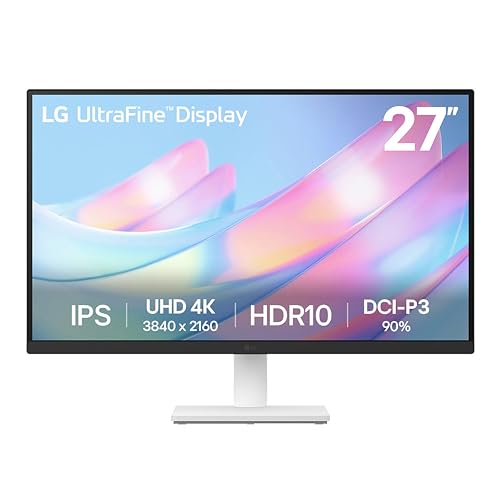
- 4K UHD resolution keeps text and interfaces sharp
- IPS panel provides wide viewing angles
- Reader Mode and Flicker Safe support comfort
Best For: Programmers seeking a conventional 4K desktop monitor
Best Ultrawide Setup
Dell S3425DW 34-inch Curved Monitor

- 34-inch 21:9 display suits side-by-side windows
- 120Hz refresh rate supports smooth work and play
- USB-C provides up to 65W power delivery
Best For: Developers who multitask across wide desktop layouts
Best Budget Large Screen
Samsung S32B304NWN 32-inch Monitor

- Large 32-inch screen for everyday coding
- Eye Saver Mode and Flicker Free support comfort
- Borderless design suits multi-monitor setups
Best For: Programmers wanting a spacious, affordable general-purpose display
Best All-Around QHD Pick

- 27-inch QHD IPS panel offers detailed text and added workspace
- 144Hz refresh rate with FreeSync supports smooth motion
- Full ergonomic adjustment, speakers, and eye-comfort features
Best For: Developers wanting a sharp, adjustable display for coding and entertainment
Best Curved Budget Option

- 1800R curve creates an immersive viewing experience
- 100Hz refresh rate supports smoother everyday motion
- Eye-comfort features reduce blue light and flicker
Best For: Programmers who prefer a curved Full HD display for general work
Best Value Smooth-Refresh Pick
Acer KB272 G0bi 27-inch FHD Monitor

- 27-inch IPS display delivers wide viewing angles
- 120Hz refresh and Adaptive-Sync provide smooth motion
- 1ms VRB response time and three-year warranty
Best For: Budget-minded programmers building a simple, smooth desktop setup
Best Ultrawide
Samsung ViewFinity S50GC 34-inch

- 34-inch 3440 x 1440 ultrawide workspace
- PBP and PIP support for multitasking
- 100Hz refresh with eye-care features
Best For: Programmers who want a wide single-screen workspace
Best High-Refresh Compact Pick
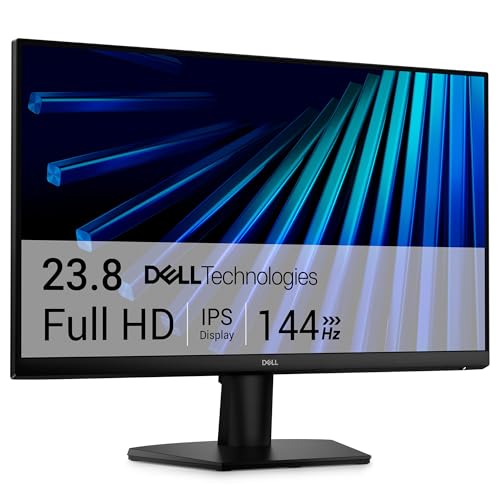
- 23.8-inch Full HD IPS display
- 144Hz refresh and 1ms MPRT
- Two HDMI ports and TÜV eye comfort
Best For: Developers with limited desk space who value smooth motion
Best Budget Office Option

- 27-inch Full HD VA display
- 100Hz refresh with 3000:1 contrast
- EasyRead and eye-care features
Best For: Budget-minded programmers building a basic productivity setup
Best Vertical Workspace – BenQ RD280UG 28.2-inch 4K+ Coding Monitor
The BenQ RD280UG is a specialized computer monitor for programmers who want more vertical workspace for source code, logs, and documentation. Its 3:2 4K+ panel, matte finish, coding modes, and 120Hz refresh rate are designed for extended development sessions.
Best For: Programmers who prioritize vertical screen space, smooth scrolling, and eye comfort during long coding sessions.
Pros:
- 3:2 aspect ratio provides more vertical room with less scrolling.
- 4K+ resolution and Nano Matte Panel support clear, low-reflection viewing.
- 120Hz refresh rate enables smoother cursor movement and code navigation.
- Coding modes and MoonHalo Backlight are tailored to extended development work.
Cons:
- The 28.2-inch 3:2 format is less conventional than a standard widescreen monitor.
- Its programming-focused features may be unnecessary for users seeking a general-purpose display.
Choose this BenQ when coding productivity and vertical visibility matter more than a conventional 16:9 layout. The combination of high resolution, coding features, and smooth motion makes it a strong dedicated programming display.
Best Traditional 4K Value – LG 27US500-W 27-inch 4K Monitor
The LG 27US500-W is a practical computer monitor for programmers who prefer a familiar 27-inch 16:9 workspace with 4K UHD detail. Its IPS panel, matte finish, Reader Mode, and Flicker Safe features make it suitable for coding, documentation, and everyday desktop work.
Best For: Programmers who want sharp 4K text, wide viewing angles, and a straightforward widescreen setup.
Pros:
- 4K UHD resolution provides detailed text and workspace clarity.
- IPS technology offers wide viewing angles and up to 90% DCI-P3 color gamut expression.
- Reader Mode and Flicker Safe features support more comfortable viewing.
- OnScreen Control can split the workspace and adjust monitor settings.
Cons:
- The 60Hz refresh rate is less fluid than higher-refresh-rate alternatives.
- Its 16:9 layout provides less vertical code space than the BenQ’s 3:2 design.
This LG is a sensible choice for developers who want crisp 4K output without a specialized form factor. It balances coding clarity with useful workspace controls and a conventional design.
Best Ultrawide Setup – Dell S3425DW 34-inch Curved Monitor
The Dell S3425DW is a computer monitor for programmers who want a broad 21:9 workspace for code, terminals, and reference material side by side. Its 34-inch WQHD curved VA panel combines 120Hz motion, strong contrast, USB-C connectivity, and eye-comfort features for work and play.
Best For: Developers who prefer an ultrawide desktop and need convenient USB-C connectivity with up to 65W power delivery.
Pros:
- 34-inch 3440×1440 ultrawide format supports side-by-side windows.
- 120Hz refresh rate and FreeSync Premium provide smooth motion.
- 3000:1 contrast ratio and VA technology deliver deep image contrast.
- USB-C can connect and charge compatible devices with up to 65W power delivery.
Cons:
- WQHD resolution is less vertically detailed than a 4K display.
- The 34-inch curved design requires more desk space than smaller monitors.
- Its 21:9 format may require application or window-layout adjustment.
For multitasking developers, the Dell’s width is its main advantage: it can reduce the need to constantly switch between coding and reference windows. It is especially appealing for desks that can accommodate a large curved display.
Best Budget Large Screen – Samsung S32B304NWN 32-inch Monitor
The Samsung S32B304NWN is a practical computer monitor for programmers who want a large 32-inch screen for everyday coding and office work at a basic 1080p resolution. Its high contrast ratio, borderless design, FreeSync support, and eye-care modes make it a straightforward desktop option.
Best For: Programmers who want an affordable, large-screen monitor for general business, multimedia, and personal use.
Pros:
- 32-inch screen provides a spacious physical workspace.
- 4000:1 contrast ratio can provide strong differentiation between dark and light areas.
- Eye Saver Mode and Flicker Free technology support extended viewing.
- Three-sided borderless design works well in multi-monitor arrangements.
Cons:
- 1920×1080 resolution is less sharp for text than the 4K models.
- 75Hz refresh rate is more modest than 120Hz alternatives.
- Connectivity is limited to one HDMI and DisplayPort.
This Samsung makes sense when screen size and basic comfort features matter more than pixel density. It is best suited to straightforward programming tasks rather than dense, high-resolution code layouts.
Best All-Around QHD Pick – Dell 27 Plus QHD Monitor
For programmers who want a versatile computer monitor for programmers, the Dell S2725DSM combines a sharp 27-inch QHD resolution with high refresh performance and extensive ergonomic adjustment. Its IPS panel, matte finish, and eye-comfort features suit long coding sessions, while built-in speakers add convenience for everyday multimedia use.
Best For: Developers seeking a high-resolution, adjustable monitor for coding, productivity, and entertainment.
Pros:
- QHD 2560×1440 resolution provides more workspace and detailed text.
- Height, tilt, pivot, and swivel adjustments support flexible desk setups.
- 144Hz refresh rate, FreeSync, and 1ms MPRT enable smooth motion.
- Built-in dual 3W speakers and TÜV-certified eye-comfort features add convenience.
Cons:
- Only one HDMI port is listed.
- The listed native response time is 8ms, despite the 1ms MPRT mode.
This is the strongest productivity-focused option of the three if you value sharper QHD text, ergonomic positioning, and a more complete feature set than a basic Full HD display.
Best Curved Budget Option – Samsung 27-inch Essential S3
The Samsung Essential S3 is a practical computer monitor for programmers who prefer a curved screen and straightforward Full HD resolution. Its 1800R curve is designed to create a more immersive view, while the 100Hz refresh rate, eye-comfort technology, and high contrast ratio support comfortable daily work.
Best For: Coders who want a curved 27-inch monitor for general productivity, browsing, and light gaming.
Pros:
- 1800R curved design can make the screen feel more engaging and reduce peripheral distraction.
- 100Hz refresh rate helps reduce motion blur and lag compared with standard 60Hz displays.
- 3,000:1 contrast ratio supports deeper-looking blacks.
- TÜV-certified eye-comfort features minimize blue light and screen flicker.
Cons:
- Full HD resolution offers less workspace and text sharpness than a QHD monitor at this size.
- Ergonomic adjustment details are limited compared with the Dell model.
- Connectivity is limited to D-Sub and HDMI.
The Samsung makes sense when a curved viewing experience and eye-comfort features matter more than maximum resolution or advanced stand adjustability.
Best Value Smooth-Refresh Pick – Acer KB272 G0bi 27-inch FHD Monitor
The Acer KB272 G0bi is a straightforward computer monitor for programmers who need an affordable 27-inch screen for coding and everyday desktop work. Its IPS panel, Full HD resolution, 120Hz refresh rate, and Adaptive-Sync support provide clear images and smooth motion without adding unnecessary complexity.
Best For: Budget-conscious developers who want a basic 27-inch monitor with smooth refresh performance.
Pros:
- 27-inch IPS display provides broad 178-degree viewing angles.
- 120Hz refresh rate and Adaptive-Sync support smooth gaming and video playback.
- 1ms VRB response time helps reduce visible smearing in fast motion.
- Three-year parts-and-labor warranty adds useful coverage.
Cons:
- Full HD resolution provides less coding workspace than QHD.
- Stand adjustment is limited to tilt according to the supplied details.
- Connectivity is limited to HDMI and VGA.
This Acer is a sensible value choice for a simple single-monitor setup, especially if smooth motion and warranty coverage are more important than higher resolution or extensive ergonomics.
Best Ultrawide – Samsung ViewFinity S50GC 34-inch
If you want a computer monitor for programmers that can replace a dual-screen setup, the Samsung ViewFinity S50GC offers a spacious 34-inch Ultra-WQHD workspace. Its 21:9 layout gives you room for code, documentation, terminals, and other applications on one screen.
Best For: Programmers who prioritize wide-screen multitasking and split-screen workflows.
Pros:
- 3440 x 1440 Ultra-WQHD resolution provides generous workspace for multiple windows.
- Picture-by-Picture and Picture-in-Picture support two input sources simultaneously.
- Ambient light adjustment, Eye Saver Mode, and Flicker Free features support extended viewing.
- 100Hz refresh rate and AMD FreeSync provide smoother motion.
Cons:
- Its 34-inch ultrawide footprint requires more desk space than a standard monitor.
- 300 cd/m² brightness and a 72% color gamut may be less appealing for specialized color work.
The S50GC is a strong productivity-focused choice when horizontal space matters most. Its ultrawide resolution, multitasking features, and eye-care tools suit long coding sessions, while 100Hz refresh adds flexibility for media and casual gaming.
Best High-Refresh Compact Pick – Dell SE2426H 24-inch
For programmers seeking a compact computer monitor for programmers, the Dell SE2426H combines a 23.8-inch Full HD IPS panel with a 144Hz refresh rate. It fits comfortably into smaller workspaces while keeping text and interface elements visible across a 1920 x 1080 display.
Best For: Developers who need a compact, smooth-running monitor for work, streaming, and general desktop use.
Pros:
- IPS technology delivers consistent color and viewing performance across a 178°/178° viewing angle.
- 144Hz refresh rate and 1ms MPRT support fluid motion.
- Two HDMI ports make it convenient to connect multiple devices.
- TÜV Rheinland 3-star eye-comfort certification addresses blue-light exposure.
Cons:
- Full HD resolution offers less workspace than higher-resolution or ultrawide alternatives.
- The listed response time is 8ms, while the 1ms figure is specified as MPRT.
The SE2426H is a practical choice when desk space and smooth motion matter more than maximum resolution. Its IPS panel, thin bezels, dual HDMI inputs, and eye-comfort certification make it well suited to everyday coding and office tasks.
Best Budget Office Option – Philips 271V8LB 27-inch
The Philips 271V8LB is a straightforward computer monitor for programmers who want a larger 27-inch screen for coding and office work without moving beyond Full HD. Its VA panel, 100Hz refresh rate, and reading-focused features make it a sensible everyday productivity display.
Best For: Budget-conscious programmers who want a large basic monitor for documents, coding, and general desktop use.
Pros:
- 27-inch Full HD display provides a larger viewing area for everyday work.
- VA technology offers a 3000:1 contrast ratio with deeper blacks and brighter whites.
- EasyRead mode is designed for more comfortable viewing of lengthy documents.
- Frameless three-sided design supports a cleaner multi-monitor arrangement.
Cons:
- 1920 x 1080 resolution provides less pixel density than the Samsung ultrawide.
- Connectivity is limited to one HDMI port plus VGA.
- The glossy screen finish may reflect more ambient light than a matte display.
The 271V8LB keeps the feature set simple while offering useful productivity touches, including EasyRead, flicker-free operation, and blue-light filtering. It is a good fit for a basic coding station or a multi-monitor setup where affordability and screen size are priorities.
How We Picked the Best Computer Monitor for Programmers
We focused on the features that matter during extended development work: resolution, text clarity, usable screen area, panel type, refresh rate, connectivity, ergonomic flexibility, and eye-comfort functions. The selection spans practical Full HD monitors, sharper QHD and 4K models, and ultrawide displays for developers who prefer multiple windows side by side.
We also considered different budgets and desk sizes. A programming display does not need gaming-focused specifications, but a responsive refresh rate, flicker reduction, a comfortable viewing mode, and reliable HDMI or DisplayPort connectivity can make daily use more pleasant.
Quick Comparison
- Best for high-density coding: The BenQ 28.2-inch 4K+ model provides a productivity-focused 3:2 workspace and coding-specific features.
- Best for sharp mainstream productivity: A 27-inch 4K IPS monitor offers crisp text without requiring an especially large desk.
- Best for multitasking: The Dell and Samsung ultrawide monitors provide extra horizontal room for an editor, browser, terminal, and preview.
- Best for balanced value: QHD 27-inch monitors typically offer a useful improvement over Full HD while remaining easier to drive than 4K.
- Best for smaller budgets: Full HD 24- and 27-inch displays keep costs low and work well for basic development setups.
Key Buying Factors for a Computer Monitor for Programmers
Resolution and Text Sharpness
Resolution affects how much code fits on screen and how clearly characters appear. QHD is a strong middle ground for a 27-inch display, while 4K is especially useful for dense interfaces, high-resolution laptops, and detailed text. Full HD remains reasonable at 24 inches or for secondary screens.
Screen Size and Aspect Ratio
A 27-inch monitor is a versatile choice for one-screen workflows. Ultrawide models are better when you routinely keep several applications visible, while a 3:2 display can provide valuable vertical space for longer files and documentation.
Panel Quality and Comfort
IPS panels generally offer consistent viewing angles and clear text, while VA screens can deliver stronger contrast. Look for flicker reduction, low-blue-light or reader modes, matte coatings, and a stand with useful height or tilt adjustment.
Connectivity and Desk Setup
Check that the monitor has the ports your computer supports, particularly DisplayPort, HDMI, USB-C, or a hub if needed. VESA compatibility is useful if you plan to mount the display or use a monitor arm.
Who Should Buy Which Computer Monitor for Programmers?
Choose a 4K or 4K+ model if code sharpness and vertical workspace are your top priorities. Pick a 34-inch ultrawide if you frequently compare files, monitor logs, and run a browser beside your IDE. A QHD 27-inch display is the safest all-purpose option for most programmers, combining useful workspace with manageable price and performance demands.
For a secondary monitor, student setup, or budget workstation, a Full HD 24- or 27-inch model can be perfectly adequate. High-refresh options are most valuable if you also game, scroll through large projects frequently, or want a more fluid desktop experience; they are not a substitute for resolution, ergonomics, or text clarity.