The right computer monitor for multitasking can make a crowded desktop feel organized. Instead of constantly switching between windows, you can keep documents, browsers, communication tools, and creative apps visible at the same time.
This roundup includes ultrawide, standard-size, curved, and dual-monitor options across several budgets. We focus on screen space, resolution, connectivity, comfort, and everyday usability so you can choose a display that fits your workflow.
Best 10 Computer Monitor for Multitasking Picks for 2026
Best Overall
LG 34-Inch UltraWide WQHD Monitor

- 34-inch 3440 x 1440 ultrawide workspace
- PbP supports two input sources
- USB-C provides up to 65W power delivery
Best For: Work-focused multitasking and laptop connectivity
Best Budget Pick
Acer 27-Inch FHD 120Hz Monitor

- 27-inch Full HD IPS display
- 120Hz refresh with Adaptive-Sync
- HDMI and VGA connectivity
Best For: Affordable everyday work and light gaming
Best for Eye Care
Samsung 34-Inch ViewFinity S50GC

- 34-inch Ultra-WQHD 21:9 display
- PBP and PIP support dual-source viewing
- Ambient sensor, Eye Saver, and Flicker Free features
Best For: Extended productivity sessions and dual-source workflows
Best High-Refresh Ultrawide

- 34-inch 3440 x 1440 curved display
- 200Hz refresh and 1ms response time
- PIP/PBP, HDMI 2.1, DisplayPort, and FreeSync
Best For: Multitasking users who also prioritize gaming speed
Spacious Everyday Choice
ViewSonic VX3276-MHD 32-Inch IPS Monitor

- Large 32-inch Full HD IPS screen
- Flicker-Free and Blue Light Filter features
- HDMI, DisplayPort, and VGA inputs
Best For: Home offices and everyday multitasking
Ready-Made Dual Display Setup
Kado 27-Inch Curved Monitor 2-Pack

- Includes two 27-inch curved Full HD monitors
- 3ms response time with 75Hz refresh rate
- Built-in speakers and 98% sRGB gamut
Best For: Side-by-side work, gaming, and creative tasks
Best Single-Screen Workspace
LG 34U530A-W 34-Inch UltraWide Monitor
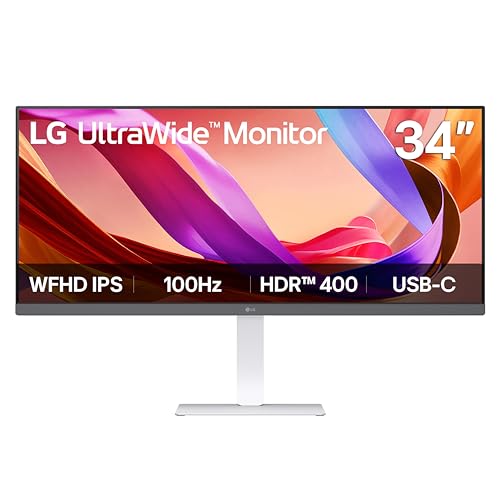
- 34-inch 21:9 screen for multiple windows
- USB Type-C, DisplayPort, and HDMI connectivity
- 100Hz refresh rate with adjustable stand
Best For: Productivity-focused single-screen workspaces
Budget Productivity Pick
Acer KB220Q H2bi 21.5-inch Monitor

- Full HD display with a matte finish
- 100Hz refresh rate and 1ms response time
- Near-bezel-less design for multi-monitor setups
Best For: Compact desks and budget-friendly office multitasking
Feature-Rich Multitasking Choice

- 27-inch IPS Full HD screen with wide viewing angles
- Switch app supports up to six split-screen sections
- 120Hz refresh rate with HDR10 and Reader Mode
Best For: Split-screen productivity, mixed work, and entertainment
Comfort-Focused Office Pick
Philips 271V8LB 27-inch Monitor

- 27-inch Full HD VA display with 3000:1 contrast
- EasyRead, blue-light filter, and flicker-free features
- Three-sided frameless design with VESA mounting
Best For: Document work and comfortable office multitasking
Best Overall – LG 34-Inch UltraWide WQHD Monitor
If you want a computer monitor for multitasking, the LG 34WR55QK-B combines a spacious 21:9 curved display with 3440 x 1440 resolution. Its OnScreen Control software and Picture-by-Picture support make it practical for managing multiple windows or input sources on one screen.
Best For: Work-focused multitasking, laptop connectivity, and users who want an adjustable ultrawide display.
Pros:
- 34-inch UltraWide WQHD screen provides room for multiple windows.
- Picture-by-Picture supports two separate input sources simultaneously.
- USB Type-C offers up to 65W power delivery, with HDMI, DisplayPort, and USB ports.
- Height-adjustable and tilt-adjustable stand, plus Reader Mode.
Cons:
- 100Hz refresh rate is less gaming-focused than some faster ultrawide options.
- The curved 21:9 format requires more desk width than a standard monitor.
The LG is a well-rounded choice when workspace and connectivity matter most. Its combination of ultrawide resolution, PbP, USB-C charging, and ergonomic adjustment makes it especially useful for a busy desktop setup.
Best Budget Pick – Acer 27-Inch FHD 120Hz Monitor
The Acer KB272 G0bi is a straightforward computer monitor for multitasking when you prefer a conventional 27-inch 16:9 layout. Its Full HD IPS panel offers a practical amount of desktop space, while 120Hz refresh and Adaptive-Sync add smoothness for video and everyday motion.
Best For: Budget-conscious home offices, general desktop use, and light gaming.
Pros:
- 27-inch Full HD IPS display offers clear everyday visuals.
- 120Hz refresh rate and Adaptive-Sync support smoother motion.
- 1ms VRB response time is suited to fast-moving content.
- HDMI and VGA inputs support common devices.
Cons:
- Full HD resolution provides less workspace than the ultrawide models in this roundup.
- It lacks USB-C, DisplayPort, and built-in multitasking features such as PbP.
- The stand is limited to tilt adjustment.
This Acer makes sense for a simple, affordable setup rather than an expansive multi-window workstation. Choose it when a standard 16:9 screen and smooth refresh rate are more important than maximum screen real estate.
Best for Eye Care – Samsung 34-Inch ViewFinity S50GC
The Samsung ViewFinity S50GC is a strong computer monitor for multitasking, with a 34-inch Ultra-WQHD screen and 21:9 aspect ratio. Its PBP and PIP modes let you view two sources at once or monitor a secondary source while keeping your main task prominent.
Best For: Productivity users who want ultrawide workspace, dual-source viewing, and eye-care features.
Pros:
- 3440 x 1440 resolution provides substantial room for multiple applications.
- PBP supports two simultaneous sources at native resolution, while PIP displays a resized second source.
- Ambient light sensing, Eye Saver Mode, and Flicker Free features support extended viewing.
- 100Hz refresh rate and FreeSync provide smoother motion.
Cons:
- Connectivity is centered on HDMI and DisplayPort, without USB-C listed.
- The stand and feature set may be less versatile for laptop docking than the LG model.
Samsung’s main advantage is the combination of wide workspace and flexible source management. It is a particularly sensible pick for long work sessions where viewing comfort and a nearly bezel-free design are priorities.
Best High-Refresh Ultrawide – SANSUI 34-Inch 200Hz Monitor
The SANSUI ES-G34C5 is a computer monitor for multitasking that also emphasizes fast motion. Its curved 34-inch UWQHD panel provides a wide 21:9 workspace, while 200Hz refresh, 1ms response time, and PIP/PBP support cover both productivity and gaming needs.
Best For: Users who want a wide multitasking display with high-refresh gaming performance.
Pros:
- 3440 x 1440 resolution and a 34-inch 21:9 panel provide generous workspace.
- 200Hz refresh rate and 1ms response time suit fast-moving games and video.
- PIP/PBP support enables multiple-source viewing.
- HDMI 2.1 and DisplayPort 1.4 support high-refresh input, with FreeSync and VRR support.
Cons:
- The stand offers tilt adjustment but no height adjustment is listed.
- No built-in speakers are included.
- The gaming-oriented feature set may be more than needed for office-only use.
This SANSUI stands out when you want one display for wide productivity layouts and demanding gaming. Its high refresh rate is the key differentiator, while PIP/PBP preserves useful multitasking flexibility.
Spacious Everyday Choice – ViewSonic VX3276-MHD 32-Inch IPS Monitor
If you want a large computer monitor for multitasking without moving to an ultrawide format, the ViewSonic VX3276-MHD offers a roomy 32-inch Full HD IPS screen. Its wide viewing angles, anti-glare finish, and eye-comfort features make it practical for office work, browsing, and entertainment.
Best For: Home offices, everyday multitasking, and users who prefer a large conventional 16:9 display.
Pros:
- Large 32-inch 1920 x 1080 IPS display provides ample workspace.
- Flicker-Free technology and a Blue Light Filter support more comfortable extended use.
- HDMI, DisplayPort, and VGA inputs provide broad device compatibility.
- ViewMode presets help optimize the screen for text, web use, movies, and gaming.
Cons:
- Full HD resolution is less detailed than higher-resolution options at this screen size.
- The 8ms response time is not as quick as some gaming-focused monitors.
- It does not provide the horizontal workspace of an ultrawide display.
The VX3276-MHD is a straightforward choice when screen size and flexible connectivity matter more than maximum resolution. Its IPS panel and built-in comfort settings make it a sensible all-purpose monitor for a home workspace.
Ready-Made Dual Display Setup – Kado 27-Inch Curved Monitor 2-Pack
The Kado dual-monitor bundle is a practical computer monitor for multitasking when you want separate screens for documents, browsers, communication, or creative work. Two 27-inch curved Full HD monitors provide a ready-made extended desktop, while 75Hz operation and built-in comfort features support daily use.
Best For: Buyers who want two monitors for side-by-side workflows, business tasks, gaming, or photo and video editing.
Pros:
- Two 27-inch 1500R curved displays create a spacious dual-screen setup.
- 98% sRGB color gamut supports vibrant visuals for multimedia and creative tasks.
- 3ms response time and 75Hz refresh rate help keep motion responsive.
- Built-in speakers, FreeSync, Flicker-Free technology, and a Blue Light Filter add convenience.
Cons:
- Both panels use 1920 x 1080 resolution rather than a higher-resolution format.
- Connectivity is limited to HDMI according to the supplied specifications.
- A dual-monitor setup requires more desk space and cable management.
This bundle makes expanding your workspace simple, especially if you regularly compare information or keep multiple applications visible. It is best suited to users who value two screens over the single-cable simplicity of an ultrawide.
Best Single-Screen Workspace – LG 34U530A-W 34-Inch UltraWide Monitor
The LG 34U530A-W is designed as a computer monitor for multitasking, with a 34-inch 21:9 UltraWide screen that keeps multiple windows visible on one display. Its 2560 x 1080 IPS panel, 100Hz refresh rate, USB Type-C connectivity, and adjustable stand make it a strong fit for organized workspaces.
Best For: Professionals, creators, and laptop users who want broad horizontal workspace without a dual-monitor arrangement.
Pros:
- 21:9 UltraWide format provides more horizontal room for multiple open windows.
- USB Type-C, DisplayPort, and HDMI support flexible connections, with USB Type-C handling display output and data transfer.
- 100Hz refresh rate delivers smoother motion for everyday work, streaming, and video calls.
- Height, tilt, and swivel adjustments support a more comfortable setup.
Cons:
- The 2560 x 1080 resolution is ultrawide Full HD rather than a higher-resolution option.
- Its 34-inch footprint may require substantial desk space.
- USB Type-C capability is specified for display output and data transfer, not charging.
The LG stands out for users who want a clean single-screen workflow with useful productivity features. Its ultrawide layout, Switch app support for up to six sections, built-in speakers, and adjustable stand make it the most purpose-built multitasking option in this group.
Budget Productivity Pick – Acer KB220Q H2bi 21.5-inch Monitor
If you need a compact computer monitor for multitasking, the Acer KB220Q H2bi offers Full HD resolution, a matte screen, and a near-bezel-less design that works well for everyday office and desktop tasks. Its 21.5-inch size also makes it practical for smaller workspaces or a multi-monitor arrangement.
Best For: Budget-conscious users, compact desks, office work, and basic multi-monitor setups.
Pros:
- Full HD 1920×1080 resolution keeps text and images clear.
- 100Hz refresh rate and 1ms response time support smooth motion.
- ZeroFrame design is useful for placing multiple monitors side by side.
- Includes HDMI and VGA connectivity, plus tilt adjustment.
Cons:
- The 21.5-inch screen provides less workspace than larger 27-inch options.
- Its 250-nit brightness and 1000:1 contrast ratio are geared toward standard desktop use.
- Only one HDMI port is listed.
The Acer is a straightforward choice when you want an affordable, space-saving display for documents, browsing, and general productivity. Adaptive-Sync and the fast refresh rate add flexibility for video playback and compatible gaming, while the slim-bezel design supports expanded desktop setups.
Feature-Rich Multitasking Choice – LG 27U411A-B 27-inch Monitor
The LG 27U411A-B is a strong computer monitor for multitasking if you want a larger 27-inch workspace and built-in layout tools. Its IPS panel, 120Hz refresh rate, and Switch app—which can divide the screen into up to six sections—make it suited to juggling documents, browsers, calls, and media.
Best For: Users who want a large screen, flexible split-screen layouts, and a monitor that can handle both productivity and gaming.
Pros:
- 27-inch Full HD IPS display provides wide 178-degree viewing angles.
- Switch app supports layouts with up to six screen sections.
- 120Hz refresh rate delivers smoother motion than standard 60Hz displays.
- HDR10 support, up to 99% sRGB coverage, and Reader Mode add versatility.
Cons:
- The 1920×1080 resolution is less spacious than higher-resolution 27-inch monitors for dense multitasking.
- The stand offers tilt adjustment but no listed height adjustment.
- Only one HDMI port is listed in the supplied specifications.
This LG stands out for multitasking because its larger panel and Switch app make organizing several activities easier. It is a particularly versatile pick for users who alternate between office work, reading, streaming, and gaming.
Comfort-Focused Office Pick – Philips 271V8LB 27-inch Monitor
The Philips 271V8LB is a practical computer monitor for multitasking, with a 27-inch Full HD screen, wide viewing angles, and a three-sided virtually bezel-free design. Its VA panel emphasizes contrast, while EasyRead mode and eye-care features support extended document and office sessions.
Best For: Office workers, document-heavy workflows, multi-monitor users, and anyone prioritizing contrast and reading comfort.
Pros:
- 27-inch Full HD display provides a larger workspace for everyday tasks.
- VA panel offers a 3000:1 contrast ratio for deeper blacks and brighter whites.
- 100Hz refresh rate and Adaptive-Sync support smoother motion.
- Includes EasyRead, blue-light filtering, flicker-free viewing, and VESA mounting.
Cons:
- The glossy screen finish may reflect more ambient light than a matte display.
- Only one HDMI port is listed.
- Its 1920×1080 resolution limits the amount of fine workspace on a 27-inch panel.
The Philips is a sensible office-oriented option for users who want a larger screen without moving beyond Full HD. Its contrast-focused VA panel, reading mode, eye-care features, and VESA compatibility make it easy to tailor to a productivity setup.
How We Picked the Best Computer Monitor for Multitasking
We compared these 10 monitors by looking at the features that matter most when several applications share one desktop. Screen size and aspect ratio determine how much content fits side by side, while resolution affects text clarity and usable workspace. We also considered refresh rate, panel type, eye-comfort features, stand flexibility, ports, and compatibility with common computers and accessories.
Ultrawide models generally offer the cleanest single-screen multitasking experience, while standard 24- to 32-inch monitors can be more affordable and easier to fit on a desk. A dual-monitor bundle may provide even more flexibility, but it requires additional desk space and cable management.
Quick Comparison
- Best overall workspace: A 34-inch UltraWide QHD model offers broad horizontal space with sharper text than a basic Full HD screen.
- Best for a simpler setup: A 27-inch or 32-inch monitor is easier to position and works well for documents, browsing, and office apps.
- Best for dual-screen productivity: A two-monitor package gives you separate displays for communication and primary work.
- Best for smoother motion: Displays rated at 100Hz or higher feel more responsive when scrolling, dragging windows, or gaming.
- Best for limited budgets: A Full HD office monitor can provide solid everyday performance without paying for ultrawide resolution.
Key Buying Factors for a Computer Monitor for Multitasking
Size, Aspect Ratio, and Resolution
A 34-inch ultrawide screen is well suited to side-by-side windows, especially when it uses 3440 × 1440 resolution. Full HD models remain practical at around 21.5 to 27 inches, but text and multi-window layouts may feel less spacious. At 32 inches, Full HD can look less sharp up close than a higher-resolution display.
Panel Type and Comfort
IPS panels typically provide consistent colors and wide viewing angles, making them useful for shared desks or creative work. VA panels often deliver stronger contrast. Look for reader modes, flicker reduction, and adjustable brightness if you spend long hours in front of the screen.
Ports, Mounting, and Desk Space
Check whether the monitor includes the inputs your computer supports, such as HDMI, DisplayPort, or USB-C. VESA compatibility helps with monitor arms, while an adjustable or compact stand can make a meaningful difference on a crowded desk. For two displays, confirm that your computer can drive both screens at the desired resolution and refresh rate.
Refresh Rate and Features
A 100Hz or 120Hz monitor makes everyday movement feel smoother than a traditional 60Hz display. Picture-in-picture and picture-by-picture modes can be useful for combining two sources on one screen, while HDR support is a secondary consideration for productivity rather than a substitute for resolution or ergonomics.
Who Should Buy Which Computer Monitor for Multitasking?
Choose an ultrawide if you want one clean screen for several windows and have enough desk depth. Choose a standard 27- or 32-inch display if you need a versatile, space-conscious office monitor. Choose a dual-monitor setup if you prefer clearly separated workspaces or frequently compare documents. Choose a budget Full HD model for email, web browsing, schoolwork, and basic office tasks. Finally, prioritize USB-C, VESA mounting, or advanced split-screen features only when they match your actual workflow, since those additions can matter more than gaming-focused specifications for productivity.