The best desktop laser engravers make it easier to personalize gifts, create signs, cut craft materials, and mark some metals without dedicating an entire workshop to the job.
This roundup compares 10 options across diode and dual-laser designs, focusing on cutting power, camera assistance, enclosure safety, portability, software, and ease of use.
Best 10 Desktop Laser Engravers Picks for 2026
Best Dual-Laser Pick
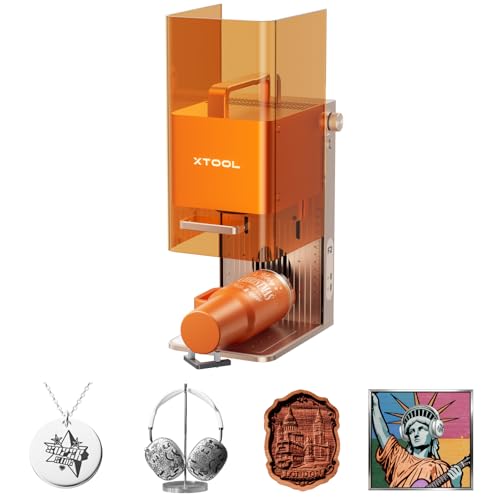
- 15W diode and 5W IR lasers
- 50MP camera for precise alignment
- Enclosed design for portable customization
Best For: On-site personalization and mixed-material projects
Best Large-Format Hobby Pick

- 10W diode laser output
- 300 x 300 mm work area
- Supports LightBurn and offline TF-card use
Best For: Makers engraving coasters, cases, jewelry, and small signs
Best Beginner Compact Pick

- 99% preassembled for quick setup
- Compact 130 x 130 mm work area
- AI design tools plus LightBurn support
Best For: Beginners and small home crafting projects
Best Air-Assist-Ready Pick

- 5.5W compressed laser technology
- 300 x 300 mm work area
- Air-assist nozzle and wireless control
Best For: Makers cutting plywood, acrylic, leather, and similar materials
Most Versatile Enclosed Pick

- Dual cameras support accurate placement
- Class 1 enclosed design for home use
- Optional modules expand its capabilities
Best For: Home crafters and personalized-gift projects
Fastest Batch-Crafting Pick

- Engraving speeds reach 600 mm/s
- Autofocus and HD camera aid precision
- Enclosed Class 1 design with safety features
Best For: Small businesses and batch projects
Best Portable Pick

- Touchscreen design and engraving
- Portable, no-assembly setup
- Class 1 safety enclosure
Best For: Beginners and small custom projects
Best AI-Assisted Pick

- AI camera with precise positioning
- Fast autofocus workflow
- Expandable laser-module platform
Best For: Creators wanting automated setup and upgrade options
Best Feature-Packed Mini
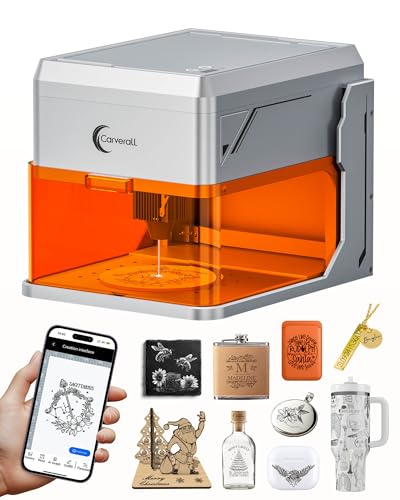
- Camera-guided precise placement
- Mobile, offline, and desktop control
- Enclosed design with air assist
Best For: Small-item customization and batch crafting
Best Dual-Laser Pick – xTool F2
For shoppers comparing desktop laser engravers, the xTool F2 stands out for combining a 15W diode laser with a 5W IR laser. Its enclosed design, built-in camera, and high claimed speed make it especially suited to detailed personalization and small-batch work.
Best For: On-site customization, metal color marking, and users who want one machine for varied materials.
Pros:
- Dual lasers support wood cutting, 3D embossing, and vivid marking on metal.
- Built-in 50MP camera offers claimed alignment accuracy of up to 0.1 mm.
- Enclosed, portable design with a built-in fan for more convenient indoor use.
- Supports batch processing with optional Slide Extension accessories.
Cons:
- Accessories such as the Slide Extension, RA3, and purifier are optional.
- The Class 4 laser requires careful attention to safe operating procedures.
- Its compact format may not suit large workpieces.
The xTool F2 is the most versatile choice here if you need both diode and IR capabilities. It costs more complexity than a basic diode engraver, but its camera alignment, enclosed construction, and portability are compelling for personalization businesses.
Best Large-Format Hobby Pick – Twotrees TTS-10 Pro
The Twotrees TTS-10 Pro is a practical option among desktop laser engravers for makers who want a 300 x 300 mm work area and a 10W diode laser. It supports computer, web, mobile-app, and TF-card workflows, giving users several ways to run projects.
Best For: Coasters, phone cases, jewelry, small signs, and hobby or classroom projects on compatible materials.
Pros:
- 10W optical output is designed for fast, deep engraving on several materials.
- 300 x 300 mm work area accommodates projects up to roughly 12 inches.
- 32-bit dual-core controller supports online and TF-card offline engraving.
- Works with LightBurn and LaserGRBL and includes assembly tools and a TF card.
Cons:
- Bare stainless steel and uncoated metal are not recommended without surface preparation.
- Assembly is required rather than arriving fully assembled.
- Projects larger than the stated work area will not fit.
This model offers a strong balance of working space, power, and flexible control options. Confirm your material list before buying, particularly if you plan to mark bare metal, but it is a capable fit for general maker projects and small products.
Best Beginner Compact Pick – ACMER S1
The ACMER S1 is a compact entry point for anyone comparing desktop laser engravers for home crafting. It arrives 99% preassembled, includes beginner-oriented ACMER Studio software with AI design tools, and supports familiar programs such as LightBurn and LaserGRBL.
Best For: Beginners, home users, and small craft projects involving wood, leather, thin plywood, MDF, and acrylic.
Pros:
- 6W diode laser supports engraving and cutting across a range of materials.
- Compact 130 x 130 mm working area suits small home projects.
- Lightweight 2 kg design is easy to carry and store.
- Supports macOS, Windows, Linux, LightBurn, and LaserGRBL.
Cons:
- The work area is substantially smaller than the 300 x 300 mm options in this roundup.
- Its lower laser power is better suited to thin materials and smaller projects.
- As a Class 4 laser, it still requires appropriate safety precautions.
The S1 makes the most sense when simplicity and portability matter more than workspace size. Its small bed limits project scale, but preassembly, broad software compatibility, and AI-assisted design tools reduce the initial learning curve.
Best Air-Assist-Ready Pick – Twotrees TTS-55 Pro
The Twotrees TTS-55 Pro is a capable choice among desktop laser engravers for makers who want a 300 x 300 mm workspace, fine focusing, and support for cleaner cutting with an air-assist system. Its wireless and offline controls also make it flexible for workshop use.
Best For: Hobbyists and small businesses cutting or engraving wood, leather, acrylic, paper, and prepared metal surfaces.
Pros:
- 5.5W laser with compression optics is designed for sharp engraving and cutting.
- Claims cutting capacity of up to 5 mm plywood, 3 mm acrylic, and 0.7 mm leather.
- Metal air-assist nozzle and red laser shield support cleaner, safer operation.
- 300 x 300 mm area, Wi-Fi control, and TF-card offline engraving add flexibility.
Cons:
- An air-assist system may need to be added for full air-assist functionality.
- Assembly is required.
- LaserGRBL support is limited to Windows, while LightBurn supports major desktop platforms.
The TTS-55 Pro is a strong middle-ground machine for users who need more workspace than a compact engraver but do not need a dual-laser system. Its air-assist-ready hardware and broad control options are useful for more involved cutting projects.
Most Versatile Enclosed Pick – xTool M2 10W
The xTool M2 is a versatile choice among desktop laser engravers for home crafters who want precision cutting and engraving in an enclosed, Class 1 machine. Its dual cameras, beginner-friendly software, and optional expansion modules make it adaptable, though several advanced capabilities require separate purchases.
Best For: Home DIY makers, personalized gifts, decor, and small crafting businesses.
Pros:
- Built-in dual cameras support real-time previews and accurate “Place & Go” positioning.
- Class 1 enclosed design includes real-time safety monitoring.
- xTool Studio offers templates and an integrated AI image generator.
- Can be expanded with optional CMYK inkjet and 3W IR laser modules.
Cons:
- The CMYK inkjet module and RA3 Lite Rotary are not included.
- The 3W IR laser module is also sold separately.
- The standard configuration uses a 10W diode laser.
The M2 stands out for its guided workflow and upgrade potential. It is a strong fit if you value convenience and creative flexibility more than an all-inclusive package.
Fastest Batch-Crafting Pick – Creality Falcon A1 Pro 20W
The Creality Falcon A1 Pro 20W is a practical desktop laser engraver for users who prioritize speed, autofocus, and enclosed operation. With up to 600 mm/s engraving, a high-definition camera, and 80% pre-assembly, it is designed to reduce setup time and support repeatable projects.
Best For: Small businesses, batch production, and makers working with wood and acrylic.
Pros:
- Engraves at speeds up to 600 mm/s for more efficient batch work.
- Automatic focusing uses camera vision, red-dot ranging, and Z-axis adjustment.
- Enclosed Class 1 design includes light filtering, smoke extraction, and lid-open safety shutoff.
- Touchscreen, app control, and 80% pre-assembly simplify operation.
Cons:
- The 2W IR module for fine metal and plastic engraving is not included.
- It is compatible only with 460 × 346 mm honeycomb panels.
- The machine weighs 37.4 pounds and has a large desktop footprint.
The Falcon A1 Pro is the better choice for speed-focused users who want minimal assembly and automated positioning. Plan on buying the optional IR module if your projects require high-precision metal or plastic engraving.
Best Portable Starter – LaserPecker LP1 Plus
The LaserPecker LP1 Plus is a compact entry point for anyone comparing desktop laser engravers for simple, portable projects. It weighs just 2.4 pounds, can run from a power bank, and uses an adjustable stand for 360-degree engraving on compatible non-metal materials.
Best For: Beginners, mobile creators, and small wood, leather, paper, or acrylic projects.
Pros:
- Pocket-sized design makes it easy to carry in a backpack.
- Can start engraving in about two minutes and operate from a power bank.
- Cross-platform app supports imported photos and doodles.
- Adjustable stand and magnetic base help secure small items.
Cons:
- Metal engraving is not supported.
- Users must set the lens-to-material distance to 200 mm.
- Its compact format is aimed at smaller projects rather than large-scale work.
The LP1 Plus is appealing when portability and simplicity matter most. Its material limitations and careful distance requirement make it better suited to casual personalization than demanding production work.
Best Portable Pick – AlgoLaser Pixi 10W
For shoppers seeking desktop laser engravers with minimal setup, the AlgoLaser Pixi 10W emphasizes touchscreen control, portability, and offline operation. Its built-in AlgoOS system lets you draw, add text, or upload designs without requiring a computer, making it approachable for home projects and small custom orders.
Best For: Beginners, educators, DIYers, and small businesses that want a compact engraver with direct touchscreen control.
Pros:
- 3.5-inch touchscreen and AlgoOS support direct design creation and engraving.
- Portable 8.53-pound design with no assembly required.
- Supports USB-C, Wi-Fi, accessory connections, and offline engraving.
- Class 1 enclosure includes an auto-pause safety door and fault alerts.
Cons:
- The 10W laser may be less suitable for demanding high-volume cutting than higher-powered systems.
- Transparent-material engraving may require colored backers for stronger contrast.
The Pixi is a convenient choice when ease of use and portability matter more than a large work area. Its touchscreen workflow and safety features make it especially appealing to first-time users, while wireless and offline options add flexibility for small production tasks.
Best AI-Assisted Pick – Creality Falcon A1C 10W
The Creality Falcon A1C is one of the more feature-rich desktop laser engravers for users who want automated setup and quick design preparation. Its AI camera, one-tap photo workflow, autofocus, and enclosed Class 1 structure help streamline projects from positioning through engraving.
Best For: Creators who value camera-assisted alignment, fast workflow, expandable hardware, and a compact but spacious desktop machine.
Pros:
- AI camera supports photo capture, background removal, layout tools, and up to 0.1 mm positioning accuracy.
- Auto focus and speeds up to 15,000 mm/min can reduce setup and production time.
- Interchangeable platform supports compatible 5W, 10W, and 1.2W laser modules.
- Enclosed Class 1 design and a 150 × 150 × 148 mm work area suit home, classroom, and studio use.
Cons:
- The listed 31.1-pound weight makes it less portable than smaller desktop models.
- Additional modules and accessories may be needed to expand its capabilities.
The Falcon A1C stands out for reducing alignment and design friction without sacrificing upgrade potential. It is a strong fit for users who expect to grow from occasional personalized items into more varied creative or small-batch work.
Best Feature-Packed Mini – Carverall A1 Pro 12W
The Carverall A1 Pro 12W packs camera positioning, app control, offline memory, and a fully enclosed Class 1 design into a compact desktop format. Among desktop laser engravers, it is particularly oriented toward small items such as dog tags, keychains, bookmarks, and jewelry blanks, while its removable base supports larger or thicker projects.
Best For: Crafters and small-batch makers who need precise positioning, mobile control, repeat jobs, and support for many materials.
Pros:
- HD camera enables photo preview and precise design placement, with stated 0.01 mm precision.
- CutLabX works across computers, tablets, and phones, with LightBurn and LaserGRBL compatibility.
- 12W output supports engraving across 200+ materials and cutting claims for plywood and acrylic.
- Class 1 enclosure includes tilt protection, built-in air assist, and an exhaust fan.
Cons:
- The 3.94 × 3.94-inch work area is comparatively small for larger designs.
- The IR head and roller are optional rather than included.
- Some thicker or larger projects may require adjusting the machine height or using the removable base.
The A1 Pro is a practical mini engraver for repeatable small-item customization, especially when camera alignment and mobile access are priorities. Its offline memory and removable base add useful flexibility, though buyers planning large-format work should consider the limited standard work area.
How We Picked the Best Desktop Laser Engravers
We evaluated these machines by comparing their laser type and power, working area, enclosure design, camera or autofocus features, material compatibility, controls, portability, and overall suitability for common home projects. We also considered whether a model is better suited to beginners, frequent makers, small businesses, or users who need more specialized marking capabilities.
Laser wattage is useful, but it is not the only measure of performance. A reliable camera, rigid frame, effective ventilation, accurate focusing, and capable software can have just as much impact on finished results.
Quick Comparison
| Best For | Features to Prioritize | Models to Consider |
|---|---|---|
| Beginners and casual crafters | Enclosure, autofocus, camera alignment, simple software | Creality Falcon A1C, xTool M2, A1 Pro 12W |
| Faster wood and acrylic work | Higher diode output, rigid construction, air assist | Creality Falcon A1 Pro, Twotrees TTS-10 Pro, xTool F2 |
| Metal marking and premium projects | IR laser, precise positioning, material presets | xTool F2 |
| Portable or space-limited use | Compact frame, adjustable stand, wireless controls | LaserPecker LP1 Plus, AlgoLaser 10W |
Key Buying Factors for Desktop Laser Engravers
Laser Type and Power
Diode lasers are popular for wood, leather, paper, coated materials, and some acrylic. Higher optical output generally improves cutting depth and speed, though multiple passes may still be required. An IR laser, such as the one included in a dual-laser system, can be especially useful for detailed metal marking and certain plastics.
Safety and Ventilation
An enclosed Class 1 design is often the easiest choice for a home, classroom, or shared workspace because it helps contain light and smoke. Open-frame machines can be more flexible, but they require careful eye protection, a controlled work area, and suitable exhaust or filtration. Never process materials that can release dangerous fumes, including PVC or vinyl.
Camera, Focus, and Software
Built-in cameras can simplify object placement, batch layouts, and design alignment. Autofocus reduces setup time, while a clear touchscreen or dependable app can make routine jobs easier. Check software compatibility with your operating system and preferred design tools before buying.
Work Area and Materials
Measure the largest items you expect to engrave, not just the machine footprint. Confirm whether the included platform supports rotary work, larger panels, or passthrough projects. Also verify the manufacturer’s material guidance rather than assuming a higher wattage can cut every material.
Who Should Buy Which Desktop Laser Engravers?
Choose an enclosed camera-assisted model if you want straightforward setup, safer operation, and accurate placement for gifts or craft projects. Choose a higher-power diode machine if cutting wood and acrylic is more important than compact size. Choose a dual-laser system if you want one desktop unit for both diode-compatible materials and more capable metal marking.
For occasional projects, prioritize ease of use and storage over maximum speed. Frequent makers should look for stronger frames, air-assist compatibility, efficient exhaust, and replacement parts. If portability matters most, a compact engraver with an adjustable stand may be worth the trade-off in work area and cutting capacity.