The right enclosure can turn an unused SATA drive into a dependable backup destination without the cost of a complete external drive. The best choice depends on your drive size, connection speed, capacity plans, and whether you need RAID redundancy.
We compared 10 hard drive enclosures for backups, including portable 2.5-inch models, powered 3.5-inch cases, and multi-bay systems for larger storage libraries.
Best 10 Hard Drive Enclosures for Backups Picks for 2026
Best Single-Drive Value
ORICO 3.5-Inch Tool-Free Enclosure

- Single-drive support up to 20TB
- USB 3.0 with UASP acceleration
- Includes 12V/2A power adapter
Best For: Simple high-capacity desktop-drive backups
Best RAID Flexibility
TERRAMASTER D2-320 2-Bay RAID Enclosure

- Two-bay hardware RAID enclosure
- Supports RAID 1, RAID 0, JBOD, and Single
- Up to 44TB with two 22TB drives
Best For: Mirrored and multi-drive backup setups
Best Compact 2.5-Inch Pick
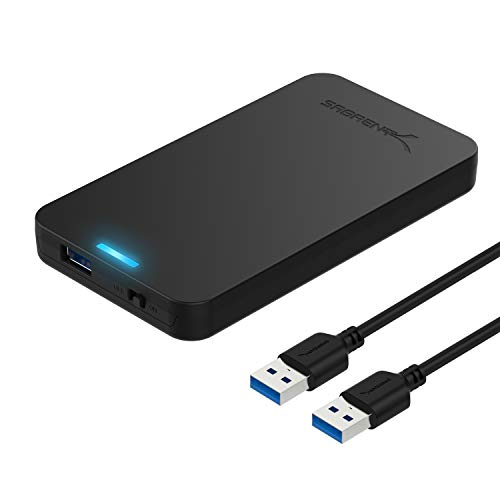
- Designed for one 2.5-inch SATA drive
- Tool-free and hot-swappable
- USB 3.0 with UASP support
Best For: Portable laptop-drive and SSD backups
Best Lay-Flat Design
CLAVOOP 3.5-Inch SATA Enclosure

- Supports 2.5-inch and 3.5-inch SATA drives
- USB 3.0 with UASP support
- Ventilated lay-flat body with non-slip feet
Best For: Flexible single-drive desktop backups
Best for Easy Setup

- Single 3.5-inch SATA drive support
- USB 3.0 with UASP and TRIM
- Aluminum body with dedicated power
Best For: Simple desktop backups with one SATA drive
Best for Multi-Drive Backups

- Four 3.5-inch SATA drive bays
- Eight RAID and disk-management modes
- Up to 88TB listed total capacity
Best For: Expandable desktop backup and storage systems
Best Tool-Free Flexibility
SABRENT USB 3.0 SATA Enclosure
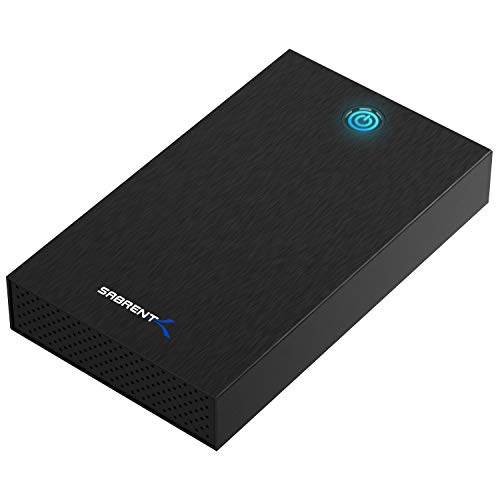
- Fits 2.5-inch and 3.5-inch SATA drives
- Tool-free drive installation
- UASP, aluminum shell, and AC adapter
Best For: Frequent swapping of compatible SATA backup drives
Best Compact Pick
BENFEI 2.5-Inch Tool-Free Enclosure

- Tool-free installation for one 2.5-inch SATA drive
- Up to 6Gbps with UASP support
- USB-C and USB-A cable included
Best For: Single-drive laptop and SSD backups
Best High-Capacity Pick

- Four bays for 2.5-inch and 3.5-inch SATA drives
- USB-C 3.2 supports up to 10Gbps
- Fans and aluminum shell help with cooling
Best For: Multi-drive desktop backup storage
Best Dual-Bay Value

- Two bays support 2.5-inch and 3.5-inch drives
- Tool-free, hot-swappable design
- USB-A/C 3.0 and built-in cooling fan
Best For: Flexible two-drive desktop backups
Best Single-Drive Value – ORICO 3.5-Inch Tool-Free Enclosure
For straightforward backups, the ORICO 3588US3 is a practical choice among hard drive enclosures for backups. It accepts one 3.5-inch SATA drive up to 20TB, includes the required 12V/2A power adapter, and supports USB 3.0 transfers up to 5Gbps with UASP.
Best For: Users who want a simple, high-capacity enclosure for one desktop SATA HDD or SSD.
Pros:
- Tool-free, plug-and-play installation with no driver or reboot required.
- Supports 3.5-inch SATA I, II, and III drives up to 20TB.
- Includes UASP, auto-sleep, activity indicators, and internal anti-shock padding.
Cons:
- Supports only one drive.
- Requires the included power adapter for 3.5-inch drives.
- Drives are not included.
The ORICO is best when simplicity matters more than RAID or multi-drive flexibility. Its broad operating-system compatibility and large stated capacity make it a useful option for expanding backup storage from a desktop or laptop.
Best RAID Flexibility – TERRAMASTER D2-320 2-Bay RAID Enclosure
The TERRAMASTER D2-320 is a strong choice for shoppers comparing hard drive enclosures for backups with redundancy in mind. This diskless, two-bay DAS supports RAID 0, RAID 1, JBOD, and Single modes, along with USB 3.2 Gen 2 connectivity up to 10Gbps.
Best For: Users who want mirrored backups or flexible two-drive storage using 2.5-inch or 3.5-inch SATA drives.
Pros:
- Hardware RAID supports RAID 1 mirroring, RAID 0, JBOD, and Single modes.
- Accepts two drives up to 22TB each, for up to 44TB total.
- Tool-free trays, push-lock design, and temperature-controlled fan simplify operation.
Cons:
- Drives are not included.
- This is a DAS, not a network-attached storage system.
- Two-drive RAID configurations may be more than needed for basic single-drive backups.
The D2-320 is the most capable option here for backup redundancy. RAID 1 can mirror data across two drives, while the faster USB 3.2 Gen 2 interface and active cooling suit larger, more frequently used storage setups.
Best Compact 2.5-Inch Pick – SABRENT EC-UASP Enclosure
The SABRENT EC-UASP is a compact, affordable fit for portable hard drive enclosures for backups. It is designed for one 2.5-inch SATA HDD or SSD, uses a tool-free installation, and supports USB 3.0 speeds up to 5Gbps with UASP.
Best For: Laptop-drive backups, SSD transfers, and users who need a lightweight enclosure for a single 2.5-inch drive.
Pros:
- Small, lightweight design at about 2 ounces.
- Tool-free, hot-swappable, plug-and-play operation.
- Works with USB 3.0, USB 2.0, and USB 1.1 connections.
Cons:
- Limited to one 2.5-inch SATA drive.
- Does not support 3.5-inch desktop drives.
- USB 2.0 connections reduce transfer rates compared with USB 3.0.
Choose the SABRENT when portability and simplicity are more important than maximum capacity or RAID. It is especially convenient for repurposing a notebook drive or adding a 2.5-inch SSD to a laptop-based backup routine.
Best Lay-Flat Design – CLAVOOP 3.5-Inch SATA Enclosure
The CLAVOOP lay-flat enclosure offers a practical balance for hard drive enclosures for backups, supporting both 3.5-inch HDDs and 2.5-inch SATA drives. Its USB 3.0 interface supports UASP, while ventilation openings, non-slip feet, and a 12V/2A adapter help suit desktop use.
Best For: Desktop users who want one enclosure that can accommodate either a 3.5-inch hard drive or a 2.5-inch SATA drive.
Pros:
- Supports 2.5-inch and 3.5-inch SATA I, II, and III drives up to 20TB.
- Lay-flat design includes ventilation openings and four non-slip pads.
- Tool-free plug-and-play setup with UASP, auto-sleep, and status LEDs.
Cons:
- Supports only one drive.
- Not compatible with IDE, mSATA, or M.2 drives.
- Warranty information is listed as unavailable.
The CLAVOOP is a versatile single-drive option for mixed drive collections, particularly if you may switch between desktop and laptop SATA drives. Confirm the drive interface before buying, since this enclosure does not support several newer or older form factors.
Best for Easy Setup – GODO 3.5" SATA HDD Enclosure
For shoppers comparing hard drive enclosures for backups, the GODO is a straightforward choice for a single 3.5-inch SATA HDD or SSD. It combines USB 3.0 connectivity with UASP, dedicated power, aluminum construction, and a removable vertical stand.
Best For: Desktop users who need a single-drive enclosure for SATA-based backup storage.
Pros:
- Supports 3.5-inch SATA I/II/III HDDs and SSDs up to the listed 18TB capacity.
- USB 3.0 provides up to 5Gbps transmission with UASP and TRIM support.
- Includes a 12V/2A power adapter, aluminum housing, LED indicator, and vertical stand.
Cons:
- Designed for one drive rather than multi-disk backup setups.
- Requires a wall-powered 12V/2A adapter.
The GODO offers a practical balance of speed, cooling, and stability for routine backups. Its single-drive design keeps setup simple, while the stand helps organize a desktop workspace.
Best for Multi-Drive Backups – ORICO 4-Bay RAID Enclosure
The ORICO 4-bay enclosure is built for larger backup systems and centralized storage. It supports four 3.5-inch SATA disks, eight RAID modes, up to 88TB total capacity, and USB 3.0 connectivity for direct-attached storage.
Best For: Users managing multiple drives, large media libraries, or backup workflows that benefit from RAID flexibility.
Pros:
- Supports RAID 0, 1, 3, 5, 10, JBOD, CLONE, and CLEAR modes.
- Accepts four 3.5-inch SATA disks, with up to 22TB per disk and 88TB total listed capacity.
- Built-in 150W power supply, 80mm cooling fan, vents, and independent safety lock support multi-drive operation.
Cons:
- Larger and more complex than a single-drive enclosure.
- Uses USB 3.0 rather than a faster host interface.
With RAID configuration options and four drive bays, the ORICO is the most expandable option here. It is a strong fit when backup capacity and drive redundancy matter more than minimal size or simplicity.
Best Tool-Free Flexibility – SABRENT USB 3.0 SATA Enclosure
For flexible hard drive enclosures for backups, the SABRENT EC-KSL3 accepts both 2.5-inch and 3.5-inch SATA HDDs and SSDs. Its tool-free design makes drive swaps quick, while USB 3.0 with UASP supports convenient connections to Windows, macOS, and Linux systems.
Best For: Users who regularly swap compatible 2.5-inch and 3.5-inch SATA drives.
Pros:
- Tool-free slide-and-click installation simplifies drive changes.
- Supports both 2.5-inch and 3.5-inch SATA HDDs and SSDs.
- Includes UASP, an aluminum shell, shock-absorbing tray, LED status light, and 12V/2A adapter.
Cons:
- Not compatible with SAS, M.2, NVMe, or IDE/PATA drives.
- Requires external AC power and a USB-C-to-USB-A adapter for USB-C-only computers.
- S.M.A.R.T. diagnostics are not accessible through the USB bridge.
The SABRENT stands out for convenience and broad SATA form-factor support. Check drive dimensions before buying, especially for some 4TB-and-larger 3.5-inch models with non-standard PCB height.
Best Compact Pick – BENFEI 2.5-Inch Tool-Free Enclosure
For shoppers seeking hard drive enclosures for backups from a laptop or older internal drive, the BENFEI provides a simple way to turn a 2.5-inch SATA HDD or SSD into portable USB storage. Its tool-free design and included USB Type-C/Type-A cable make setup straightforward.
Best For: Backing up files from a single 2.5-inch SATA drive and moving data between computers, laptops, or a PS4.
Pros:
- Tool-free, plug-and-play installation with hot-swapping support.
- Supports SATA I/II/III drives up to 6TB and 7/9.5mm thickness.
- UASP and the JMS580 chipset support data transfer rates up to 6Gbps.
- Includes both USB-C and USB-A connectivity, plus an 18-month warranty.
Cons:
- Designed for one 2.5-inch drive only.
- Does not support 3.5-inch hard drives.
This is a practical, compact choice for individual-drive backups, upgrades, and file transfers. It is less suitable if you need multiple bays or substantial desktop storage expansion.
Best High-Capacity Pick – WAVLINK 4-Bay USB-C Enclosure
For larger backup collections, the WAVLINK is one of the more expansive hard drive enclosures for backups, with four SATA bays for 2.5-inch and 3.5-inch drives. Its USB 3.2 Type-C connection, aluminum construction, and temperature-controlled fans suit frequent, high-volume transfers.
Best For: Users who need multi-drive desktop backup storage, media capacity, or convenient access to up to four SATA drives.
Pros:
- Four SATA bays support up to 4x32TB of stated capacity.
- USB 3.2 Type-C supports transfer speeds up to 10Gbps.
- Built-in fans activate at 48°C to help manage drive temperatures.
- Independent power switches enable hot-swappable bay use.
Cons:
- 2.5-inch drives require separate 2.5-to-3.5-inch mounting brackets.
- It is a DAS enclosure, not a stated RAID or NAS solution.
- HDMI video output requires a compatible host USB-C port and USB-C-to-C cable.
The WAVLINK offers strong capacity and connectivity for a desktop backup setup, especially when several drives must remain accessible. Its larger footprint and mounting-bracket requirement make it less convenient for occasional, single-drive use.
Best Dual-Bay Value – CENMATE 2-Bay SATA Enclosure
The CENMATE offers a middle ground for hard drive enclosures for backups, combining two bays with support for both 2.5-inch and 3.5-inch SATA HDDs and SSDs. Its tool-free trays, cooling fan, and USB-A/C connectivity make it suitable for a flexible desktop backup station.
Best For: Home or small-business users who want to access two SATA drives and expand storage through USB daisy chaining.
Pros:
- Supports two 2.5-inch or 3.5-inch drives, with up to 20TB per drive stated.
- Tool-free trays and hot-swapping simplify drive changes.
- USB 3.0 supports transfer rates up to 5Gbps and includes USB-A/C cables.
- Aluminum housing and a built-in fan help manage heat.
Cons:
- It is a DAS enclosure with no RAID or NAS functionality.
- The fan is rated around 40–50 decibels and may be noticeable.
- USB 3.0 is slower than the 10Gbps USB-C connection offered by some newer enclosures.
This CENMATE is a useful choice when one bay is limiting but a four-bay enclosure is excessive. Choose it for straightforward two-drive access and expansion, while keeping its audible fan and non-RAID design in mind.
How We Picked the Best Hard Drive Enclosures for Backups
We focused on enclosure compatibility, connection standards, power requirements, cooling, ease of installation, and practical backup use. Single-drive cases were assessed for portability and simplicity, while multi-bay models were considered for capacity expansion, RAID support, drive swapping, and sustained operation.
Because enclosure specifications can vary by drive, host computer, and operating system, confirm the manufacturer’s stated capacity, interface, and RAID compatibility before buying. An enclosure does not replace a backup strategy: important files should ideally exist in more than one physical location.
Quick Comparison
| Best For | Recommended Type | Important Feature |
|---|---|---|
| Portable 2.5-inch SSD or HDD | Tool-free 2.5-inch USB enclosure | Bus power and UASP |
| Desktop 3.5-inch backup drive | Powered single-drive enclosure | Dedicated power adapter and cooling |
| Two-drive backup setup | Dual-bay enclosure | RAID or independent-disk modes |
| Large media or archive collection | Four-bay enclosure | High capacity, cooling, and expansion |
Key Buying Factors for Hard Drive Enclosures for Backups
Drive Size and Interface
Check whether the enclosure accepts 2.5-inch drives, 3.5-inch drives, or both. SATA HDDs and SSDs are generally supported, but an enclosure cannot directly accept an NVMe drive unless it specifically includes an NVMe-compatible interface.
USB Speed and UASP
USB 3.0 is sufficient for many SATA hard drives, while USB 3.2 or USB-C can provide more headroom for SSDs and multi-drive systems. UASP support can improve transfer efficiency when paired with a compatible computer and operating system, although the installed drive remains the main speed limitation.
Power, Cooling, and Noise
Portable 2.5-inch enclosures commonly draw power over USB. Most 3.5-inch drives require an external power adapter. For frequent backups or long transfers, look for ventilation or an active fan, especially in multi-bay enclosures. More cooling can mean more noise, so consider where the enclosure will sit.
RAID and Data Protection
RAID can improve redundancy, capacity, or performance, but RAID is not the same as a backup. A failed enclosure, accidental deletion, malware, or theft can still affect the array. Choose independent disks for simple, separate backups, or RAID when you understand the trade-offs and maintain another copy.
Who Should Buy Which Hard Drive Enclosures for Backups?
Choose a compact 2.5-inch tool-free enclosure if you need to reuse a laptop drive, move backups between computers, or prioritize portability. A powered 3.5-inch model is better for inexpensive desktop HDDs and larger single-drive archives. Pick a two-bay enclosure if you want room for two drives or basic RAID flexibility. A four-bay enclosure makes the most sense for expanding storage, organizing several backup disks, or building a larger direct-attached archive.
For most buyers, the best enclosure is the simplest model that matches the drive and backup routine. Spend more on multiple bays, RAID, USB-C, or active cooling only when those features solve a specific storage need.