Choosing the best laser engraver for jewelry means matching the laser source to your metals, the machine’s precision to your designs, and its workflow to your experience level.
This roundup compares 10 selected engravers across infrared, diode, and dual-laser platforms, with attention to marking capability, enclosure design, speed, camera assistance, and everyday usability.
Best 10 Laser Engraver for Jewelry Picks for 2026
Best Overall Versatility
- 5W IR laser for vivid metal marking
- 50MP camera for precise small-piece alignment
- Enclosed, portable design with speeds up to 6000mm/s
Best For: Jewelry makers and small businesses needing metal and multi-material capability
Best Countertop Metal Personalization
AlgoLaser Pixi Infrared Engraver

- 1064nm infrared laser for detailed metal work
- 3.5-inch touchscreen enables computer-free designs
- Compact format for counters and market tables
Best For: Gift shops and makers personalizing small metal keepsakes
Best for Jewelry Production
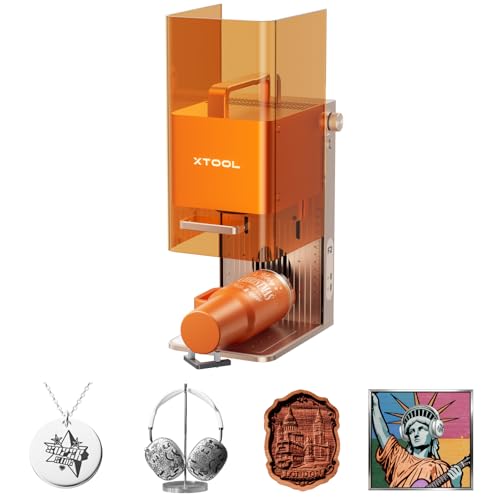
xTool F1 Ultra Dual-Laser Engraver

- 20W fiber laser handles gold, silver, and other metals
- Up to 10,000mm/s for high-throughput work
- 220 x 220 mm area, expandable with optional conveyor
Best For: Jewelry businesses and retail services needing powerful batch metal engraving
Compact Metal Specialist
Ortur R1 Infrared Jewelry Engraver
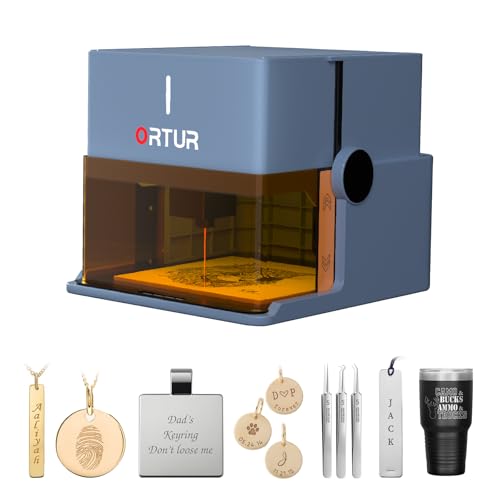
- 1064nm infrared laser for gold, silver, platinum, and copper
- Foldable, no-installation design with aluminum base plate
- Class 1 safety features and app-based design tools
Best For: Beginners making personalized jewelry and metal gifts
High-Power Workshop Pick
Twotrees TTS-10 Pro Laser Engraver

- 10W blue diode laser for fast, deep engraving
- 300 × 300mm work area for small products and jewelry projects
- Supports LightBurn, LaserGRBL, mobile, web, and TF-card workflows
Best For: Hobbyists and small businesses using coated or anodized materials
Touchscreen Beginner Choice

- Computer-free operation through a 3.5-inch touchscreen
- Adjustable power and speed for detailed designs
- Enclosed Class 1 system with smart safety protections
Best For: Beginners engraving jewelry, gifts, and small business products
Power Pick

- 40W power with 600mm/s engraving speed
- Rotary bundle and precise curved-surface positioning
- Enclosed Class 1 design with multiple safety features
Best For: High-volume makers and small businesses
Beginner Smart Pick
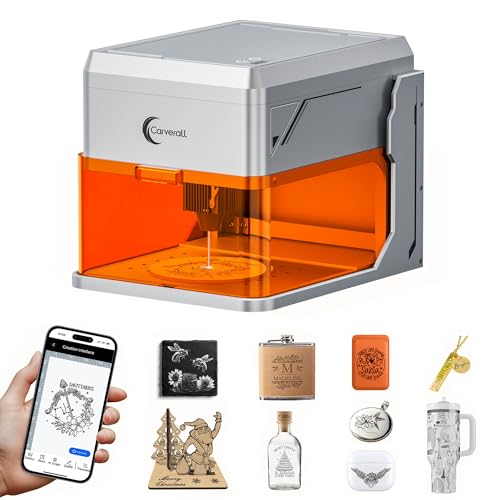
- Camera-guided positioning for accurate placement
- Compact area fits jewelry blanks and small crafts
- Class 1 enclosure with app and AI-assisted software
Best For: Beginners making personalized small items
Compact Value Pick

- Lightweight 3.98-pound desktop design
- 0.01mm repeatable positioning accuracy
- Works with major operating systems and popular software
Best For: Hobbyists engraving small items at home
Best Overall Versatility – xTool F2 Dual-Laser Engraver
For shoppers comparing a laser engraver for jewelry, the xTool F2 stands out for combining a 5W infrared laser with a 15W diode laser. Its infrared laser is suited to vivid metal marking, while the camera-assisted alignment and enclosed design support accurate small-piece work and indoor customization.
Best For: Jewelry makers and small businesses that need metal marking plus broader material versatility.
Pros:
- 5W IR laser supports dark, vivid color marking on metal.
- Built-in 50MP camera offers up to 0.1 mm alignment accuracy for small pieces.
- Up to 6000mm/s speed, enclosed construction, and a portable 4.6 kg design.
Cons:
- The Slide Extension, RA3, and purifier are optional accessories.
- The 15W diode and 5W infrared lasers are specialized for different materials and tasks.
The F2 is a strong all-around choice when jewelry personalization is only part of your workflow. Its camera and dual-laser setup make it especially appealing for repeatable, small-batch customization.
Best Compact Starter – Twotrees TS1 Mini
The Twotrees TS1 Mini is a compact option for shoppers seeking a laser engraver for jewelry-related tags, painted metal, and small personalized projects. Its enclosed design, smartphone control, and small 80 x 80 mm work area make it suited to limited workspaces and lighter-duty crafting.
Best For: Beginners, classrooms, and hobbyists engraving small metal pieces and thin materials.
Pros:
- Fully enclosed acrylic cover and included safety goggles.
- Bluetooth smartphone control plus USB support for LightBurn.
- Compact footprint, 0.1 mm positioning accuracy, and auto-focus laser head.
Cons:
- The 80 x 80 mm work area limits jewelry batch size and larger pieces.
- The adjustable 3W laser is intended for detailed engraving and light cutting, not heavy-duty work.
- Objects inside the enclosure can be up to 30 mm tall.
The TS1 Mini is easiest to recommend when space, simplicity, and portability matter more than production capacity. It can handle painted metal and small personalization jobs, but its compact work area is a meaningful limitation for growing jewelry businesses.
Best Countertop Metal Personalization – AlgoLaser Pixi Infrared Engraver
The AlgoLaser Pixi is a focused choice for a laser engraver for jewelry and other small metal keepsakes. Its 1064nm infrared laser, 3.5-inch touchscreen, and built-in design tools let users prepare names, dates, and simple artwork without a computer.
Best For: Gift shops and makers offering on-demand personalization of suitable metal tags and keepsakes.
Pros:
- 1064nm infrared laser supports detailed metal lettering and artwork.
- Touchscreen includes AlgoType, AlgoSketch, and more than 300 built-in designs.
- Compact approximately 3 kg format fits counters and market tables.
Cons:
- It is primarily designed for suitable metal pieces rather than broad material versatility.
- The small desktop format is aimed at tags, nameplates, and keepsakes, not large workpieces.
- More detailed computer-designed artwork requires compatible LightBurn or LaserGRBL software.
Pixi makes the most sense for customer-facing personalization rather than general fabrication. The touchscreen workflow is particularly useful when customers choose names or dates at the counter and want a quick, individualized result.
Best for Jewelry Production – xTool F1 Ultra Dual-Laser Engraver
For commercial users seeking a laser engraver for jewelry, the xTool F1 Ultra pairs a 20W fiber laser with a 20W diode laser. The fiber laser is designed for metals including gold, silver, copper, stainless steel, brass, and titanium, while the camera system and high speed support repeatable production.
Best For: Jewelry businesses and retail customization services needing powerful metal engraving and batch capability.
Pros:
- 20W fiber laser engraves a wide range of metals, including gold and silver.
- Up to 10,000mm/s speed, 16MP camera, and optional conveyor support production workflows.
- 220 x 220 mm work area, expandable to 220 x 500 mm with the optional conveyor.
Cons:
- The Auto Conveyor is sold separately.
- At 43.8 pounds, it is substantially less portable than compact desktop options.
- The advanced fiber-and-diode system may be more capability than occasional hobby use requires.
The F1 Ultra is the strongest fit here for serious metal-focused production. Its cost and footprint are best justified when fast, repeatable customization of jewelry or other metal goods is central to the business.
Compact Metal Specialist – Ortur R1 Infrared Jewelry Engraver
If you want a laser engraver for jewelry that prioritizes metal customization and simple setup, the Ortur R1 is a practical option. Its 1000mW, 1064nm infrared laser is designed for precise work on gold, silver, platinum, and copper, while its foldable design requires no installation.
Best For: Beginners and gift makers engraving jewelry, metal items, and small personalized projects at home.
Pros:
- 1064nm infrared laser is suited to engraving several metals, including jewelry metals.
- Foldable, ready-to-use design with an aluminum alloy base plate.
- Class 1 safety system includes tilt detection, auto shutdown, exposure limits, and lid-stop protection.
- App supports text, photos, hand-drawn designs, templates, and QR-code projects.
Cons:
- The 1000mW module is focused on engraving rather than high-power cutting.
- Its compact dimensions may limit the size of projects you can place inside.
The Ortur R1 stands out when jewelry and metal engraving are the priority. Its beginner-friendly foldable format and app controls make it especially appealing for personalized gifts, though users seeking larger work areas or heavier cutting power may need a different machine.
High-Power Workshop Pick – Twotrees TTS-10 Pro Laser Engraver
The Twotrees TTS-10 Pro can serve as a laser engraver for jewelry when your projects involve coated or anodized metal, leather, acrylic, or other craft materials. Its 10W blue diode laser offers a 300 × 300mm work area and supports computer, mobile, web, and TF-card workflows.
Best For: Hobbyists and small businesses engraving jewelry accessories, coated metal pieces, keychains, and other small products.
Pros:
- 10W optical power supports fast, deep engraving on several craft materials.
- 300 × 300mm work area accommodates jewelry, keychains, coasters, and small signs.
- Works with LightBurn and LaserGRBL, plus mobile, web, and offline TF-card engraving.
- Full-metal frame, dual Y-axis motors, and included assembly tools support a capable workshop setup.
Cons:
- Not recommended for bare stainless steel or uncoated metal without marking spray or preparation.
- Assembly is required, unlike a ready-to-use foldable engraver.
- Blue diode laser safety practices and suitable ventilation remain important.
This model is a stronger fit for users who value power and a larger work area over instant setup. For jewelry, confirm that your metal is coated or plan to use the required surface preparation before buying.
Touchscreen Beginner Choice – AlgoLaser Pixi 10W Engraver
For shoppers seeking a laser engraver for jewelry without relying on a computer, the AlgoLaser Pixi offers a straightforward touchscreen workflow. Its 3.5-inch display lets you draw, type, or upload designs, while adjustable power and speed settings help refine text and logos on metal and other materials.
Best For: Beginners, educators, and DIYers who want simple offline engraving for jewelry, gifts, and small business products.
Pros:
- Built-in touchscreen, presets, tutorials, and more than 160 templates simplify operation.
- Adjustable power and speed support detailed text and logo work.
- Handles metal, glass, acrylic, leather, wood, stone, and many other materials.
- Enclosed Class 1 design includes an auto-pause lid, password lock, alerts, and rear exhaust fan.
Cons:
- External ventilation is recommended for wood, leather, and coated materials.
- Its compact format is better suited to small projects than oversized workpieces.
- Metal results may require testing different power, speed, and pass settings.
The Pixi is a particularly accessible choice for jewelry makers who prefer guided controls and offline operation. It offers broad material compatibility and useful safety features, making it suitable for home or small-workshop personalization.
Power Pick – xTool S1 40W Rotary Bundle
For shoppers seeking a high-capacity laser engraver for jewelry, the xTool S1 40W stands out for its large work area, rotary bundle, and enclosed Class 1 design. Its pinpoint positioning and curved-surface capabilities are particularly useful for detailed work on jewelry-related items and other small products, while the 600mm/s speed supports larger batches.
Best For: Makers and small businesses that need high power, rotary capability, and room for batch production.
Pros:
- 40W laser and speeds up to 600mm/s support demanding projects and batch work.
- Rotary bundle and pinpoint positioning help with curved items and precise placement.
- Enclosed Class 1 design includes flame sensors, lid-open protection, and an emergency stop.
- Auto-focus, material presets, AI design tools, and tutorials ease the learning curve.
Cons:
- At 86.8 pounds, it is considerably less portable than compact desktop engravers.
- The large feature set and powerful 40W format may be more than casual users need.
The xTool S1 is the strongest option here for productivity and versatility. Choose it when you want to move beyond occasional jewelry projects into larger, repeatable production and varied materials.
Beginner Smart Pick – Carverall A1 Pro 5W
The Carverall A1 Pro is a practical laser engraver for jewelry when accurate placement and simple operation matter most. Its camera lets you position artwork visually, while the compact work area suits jewelry blanks, pet tags, and other small crafts. An optional IR head expands its marking capability to bare metal.
Best For: Beginners, home studios, and makers creating small personalized items with minimal setup.
Pros:
- HD camera enables visual placement and helps reduce misaligned engravings.
- Compact 3.94-by-3.94-inch work area is suited to jewelry blanks and tags.
- Class 1 enclosure, tilt protection, air assist, and exhaust fan support safer operation.
- Free CutLabX software, app control, offline jobs, and AI design tools are beginner-friendly.
Cons:
- The small work area limits the size and quantity of items engraved at once.
- The standard 5W laser is less powerful than the 40W xTool for cutting and high-volume work.
- An IR head is needed for bare-metal marking.
With its camera-guided workflow and small footprint, the A1 Pro is a strong choice for personalized jewelry and other small products. It is especially appealing if you value convenience over maximum cutting power.
Compact Value Pick – ACMER S1 2500mW Engraver
The ACMER S1 is a compact entry point for shoppers comparing a laser engraver for jewelry for home crafting or small projects. Its 130-by-130mm work area supports detailed work on small pieces, and compatibility with LightBurn and LaserGRBL gives users room to develop more advanced workflows.
Best For: Hobbyists who want a lightweight, affordable-size machine for small engraving and cutting projects.
Pros:
- Compact 3.98-pound design is easy to carry and store.
- 0.01mm repeatable positioning accuracy and a 455±5nm laser support detailed work.
- Arrives 99% preassembled with quick laser-head installation.
- Supports macOS, Windows, Linux, LightBurn, and LaserGRBL.
Cons:
- The 130-by-130mm work area is limited to smaller items and projects.
- Its 2500mW laser is less powerful than the higher-powered xTool option.
- The product is Class 4 certified, so users should follow appropriate laser-safety practices.
The ACMER S1 makes the most sense for beginners and hobbyists who prioritize portability and a low-footprint setup. Its small bed is a limitation, but it is well matched to detailed, small-format crafting.
How We Picked the Best Laser Engraver for Jewelry
We selected machines based on the features that matter most for jewelry work: compatibility with common metals and coated surfaces, fine-detail potential, positioning accuracy, usable work area, safety design, and control options. Infrared and fiber-style systems generally deserve priority for bare-metal marking, while diode machines can be useful for wood, leather, acrylic, coated metal, and mixed craft projects.
We also considered practical workflow features, including built-in cameras, touchscreen or app control, enclosure class, rotary compatibility, speed claims, and whether the machine is better suited to occasional personalization or repeated production. Product specifications can vary by configuration, so verify the included laser module and accessories before buying.
Quick Comparison
| Best For | Look For | Recommended Type |
|---|---|---|
| Bare-metal jewelry | 1064nm infrared or fiber laser | Infrared or fiber-capable engraver |
| Mixed craft materials | Diode power, enclosure, and air assist | Enclosed diode machine |
| Accurate placement | Camera preview and calibration | Camera-equipped engraver |
| Small-batch business work | Speed, repeatability, and rotary support | Higher-end dual-laser system |
| Beginners | Class 1 enclosure, simple controls, and presets | Enclosed desktop model |
Key Buying Factors for a Laser Engraver for Jewelry
Laser Wavelength and Material Compatibility
For stainless steel, brass, aluminum, and other jewelry metals, a 1064nm infrared or fiber-based source is usually more appropriate than a basic blue-diode laser. Diode models can still make sense for coated metal, anodized surfaces, wood, leather, and other nonmetal projects.
Detail, Repeatability, and Positioning
Small jewelry designs expose alignment errors quickly. Look for a rigid frame, fine spot size, reliable focus system, and camera-assisted positioning. A preview camera is especially useful when working with rings, pendants, tags, and irregular blanks.
Work Area and Accessories
Check the actual engraving area rather than relying only on overall machine dimensions. A rotary attachment can be essential for rings and cylindrical pieces, while a removable base or pass-through design may help with larger objects.
Safety and Ventilation
An enclosed Class 1 design is easier to use in a home studio, but it still requires responsible operation. Engraving can produce smoke and metal or coating fumes, so use suitable ventilation, follow the manufacturer’s safety instructions, and never leave an active machine unattended.
Who Should Buy Which Laser Engraver for Jewelry?
Choose an infrared or fiber-capable model if your priority is direct marking on bare metal jewelry. Choose a dual-laser machine if you want one setup for both metal personalization and broader craft materials. A camera-equipped desktop engraver is a strong choice for beginners who value easier placement, while a compact enclosed unit suits limited workspaces and occasional projects.
For a growing personalization business, prioritize repeatability, speed, rotary compatibility, software stability, and service support over headline wattage alone. If your projects focus mainly on wood, leather, acrylic, or coated metal, a diode machine may deliver better overall value than a metal-focused system.