Upgrading to one of the best internal SSDs can make a PC feel dramatically faster, from shorter boot times and quicker game loading to more responsive file transfers and applications.
This roundup includes high-performance PCIe 4.0 and PCIe 5.0 NVMe drives alongside practical 2.5-inch SATA models, so you can match speed, capacity, compatibility, and budget to your system.
Best 10 Internal Ssds Picks for 2026
Best High-Speed Upgrade

- Up to 7,450/6,900 MB/s read/write speeds
- 2TB capacity for games and large projects
- M.2 PCIe 4.0 design with five-year warranty
Best For: Gamers, creators, and power users
Best Budget SATA Upgrade

- 1TB 2.5-inch SATA storage
- Read speeds up to 550 MB/s
- 3D NAND TLC and three-year service
Best For: Laptop and desktop SATA upgrades
Best Compact Creator Drive

- PCIe 4.0 M.2 2280 form factor
- Up to 6,600 MB/s listed read speed
- Power-efficient design with five-year warranty
Best For: Mobile creators and compact PC builds
Best Reliable SATA Capacity

- 2TB 2.5-inch SATA storage
- Up to 560/530 MB/s read/write speeds
- Up to 2,400 TBW and broad compatibility
Best For: High-capacity SATA system upgrades
Best Value Gen 4 Upgrade

- PCIe 4.0 Gen 4x4 NVMe interface
- Up to 6,000 MB/s read speed
- Includes Acronis cloning software
Best For: Fast, versatile 1TB storage upgrades
Best for Everyday Use

- 2.5-inch SATA III form factor
- Up to 550 MB/s sequential reads
- Low-power replacement for HDDs
Best For: Older SATA laptops and desktops
Best High-Performance Gen 4 SSD
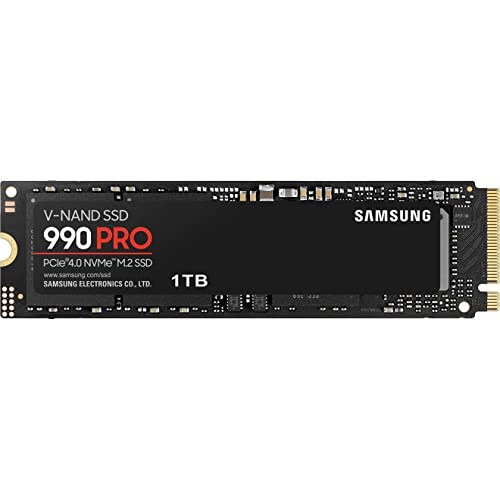
- Up to 7,450 MB/s sequential reads
- High random IOPS for demanding workloads
- Thermal controls and Magician software
Best For: Gaming and demanding PCIe 4.0 systems
Best with Extra Features

- 256GB 2.5-inch SATA 3 design
- Up to 500MB/s read speed
- SmartECC and thermal throttling
Best For: Basic desktop and PC upgrades
Best High-Speed PCIe 5.0 SSD

- PCIe 5.0 x4 M.2 2280 interface
- Up to 14,700MB/s read speed
- Five-year warranty and thermal control
Best For: Gaming, video editing, and demanding workloads
Best Value 1TB SATA SSD

- 1TB 2.5-inch SATA III capacity
- Up to 550MB/s read speed
- Three-year warranty and broad compatibility
Best For: Laptop, desktop, and PS4 storage upgrades
Best High-Speed Upgrade – Samsung SSD 990 PRO 2TB
For demanding internal SSD builds, the Samsung 990 PRO 2TB is a performance-focused M.2 PCIe 4.0 option. It reaches up to 7,450 MB/s read and 6,900 MB/s write speeds, making it well suited to fast game loading, video editing, and other heavy workloads.
Best For: Gamers, creators, and power users who want high-end PCIe 4.0 performance and 2TB of capacity.
Pros:
- Up to 7,450/6,900 MB/s sequential read and write speeds.
- 2TB capacity provides room for games, media, and project files.
- Designed for desktops, laptops, and Sony PlayStation 5 compatibility.
- Includes a five-year manufacturer warranty.
Cons:
- Requires an M.2 2280 PCIe 4.0-compatible slot.
- High-end performance may exceed the needs of everyday users.
The 990 PRO is a strong choice when fast transfers and responsive application loading matter most. Its M.2 PCIe 4.0 design delivers substantially more performance than SATA-based internal SSDs, provided your system supports the interface.
Best Budget SATA Upgrade – fanxiang S101 1TB
The fanxiang S101 is a straightforward 2.5-inch SATA internal SSD for upgrading compatible laptops and desktops. With 1TB of storage and speeds up to 550 MB/s read and 520 MB/s write, it offers a practical step up from a traditional hard drive.
Best For: Everyday computing, laptop upgrades, and desktop users seeking affordable SATA-based storage.
Pros:
- 1TB capacity supports applications, documents, and media libraries.
- 2.5-inch SATA form factor fits many laptops and desktops.
- 3D NAND TLC is designed for longer write life than QLC.
- Includes three years of service and lifetime technical support.
Cons:
- SATA speeds are considerably lower than PCIe 4.0 NVMe internal SSDs.
- Compatibility depends on having a 2.5-inch SATA drive bay or connection.
The S101 makes sense for older systems that cannot use an M.2 drive. It prioritizes broad compatibility and useful capacity over cutting-edge transfer speeds, making it a sensible replacement for an aging HDD.
Best Compact Creator Drive – SanDisk Optimus 5100 500GB
The SanDisk Optimus 5100 is a compact PCIe 4.0 M.2 2280 internal SSD aimed at responsive creative and everyday workloads. This 500GB model offers read speeds listed up to 6,600 MB/s, while the range supports larger capacities for users who need more room.
Best For: Laptop and desktop users who want a power-efficient NVMe drive for applications, gaming, and smaller project libraries.
Pros:
- M.2 2280 PCIe 4.0 design saves space inside compatible systems.
- Listed read speed reaches up to 6,600 MB/s for the 500GB model.
- Power-efficient architecture suits mobile productivity.
- Five-year limited warranty and SanDisk Dashboard support are included.
Cons:
- 500GB capacity may fill quickly with 4K video and large game libraries.
- Requires an available PCIe 4.0-compatible M.2 slot.
This drive is a good fit when compact dimensions, NVMe responsiveness, and power efficiency are more important than maximum capacity. Check your system’s M.2 support before buying, particularly for laptop installations.
Best Reliable SATA Capacity – Samsung SSD 870 EVO 2TB
The Samsung 870 EVO 2TB is a dependable 2.5-inch SATA internal SSD for systems that use the traditional drive interface. It reaches up to 560 MB/s read and 530 MB/s write speeds, while its 2TB capacity provides substantial space for everyday files and media.
Best For: Users upgrading SATA-equipped laptops, desktops, NAS systems, or other compatible devices that need reliable high-capacity storage.
Pros:
- 2TB capacity offers ample room for applications and personal files.
- Maximizes the SATA interface with up to 560/530 MB/s read and write speeds.
- Compatibility-tested with major host systems, chipsets, and applications.
- Rated for up to 2,400 TBW and supports AES 256-bit encryption.
Cons:
- SATA performance is below that of modern PCIe NVMe internal SSDs.
- Uses a 2.5-inch drive form factor rather than a compact M.2 design.
The 870 EVO is a well-rounded choice for a SATA-based upgrade, especially when capacity and established compatibility matter. It is best suited to systems without an available NVMe slot or users replacing a hard drive with a proven 2.5-inch solution.
Best Value Gen 4 Upgrade – Kingston NV3 1TB
Kingston NV3 1TB M.2 2280 NVMe SSD | PCIe 4.0 Gen 4x4 | Up to 6000 MB/s | SNV3S/1000G
Check Price On AmazonThe Kingston NV3 is a practical choice for upgrading a compatible desktop or laptop with fast internal SSD storage. Its PCIe 4.0 Gen 4×4 interface delivers rated sequential speeds of up to 6,000 MB/s read and 4,000 MB/s write, while backward compatibility can help with broader system support.
Best For: Users who want high-speed 1TB NVMe storage for everyday computing, applications, and multi-purpose use.
Pros:
- Fast PCIe 4.0 Gen 4×4 NVMe performance
- Rated speeds up to 6,000 MB/s read and 4,000 MB/s write
- Includes Acronis cloning software
- Compact M.2 2280 design with a 5-year limited warranty listed in the product bullets
Cons:
- Requires an M.2 slot with suitable PCIe support
- Sequential speeds depend on system compatibility and workload
The NV3 balances capacity, compact sizing, and strong Gen 4 performance. Check your motherboard or laptop specifications before buying to confirm M.2 2280 and PCIe compatibility.
Best for Everyday Use – PNY CS900 500GB
The PNY CS900 is a straightforward 2.5-inch internal SSD for replacing a traditional hard drive in a compatible laptop or desktop. With SATA III connectivity, rated sequential speeds of up to 550 MB/s read and 500 MB/s write, and low power consumption, it is designed to improve boot and application load times without requiring an M.2 slot.
Best For: Older laptops and desktops that use a 2.5-inch SATA drive bay and need a simple storage upgrade.
Pros:
- Compatible 2.5-inch SATA III form factor
- Up to 550 MB/s sequential read and 500 MB/s sequential write speeds
- Low power consumption
- Backwards compatible with SATA II
Cons:
- Slower than PCIe NVMe internal SSDs
- 500GB capacity may be limiting for large game or media libraries
- Requires a compatible 2.5-inch drive bay and SATA connection
The CS900 makes sense when compatibility and affordability matter more than cutting-edge throughput. It is a practical way to give an older SATA-based system faster boots and application loading.
Best High-Performance Gen 4 SSD – Samsung 990 PRO 1TB
The Samsung 990 PRO is a premium internal SSD for systems that can take advantage of PCIe 4.0 performance. It offers rated sequential speeds of up to 7,450 MB/s read and 6,900 MB/s write, along with high random IOPS, thermal management, and Samsung Magician software for monitoring and optimization.
Best For: Gaming, demanding PC workloads, and compatible PlayStation 5 or DirectStorage setups that benefit from high PCIe 4.0 performance.
Pros:
- Very high sequential speeds up to 7,450 MB/s read and 6,900 MB/s write
- Up to 1,400K/1,550K random read/write IOPS
- Smart Thermal Control and nickel-coated controller
- Includes Samsung Magician software and a 5-year manufacturer warranty
Cons:
- Requires a compatible PCIe 4.0 M.2 2280 slot for full performance
- Higher-end specifications may exceed the needs of basic storage upgrades
- Thermal performance depends on the host system and airflow
The 990 PRO is the strongest performance-oriented option in this group, particularly for gaming and demanding workloads. Confirm PCIe 4.0, M.2 2280, and platform compatibility before installation.
Best with Extra Features – Patriot P210 256GB
Patriot P210 256GB SATA 3 2.5 Inch SSD | Form factor: 2.5 Inch; Interface: SATA 3.
Check Price On AmazonThe Patriot P210 is a compact 256GB SATA 3 drive for upgrading an older desktop or compatible PC. With sequential read speeds up to 500MB/s and write speeds up to 400MB/s, it offers a practical way to improve everyday responsiveness over a traditional hard drive.
Best For: Budget-conscious users needing a basic internal SSD for business, personal computing, or multimedia storage.
Pros:
- 2.5-inch SATA form factor suits many desktop upgrades.
- Up to 500MB/s sequential read performance.
- Includes end-to-end data path protection, SmartECC, and thermal throttling.
Cons:
- 256GB capacity is limited for large game libraries or media collections.
- SATA performance is much lower than newer PCIe NVMe internal SSDs.
The P210 is a straightforward choice when compatibility and low cost matter more than maximum speed or capacity. Confirm that your system supports a 2.5-inch SATA drive before buying.
Best High-Speed PCIe 5.0 SSD – Samsung 9100 PRO 1TB
The Samsung 9100 PRO is a premium 1TB M.2 internal SSD built around PCIe 5.0 x4. It delivers listed sequential speeds up to 14,700MB/s read and 13,300MB/s write, making it a strong fit for demanding gaming, creative, and AI-oriented workloads on compatible systems.
Best For: Enthusiasts, gamers, and creators with a PCIe 5.0-capable desktop or laptop.
Pros:
- Exceptional PCIe 5.0 sequential performance.
- Random performance rated up to 1,850K/2,600K IOPS.
- Advanced thermal control, hardware encryption, and five-year manufacturer warranty.
Cons:
- Requires a compatible PCIe 5.0 x4 M.2 slot to reach its rated speeds.
- Premium performance may be unnecessary for routine office use.
The 9100 PRO is designed for users who can take advantage of next-generation bandwidth. Check your motherboard or laptop specifications and cooling support before selecting this high-performance drive.
Best Value 1TB SATA SSD – KingSpec 1TB 2.5-Inch SSD
The KingSpec 1TB SATA SSD combines a roomy capacity with a familiar 2.5-inch form factor for laptop, desktop, and select console upgrades. Its 3D NAND design is rated for sequential read speeds up to 550MB/s and write speeds up to 520MB/s.
Best For: Users seeking an affordable 1TB internal SSD for general computing, gaming, or replacing a mechanical drive.
Pros:
- 1TB capacity provides useful space for applications and files.
- Compatible with SATA III and backward-compatible with SATA II systems.
- Supports TRIM, S.M.A.R.T., wear leveling, and garbage collection.
- Three-year limited warranty with lifetime technical support.
Cons:
- SATA interface cannot match PCIe NVMe SSD speeds.
- System compatibility should be checked for 2.5-inch drive clearance and SATA support.
For a conventional SATA upgrade, the KingSpec offers a useful balance of capacity, rated performance, and broad compatibility. It is especially practical for extending the life of older laptops and desktops.
How We Picked the Best Internal Ssds
We selected these Internal Ssds across the main upgrade categories: high-speed NVMe drives for modern desktops, affordable entry-level models, and dependable 2.5-inch SATA SSDs for older laptops and PCs. We considered advertised sequential performance, interface compatibility, available capacities, form factor, brand reputation, and the type of user each drive best serves.
Specifications such as maximum read speed are useful for comparison, but real-world results depend on the computer, workload, thermals, firmware, and whether the drive has sufficient free space.
Quick Comparison
| Drive type | Best suited for | Typical advantage |
|---|---|---|
| PCIe 5.0 NVMe | High-end workstations and enthusiasts | Exceptional sequential speed |
| PCIe 4.0 NVMe | Gaming and modern desktops | Excellent speed and broad compatibility |
| 2.5-inch SATA | Older laptops and desktops | Simple upgrades at lower cost |
Key Buying Factors for Internal Ssds
Interface and Compatibility
Check whether your system supports an M.2 NVMe drive or requires a 2.5-inch SATA model. M.2 describes the physical shape, while NVMe and SATA describe the storage interface. An M.2 SATA drive is not automatically compatible with an NVMe-only slot, so confirm your motherboard or laptop manual before buying.
Speed and Workload
PCIe 4.0 models offer an excellent balance for gaming, general computing, and content creation. PCIe 5.0 drives can be substantially faster for large sequential transfers, but they may require newer hardware and stronger cooling. For web browsing, office work, and ordinary upgrades, SATA performance is often sufficient.
Capacity and Endurance
Choose at least 1TB if you install large games or applications. A 500GB drive works well for a basic operating-system upgrade, while 2TB provides more room for media libraries and demanding workloads. Also check the manufacturer’s endurance rating and warranty when the drive will receive frequent writes.
Thermals and Installation
Fast NVMe SSDs can throttle when hot. Use a motherboard heatsink or compatible aftermarket cooler when recommended. SATA drives need the correct data and power cables, while M.2 drives require a suitable slot and mounting screw.
Who Should Buy Which Internal Ssds?
- Best for maximum performance: Choose the Samsung 9100 PRO if your system supports PCIe 5.0 and your workload benefits from very high transfer speeds.
- Best for high-end PCIe 4.0 use: The Samsung 990 PRO models suit gaming, creative work, and demanding everyday systems.
- Best balanced NVMe upgrade: The Kingston NV3 is a practical choice for compatible PCIe 4.0 desktops and laptops.
- Best for older computers: Select a 2.5-inch SATA option such as the Samsung 870 EVO, PNY CS900, fanxiang S101, Patriot P210, or KingSpec model after confirming drive-bay and cable compatibility.
- Best for capacity-focused upgrades: Prioritize a 2TB model when you need room for games, projects, or a large local library.
Before ordering, verify the interface, physical dimensions, operating-system support, and available storage capacity in your computer. Back up important files before replacing or cloning an existing drive.