Clear dialogue can make or break a film, documentary, interview, or short-form production. The right lavalier microphone keeps voices intelligible while staying discreet and practical on set.
We’ve selected 10 lavalier options covering professional wearable microphones, wireless camera systems, smartphone kits, dual-mic packages, and compact recording solutions. Use the guide below to narrow the choices by compatibility, range, noise control, and workflow.
Best 10 Lavalier Microphones for Film Picks for 2026
Best Wired Pick

- Discreet 4.0mm capsule
- Omnidirectional pickup
- Kevlar-reinforced 1.2m cable
Best For: Film crews wanting a durable wired lav for cameras or transmitters
Best Feature-Rich Wireless Kit
NEEWER CM28 Wireless Lavalier Kit

- Two transmitters and one receiver
- 4GB onboard recording per transmitter
- Noise cancellation and 200m stated range
Best For: Two-person interviews and shoots needing backup recording
Best for DJI Mic Systems

- Made for DJI Mic and Mic 2
- Rotating connector design
- Cable routing reduces unplugging
Best For: DJI users seeking a discreet external lav
Best Wired Two-Pack
NEEWER CM5 Lavalier Microphones

- Two omnidirectional wired microphones
- 3.5mm TRS plug-and-play connection
- Includes clips and foam windscreens
Best For: Two-speaker shoots using compatible 3.5mm equipment
Best Pocket Wireless Kit
Mini Mic Pro Wireless Lavalier

- USB-C and Lightning adapters included
- Noise reduction with wind protection
- Up to six hours per charge
Best For: Mobile interviews and creator-focused video shoots
Best Feature-Rich Wireless System
NEEWER CM26 MAX AI Wireless Lavalier

- AI noise cancellation with two modes
- 48kHz/24-bit audio and real-time monitoring
- Up to 50 hours with charging case
Best For: Production shoots needing control, monitoring, and long runtime
Discreet Wired Pick
Premium Ultra-Low-Profile Lavalier

- Two microphones with clips and windscreens
- 5-foot cable and plug-and-play setup
- Designed for discreet voice capture
Best For: Controlled interviews, studio work, and presenters
Long-Range Wireless Pick
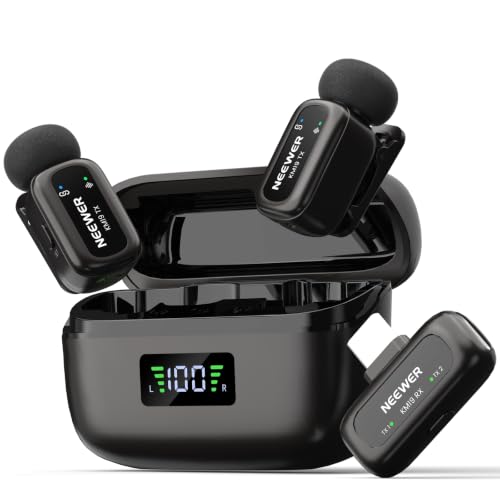
- Two transmitters and USB-C receiver
- Up to 100m range and 30-hour case runtime
- Noise cancellation, mute, and stereo/mono modes
Best For: Two-person mobile shoots with compatible USB-C devices
Simple Two-Person Value

- Two wireless microphones for interviews
- Automatic pairing without Bluetooth or apps
- Phone charging during use and 4-hour runtime
Best For: Quick two-person smartphone filming
Best Wired Pick – Rode Lavalier GO
For filmmakers who want a dependable wired option, the Rode Lavalier GO is a discreet lavalier microphone for film with a standard 3.5mm TRS connection. Its omnidirectional capsule is forgiving to position and works with compatible cameras, audio interfaces, and wireless transmitters.
Best For: Film crews seeking a compact, professional-grade wired lav for cameras or transmitters.
Pros:
- Broadcast-grade audio capture from a discreet 4.0mm capsule
- Omnidirectional pattern allows flexible placement on talent
- Kevlar-reinforced 1.2m cable is designed for shoot-day durability
- Includes a pop shield and cable-management mounting clip
Cons:
- Wired design requires a cable connection to the camera or transmitter
- 3.5mm TRS connector may require an adapter for some devices
The Lavalier GO is a straightforward choice when consistent connectivity and a discreet appearance matter more than wireless convenience.
Best Feature-Rich Wireless Kit – NEEWER CM28 Wireless Lavalier Kit
The NEEWER CM28 is a versatile wireless lavalier microphone for film supplied as a two-transmitter, one-receiver kit. It combines wireless camera connectivity with onboard 48kHz/16-bit recording, noise cancellation, and a charging case for productions that need flexible audio capture.
Best For: Interviews, two-person shoots, and filmmakers who value backup recording and broad device compatibility.
Pros:
- Includes two transmitters and one receiver for two-person recording
- Each transmitter provides 4GB of standalone WAV recording storage
- Offers one-click noise cancellation and selectable mono, stereo, and MS modes
- Claims up to 200m transmission in unobstructed areas
Cons:
- Wireless range varies with location and conditions
- Requires charging and battery management for extended shoots
- The system has more components than a simple wired lavalier
With internal recording, an LCD display, and multiple adapters, the CM28 is particularly useful when a film setup needs redundancy and flexible routing options.
Best for DJI Mic Systems – DJI Lavalier Microphone
The DJI Lavalier Microphone is a compact wired accessory designed specifically for DJI Mic and DJI Mic 2 receivers. Its rotating design and cable-routing feature make it easier to conceal and help reduce accidental unplugging during interviews, vlogs, and film-style recordings.
Best For: Filmmakers already using a DJI Mic or DJI Mic 2 wireless system.
Pros:
- Designed for compatibility with DJI Mic and DJI Mic 2
- Rotating design supports flexible recording positions
- Cable routing helps prevent accidental unplugging
- Compact form is suitable for discreet placement
Cons:
- Compatibility is centered on DJI Mic receivers
- Sold as a single lavalier microphone rather than a complete wireless system
This is a focused upgrade for DJI users who want a more concealable external lav without changing their existing receiver setup.
Best Compact Camera Wireless System – Movo WMX-2 Wireless Camera Mic
The Movo WMX-2 is a compact 2.4GHz wireless lavalier microphone for film that pairs a wearable transmitter with an auto-pairing camera receiver. It is built for DSLR cameras and content production, with a charging case and stated range up to 328 feet.
Best For: Solo filmmakers and creators who want a portable wireless setup for DSLR-based production.
Pros:
- Auto-pairing receiver simplifies setup
- Built-in omnidirectional transmitter mic captures voice without a separate lav connection
- Adaptive Frequency Hopping is designed to support a stable signal
- Charging case provides an additional full charge
Cons:
- Uses a 2.4GHz wireless connection that can be affected by the shooting environment
- Listed system has one transmitter and one receiver
- Camera connection uses a 3.5mm jack, so other devices may need an adapter
The WMX-2 keeps a wireless camera rig simple and portable, making it a practical option for single-subject filming, vlogging, and mobile production.
Best Wired Two-Pack – NEEWER CM5 Lavalier Microphones
For filmmakers who need simple, dependable lavalier microphones for film, the NEEWER CM5 offers two wired omnidirectional mics with broad 3.5mm TRS compatibility. They require no batteries or software, making them a practical choice for interviews, presentations, and multi-person shoots.
Best For: Budget-conscious creators recording two speakers with cameras, recorders, or compatible wireless transmitters.
Pros:
- Two microphones let you record two speakers without moving a single mic.
- Omnidirectional condenser capsules capture voices from 360 degrees.
- Plug-and-play 3.5mm TRS connection requires no batteries or drivers.
- Includes clips and foam windscreens for convenient lapel mounting.
Cons:
- Wired 3.9-foot cables limit movement compared with wireless systems.
- Not compatible with Sony microphone systems.
- Devices using USB-C or other connectors require a separate adapter.
The CM5 is a straightforward option when reliability and a two-mic setup matter more than wireless range. Its compatibility should be checked carefully before purchase, especially for newer phones and Sony equipment.
Best Pocket Wireless Kit – Mini Mic Pro Wireless Lavalier
The Mini Mic Pro is a compact wireless option for creators seeking lavalier microphones for film, interviews, and mobile video. It includes USB-C and Lightning adapters, noise reduction, wind protection, and up to six hours of recording per charge.
Best For: Mobile filmmakers and interviewers recording with iPhones, Android devices, tablets, or laptops.
Pros:
- Includes both USB-C and Lightning adapters for broad mobile compatibility.
- Wireless design avoids a cable running from the subject to the recording device.
- Noise reduction and included foam and dead cat covers help with outdoor recording.
- Rechargeable system provides up to six hours of use per charge.
Cons:
- The supplied details do not specify a wireless transmission range.
- Its stated compatibility centers on mobile and computing devices rather than traditional camera inputs.
- Battery-powered operation requires charging before extended shoots.
With its small form factor and dual connector support, the Mini Mic Pro is convenient for run-and-gun mobile production. It is especially appealing when fast setup and basic wind protection are more important than advanced camera-focused controls.
Best Feature-Rich Wireless System – NEEWER CM26 MAX AI Wireless Lavalier
The NEEWER CM26 MAX is designed for demanding lavalier microphones for film workflows, combining AI noise cancellation, app control, monitoring, and multiple recording modes. Its charging case provides up to 50 hours of total runtime, while the system supports phones, cameras, computers, and tablets.
Best For: Filmmakers who want wireless flexibility, real-time monitoring, noise control, and extended battery life.
Pros:
- Two AI noise-cancellation modes target indoor and outdoor background noise.
- Supports 48kHz/24-bit audio, real-time monitoring, limiter, and safety-track recording.
- Charging case extends total battery life to 50 hours.
- Offers USB-C connectivity plus a 3.5mm TRS monitoring connection and furry windscreen.
Cons:
- iPhone 14 and earlier models require a separate MFi-certified USB-C-to-Lightning OTG adapter.
- Some Android phones may require OTG activation.
- Its 10-ounce weight and larger feature set may be more than casual users need.
The CM26 MAX is the most production-oriented choice here, with useful controls for challenging audio environments and longer shoots. Its strongest advantages are best realized when you need monitoring, safety tracks, app adjustments, and a broad wireless setup.
Discreet Wired Pick – Premium Ultra-Low-Profile Lavalier
For filmmakers who want a simple, discreet setup, this wired lavalier is a practical option among lavalier microphones for film. Its 5-foot cable, clip, foam windscreen, and plug-and-play operation make it suited to interviews, presenters, voice recording, and other productions where dependable hands-free capture matters.
Best For: Filmmakers needing a low-profile wired microphone with a 3.5mm connection and a two-microphone package.
Pros:
- Ultra-low-profile design helps minimize microphone visibility on camera.
- Includes two microphones, clips, and foam windscreens.
- Plug-and-play operation requires no drivers.
- 5 input options are available across the product line, including 3.5mm and USB variants.
Cons:
- The supplied 3.5mm version is limited by its wired connection.
- The 5-foot cable may restrict movement in larger shooting spaces.
- Listed warranty coverage is a 30-day return policy.
This is a straightforward choice for controlled shoots, interviews, and studio voice work. Choose it when discreet placement and immediate setup are more important than wireless mobility.
Long-Range Wireless Pick – NEEWER KM19 Mini Lav Mic
The NEEWER KM19 is a flexible choice among lavalier microphones for film when a small wireless system is more useful than a cable. It includes two transmitters, a USB-C receiver, noise-canceling controls, stereo or mono output, and a charging case for extended recording sessions.
Best For: Mobile film crews and creators recording two people with compatible USB-C phones, tablets, computers, or laptops.
Pros:
- Two transmitters support two-person recording.
- Offers up to a stated 100-meter range and 30 hours with the charging case.
- Provides three noise-cancellation levels plus a mute function.
- Supports 48kHz/24-bit recording with stereo and mono output modes.
Cons:
- It is not compatible with GoPro cameras.
- Some Android phones require OTG activation.
- The receiver uses USB-C, so device compatibility should be checked before filming.
With its dual transmitters, charging case, and long stated range, the KM19 is well suited to interviews and location shoots. Its main consideration is confirming the camera or mobile device supports the included USB-C workflow.
Simple Two-Person Value – KUKIHO Wireless Lavalier Set
This KUKIHO set is a convenient entry point for lavalier microphones for film, particularly for phone-based interviews, vlogs, and podcasts. The two wireless microphones pair automatically without Bluetooth or an app, while the included receiver can charge a phone during use.
Best For: Smartphone filmmakers and content creators who need two microphones with a simple plug-and-play setup.
Pros:
- Two microphones allow simultaneous recording for interviews or conversations.
- Automatic pairing requires no Bluetooth or application.
- Noise reduction and windproof foam help support clearer voice recording.
- Offers a stated 66-foot transmission range and up to 4 hours of working time.
Cons:
- The stated operating time is shorter than some larger wireless systems.
- The system is primarily designed around smartphone and compatible computer use.
- Wireless range depends on unobstructed conditions.
This kit emphasizes convenience rather than a complex production workflow. It is a sensible pick for quick two-person smartphone shoots, provided the included iOS or USB-C connection matches your device.
How We Picked the Best Lavalier Microphones for Film
We focused on the factors that matter most during production: voice clarity, connection reliability, microphone size, device compatibility, battery life, operating range, monitoring options, and ease of setup. The selection includes wired lavalier microphones for simple, dependable rigs as well as wireless systems suited to moving subjects, interviews, and solo filmmaking.
Because film crews use different cameras and recording workflows, we also included products designed for DSLR and mirrorless cameras, smartphones, computers, and independent onboard recording. Specifications such as 48 kHz/16-bit recording, internal storage, charging cases, and noise-reduction features can be valuable, but they should support—not replace—good microphone placement and room control.
Quick Comparison
| Type | Best For | What to Check |
|---|---|---|
| Wired lavalier | Simple interviews and backup audio | Connector, cable length, camera input |
| Wireless camera system | DSLR, mirrorless, and mobile filmmaking | Receiver output, range, battery life |
| Wireless phone microphone | Creators and lightweight production | Phone connector and app compatibility |
| Standalone recording lav | Backup tracks and unrestricted movement | Storage, timecode workflow, file transfer |
| Two-microphone kit | Interviews and two-person scenes | Independent channels and charging setup |
Key Buying Factors for Lavalier Microphones for Film
Compatibility and Connection
Start with the recording device. Cameras commonly use 3.5mm microphone inputs, while phones may require USB-C, Lightning, or a dedicated wireless receiver. Confirm the connector and whether the system supports your device before buying. Some smartphone-focused products are not suitable for cameras without an adapter or receiver.
Wired Versus Wireless Operation
Wired lavs are lightweight, affordable, and do not require wireless pairing or battery management. Wireless systems provide more freedom of movement and a cleaner on-camera setup, but add transmitters, receivers, charging requirements, and possible interference. For professional shoots, a wireless microphone with a camera-mounted receiver and a separate backup recording path can be especially useful.
Sound Quality and Noise Control
Look for natural speech reproduction rather than relying only on claims such as “noise cancelling.” A lav should reduce clothing rustle and handle ordinary background noise without making voices sound thin or processed. Placement near the upper chest, away from necklaces and loose fabric, often matters as much as the microphone itself.
Range, Battery Life, and Monitoring
Choose enough wireless range for the largest expected setup, with margin for walls and crowded radio environments. Check continuous runtime, charging-case capacity, and whether the receiver allows headphone monitoring. Internal recording can protect a take if the wireless signal drops, but it adds another file-management step.
Who Should Buy Which Lavalier Microphones for Film?
- Choose a wired lavalier if you want the simplest dependable setup, a low-cost backup, or a microphone for controlled interviews.
- Choose a wireless camera system for filmmaking, documentaries, events, and subjects who need to move naturally away from the camera.
- Choose a smartphone-focused kit for mobile video, social content, quick interviews, and creators who record primarily on a phone.
- Choose a dual-microphone package when recording two speakers, co-hosts, or an interviewer and guest.
- Choose internal recording when you need a safety track, greater freedom from wireless range limits, or a backup for demanding locations.
For the best results, test the connector, placement, gain levels, and clothing noise before the shoot. A short sound check can reveal compatibility or rustling problems before they affect a full take.