The right lavalier microphone can make DSLR video sound clearer, fuller, and more professional without forcing you to hold a microphone on camera.
We selected 10 options for different recording styles, including wireless systems for creators and filmmakers, compact camera-ready kits, and affordable wired lavaliers.
Best 10 Lavalier Microphones for Dslr Cameras Picks for 2026
Best Long-Range Pick

- 9g transmitters with 48kHz/24-bit audio
- 300m line-of-sight wireless range
- 40-hour battery life with charging case
Best For: Filmmakers and vloggers needing compact, long-range wireless audio
Best for Two-Person Shoots

- Includes two lightweight transmitters
- 400m maximum transmission range
- Automatic limiting helps prevent clipping
Best For: Interviews, livestreams, and two-speaker recordings
Best Noise-Control Features

- 48kHz/24-bit recording with 80dB signal-to-noise ratio
- Adjustable noise cancellation with 14 levels
- 40-hour total battery life
Best For: Solo creators recording in busy or noisy locations
Best Simple Wired Option
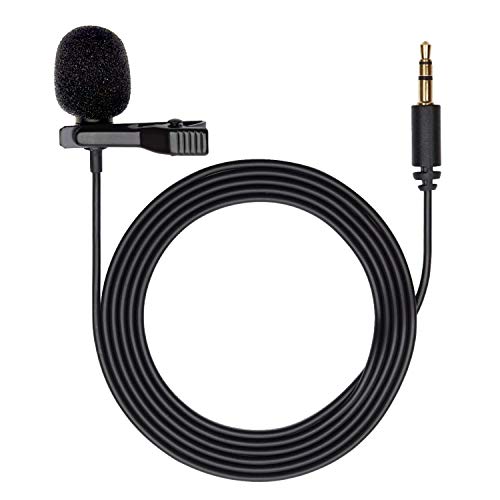
- Plug-and-play 3.5mm TRS connection
- No batteries required
- 47-inch flexible cable
Best For: DSLR users wanting uncomplicated wired audio
Flexible Wireless Pick
PQRQP GT20 3-in-1 Wireless Lavalier

- Camera, phone, tablet, and laptop compatibility
- Up to 328 feet stated range
- Dual-mic setup with up to 20-hour total runtime
Best For: Creators needing one wireless system across multiple devices
Advanced Noise Control

- Two AI noise-cancellation levels
- 50-hour stated runtime with charging case
- Monitoring, Safety Track, and app controls
Best For: Creators needing adjustable audio control for indoor and outdoor shoots
DSLR-Focused Classic

- Camera shoe mount and 3.5mm TRS cable included
- Real-time headphone monitoring
- Up to 200 feet stated range
Best For: DSLR filmmakers wanting a simple receiver-based wireless kit
Best Dual-Transmitter Pick
NEEWER CM28 Wireless Lavalier Microphone

- Two transmitters support interviews and two-person shoots.
- Built-in 4GB recording per transmitter provides audio backup.
- Noise cancellation, display, and 200m stated range add flexibility.
Best For: Two-person interviews and creators wanting onboard recording
Best Long-Range Pick – Hollyland Lark M2
For creators seeking lavalier microphones for DSLR cameras, the Hollyland Lark M2 combines a compact wireless design with a camera receiver, high-resolution recording, and long-range transmission. Its pre-paired setup also makes it practical for fast-moving shoots.
Best For: Filmmakers, vloggers, and podcasters who need discreet wireless audio and extended range.
Pros:
- Very light 9g transmitters with 48kHz/24-bit audio
- Up to 300m line-of-sight wireless transmission
- Noise cancellation, mono/stereo switching, and 40-hour case battery life
- Pre-paired, plug-and-play setup with 3.5mm and USB-C connectivity
Cons:
- Mono/stereo switching is supported through the camera’s 3.5mm connection
- Noise cancellation is controlled through the transmitter and receiver indicators rather than fully automatic operation
The Lark M2 is a strong all-around choice when range, portability, and DSLR-friendly connectivity matter. Its camera version is especially useful for creators who want reliable wireless operation without a complicated setup.
Best for Two-Person Shoots – DJI Mic Mini
The DJI Mic Mini is a convenient option among lavalier microphones for DSLR cameras, including two transmitters, a camera receiver, and a charging case. Its automatic limiting and adjustable noise cancellation are useful when recording voices in changing environments.
Best For: Interviews, livestreams, and creators who regularly record two speakers.
Pros:
- Two 10g transmitters support two-channel recording
- Up to 400m maximum transmission range
- 48kHz audio, 120dB SPL, and automatic limiting help protect against clipping
- Up to 48 hours of battery life with the charging case
Cons:
- The full feature set is most closely integrated with DJI devices and ecosystem products
- USB-C connectivity is included, but DSLR use relies on the supplied 3.5mm TRS camera cable
With two transmitters and dependable level protection, the DJI Mic Mini is well suited to interview-style production. It is a practical pick for DSLR users who also want flexibility across smartphones and compatible DJI devices.
Best Noise-Control Features – MAONO Wave T5
The MAONO Wave T5 stands out among lavalier microphones for DSLR cameras with 48kHz/24-bit recording, configurable noise cancellation, and built-in voice presets. It is designed for creators who want to shape their sound quickly while recording on location.
Best For: Vloggers, reporters, podcasters, and solo creators working in noisy surroundings.
Pros:
- 9g transmitters with 80dB signal-to-noise ratio and 120dB maximum SPL
- Three noise-cancellation modes with 14 adjustment levels through the Maono Link app
- Four one-tap voice filters for different vocal styles
- Up to 40 hours of total battery life and phone charging while recording
Cons:
- Advanced noise controls and voice filters depend on the Maono Link app
- The supplied notes do not specify a wireless transmission distance
The Wave T5 is a feature-rich choice for creators who value quick audio customization. Its noise-control options and voice presets can reduce the need for extensive adjustment during production or post-processing.
Best Simple Wired Option – Movo DOM1
For a straightforward wired choice among lavalier microphones for DSLR cameras, the Movo DOM1 uses a 3.5mm TRS connection and requires no batteries. Its long cable provides useful flexibility when positioning the microphone during filming.
Best For: DSLR users who want an affordable, plug-and-play lavalier without wireless setup.
Pros:
- Works directly with compatible 3.5mm TRS devices
- No batteries are required because it is powered by the connected device
- Omnidirectional pickup captures sound from all sides
- 47-inch cable allows flexible microphone placement
Cons:
- Wired operation limits movement compared with wireless systems
- Compatibility is centered on 3.5mm TRS devices
- It is a single-channel microphone rather than a two-transmitter system
The DOM1 is a sensible entry-level solution for DSLR recording when simplicity matters more than wireless freedom. It avoids charging and pairing while providing a generous cable length for basic video work.
Flexible Wireless Pick – PQRQP GT20 3-in-1 Wireless Lavalier
For creators comparing lavalier microphones for DSLR cameras, the PQRQP GT20 offers a versatile wireless setup with a camera-compatible receiver and two clip-on transmitters. Its plug-and-play design, noise reduction, and long stated range make it suitable for interviews, livestreams, and mobile production.
Best For: Creators who need one wireless lavalier system for cameras, phones, tablets, and laptops.
Pros:
- Supports cameras plus iPhone, Android, iPad, and laptop connections through included receiver options.
- Claims 48kHz/24-bit audio, noise cancellation, and a windproof cotton cover.
- Offers up to 328 feet of stated transmission range and up to 20 hours with dual microphones.
- Includes one-touch mute and built-in reverb for added recording flexibility.
Cons:
- The omnidirectional pickup pattern may capture surrounding sound along with the speaker.
- The listed 10-hour use per charge applies to each microphone; total runtime depends on using both transmitters.
The GT20 stands out for broad device compatibility and a generous feature set. It is a practical choice when you want a compact wireless kit that can move between DSLR work and mobile content creation.
Advanced Noise Control – NEEWER CM26 MAX AI Lavalier
The NEEWER CM26 MAX is a feature-rich option among lavalier microphones for DSLR cameras, pairing a camera connection with AI noise cancellation, monitoring, and app controls. It is designed for creators who want more control over cleanup, recording modes, and battery management.
Best For: Video creators who value adjustable noise reduction, real-time monitoring, and extended battery life.
Pros:
- Provides two AI noise-cancellation modes, plus a furry windscreen for outdoor recording.
- Supports 48kHz/24-bit audio, adaptive gain, a limiter, and Mono, Stereo, and Safety Track modes.
- Includes a 3.5mm TRS jack for real-time monitoring and a camera-compatible cable.
- Charging case extends total stated runtime to 50 hours, with transmission up to 394 feet line of sight.
Cons:
- iPhone 14 and earlier models require a separately purchased MFi-certified USB-C-to-Lightning OTG adapter.
- Some Android devices may require OTG activation.
- The larger feature set and app control may be more than casual users need.
With strong recording controls and the longest stated battery life in this group, the CM26 MAX is aimed at demanding content workflows. Its compatibility requirements are worth checking before purchase, especially for older iPhones.
DSLR-Focused Classic – Movo WMX-1 Wireless Lavalier
The Movo WMX-1 is a straightforward choice for shoppers seeking lavalier microphones for DSLR cameras. Its 2.4GHz transmitter-and-receiver system includes a shoe mount, camera cable, headphone monitoring, and manual volume control for practical filmmaking setups.
Best For: DSLR filmmakers, vloggers, and mobile journalists who prefer a traditional external receiver system.
Pros:
- Designed to work with DSLR cameras, camcorders, smartphones, and tablets.
- Includes a receiver shoe mount and 3.5mm TRS cable for camera connection.
- Headphone input enables real-time audio monitoring, while adjustable volume helps reduce post-production work.
- Offers up to 200 feet of stated range and includes a hard case plus a one-year warranty.
Cons:
- Uses two AAA batteries per unit and provides up to six hours of operation.
- Its stated 14kHz frequency response and 74dB signal-to-noise ratio are more modest than the newer systems here.
- The system uses 3.5mm connections rather than a direct USB-C receiver.
The WMX-1 favors familiar controls and camera-ready accessories over app features or extended battery life. It makes sense for DSLR users who want headphone monitoring and a conventional wireless workflow.
Best Dual-Transmitter Pick – NEEWER CM28 Wireless Lavalier Microphone
For creators comparing lavalier microphones for DSLR cameras, the NEEWER CM28 stands out as a flexible two-person wireless kit. It combines a camera receiver, two transmitters, onboard recording, noise cancellation, and a charging case for interviews, vlogging, and outdoor shoots.
Best For: Interviews, podcasts, and creators who need two microphones plus backup recording.
Pros:
- Includes two transmitters and one receiver for two-person recording.
- Each transmitter offers 4GB of storage for up to 9 hours of uncompressed 48kHz WAV audio.
- One-click noise cancellation, adjustable gain, windshields, and a display support easier field recording.
- Up to 200m transmission range in unobstructed areas and compatibility with DSLR cameras through the included camera cable.
Cons:
- The stated 200m range varies by location and obstacles.
- The feature-rich system may be more than a solo creator needs.
The CM28 is a strong all-around option when redundancy and two-person coverage matter. Its standalone recording can also help protect a shoot if wireless conditions become unreliable.
Best Simple Camera Kit – Movo WMX-2 Wireless Camera Microphone
The Movo WMX-2 is a compact choice among lavalier microphones for DSLR cameras, pairing a wearable transmitter with an auto-pairing receiver. Its straightforward 2.4GHz design is suited to vlogging, filmmaking, podcasting, and other mobile content work.
Best For: Solo creators who want a lightweight wireless microphone with simple camera setup.
Pros:
- Ultra-compact transmitter and auto-pairing receiver are easy to carry and use.
- Built-in omnidirectional microphone supports hands-free recording without a separate lav capsule.
- Adaptive Frequency Hopping helps maintain a stable signal up to 328 feet.
- Up to 7 hours of battery life plus an additional full charge from the case.
Cons:
- This kit has one transmitter and one channel, so it is less suited to two-person interviews.
- The listed camera connection uses a 3.5mm jack, so device compatibility should be checked before purchase.
The WMX-2 keeps the workflow uncomplicated and portable. It is a practical fit for one speaker using a Canon, Sony, Nikon, or other compatible DSLR camera.
Best Lightweight Dual-Mic Option – Movo NanoMic Wireless Lavalier System
For DSLR users seeking unobtrusive lavalier microphones for DSLR cameras, the Movo NanoMic provides two extremely small wireless transmitters and a receiver designed for standard 3.5mm TRS camera inputs. It is built for interviews, filmmaking, and run-and-gun production.
Best For: Videographers recording two subjects who prioritize low-profile transmitters and direct TRS camera connection.
Pros:
- Includes two transmitters, making it suitable for interviews and two-person shoots.
- Each transmitter weighs 0.17 oz for discreet, unobtrusive placement.
- 16-bit/48kHz audio, 20Hz–20kHz response, three noise-cancellation levels, and anti-clipping support cleaner dialogue.
- Up to 6 hours of runtime, with up to 30 additional hours supplied by the charging case.
Cons:
- It is designed for cameras with a standard 3.5mm TRS input and may require a different solution for other connectors.
- The listed wireless range is up to 328 feet, with actual performance depending on shooting conditions.
The NanoMic is particularly appealing when small transmitters matter as much as sound quality. Its direct TRS camera connection and dual-microphone layout keep a two-person production relatively streamlined.
How We Picked the Best Lavalier Microphones for Dslr Cameras
We focused on microphones that can work with DSLR or mirrorless camera setups, prioritizing reliable camera connectivity, clear speech reproduction, practical mounting, and useful recording flexibility. The lineup includes wired 3.5mm lavaliers, compact wireless systems, dual-transmitter kits, and models with internal recording or noise-reduction features.
We also considered range, battery life, included adapters, monitoring options, portability, and the needs of solo creators, interviewers, educators, and small production teams. Wireless specifications can vary by environment, so stated range should be treated as a best-case figure rather than a guarantee.
Quick Comparison
| Type | Best For | Main Advantage | Potential Trade-Off |
|---|---|---|---|
| Wired lavalier | Simple DSLR recording | Low cost and no wireless battery | Requires a cable to the camera |
| Single wireless system | Solo creators and presenters | Freedom of movement | Requires charging and pairing |
| Dual wireless system | Interviews and two-person shoots | Records two speakers | Higher cost and more equipment |
| Wireless system with onboard recording | Backup-conscious filmmakers | Can preserve audio if the connection drops | Extra files and workflow steps |
Key Buying Factors for Lavalier Microphones for Dslr Cameras
Connection and Compatibility
Check whether your camera accepts a 3.5mm TRS microphone input. Some wireless kits include camera receivers, while others are designed primarily for phones and need the correct TRS or TRRS cable and adapter. Confirm compatibility before buying, especially if your camera uses a nonstandard input arrangement.
Wired or Wireless Design
Wired lavaliers are usually the simplest and most affordable choice for controlled setups. Wireless microphones are better when the speaker needs to move, but they add transmitters, receivers, batteries, and pairing steps. For interviews, a dual-transmitter kit can be more practical than buying two separate systems.
Audio Quality and Noise Control
Look for clean speech, suitable sensitivity, and effective wind protection. Noise cancellation can help in busy environments, but aggressive processing may make voices sound unnatural. A good lav placement—near the upper chest and away from clothing friction—is often just as important as the microphone specification.
Battery Life, Range, and Backup Recording
Choose enough operating time for the longest planned shoot, not just a short recording session. Charging cases simplify travel, while onboard recording can provide valuable backup protection. Advertised wireless range is typically measured with a clear line of sight; walls, crowds, and interference reduce it.
Who Should Buy Which Lavalier Microphones for Dslr Cameras?
Choose a wired lavalier if you want the lowest-cost setup, do mostly seated recordings, or prefer not to manage batteries. Choose a compact wireless system for vlogging, presentations, travel, and fast-moving content. Choose a dual wireless kit for interviews, dialogue between two people, and small productions. Choose a model with onboard recording when protecting a shoot from wireless dropouts matters most.
Before ordering, verify the included camera cable, connector type, transmitter count, charging method, and return policy. Those details determine whether a microphone will work smoothly with your DSLR on the first shoot.