Clear speech can make the difference between a polished video and one viewers quickly abandon. The best lavalier microphones keep voices close, consistent, and easier to understand than a phone or camera’s built-in mic.
This roundup covers wired and wireless options for phones, cameras, interviews, presentations, and everyday content creation, with choices ranging from simple clip-on mics to complete multi-transmitter kits.
Best 10 Lavalier Microphones Picks for 2026
Best Overall Wireless Kit
DJI Mic Mini with Charging Case

- Two ultralight transmitters with a receiver
- Up to 48 hours with charging case
- Noise cancellation and automatic limiting
Best For: Creators needing a complete, long-running wireless setup
Best Wired Option
RØDE Lavalier GO Professional Microphone

- Standard 3.5 mm TRS connectivity
- Discreet omnidirectional capsule
- Kevlar-reinforced 1.2 m cable
Best For: Users who prefer a durable wired mic
Best for Mobile Recording

- Two 10 g wireless transmitters
- USB-C plug-and-play mobile receiver
- Up to 300 m range and 11.5 hours
Best For: Phone-based interviews, vlogs, and livestreams
Best for Mobile Livestreaming
Hollyland Lark A1 Wireless Microphone
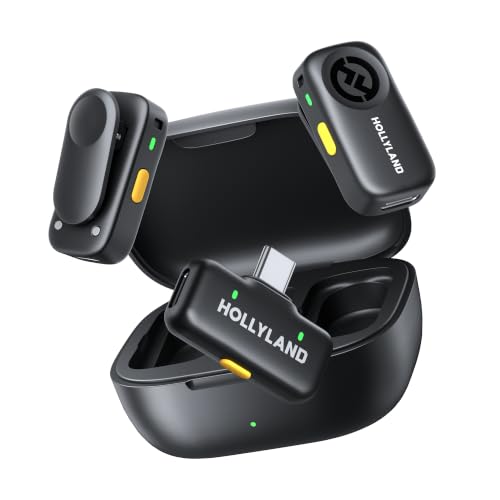
- USB-C plug-and-play receiver
- Up to 54 hours with charging case
- Noise cancellation and clip protection
Best For: Frequent mobile livestreamers and video creators
DJI-Compatible Pick

- Rotating design for flexible positioning
- Cable routing helps prevent unplugging
- Compatible with DJI Mic and Mic 2
Best For: DJI users needing a compact wired lavalier
Wireless All-Device Pick

- Receivers support Lightning, USB-C, and 3.5 mm
- 328-foot stated range with low latency
- Up to 20 hours with dual microphones
Best For: Multi-platform creators recording wirelessly
Best Wired Two-Pack
NEEWER CM5 Lavalier Microphones

- Two microphones for dual-speaker recording
- No batteries or pairing required
- 3.5 mm TRS compatibility for select devices
Best For: Presentations and two-person wired recording
Top Pick

- USB-C and Lightning adapters included
- Wind protection and noise reduction
- Up to six hours of recording
Best For: Mobile creators using iPhone or Android
Best for Phone-Case Convenience
MAYBESTA Wireless Mini Microphone

- Longer receiver fits most phone cases
- Works with Lightning and USB-C devices
- Two microphones with plug-and-play setup
Best For: Vloggers and interviewers recording on phones
Best for Monitoring
wedaniya Wireless Mini Microphone

- Real-time headphone monitoring
- Standard, Reverb, and Mute modes
- Two transmitters with wind covers
Best For: Creators who want more control while recording
Best Overall Wireless Kit – DJI Mic Mini with Charging Case
For creators who want flexible lavalier microphones for interviews, livestreams, and outdoor recording, the DJI Mic Mini combines two lightweight transmitters with a receiver and charging case. Its long range, noise cancellation, automatic limiting, and extended battery capacity make it a versatile all-around kit.
Best For: Content creators, interviewers, and livestreamers who need a complete two-transmitter wireless setup with long battery life.
Pros:
- Two 10 g transmitters are discreet and comfortable to wear.
- Up to 400 m transmission range and 48 hours of use with the charging case.
- Offers two noise-cancellation levels and automatic limiting to help prevent clipping.
- Can connect directly to compatible DJI devices through OsmoAudio without the receiver.
Cons:
- The full kit is more equipment than a solo creator may need.
- Its strongest ecosystem benefits depend on using compatible DJI devices.
This is the most broadly equipped option here for buyers who want a polished wireless lavalier microphone system that can cover both indoor and outdoor production.
Best Wired Option – RØDE Lavalier GO Professional Microphone
The RØDE Lavalier GO is a straightforward wired choice among lavalier microphones. Its standard 3.5 mm TRS connector works with many cameras, audio interfaces, and wireless transmitters, while the discreet capsule and omnidirectional pickup keep placement practical for fast-moving shoots.
Best For: Filmmakers, broadcasters, streamers, and video-call users who prefer a dependable wired microphone with broad 3.5 mm compatibility.
Pros:
- Standard 3.5 mm TRS connector supports many cameras and audio devices.
- Discreet 4.0 mm capsule delivers broadcast-grade audio capture.
- Omnidirectional pattern is forgiving of placement.
- Includes a pop shield, mounting clip, pouch, and reinforced 1.2 m Kevlar cable.
Cons:
- It requires a cable connection rather than offering wireless operation.
- The 3.5 mm TRS connector may require an adapter for some newer phones and devices.
Choose this model when simplicity, compatibility, and a durable wired connection matter more than wireless range or built-in battery features.
Best for Mobile Recording – DJI Mic Mini Mobile Receiver
This DJI Mic Mini package is designed for creators recording directly to mobile devices. It includes two ultralight transmitters and a USB-C mobile receiver, with plug-and-play compatibility for supported iPhones, Android phones, PCs, and tablets.
Best For: Mobile vloggers, interviewers, and livestreamers who need a compact two-transmitter lavalier microphone system without a full camera receiver kit.
Pros:
- Two 10 g transmitters are lightweight and discreet.
- USB-C mobile receiver supports plug-and-play use with compatible devices.
- Offers up to 300 m transmission range and up to 11.5 hours of operating time.
- Includes noise cancellation and automatic limiting for more reliable vocal recording.
Cons:
- The listed mobile receiver uses USB-C, so device compatibility should be checked before buying.
- It does not include the charging case featured in the other DJI Mic Mini kit.
This is a focused choice for phone-first production, especially when portability and quick setup are more important than maximum battery capacity.
Best for Mobile Livestreaming – Hollyland Lark A1 Wireless Microphone
The Hollyland Lark A1 is a practical wireless option for phone-based livestreaming and video creation. Its dedicated USB-C receiver avoids Bluetooth pairing, while intelligent noise cancellation, gain adjustment, and clip protection give creators useful control over their lavalier microphones.
Best For: TikTok, YouTube, Instagram Live, Zoom, and other mobile creators who want quick receiver-based setup and long battery endurance.
Pros:
- Plug-and-play USB-C receiver avoids Bluetooth pairing and potential dropouts.
- Two transmitters and a charging case provide up to 54 hours of battery life.
- Includes three-level noise cancellation, six-level gain adjustment, and automatic clip protection.
- Supports 48 kHz/24-bit audio and includes furry windshields.
Cons:
- The supplied receiver is USB-C, so non-USB-C devices may need additional compatibility solutions.
- Some advanced features, such as EQ and reverb adjustment, may be more control than casual users need.
With its long claimed runtime and no-Bluetooth receiver connection, the Lark A1 is especially appealing for creators who stream frequently from a compatible phone or tablet.
DJI-Compatible Pick – DJI Lavalier Microphone
For creators already using DJI wireless audio gear, this compact lavalier microphone offers a tidy, flexible option for interviews, vlogs, livestreams, and video calls. Its unidirectional pickup and rotating design are suited to focused voice recording, while the cable-routing feature helps reduce accidental unplugging.
Best For: DJI Mic and DJI Mic 2 users who want a small wired lavalier for focused voice capture.
Pros:
- Compatible with DJI Mic 2 and DJI Mic systems.
- Rotating design supports flexible microphone positioning.
- Cable routing helps prevent accidental unplugging.
- Compact, concealable form suits interviews, vlogs, and livestreams.
Cons:
- Its 3.5 mm TRS connection is oriented toward compatible receivers rather than broad direct-device use.
- The supplied notes identify a unidirectional pattern, which may be less forgiving of off-axis positioning.
This is a focused accessory choice rather than an all-purpose wireless kit. If you already own compatible DJI equipment and value a discreet microphone with flexible cable handling, it is a practical addition.
Wireless All-Device Pick – PQRQP GT20 Mini Microphone
Among these lavalier microphones, the PQRQP GT20 stands out for creators who need wireless flexibility across phones, tablets, computers, and cameras. Its 3-in-1 receiver setup, noise reduction, long stated range, and dual-transmitter battery capacity make it suitable for mobile content production and extended recording sessions.
Best For: Content creators who want a wireless lavalier system compatible with iPhone, Android, cameras, and computers.
Pros:
- Includes receiver connections for Lightning, USB-C, and 3.5 mm devices.
- Supports up to 328 feet of stated transmission range with low latency.
- Dual microphones provide up to 20 hours of combined runtime.
- Offers noise reduction, one-touch mute, volume control, and reverb.
Cons:
- Requires charging because it is battery powered.
- Its omnidirectional pickup can capture sound from around the microphone, including nearby background noise.
- The feature-rich system may be more equipment than a user seeking a simple wired lavalier needs.
The GT20 is the most versatile choice here for creators moving between recording platforms. Its broad connectivity and wireless range are useful for active shoots, while the included dual transmitters support interviews and two-person setups.
Best Wired Two-Pack – NEEWER CM5 Lavalier Microphones
The NEEWER CM5 two-pack is a straightforward option for users who prefer dependable wired lavalier microphones without charging or pairing. Each omnidirectional condenser mic has a 3.9-foot cable and 3.5 mm TRS connector, making the set useful for presentations, streaming, stage work, and compatible wireless transmitters.
Best For: Two-person recordings, presentations, and users with devices or transmitters that accept 3.5 mm TRS input.
Pros:
- Includes two wired lavalier microphones for dual-speaker use.
- No batteries or wireless pairing are required.
- Compatible with many 3.5 mm TRS devices, including Rode Wireless GO II and select DJI and NEEWER systems.
- Omnidirectional condenser design captures voices from 360 degrees.
Cons:
- Not compatible with Sony microphone systems.
- USB-C and other non-3.5 mm devices require a separately purchased adapter.
- The wired design limits movement compared with a wireless system.
Choose the CM5 when simplicity and a two-microphone bundle matter more than wireless freedom. It is particularly practical for fixed-position recording and compatible transmitters, provided your equipment accepts 3.5 mm TRS input.
Top Pick – Mini Mic Pro
The Mini Mic Pro is a versatile choice among lavalier microphones for creators who want a compact, plug-and-play setup. It includes both USB-C and Lightning adapters, noise-reduction accessories, and up to six hours of recording per charge.
Best For: iPhone and Android creators recording TikToks, YouTube videos, interviews, voiceovers, and livestreams.
Pros:
- Includes USB-C and Lightning adapters for broad device compatibility.
- Comes with foam windscreens and dead cat covers for outdoor recording.
- Supports up to six hours of recording and simultaneous device charging.
- Compact, lightweight design with two lavalier microphones included.
Cons:
- The listed warranty and refund coverage is more limited than some alternatives.
- Its 2.4 GHz wireless connection may be less suited to users seeking a professional camera-audio system.
With its simple setup, dual-device connectors, and useful wind protection, the Mini Mic Pro is a well-rounded option for mobile content creation.
Best for Phone-Case Convenience – MAYBESTA Wireless Mini Microphone
The MAYBESTA Wireless Mini Microphone is one of the more convenient lavalier microphones for phone-based recording, especially if you prefer not to remove your case. Its longer receiver, automatic connection, and two-microphone kit make it practical for interviews and creator workflows.
Best For: Vloggers, teachers, interviewers, and livestreamers who record with phones, tablets, or laptops.
Pros:
- The extended receiver is designed to work with most phone cases.
- Supports Lightning and USB-C devices, including newer USB-C iPhones.
- Plug-and-play setup requires no app or adapter beyond the included receiver.
- Includes two microphones, windscreen accessories, and a mute function.
Cons:
- The supplied specifications list higher audible noise than the Mini Mic Pro.
- Battery runtime is described generally rather than with a specific hour rating.
The MAYBESTA stands out for straightforward operation and receiver clearance, making it a sensible pick when convenience and broad phone compatibility matter most.
Best for Monitoring – wedaniya Wireless Mini Microphone
The wedaniya Wireless Mini Microphone adds useful control features to the typical mobile lavalier microphones setup. Along with USB-C and Lightning connectivity, it offers receiver-based real-time monitoring and selectable Standard, Reverb, and Mute modes.
Best For: Creators who want to monitor audio while recording podcasts, vlogs, YouTube videos, or outdoor content.
Pros:
- Supports real-time headphone monitoring through the receiver.
- Offers Standard, Reverb, and Mute recording modes.
- Includes foam and deadcat covers for wind and background-noise control.
- Provides two transmitters and up to six hours of recording after a one-hour charge.
Cons:
- The specifications identify a plastic enclosure rather than a premium metal build.
- Its listed 70 dB signal-to-noise ratio is lower than the Mini Mic Pro’s supplied rating.
For creators who want to hear their audio before publishing, the wedaniya offers a stronger monitoring feature set than many basic phone microphones while remaining compact and wireless.
How We Picked the Best Lavalier Microphones
We focused on microphone kits that offer a practical balance of voice clarity, connection compatibility, portability, battery life, and setup simplicity. The selection includes wired Lavalier Microphones, wireless transmitters, phone-focused mini mics, and systems designed for cameras or more advanced recording workflows.
We also considered whether each option includes useful accessories such as receivers, charging cases, adapters, clips, and windscreens. Because recording needs vary widely, the list includes both affordable starter choices and more capable systems for frequent creators.
Quick Comparison
| Best For | Look For | Typical Advantage |
|---|---|---|
| Phone videos | USB-C or Lightning receiver | Fast, direct connection |
| Camera recording | Camera-compatible receiver or 3.5mm output | Flexible shooting setups |
| Interviews | Two transmitters | Records two speakers |
| Presentations | Lightweight clip and stable wireless link | Hands-free operation |
| Budget recording | Wired lav or basic wireless kit | Lower cost and simple setup |
Key Buying Factors for Lavalier Microphones
Connection and Compatibility
Check how the microphone connects before buying. USB-C models suit many current Android phones, tablets, and newer devices, while Lightning versions are intended for compatible iPhones and iPads. Camera users may need a receiver with a 3.5mm output. Some kits include multiple adapters, but confirm that the required connector is included.
Wired or Wireless Design
Wired Lavalier Microphones are usually affordable, lightweight, and dependable, but the cable can restrict movement. Wireless systems provide a cleaner setup for walking, demonstrations, and interviews, though they require charging and pairing. A dual-transmitter kit is especially useful when recording two people.
Audio Quality and Noise Control
Look for clear speech, consistent volume, and useful noise-reduction features. Active or software-based noise cancellation can help in busy locations, but it may also affect voice tone. A microphone placed close to the speaker is often more important than a long advertised range.
Battery Life and Charging
For wireless models, compare operating time, charging-case capacity, and whether the receiver also needs power. Longer battery life is valuable for events and extended shoots, while a compact case makes travel easier.
Range, Reliability, and Accessories
Advertised range is measured in ideal conditions, so walls and crowded wireless environments can reduce performance. Favor systems with reliable pairing, clear status indicators, clips, windscreens, and the adapters you actually need.
Who Should Buy Which Lavalier Microphones?
- Mobile creators: Choose a compact wireless kit with the correct USB-C or Lightning receiver.
- Interviewers: Pick a two-transmitter system so both speakers can be recorded at once.
- Camera users: Select a kit with camera connectivity and a receiver that mounts easily.
- Presenters and teachers: Prioritize stable wireless operation, comfortable clips, and long battery life.
- Occasional users: A wired lavalier microphone can deliver clear speech without charging or pairing.
- Traveling creators: Look for a small charging case, multiple device adapters, and simple plug-and-play operation.
Before ordering, verify your device connector, recording app support, included accessories, and whether you need one or two speakers captured simultaneously. Those details usually matter more than maximum range claims.