The best multitrack recorders for interviews make it easier to capture separate voices, manage unpredictable locations, and recover from recording-level mistakes. The right model depends on how many people you record, whether you need built-in microphones, and how much portability matters.
We’ve gathered 10 options spanning podcast recorders, field recorders, and camera-friendly audio tools so you can match your workflow, crew size, and budget to the features that matter most.
Best 10 Multitrack Recorders for Interviews Picks for 2026
Best All-Around Interview Hub

- Four XLR inputs and four headphone outputs
- Automatic mix-minus for phone and remote guests
- Multitrack recording with battery or USB operation
Best For: Multi-person podcasts and remote interviews
Best High-Resolution Field Option

- 32-bit float recording up to 192kHz
- Four locking XLR/TRS inputs with phantom power
- Touchscreen workflow and detachable condenser mics
Best For: Documentary and location interviews
Best for Assisted Podcast Mixing

- AI noise reduction, tone enhancement, and compression
- Four XLR inputs with up to +70dB of gain
- Four headphone outputs and phone-video connectivity
Best For: Fast, polished multi-person podcast interviews
Best for Camera-Mounted Production
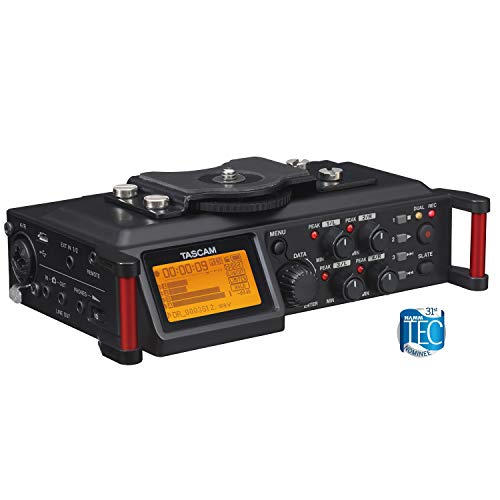
- Four balanced XLR inputs with phantom power
- Camera-mountable design for video production
- Dual Recording mode provides a lower-level safety copy
Best For: Videographers and documentary interview shoots
Best for Reliable Dialogue

- 32-bit float recording helps prevent clipped interview audio.
- Dual locking XLR/TRS inputs secure professional microphones.
- Low-noise preamps suit unpredictable field environments.
Best For: Run-and-gun interviews with external XLR microphones
Best for Touchscreen Workflows

- Interview presets simplify recording setup.
- Six-track recording supports multiple audio sources.
- Built-in mics and two XLR inputs add flexibility.
Best For: Touchscreen-controlled interviews with expandable inputs
Best for Hands-On Multitrack Control

- Dedicated gain knobs enable quick level adjustments.
- 32-bit float recording helps handle sudden volume changes.
- Four-track recording and built-in stereo mics support mobile interviews.
Best For: Portable interviews needing direct controls and multitrack recording
Layering Pick

- Four-track recording with bounce functionality
- 32-bit float recording for clip-free capture
- Two XLR/TRS inputs plus USB interface mode
Best For: Layered portable recording and flexible creative setups
Interview All-Rounder
Zoom H4 Essential Handheld Recorder

- Four-track recording with 32-bit float audio
- Built-in stereo mics and two XLR/TRS inputs
- USB-C recording or streaming with SD backup
Best For: Interviews, podcasts, and field recording with flexible inputs
Simple Two-Channel Pick

- Two locking XLR/TRS inputs
- 32-bit/96kHz recording with waveform display
- 3.5mm input and headphone output
Best For: Compact two-microphone interview setups
Best All-Around Interview Hub – Zoom PodTrak P4
The Zoom PodTrak P4 is a practical choice among multitrack recorders for interviews when you need to connect several microphones and monitor each participant. Four XLR inputs, four independently controlled headphone outputs, and automatic mix-minus support make it suited to both in-person conversations and call-in guests.
Best For: Podcast interviews with up to four microphone participants, including phone or USB-connected remote guests.
Pros:
- Four XLR inputs with phantom power and multitrack recording
- Four headphone outputs with individual volume controls
- Automatic mix-minus for phone and remote interviews
- Battery powered and supports USB audio interface mode
Cons:
- Battery life is listed at up to 3.5 hours on two AA batteries
- Its 2-inch screen is relatively compact
The P4 balances interview-focused connectivity with portable operation. It is especially convenient for small podcast teams that need separate tracks and simple guest call-in handling without carrying a larger field recorder.
Best High-Resolution Field Option – Tascam Portacapture X8
The Tascam Portacapture X8 is a versatile pick among multitrack recorders for interviews, combining a color touchscreen with 32-bit float recording and field-oriented microphone options. Its four locking combo inputs can accommodate external microphones, while the detachable condenser microphones support different stereo placements.
Best For: Field interviews, documentary work, and creators who want high-resolution recording with flexible microphone configurations.
Pros:
- Supports up to 192kHz/32-bit float recording
- Four XLR/TRS inputs with individual 24V/48V phantom power
- 3.5-inch color touch display with dedicated recording applications
- Detachable condenser microphones support A-B and X-Y positions
Cons:
- Weighs 1.6 pounds, making it less compact than simpler interview recorders
- The detachable microphone setup requires the specified AK-BT1 adapter for compatible accessory use
The X8 offers more recording flexibility than a basic interview interface, particularly for location work. Its touchscreen workflow and 32-bit float capability appeal to users who want detailed capture and room to handle changing levels in the field.
Best for Assisted Podcast Mixing – Zoom PodTrak P4next
The Zoom PodTrak P4next is designed for interview setups that prioritize straightforward control and cleaner results with less manual processing. It provides four XLR inputs, four individually controlled headphone outputs, and built-in AI tools for noise reduction, tone enhancement, and compression.
Best For: Small podcast teams recording four local speakers or adding a call-in guest while using assisted audio processing.
Pros:
- Four XLR inputs support multitrack recording for up to four people plus a call-in guest
- AI noise reduction, tone enhancement, and compression help balance audio
- Up to +70dB of gain supports demanding microphones
- Four headphone outputs have separate volume controls
Cons:
- The supplied notes do not specify battery type or battery life
- Its AI processing may be unnecessary for users who prefer fully manual post-production
The P4next is a strong fit when speed matters, especially for podcasters who want to reduce editing and connect several participants. Phone-video connectivity also makes it useful for capturing synchronized audio directly into mobile video workflows.
Best for Camera-Mounted Production – Tascam DR-70D
The Tascam DR-70D is a production-focused choice among multitrack recorders for interviews, particularly for videographers and documentarians working with cameras. Four balanced XLR inputs, individual gain controls, built-in microphones, and a safety-copy recording mode support flexible on-set capture.
Best For: Camera-mounted interviews, documentary production, and DSLR or video shoots requiring multiple balanced microphone inputs.
Pros:
- Four balanced XLR inputs with phantom power and individual gain controls
- Mounts above or below a camera
- Dual Recording mode creates a lower-level safety copy
- Records to SD, SDHC, or SDXC cards up to 128GB
Cons:
- Uses four AA batteries, which may add bulk for extended shoots
- Its 1.5-inch screen is smaller than the touchscreen displays on newer recorders
- Designed more for camera production than direct podcast call-in workflows
The DR-70D emphasizes dependable production features rather than podcast-specific conveniences. Its safety recording, camera-mounting design, and four-input layout make it a sensible tool for capturing interview audio alongside video.
Best for Reliable Dialogue – Zoom F3
For interviews where changing levels is impractical, the Zoom F3 is one of the most dependable multitrack recorders for interviews. Its 32-bit float recording helps preserve quiet dialogue and sudden peaks, while dual locking XLR inputs suit professional microphones and more complex rigs.
Best For: Run-and-gun filmmakers, field recordists, and interview setups using professional XLR microphones.
Pros:
- 32-bit float recording helps deliver clip-free audio without constant level adjustments.
- Dual locking XLR/TRS inputs keep connections secure.
- Ultra-low-noise preamps support clean recordings in uncontrolled environments.
- Battery-powered and USB workflows provide flexible field use.
Cons:
- It relies on external microphones rather than offering built-in interview microphones.
- The 2-inch screen is relatively compact for detailed setup control.
The F3 is a focused choice for interviewers who already have XLR microphones and prioritize dependable, clip-resistant recording over built-in convenience.
Best for Touchscreen Workflows – TASCAM Portacapture X6
The TASCAM Portacapture X6 is a versatile option among multitrack recorders for interviews, especially when you want guided controls and built-in microphone flexibility. Its touchscreen presets include an interview mode, while 32-bit float recording and six-track capability support more involved productions.
Best For: Interviewers who want an app-like touchscreen workflow, built-in microphones, and room to expand with external sources.
Pros:
- Large 2.4-inch touchscreen makes recording and setup more intuitive.
- Interview and six-track presets simplify common workflows.
- Records up to six tracks simultaneously at 32-bit float.
- Combines two XLR inputs with built-in mics offering AB and true-XY patterns.
Cons:
- Estimated battery life is about six hours.
- Its lithium-metal battery requirement may be less convenient for extended field sessions.
- The included wireless adapter compatibility is limited to the AK-BT1.
The X6 is a strong all-around pick for interviews that may involve multiple sources, because it combines easy touchscreen controls with built-in and XLR microphone options.
Best for Hands-On Multitrack Control – Zoom H5 Studio
The Zoom H5 Studio is a practical choice among multitrack recorders for interviews when you want direct gain control and built-in stereo microphones. It records up to four tracks simultaneously at up to 192 kHz in WAV format, while 32-bit float recording helps protect takes from unexpected volume changes.
Best For: Mobile interview crews that need built-in stereo capture, dedicated controls, and support for multiple tracks.
Pros:
- 32-bit float recording helps provide clip-free results in changing environments.
- Dedicated gain knobs allow quick, hands-on level adjustments.
- Large 19.4mm X/Y stereo microphones capture detailed audio.
- Records up to four tracks simultaneously and works as a USB audio interface.
Cons:
- It requires four AA batteries, which adds to the field power load.
- Its two XLR/TRS inputs provide less external input capacity than the X6’s six-track workflow.
The H5 Studio balances portability and control well, making it appealing for interviewers who want built-in stereo recording without giving up dedicated input adjustment and multitrack capability.
Layering Pick – Zoom R4 Multi-Track Recorder
The Zoom R4 is a flexible choice among multitrack recorders for interviews when you want to capture dialogue, room sound, or additional sources while retaining room to layer and bounce tracks. Its two XLR/TRS combo inputs, built-in stereo microphones, and 32-bit float recording support hands-off level management.
Best For: Creators who want a portable recorder that can also build layered, multi-track projects.
Pros:
- Records, layers, and bounces up to four tracks.
- 32-bit float recording helps avoid clipping without constant gain adjustments.
- Two XLR/TRS combo inputs support microphones, instruments, and keyboards.
- Works as a USB audio interface and runs on four AA batteries or USB-C.
Cons:
- Its layering and rhythm features may be more than needed for straightforward interviews.
- Requires four AA batteries when used away from USB-C power.
The R4 stands out when interview recording is part of a broader creative workflow. Choose it if track bouncing and flexible power matter as much as portable dialogue capture.
Interview All-Rounder – Zoom H4 Essential Handheld Recorder
The Zoom H4 Essential is a practical option among multitrack recorders for interviews, combining built-in stereo microphones with two XLR/TRS inputs. It records four tracks, supports 32-bit float audio, and can save to an SD card while connecting to a phone, tablet, or computer over USB-C.
Best For: Interviewers, podcasters, and filmmakers who need built-in mics plus connections for external microphones.
Pros:
- Supports four-track recording for interviews, podcasts, and field work.
- Built-in stereo microphones and two XLR/TRS inputs offer flexible setup options.
- 32-bit float recording helps reduce concern about distorted takes.
- Spoken menu guidance can make operation easier for visually impaired users.
Cons:
- Runs on two AA batteries, so spare batteries may be useful for longer sessions.
- The compact two-inch screen may provide less room for menu navigation than larger equipment.
For interviews that may shift between handheld microphone use, external inputs, and USB recording, the H4 Essential offers a well-rounded feature set. Its backup-to-SD capability is useful when connecting to another device.
Simple Two-Channel Pick – Zoom H1 XLR Recorder
The Zoom H1 XLR is a streamlined choice among multitrack recorders for interviews when two-channel recording is enough. It combines two locking XLR/TRS inputs with 32-bit/96kHz recording, a waveform display, and 3.5mm input and headphone connections for monitoring and added flexibility.
Best For: Interviewers and creators who prefer a compact two-channel recorder with clear visual level feedback.
Pros:
- Two locking XLR/TRS inputs accommodate microphones and other sources.
- 32-bit/96kHz recording supports detailed audio capture.
- OLED waveform display helps monitor levels at a glance.
- Supports SDXC cards up to 1TB and offers a stated battery life of up to 10 hours.
Cons:
- Two-channel recording offers less expansion than four-track models.
- It does not list built-in stereo microphones among the supplied features.
The H1 XLR is a focused option for interviews using one or two connected microphones. Its locking inputs, waveform display, and compact design make it particularly suitable when a simple, monitorable setup is the priority.
How We Picked the Best Multitrack Recorders for Interviews
We focused on recorders that can capture interview audio on separate tracks or provide practical multichannel recording for post-production. Our comparison considers input count, connector types, built-in microphones, headphone monitoring, portability, recording formats, and features that help prevent ruined takes.
We also considered real-world interview workflows: one-on-one conversations, small panels, remote guests, documentary shoots, and camera-based production. Features such as 32-bit float recording, limiters, low-cut filters, noise reduction, phone connectivity, and USB operation can make a meaningful difference outside a controlled studio.
Quick Comparison
- Best for podcast-style interviews: Choose a PodTrak model if you need multiple XLR inputs, headphone outputs, remote-call connectivity, or streamlined monitoring.
- Best for location flexibility: Portacapture, H5, H4 Essential, and H1 XLR models suit mobile recording, depending on the number of microphones required.
- Best for high recording safety: 32-bit float models can provide substantial protection against clipping when levels change unexpectedly.
- Best for camera rigs: The DR-70D is designed around videographer workflows, with multiple combo inputs and camera-friendly features.
- Best for focused professional capture: The Zoom F3 offers a compact two-input design for crews that prioritize clean field audio over extra channels.
Key Buying Factors for Multitrack Recorders for Interviews
Input and Track Count
Count every microphone you may use at once, including a host, guest, translator, producer, or room microphone. Separate tracks are preferable to a single mixed file because they let you adjust voices independently during editing.
Microphone Connections
XLR inputs support professional microphones and usually provide phantom power for condenser models. Combo XLR/TRS inputs add flexibility for microphones, mixers, and line-level sources. Built-in microphones are useful for quick setup, ambience, or backup recording, but they do not replace dedicated microphones in every interview environment.
32-Bit Float and Level Protection
32-bit float recording can simplify gain management and help recover audio from unexpected peaks, provided the microphone and recorder are used correctly. On conventional recorders, a limiter, low-cut filter, and careful headphone monitoring remain important safeguards.
Monitoring and Connectivity
Multiple headphone outputs are valuable for interviews where the host, guest, and producer all need to hear the conversation. USB audio, phone inputs, sound pads, and remote-interview support can reduce the amount of additional equipment required.
Portability and Power
For field work, check size, battery type, mounting options, wind protection, and how easily controls can be reached while recording. A recorder that is slightly less feature-rich but faster to deploy may be the better choice for documentary or run-and-gun interviews.
Who Should Buy Which Multitrack Recorders for Interviews?
Podcast hosts and small interview teams should prioritize multiple headphone outputs, straightforward routing, and phone or USB connectivity. Solo filmmakers and journalists may prefer compact 32-bit float recorders with dependable XLR inputs. Videographers should look for camera integration, combo inputs, and physical controls that work quickly on location. Interviewers recording panels or multi-person conversations should choose the highest practical input count, even if it adds size.
Before buying, list the microphones and participants in your usual setup, then select a recorder with at least one spare input when possible. That small amount of headroom can make future interviews much easier to manage.