Finding the best multitrack recorder with sixteen XLR inputs can be surprisingly difficult because many popular standalone units offer fewer inputs, while larger mixer-recorders use channel counts, combo inputs, or expandable routing instead.
This roundup compares 10 practical options for recording bands, rehearsals, live performances, podcasts, and home-studio projects. We focus on input flexibility, track capacity, hands-on control, computer connectivity, and how each format fits different workflows.
Best 10 Multitrack Recorder with Sixteen Xlr Inputs Picks for 2026
Best Computer-Free Pick
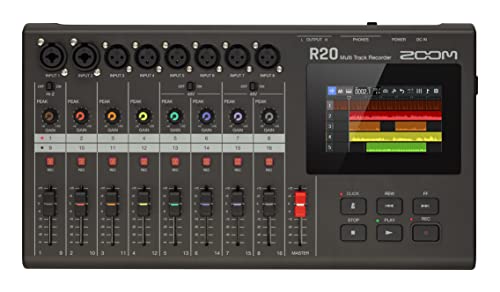
- 16-track recording with up to 8 tracks simultaneously
- Touchscreen editing and mixing without a computer
- Six XLR/combo inputs, plus rhythms and onboard synth
Best For: Computer-free songwriting, demos, and smaller recording setups
Best Mixer-Style Studio Hub

- Mixer, recorder, USB interface, and DAW controller
- 12-in/10-out USB audio connectivity
- Channel compressors, EQ, MIDI, and dual headphone outputs
Best For: Smaller studios that favor hands-on mixer controls
Best for Large Live Sessions
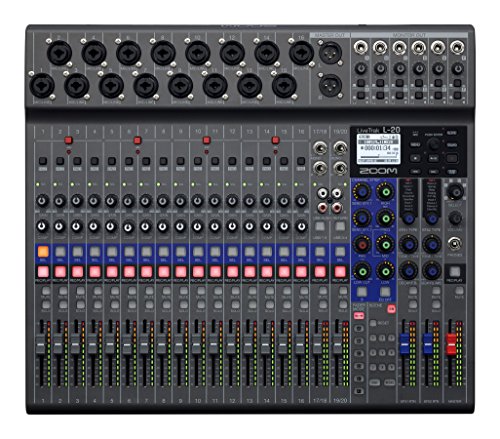
- 20 inputs and simultaneous 22-track recording
- Six independent headphone and line-output mixes
- Wireless iOS control, effects, and USB interface support
Best For: Bands, live shows, and large multi-source recordings
Best Traditional Portastudio

- 24-track standalone digital recording
- Eight XLR inputs with effects and mastering tools
- Color screen and up to 32 hours of listed recording time
Best For: Standalone multitrack production and overdubbing
Best for Remote-Controlled Live Mixing

- 22-track simultaneous recording
- Six customizable monitor outputs
- iPad control and scene saving
Best For: Live musicians and engineers needing flexible monitoring
Best for Standalone Studio Production

- 32-track recording to SD media
- Up to eight simultaneous inputs
- Built-in processing and color LCD
Best For: Hands-on home and project studios
Best for Analog-Style Workflow

- Integrated mixer, recorder, and USB interface
- 16-track SD recording
- Up to eight tracks recorded simultaneously
Best For: Bands and small studios wanting hands-on controls
Flexible Field Recording

- Links two units for 16-track simultaneous recording
- Built-in stereo condenser microphones
- USB interface with effects and phantom power
Best For: Mobile recording and post-production workflows
All-in-One Live Studio

- Includes 16 TASCAM microphone preamps
- Records up to 24 tracks to SD
- Hands-on mixer controls and USB interface
Best For: Live bands and hands-on studio tracking
Portable Effects Workstation

- Two units can support a 16-input setup
- 135 built-in recording and mixing effects
- Eight-channel simultaneous recording
Best For: Portable music production and demos
Best Computer-Free Pick – Zoom R20
The Zoom R20 is a practical choice for musicians seeking a multitrack recorder with sixteen XLR inputs in spirit, although this model provides six XLR/combo inputs rather than sixteen. It records up to 16 tracks, with as many as 8 tracks simultaneously, and supports recording, editing, and mixing without a computer.
Best For: Musicians who want touchscreen, computer-free recording and straightforward project editing.
Pros:
- Records up to 16 tracks and up to 8 simultaneously.
- Touchscreen interface supports drag-and-drop editing and mixing.
- Includes EQ, compression, 150 rhythm patterns, and an onboard synth.
- Can function as a USB interface with Windows and macOS systems.
Cons:
- Has six XLR/combo inputs, not sixteen dedicated XLR inputs.
- Maximum sample rate is 44.1 kHz.
The R20 emphasizes a hands-on workflow and compact tabletop operation. It is best suited to songwriting, demos, and smaller recording setups rather than projects requiring sixteen simultaneous XLR sources.
Best Mixer-Style Studio Hub – Tascam Model 12
The Tascam Model 12 combines a mixer, digital multitrack recorder, USB audio interface, and DAW controller. While it is not a multitrack recorder with sixteen XLR inputs, its integrated controls and 12-channel design make it a useful option for smaller studio and rehearsal setups.
Best For: Users who want a traditional mixer layout with computer connectivity and integrated channel processing.
Pros:
- Combines mixing, recording, USB interfacing, and DAW control.
- Provides a 12-in/10-out USB audio interface.
- Includes a one-knob compressor and three-band EQ on input modules.
- Offers dual headphone outputs with individual volume and source selection.
Cons:
- Provides 12 channels rather than sixteen XLR inputs.
- Its 13.3-pound weight and larger footprint are less portable than tabletop recorders.
The Model 12 is a control-focused solution for producers who prefer physical mixer controls. Its channel count and USB-centered workflow make it a better fit for moderate-sized sessions than large multi-microphone recordings.
Best for Large Live Sessions – Zoom LiveTrak L-20
The Zoom LiveTrak L-20 is designed for larger ensembles, live shows, and productions. It is not a multitrack recorder with sixteen XLR inputs specifically, but its 20-input layout and ability to record 22 tracks simultaneously make it the strongest large-session alternative in this group.
Best For: Bands, live engineers, and podcasters who need multiple inputs and separate performer monitor mixes.
Pros:
- Simultaneously records 22 tracks at 24-bit/96 kHz directly to an SD card.
- Provides six independent headphone and line-output monitor mixes.
- Includes 20 onboard effects and preamps with up to +60 dB of gain.
- Supports wireless control from an iPhone or iPad and USB audio interfacing.
Cons:
- The supplied notes do not specify sixteen dedicated XLR inputs.
- It is a corded, larger-format mixer rather than a compact recorder.
For recording a full band or live production, the L-20 offers substantially more routing and monitoring capacity than smaller tabletop units. Its six independent monitor mixes are especially useful when performers need individualized headphone feeds.
Best Traditional Portastudio – Tascam DP-24SD
The Tascam DP-24SD is a traditional standalone Portastudio with 24-track recording, eight XLR inputs, onboard effects, mastering features, and a color screen. It does not meet the requirement for a multitrack recorder with sixteen XLR inputs, but it offers more track capacity than its input count suggests.
Best For: Producers who prefer an all-in-one Portastudio workflow for multitrack recording and mastering.
Pros:
- Supports 24-track digital multitrack recording.
- Provides eight XLR inputs for microphone-based recording.
- Includes effects, mastering tools, and a color screen.
- Offers up to 32 hours of digital recording time according to the supplied details.
Cons:
- Has eight XLR inputs rather than sixteen.
- At 13.7 pounds, it is relatively heavy for a standalone recorder.
- The supplied specifications list a 3.5-inch screen and USB 2.0 hardware interface.
The DP-24SD suits users who want dedicated recording hardware and onboard finishing tools. Its eight-input design limits simultaneous microphone capture compared with larger systems, but its 24-track capacity supports substantial arrangement and overdubbing work.
Best for Remote-Controlled Live Mixing – Zoom LiveTrak L-20R
The Zoom LiveTrak L-20R is a flexible choice when you need a multitrack recorder with sixteen XLR inputs—or more input capacity—for rehearsals, live performances, and remote-controlled mixing. It records up to 22 tracks simultaneously and supports iPad control, six customizable monitor outputs, and scene saving.
Best For: Musicians and live engineers who want extensive recording, monitoring, and iPad-based control.
Pros:
- Records up to 22 tracks simultaneously and offers 20-track playback.
- Provides six customizable monitor outputs plus a dedicated FOH output.
- Includes built-in chorus, delay, and reverb effects, with storage for up to nine scenes.
Cons:
- Its feature set may be more than needed for simple recording setups.
- iPad control requires using a compatible iPad workflow.
The L-20R stands out for live-oriented flexibility, especially when multiple monitor mixes and quick scene changes are important. It is a strong option for performers and crews who value remote operation alongside multitrack recording.
Best for Standalone Studio Production – Tascam DP-32SD
The Tascam DP-32SD is a standalone Portastudio for creators who want extensive track capacity without relying on a computer. It records up to 32 tracks to solid-state media and can record up to eight tracks at once through its XLR/TRS combo inputs.
Best For: Home studios, songwriters, and project-based recording that benefits from hands-on controls and onboard processing.
Pros:
- Records up to 32 tracks and up to eight tracks simultaneously.
- Includes compression, limiting, guitar amp simulation, and multi-effects.
- Offers a color LCD, channel-strip knobs, and powered headphone monitoring.
Cons:
- Provides eight XLR/TRS combo inputs rather than sixteen XLR inputs.
- Recording media is limited to SD, SDHC, and the supplied 4GB SD card capacity range.
- Its 90-day labor warranty is shorter than some alternatives.
Although it does not meet a strict sixteen-XLR-input requirement, the DP-32SD offers substantial track capacity and a self-contained recording workflow. Its physical controls and onboard effects make it appealing for hands-on production away from a DAW.
Best for Analog-Style Workflow – Tascam Model 16
The Tascam Model 16 combines an analog mixer, 16-track recorder, and USB audio interface in one unit. For shoppers comparing a multitrack recorder with sixteen XLR inputs, it offers 14 inputs, including 10 monaural XLR/TRS balanced inputs, and can record up to eight tracks simultaneously.
Best For: Bands and small studios that want mixer-style operation, SD recording, and computer connectivity.
Pros:
- Combines a 16-track recorder with an analog mixer and USB interface.
- Records WAV audio to SD, SDHC, and SDXC cards at up to 48kHz/24-bit.
- Provides punch-in/out recording for up to eight tracks simultaneously.
Cons:
- It has 14 total inputs, not sixteen XLR inputs.
- Only channels 1 through 8 are identified as using the Ultra-HDDA mic preamps.
- Its recording specification is limited to 48kHz/24-bit.
The Model 16 is a practical middle ground for users who prefer immediate mixer controls but still want multitrack recording and DAW integration. It is best suited to compact band setups where 14 inputs and eight-track simultaneous recording are sufficient.
Flexible Field Recording – Zoom R24 Multitrack Recorder
The Zoom R24 is a compact option for anyone seeking a multitrack recorder with sixteen XLR inputs across two linked units. One R24 provides eight XLR combo inputs, while connecting two R24 recorders via USB enables 16-track simultaneous recording.
Best For: Mobile producers, post-production work, and users who need built-in microphones, effects, and USB DAW compatibility.
Pros:
- Two R24 units can be connected for 16 tracks of simultaneous recording.
- Includes built-in stereo condenser microphones for capturing effects, speeches, and dialogue.
- Offers onboard phantom power, microphone preamps, vocal effects, and 24-track capability.
- Supports WAV recording at 16- or 24-bit and 44.1 or 48 kHz.
Cons:
- Sixteen-track simultaneous recording requires two R24 units.
- Maximum sample rate is 48 kHz.
- SD and SDHC card support is limited to cards up to 32 GB.
The R24 is a versatile, lightweight tabletop recorder with useful production features. It is particularly appealing when portability and post-production flexibility matter more than having sixteen physical inputs on one chassis.
All-in-One Live Studio – Tascam Model 24 Recorder
The Tascam Model 24 is a strong choice for buyers comparing a multitrack recorder with sixteen XLR inputs. It combines 16 TASCAM microphone preamps with a live mixer, SD recording, and USB connectivity for computer-based production.
Best For: Bands, live engineers, and studios that want hands-on mixer controls alongside multitrack recording.
Pros:
- Provides 16 high-grade microphone preamps.
- Can capture up to 24 tracks simultaneously at 24-bit/48 kHz directly to an SD card.
- Familiar EQ and auxiliary controls keep key functions accessible without menu diving.
- Works as a USB audio interface with PC or Mac systems.
Cons:
- Its reported dimensions and weight details are inconsistent in the supplied specifications, so buyers should verify them before purchase.
- The recorder operates at a maximum listed frequency of 48 kHz.
- It is a corded device rather than a battery-powered recorder.
For a single-unit setup with sixteen microphone preamps, the Model 24 is the most direct match in this group. Its physical mixer layout also makes it well suited to live tracking and immediate playback or mixdown.
Portable Effects Workstation – Zoom R16 Multitrack Recorder
The Zoom R16 suits buyers exploring a multitrack recorder with sixteen XLR inputs when a two-unit setup is acceptable. Each recorder includes eight balanced XLR/quarter-inch combination inputs, and two R16 units can provide the larger input count while retaining a portable tabletop design.
Best For: Musicians and home producers who want portable recording, built-in microphones, and integrated effects.
Pros:
- Two R16 units can address a 16-input recording setup.
- Supports eight-channel simultaneous recording and 16-channel playback.
- Includes 135 digital effects for recording, mixing, and mastering.
- Records to SDHC cards up to 32 GB and includes built-in stereo microphones.
Cons:
- A single R16 has eight inputs, so sixteen inputs require two units.
- Forty-eight-volt phantom power is available on only two tracks.
- Its listed simultaneous recording capacity is eight channels.
The R16 is a practical portable workstation rather than a single-box sixteen-input console. Its effects library, battery operation, built-in microphones, and USB connectivity make it attractive for flexible songwriting and demo setups.
How We Picked the Best Multitrack Recorder with Sixteen Xlr Inputs
We selected recorders and mixer-recorders based on their suitability for multichannel recording, not simply their advertised track count. Key considerations included the number and type of microphone inputs, simultaneous recording capability, standalone operation, storage or computer workflow, monitoring, mixing controls, and usefulness for live or studio work. Because a true 16-XLR configuration is uncommon in this group, we also included closely related models with expandable or higher channel counts, as well as compact units that suit smaller sessions.
Quick Comparison
Tabletop recorders such as the Zoom R16, R20, and R24 are portable and approachable for songwriting, rehearsals, and small ensembles. Tascam’s DP-24SD and DP-32SD provide a traditional Portastudio workflow with more onboard tracks and mixing depth. The Model 12, Model 16, and Model 24 combine analog-style mixer controls with multitrack recording and USB connectivity. Zoom’s LiveTrak L-20 and L-20R are especially well suited to live bands, event recording, and monitor-mix duties.
Key Buying Factors for a Multitrack Recorder with Sixteen Xlr Inputs
Input Count and Simultaneous Recording
Confirm whether the stated input total means XLR microphone sockets, combo XLR/TRS inputs, mixer channels, or USB channels. Also check how many sources can be recorded at once. A recorder may advertise many tracks while offering fewer microphone preamps, so match the specification to your expected band or ensemble size.
Standalone Workflow Versus Computer Recording
Standalone Portastudios are useful when you want to record without a laptop, while mixer-recorders with USB interfaces can integrate directly with a DAW. If you move between rehearsal spaces and a studio, prioritize reliable storage, straightforward file transfer, and a workflow that does not depend on an external computer.
Monitoring, Routing, and Live Use
For live recording, look for multiple headphone mixes, direct monitoring, flexible outputs, and controls that remain accessible during a performance. Wireless control can be valuable when the recorder is positioned away from the mixing position, but it should complement—not replace—clear physical controls.
Track Capacity and Mixing Features
More tracks provide room for overdubs, backups, effects returns, and separate mixes. Check whether effects, automation, mastering tools, punch-in recording, and editing are built in. Extra capability is helpful only if the interface remains fast enough for your preferred workflow.
Who Should Buy Which Multitrack Recorder with Sixteen Xlr Inputs?
Choose a compact Zoom R-series recorder for portable songwriting, rehearsal capture, and smaller groups. Pick a Tascam DP-series Portastudio if you prefer hands-on, computer-free editing and mixing with substantial track capacity. The Tascam Model series is a strong fit for users who want an analog mixer layout alongside recording and USB interface functions. For live bands, venues, and podcasters managing multiple performers, the Zoom LiveTrak L-20 or L-20R offers broader channel handling and practical monitoring control.
If your project genuinely requires sixteen independent XLR microphone inputs at once, verify the manufacturer’s detailed input and recording specifications before buying. In many cases, a mixer-recorder with additional channels, expansion options, or USB routing will be a better match than a compact multitrack unit marketed primarily by its track count.