The best stage monitors for home studios need to do more than get loud. They should deliver clear vocals, instruments, and backing tracks while fitting your room, setup, and budget.
We’ve selected 10 powered monitors spanning compact desktop speakers, nearfield studio monitors, and PA-style wedges. Use the guide below to narrow the list by sound, connectivity, output, and available space.
Best 10 Stage Monitors for Home Studios Picks for 2026
Balanced Reference Pick
Yamaha HS5 Powered Studio Monitors

- Pair of bi-amplified 5-inch monitors
- Neutral, uncolored sound emphasis
- XLR and TRS inputs
Best For: Compact home studios focused on production and mixing
Live Monitoring Powerhouse

- 250-watt powered monitor system
- 12-inch woofer with 3-inch tweeter
- Feedback filter and integrated limiter
Best For: Rehearsals, live monitoring, and high-output playback
Wide-Sweet-Spot Favorite

- Pair of active 5-inch monitors
- Wide-sweet-spot Image Control Waveguide
- Boundary EQ and HF Trim adjustments
Best For: Production, podcasting, and shared listening positions
Room-Adaptable Detail Pick

- U-ART tweeter and HPS waveguide
- DSP-based high- and low-shelf filters
- Compatible with T10S subwoofer
Best For: Detailed production and difficult-room placement
Wireless Desktop Pick

- 5-inch active monitor pair
- Bluetooth for wireless listening
- DJ-tuned sound with fuller low end
Best For: Compact home studios and DJ setups needing Bluetooth flexibility
Compact Production Choice

- 4.5-inch two-way powered pair
- XLR/TRS, RCA, and stereo-mini inputs
- Room Control and high-trim adjustments
Best For: Compact wired production and video-editing workstations
All-in-One Monitoring Option
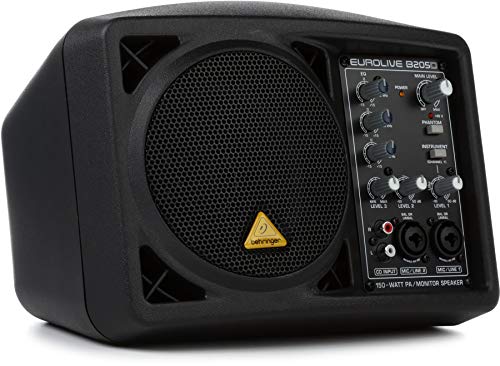
- 150-watt active single speaker
- Built-in three-channel mixer and EQ
- Mic preamps with phantom power
Best For: Vocal, keyboard, and instrument monitoring with integrated mixing
Wide-Sweet-Spot Choice

- 6.55-inch woofer for deep lows
- Wide EBM waveguide sweet spot
- Multiple acoustic tuning controls
Best For: Home-studio mixing with room-placement flexibility
Compact Desktop Pick

- Compact 4-inch active pair
- DSP-tuned balanced sound
- Built-in amplification for simple setup
Best For: Small DJ or home-production desks
Large-Bass Nearfield
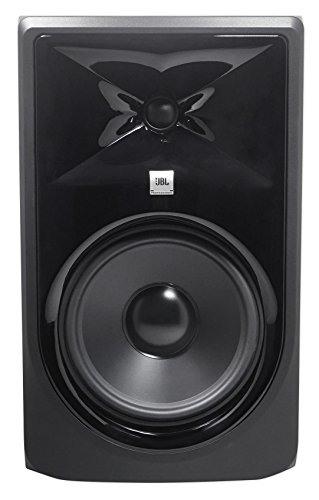
- 8-inch woofer for deep bass
- Boundary EQ for desktop or wall placement
- Balanced XLR and TRS inputs
Best For: Near-field production needing larger low-frequency output
Balanced Reference Pick – Yamaha HS5 Powered Studio Monitors
The Yamaha HS5 pair is a practical choice when you want stage monitors for home studios that prioritize an uncolored, straightforward presentation. Its bi-amplified 5-inch design, 70-watt system, and balanced or unbalanced XLR/TRS inputs suit music production and near-field monitoring.
Best For: Home-studio users who want a focused, neutral monitoring setup for mixing and production.
Pros:
- Includes two powered HS5 studio monitors.
- Emphasizes sonic purity without coloring the original sound.
- Offers a 54 Hz–30 kHz frequency response and 70 watts of bi-amplified power.
- Accepts balanced or unbalanced XLR and TRS connections.
Cons:
- The 5-inch woofer may provide less low-end reach than larger monitor designs.
- These are wired monitors with no stated wireless playback feature.
The HS5 pair is a sensible fit for compact studios where accurate, restrained monitoring matters more than maximum output or pronounced bass.
Live Monitoring Powerhouse – Behringer EUROLIVE F1220D
The Behringer EUROLIVE F1220D brings a very different approach to stage monitors for home studios, pairing a 12-inch woofer with 250 watts of powered output. Its feedback filter, limiter, and broad connection options make it more suited to louder rehearsal, playback, and live-monitoring duties than small near-field mixing.
Best For: Musicians and small live setups needing high output, feedback control, and flexible wired inputs.
Pros:
- 12-inch woofer and 250-watt powered design provide substantial output.
- Includes an adjustable feedback filter and integrated limiter.
- Uses Class-D amplifier technology for high power in a lighter design.
- Supports XLR, 1/4-inch TRS/TS, RCA, and Speakon connectivity.
Cons:
- Its larger, heavier cabinet is less convenient for a compact desktop studio.
- Mono monitor operation is less suited to conventional stereo near-field mixing.
- It is not waterproof or water resistant.
If your home studio doubles as a rehearsal or performance space, the F1220D offers useful headroom and feedback-management features, though it is less purpose-built for detailed stereo mixing.
Wide-Sweet-Spot Favorite – JBL 305P MkII Pair
The JBL 305P MkII pair is a strong option for stage monitors for home studios when clear imaging and flexible room adjustment are priorities. Its Image Control Waveguide, Boundary EQ, HF Trim, and dual 41-watt Class-D amplifiers support music production, podcasting, and cinematic sound work.
Best For: Producers, podcasters, and creators who want a broad listening sweet spot with room-tuning controls.
Pros:
- Includes two active 5-inch studio reference monitors.
- Image Control Waveguide is designed for precise imaging and a wide sweet spot.
- Boundary EQ and HF Trim help adapt the monitors to different rooms.
- Provides XLR and 1/4-inch TRS inputs with dual 41-watt amplifiers.
Cons:
- The 5-inch woofer may not satisfy users seeking the deepest low-end extension.
- These are AC-powered, wired monitors rather than portable wireless speakers.
The 305P MkII pair is especially appealing when more than one person needs to hear the monitoring position or when the room requires basic tonal adjustment.
Room-Adaptable Detail Pick – ADAM Audio T5V
The ADAM Audio T5V is a detail-focused option for stage monitors for home studios, with a U-ART tweeter, HPS waveguide, and room-adjustment filters. Its rear-firing bass reflex port and multiple analog connections make it practical for detailed recording, mixing, podcast editing, and film work.
Best For: Home-studio creators who value high-frequency detail and flexible placement in acoustically difficult rooms.
Pros:
- U-ART tweeter and HPS waveguide are designed for high-frequency detail.
- High- and low-shelf DSP-based filters allow room adaptation.
- Beveled cabinet and rear-firing bass reflex port support flexible placement.
- Can be paired with the ADAM Audio T10S subwoofer for extended low end.
Cons:
- The supplied notes do not specify wattage or frequency-response figures.
- A separate subwoofer may be needed for more extended low-frequency monitoring.
- Rear-firing bass reflex ports require thoughtful placement near walls.
The T5V is a compelling choice when revealing detail and placement flexibility matter, particularly in smaller rooms where basic DSP-based adjustment can help manage the listening environment.
Wireless Desktop Pick – Pioneer DJ DM-50D-BT
The Pioneer DJ DM-50D-BT is a practical choice for stage monitors for home studios when you want a pair of 5-inch active speakers with Bluetooth. Its DJ-oriented tuning, built-in amplification, and tabletop design suit compact production desks, DJ setups, and casual wireless listening.
Best For: Home-studio users who want punchy monitoring with Bluetooth convenience.
Pros:
- Pair of 5-inch active monitors with built-in amplification
- Bluetooth supports wireless listening from compatible devices
- DSP tuning is designed for clear, balanced audio and defined low frequencies
- Tabletop format is well suited to desktops and small rooms
Cons:
- Bluetooth is less focused on a fully wired production workflow
- At 20.5 pounds per listed package, it may be less convenient to move than smaller monitors
- No water resistance
Choose this pair if flexible playback and fuller low-end weight matter as much as straightforward desktop monitoring. It is especially appealing for DJ-focused home studios and listeners who want one setup for work and wireless playback.
Compact Production Choice – Yamaha HS4
The Yamaha HS4 is a compact wired option for stage monitors for home studios, combining a 4.5-inch woofer and 1-inch dome tweeter in a powered pair. Room Control and high-trim response controls help adapt the speakers to a workstation, while XLR/TRS, RCA, and stereo-mini inputs support common studio and media sources.
Best For: Music production and video-editing desks that need compact, wired monitoring.
Pros:
- Two-way powered pair with a 4.5-inch woofer and 1-inch dome tweeter
- Multiple inputs include XLR/TRS combo, RCA, and stereo mini
- Room Control and high-trim response controls aid placement adjustment
- Includes speaker cable, stereo mini-to-RCA cable, and anti-slip pads
Cons:
- 26-watt output is aimed at compact setups rather than high-volume reinforcement
- 60 Hz–22 kHz response may provide less low-end extension than larger monitors
- Wired connectivity only
The HS4 makes sense when desk space, connection flexibility, and adjustable response are priorities. Its compact powered design keeps a home-studio setup simple without requiring a separate amplifier.
All-in-One Monitoring Option – Behringer Eurolive B205D
The Behringer Eurolive B205D is a single active 150-watt speaker for stage monitors for home studios, vocal and keyboard monitoring, and other small-format audio tasks. Its 5.25-inch full-range driver, three-channel mixer, three-band EQ, microphone preamps, phantom power, and instrument input make it more self-contained than a conventional stereo monitor pair.
Best For: Home recording setups needing vocal, keyboard, or instrument monitoring with built-in mixing.
Pros:
- 150-watt active design with a lightweight 7.05-pound listed weight
- 5.25-inch full-range neodymium driver
- Three-channel mixer with three-band EQ
- Two microphone preamps with phantom power plus an instrument-ready input
Cons:
- Single-speaker design does not provide a stereo pair
- Its multi-purpose PA format may be less suited to detailed stereo mixing than dedicated studio monitors
- Specific frequency-response information is not supplied in the notes
This is the strongest fit when input handling and live-style monitoring are more important than stereo imaging. It can simplify a home recording setup by combining amplification, mixing, EQ, and microphone support in one cabinet.
Wide-Sweet-Spot Choice – PreSonus Eris E7 XT
PreSonus Eris E7 XT 2-Way Active Studio Monitor with EBM Waveguide (Pack of 1)
Check Price On AmazonFor stage monitors for home studios, the PreSonus Eris E7 XT offers a larger 6.55-inch woofer, smooth silk-dome highs, and a wide sweet spot for checking mixes from different listening positions. Its acoustic controls also make it easier to tailor the monitor to your room.
Best For: Home-studio mixing where broad imaging, deep lows, and room-tuning flexibility matter.
Pros:
- 6.55-inch woven-composite woofer supports deep low frequencies.
- 100° horizontal by 60° vertical EBM waveguide creates a wide sweet spot.
- Level, high-pass, low-frequency, high-frequency, and acoustic-space controls help adapt the monitor to its placement.
- Includes Studio One Prime and Studio Magic plug-in software.
Cons:
- Sold as a single monitor, so a stereo setup requires two units.
- Its larger cabinet may take more desk or stand space than compact monitors.
The Eris E7 XT is a strong choice when accurate monitoring and flexible acoustic adjustment are more important than minimizing footprint. Plan for a second unit if you need a matched stereo pair.
Compact Desktop Pick – Pioneer DJ DM-40D
For stage monitors for home studios, the Pioneer DJ DM-40D pair is designed to fit comfortably on a production or DJ desk. Its active two-way design, DSP tuning, and punchy low end provide a straightforward monitoring setup without a separate amplifier.
Best For: Desktop DJ setups, compact home studios, and users pairing speakers with a DDJ controller or mixer.
Pros:
- Compact 4-inch active monitors fit desks with limited space.
- Built-in amplification simplifies connection to compatible gear.
- DSP tuning provides clear, balanced sound for mixing and monitoring.
- Sold as a pair for immediate stereo use.
Cons:
- 4-inch drivers offer less low-frequency reach than larger monitors in this roundup.
- Connectivity is listed as wired, with auxiliary and RCA connections.
The DM-40D makes sense when desk space and simple setup are priorities. It is a practical pair for DJing and entry-level production, especially when compact speakers are preferable.
Large-Bass Nearfield – JBL 308P MkII
For stage monitors for home studios, the JBL 308P MkII brings an 8-inch woofer and a Slip Stream low-frequency port to near-field music production. Its boundary EQ and balanced inputs help accommodate desktop placement and different studio connections.
Best For: Near-field production setups that need extended bass, high output capability, and flexible wired connectivity.
Pros:
- 8-inch woofer delivers deep bass for music-production monitoring.
- Boundary EQ helps restore a neutral low-frequency response near walls or on work surfaces.
- Balanced XLR and 1/4-inch TRS inputs support flexible studio connections.
- Slip Stream port is designed for consistent bass performance across playback levels.
Cons:
- Sold individually, so a stereo setup requires two speakers.
- Larger 8-inch cabinet may be excessive for very small desks or rooms.
- Its supplied notes list auxiliary connectivity, rather than wireless operation.
The 308P MkII is suited to listeners who want a larger near-field monitor and room-placement adjustment. Its size makes careful positioning especially important in a compact home studio.
How We Picked the Best Stage Monitors for Home Studios
We focused on powered speakers that can work in a home recording, rehearsal, or performance setup without requiring a separate amplifier. The selection includes compact pairs for desks, larger nearfield monitors for detailed mixing, and PA-style designs for musicians who need more projection and feedback control.
We also considered driver size, active amplification, connectivity, Bluetooth availability, cabinet format, and practical placement. Because “monitor” can mean either a studio reference speaker or a stage-style wedge, this list covers both categories while making their intended uses clear.
Quick Comparison
| Best For | Recommended Type | What to Look For |
|---|---|---|
| Desktop production | Compact powered pair | Small footprint, balanced inputs, controlled bass |
| Mixing and critical listening | Nearfield studio monitor | Flat response, placement controls, accurate imaging |
| Rehearsal vocals or instruments | PA-style monitor | Higher output, rugged cabinet, feedback control |
| Casual playback and practice | Bluetooth-enabled monitor | Wireless streaming and simple front-panel access |
| Large rooms | Larger two-way monitor | More headroom, deeper bass, suitable listening distance |
Key Buying Factors for Stage Monitors for Home Studios
Studio Accuracy Vs. Stage Output
Nearfield studio monitors are designed for detail and a relatively neutral response at close range. They are usually the better choice for recording and mixing. PA-style monitors emphasize projection and usable volume, making them more suitable for vocal practice, keyboard monitoring, or small rehearsals.
Driver Size and Room Placement
Five-inch speakers are a versatile middle ground for many bedrooms and project studios. Four-inch models suit small desks and lower listening levels, while seven- and eight-inch monitors can provide more bass and headroom but need greater separation from walls and a larger listening position. Use isolation pads or stands when possible, and aim tweeters toward ear level.
Inputs, Controls, and Wireless Features
Check whether your interface, mixer, or instrument uses XLR, TRS, RCA, or another connection. Rear-panel level and EQ controls can help compensate for wall proximity. Bluetooth is convenient for reference tracks and casual playback, but wired connections remain preferable for critical monitoring.
Volume, Headroom, and Feedback
Choose enough output for clean peaks at your normal listening distance rather than simply selecting the loudest speaker. For live vocal use, a feedback filter and wedge-friendly design may matter more than a flat studio response. Keep microphones behind the speaker’s main projection area and avoid excessive volume.
Who Should Buy Which Stage Monitors for Home Studios?
- Choose a compact desktop pair if you have limited space or mainly produce, edit, and listen at moderate levels.
- Choose a five-inch nearfield monitor for a balanced home-studio upgrade with useful detail and manageable bass.
- Choose a larger seven- or eight-inch model if your room is suitably treated and you need more low-end extension and headroom.
- Choose a PA-style monitor for rehearsal vocals, keyboards, electronic instruments, or stage-oriented monitoring where output is the priority.
- Choose Bluetooth-enabled speakers when convenient wireless playback is important alongside wired studio connections.
Before buying, measure your desk or floor space, confirm the available inputs, and consider whether you need accurate mixing or live-style volume. The right match will sound clear at your normal level without forcing a small room to handle more bass or output than it can manage.