3D printing can release ultrafine particles, odors, and chemical vapors, especially when working with ABS, ASA, resin, or other materials that benefit from enclosure ventilation and filtration.
We compared 10 HEPA 3D printer air purifiers, from compact printer-mounted filters to full-room units, to help you choose the right balance of particle capture, odor control, noise, coverage, and compatibility.
Best 10 Hepa 3d Printer Air Purifiers Picks for 2026
Best Purpose-Built Pick
Bambu Lab HEPA H13 Filter System

- Triple-layer particle and odor filtration
- Default connector for P1S and X1C
- Quick-swap filters and stable airflow
Best For: Bambu Lab P1S and X1C owners
Best Room Air Cleaner
Levoit Core 300-P Air Purifier

- AHAM verified for room air cleaning
- Quiet 24 dB Sleep Mode
- Three-in-one filtration with timer
Best For: Rooms and offices near a 3D printer
Best Compact Resin Pick
ELEGOO Mini Air Purifier 2-Pack

- Activated carbon targets resin odor
- Compact design for LCD and MSLA printers
- Rechargeable battery lasts at least 24 hours
Best For: Compact odor control inside resin printers
Quiet Room Purifier
Honeyuan H13 HEPA Air Purifier
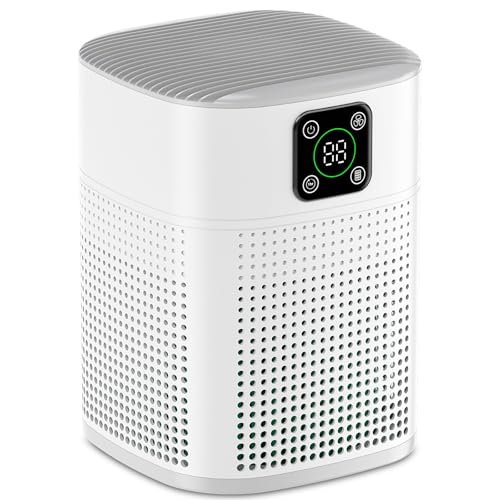
- H13 HEPA and three-stage filtration
- 360° intake, touch controls, and timers
- Compact 24 dB design for bedrooms
Best For: Bedrooms, offices, and general air cleaning near a 3D printing workspace
Printer-Specific DIY Kit

- Seven-layer HEPA, pre-filter, and carbon design
- Supports several enclosed Bambu Lab printers
- Requires printed housing parts and assembly
Best For: DIY users building filtration for compatible enclosed Bambu Lab printers
Smart Large-Room Option

- Three-layer HEPA and activated-carbon filtration
- Cleans spaces up to 1,000 square feet
- Particle sensor and quiet 22 dB sleep mode
Best For: Large rooms or printing areas needing automatic, continuous air cleaning
Best Compact Resin Odor Control
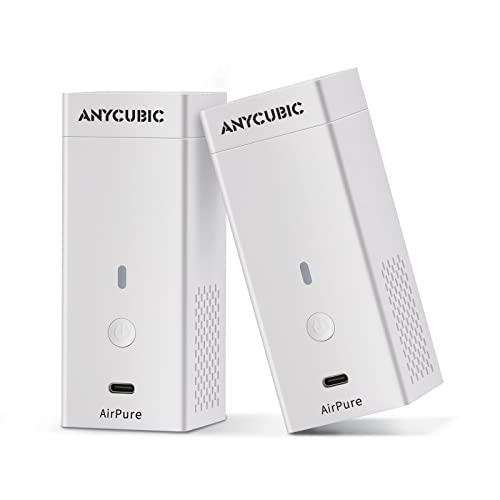
- Compact 4.5-inch purifier for LCD/DLP printers
- High-density activated carbon targets resin odors
- Replaceable filters last about 3–6 months
Best For: Small resin-printing setups focused on odor reduction
Best Enclosed-Printer HEPA System

- Pre-filter, HEPA H13, and activated carbon stages
- Up to 60 m³/h airflow for enclosed printers
- Supports PLA, PETG, ABS, ASA, and nylon
Best For: Enclosed 3D printers using varied filament materials
Best Versatile Multi-Stage Option

- Six-layer HEPA and activated-carbon filtration
- Works with resin and FDM printers
- Three fan speeds and 42 dB operation
Best For: Mixed resin and FDM printing environments
Best Purpose-Built Pick – Bambu Lab HEPA H13 Filter System
For shoppers comparing hepa 3d printer air purifiers, this purpose-built system combines a pre-filter, True HEPA H13 media, and chemically activated carbon. It is designed for enclosed printers and targets particles, VOCs, and odors produced by materials such as PLA, PETG, ABS, ASA, and Nylon.
Best For: Bambu Lab P1S and X1C owners who want a dedicated printer-emissions filtration system.
Pros:
- Triple-layer filtration includes True HEPA H13 and activated carbon.
- Default connector supports Bambu Lab P1S and X1C printers.
- Stable airflow reaches up to 60 m³/h, with tool-free quick-swap filters.
Cons:
- Additional adapter kits may be needed for other printer models.
- Designed primarily for enclosed printer setups.
Its compact design and maintenance-friendly filter modules make it a strong fit for home offices, classrooms, workshops, and makerspaces. It reduces airborne contaminants but should complement appropriate room ventilation.
Best Room Air Cleaner – Levoit Core 300-P Air Purifier
The Levoit Core 300-P is a general-purpose option among hepa 3d printer air purifiers, especially when you want to clean the surrounding room rather than connect directly to a printer. Its three-in-one filtration, AHAM verification, and quiet Sleep Mode suit bedrooms, offices, and other indoor spaces.
Best For: Users who need a room air purifier for dust, pollen, smoke, pet allergens, and some odors near a printing workspace.
Pros:
- AHAM verified with room-cleaning performance rated for a 222-square-foot room.
- HEPA-grade filtration in Sleep Mode and stated 99.97% particle filtration.
- Quiet 24 dB Sleep Mode, timer settings, and display-off operation.
Cons:
- It is a general room purifier, not a printer-specific enclosure filtration system.
- Its 120V specification makes it suitable for use only in the United States.
This is a practical choice for improving ambient room air around a printer, with useful certifications and controls. For concentrated emissions from enclosed printing, a dedicated printer filtration system may be more targeted.
Best Multi-Printer Option – Enclosed Printer HEPA H13 Filter System
This enclosed-printer system is a versatile choice for shoppers seeking hepa 3d printer air purifiers with both particle and odor control. Its pre-filter, HEPA H13 stage, and thick activated-carbon bed are designed for emissions from PLA, PETG, ABS, ASA, and Nylon printing.
Best For: Makers using Bambu Lab or other enclosed printers who want adaptable connections and quick filter changes.
Pros:
- Triple-layer filtration targets ultrafine particles, VOCs, and chemical odors.
- Default connector supports Bambu Lab P1S and X1C, with printable adapters available for other models.
- Provides up to 60 m³/h airflow and tool-free quick-swap filter modules.
Cons:
- Not recommended for open-frame printers without an enclosure.
- It reduces emissions but does not replace room ventilation.
With broad enclosed-printer compatibility and stable airflow intended not to disrupt chamber conditions, this system offers a flexible workshop solution. Users printing ABS, ASA, or Nylon should still provide proper ventilation.
Best Compact Resin Pick – ELEGOO Mini Air Purifier 2-Pack
The ELEGOO Mini Air Purifier is a compact, carbon-focused option in the hepa 3d printer air purifiers category. It is made for LCD, DLP, and MSLA resin printers that have room inside the enclosure, helping absorb resin odors before they spread through the printer’s airflow.
Best For: Resin-printer users who prioritize compact odor control and cordless operation.
Pros:
- Activated carbon targets irritating resin odors.
- Small 44 × 44 × 107 mm design fits compatible printer interiors.
- 2000mAh battery provides at least 24 hours of operation per charge.
Cons:
- Uses activated carbon only, rather than HEPA filtration.
- Replacement carbon filters must be purchased separately after the included filter wears out.
- Compatibility depends on having enough space inside the printer.
Sold as a two-pack, this is a convenient supplemental odor-control tool for resin setups. It is not a substitute for HEPA particle filtration or proper ventilation when broader emissions control is required.
Quiet Room Purifier – Honeyuan H13 HEPA Air Purifier
For shoppers comparing hepa 3d printer air purifiers for a nearby bedroom, office, or general living space, the Honeyuan offers H13 HEPA filtration in a compact, portable design. Its 360-degree intake, touch controls, timer settings, and quiet 24 dB operation make it practical for everyday room use.
Best For: Bedrooms, small offices, pet owners, and users who want simple touch controls and quiet operation.
Pros:
- H13 HEPA filter with three-stage filtration and 360-degree air intake.
- Rated for spaces up to 1,095 square feet, with three fan speeds and nine timer options.
- Compact 2-pound design, 24 dB noise level, sleep mode, and filter reminder.
- CARB, CE, FCC, and EPA certifications listed in the supplied details.
Cons:
- It is a general room air purifier rather than a printer-specific enclosure or ducting kit.
- Replacement filters are sold separately.
The Honeyuan is a flexible choice when you need portable HEPA filtration around a workspace but do not need a dedicated 3D printer attachment. Its compact size and low-noise settings are especially useful for bedrooms or home offices.
Printer-Specific DIY Kit – Bambu Lab H13 HEPA Filter Kit
Among hepa 3d printer air purifiers, this DIY kit is the most directly tailored to enclosed printing setups. It combines H13 pleated HEPA media, an external pre-filter, activated carbon, a fan, and ducting hardware, but buyers must print the housing and connection parts before assembly.
Best For: DIY-minded Bambu Lab owners who want a printer-specific filtration setup and have access to another 3D printer.
Pros:
- Seven-layer filtration design with H13 HEPA media, pre-filter, and activated carbon.
- Designed for enclosed printing and intended to capture PM0.3 particles while reducing some odors and VOCs.
- Adapter files support the listed Bambu Lab models, including P1S, X1C, H2D, H2S, and H2C.
- Includes a fan, foil duct, hose clamps, foil tape, screws, Allen key, and USB drive.
Cons:
- Five plastic housing and connection pieces are not included.
- Assembly requires a separate 3D printer, filament, and DIY installation.
- Compatibility depends on using the correct printable adapter files and mounting hardware.
This is the most purpose-built option in the group for enclosed Bambu Lab printing. It can be a strong fit for makers comfortable with printing parts and following an assembly guide, but it is less convenient than a ready-to-use purifier.
Smart Large-Room Option – PuroAir 240 HEPA Purifier
The PuroAir 240 is a general-purpose option for shoppers considering hepa 3d printer air purifiers for a larger room surrounding their printer. Its three-layer filter combines HEPA and activated carbon, while the particle sensor can automatically increase power when it detects polluted air.
Best For: Large bedrooms, living areas, or printing rooms where automatic sensing, carbon filtration, and quiet overnight operation matter.
Pros:
- Three-layer pre-filter, HEPA, and activated-carbon system for dust, smoke, odors, pet dander, pollen, and VOCs.
- Designed for rooms up to 1,000 square feet and supports continuous use.
- PuroIQ particle sensor, automatic mode, filter indicator, child lock, timer, and sleep mode.
- 22 dB listed noise level, 360-degree intake, and a two-year manufacturer warranty.
Cons:
- It is a standalone room purifier, not a printer-mounted or ducted filtration kit.
- Its 7.3-pound body is less portable than the compact Honeyuan.
- It may be more equipment than needed for a small, enclosed printer workspace.
The PuroAir 240 makes sense when you want to clean the broader room rather than attach filtration directly to a printer. Automatic sensing and quiet sleep operation give it an advantage for users who plan to run it regularly without constant manual adjustment.
Best Compact Resin Odor Control – Anycubic Mini Purifier 2-Pack
For shoppers comparing hepa 3d printer air purifiers, the Anycubic Mini Purifier is a compact option focused on resin odors. Its high-density activated-carbon filter, quiet fan, and two-unit pack make it easy to position around LCD or DLP printers.
Best For: Resin-printer users who want a small, lightweight purifier dedicated to odor reduction.
Pros:
- Compact 4.5 x 1.8 x 1.8-inch design fits beside a printer.
- High-density activated carbon targets resin odors.
- Fan operates at up to 5,000 rpm with stated noise of 40 dB or less.
- Replaceable filters are designed to last about 3–6 months.
Cons:
- Activated carbon is the listed filtration type, so it is primarily an odor-focused solution.
- Its small form factor is intended for a limited 10-square-meter area.
This two-pack is a practical choice when space is limited and resin odor is the main concern. Buyers specifically seeking robust particle filtration should compare it with a model that explicitly includes HEPA filtration.
Best Enclosed-Printer HEPA System – Mintion V1 H13 Filter System
The Mintion V1 is a strong fit for shoppers seeking hepa 3d printer air purifiers for enclosed printers. It combines a pre-filter, HEPA H13 filter, and activated carbon stage to address particles and odors from materials including ABS, ASA, PA, PETG, and PLA.
Best For: Enclosed-printer owners who want three-stage filtration and broad filament compatibility.
Pros:
- Three-stage system uses a pre-filter, HEPA H13 filter, and activated carbon.
- Designed to capture ultrafine particles and reduce VOC-related odors.
- Provides airflow up to 60 m³/h.
- Compatible with common enclosed printers, with adapters available for several brands.
Cons:
- At 3.63 pounds, it is less portable than compact desktop purifiers.
- Brand-specific installation may require an optional printed adapter.
- The supplied details do not specify filter replacement intervals or an exact noise rating.
With HEPA H13 and activated carbon filtration in one system, the Mintion V1 is the most filtration-focused option in this group. Its enclosed-printer compatibility and 60 m³/h airflow make it better suited to a dedicated workspace than a tiny desktop setup.
Best Versatile Multi-Stage Option – Phrozen Air Purifier Max
The Phrozen Air Purifier Max is a versatile choice among hepa 3d printer air purifiers, supporting both resin and FDM printing. Its six-layer system uses HEPA and activated-carbon filtration to target dust, smoke, VOCs, and resin odors, while three fan modes make it suitable for different print sessions.
Best For: Users who need one purifier for both resin and FDM printers and want adjustable fan control.
Pros:
- Designed for both LCD resin and FDM printers.
- Six-layer filtration includes HEPA and activated-carbon elements.
- Three speeds—Power, Balanced, and Quiet—support different printing conditions.
- Runs at a stated 42 dB and includes a filter-change reminder light.
Cons:
- At 10 kg, it is substantially heavier than compact desktop units.
- The large 11.7 x 11.59 x 17-inch dimensions require considerable floor or workspace room.
- The supplied details do not identify a specific HEPA grade.
The Air Purifier Max offers the broadest stated application range of these picks, with filtration for particles, odors, VOCs, and smoke. Its size and weight make it less convenient to move, but the adjustable modes and filter reminder add everyday usability.
How We Picked the Best Hepa 3d Printer Air Purifiers
We focused on filtration design, printer compatibility, airflow, noise, installation, and practical use. Products with HEPA H13 filtration can help capture fine airborne particles, while activated carbon is important for reducing odors and some volatile compounds. We also separated compact units designed for printer enclosures from room air purifiers intended to clean the surrounding workspace.
Because air purifiers do not replace safe materials handling, enclosure use, ventilation, or manufacturer guidance, we favored products that clearly state their intended application and filter configuration. For resin printing, odor control and placement near the printer are especially important; for filament printing, particle filtration and adequate airflow may matter more.
Quick Comparison
- Best for Bambu Lab enclosures: Choose a model specifically sized and shaped for compatible P-Series or X-Series printers.
- Best for enclosed filament printers: Look for HEPA H13 plus activated carbon and airflow suitable for the enclosure volume.
- Best for resin printers: Prioritize carbon filtration, quiet operation, and placement close to the source.
- Best for a whole room: Select a larger purifier with a stated room-coverage rating and replaceable filters.
- Best for low-cost supplemental filtration: Compact mini purifiers can provide localized assistance but usually have limited airflow.
Key Buying Factors for Hepa 3d Printer Air Purifiers
Filtration
Confirm whether the unit includes HEPA H13, another clearly specified particle filter, activated carbon, or a combination. HEPA handles particles; carbon supports odor and vapor reduction. A thin carbon layer may have less capacity than a substantial carbon filter.
Compatibility and Airflow
Check dimensions, mounting method, power requirements, and the printer models listed by the manufacturer. Airflow must be sufficient for the enclosure or room, but excessive airflow can affect temperature-controlled printing. A stated airflow rate, such as cubic meters per hour, is more useful than a vague “high performance” claim.
Noise, Controls, and Maintenance
Quiet operation matters when a printer runs for many hours in a home, office, or bedroom. Look for adjustable speeds, a straightforward power connection, and accessible replacement filters. Replace filters on schedule, particularly when printing frequently or using odor-producing materials.
Placement and Safety
Place the purifier where it can draw contaminated air without obstructing the printer or creating unsafe heat buildup. Use ventilation when appropriate, avoid relying on filtration alone for hazardous emissions, and follow the filament or resin manufacturer’s safety instructions.
Who Should Buy Which Hepa 3d Printer Air Purifiers?
Choose a printer-specific filter system if you mainly need filtration inside an enclosed Bambu Lab or other compatible printer. These units are compact and targeted, but their benefits depend on proper fit and airflow.
Choose a mini purifier for a small resin printer, occasional printing, or supplemental odor control near the machine. It is a practical budget option, though it is not a substitute for a high-airflow room purifier.
Choose a full-room HEPA purifier if your printer shares space with people, pets, or allergy-sensitive occupants. Models rated for larger rooms can circulate more air, but verify that their carbon filtration is suitable for your odor-control needs.
For the best overall setup, combine an appropriate enclosure, source-level filtration, room ventilation, and sensible material-handling practices rather than depending on one purifier alone.