Building a serious home theater means more than choosing a large screen. An acoustically transparent projector screen lets you position speakers behind the image, creating cleaner dialogue, wider soundstage placement, and a more convincing cinema-style experience.
Our selection includes fixed-frame, motorized, edge-free, ambient-light-rejecting, and DIY screen options in several large 16:9 sizes. Use the guide below to match screen material, installation style, room lighting, and projector performance to your theater.
Best 10 Acoustically Transparent Projector Screens Picks for 2026
Balanced 120-Inch Fixed-Frame Pick
Silver Ticket STR 120-Inch Woven Acoustic

- Acoustically transparent woven screen
- 1.15 gain with a 160° viewing angle
- Velvet-wrapped fixed aluminum frame
Best For: Dedicated 16:9 home theaters with behind-screen speakers
Convenient Motorized Choice
Elite Screens AcousticPro UHD 125

- Motorized 125-inch 16:9 screen
- IR, RF, and wall-box controls
- 180° viewing angle with acoustic weave
Best For: Conventional-throw theaters wanting remote operation
Large-Screen Theater Upgrade
Silver Ticket STR 150-Inch Woven Acoustic

- Large 150-inch 16:9 viewing area
- 1.15 gain and 160° viewing angle
- Woven surface supports hidden speakers
Best For: Spacious dedicated theaters seeking an immersive fixed screen
Extra-Wide Motorized Display
Elite Screens AcousticPro UHD 135

- 135-inch motorized 16:9 screen
- Acoustic perforated weave for in-wall speakers
- IR/RF controls and 12V trigger
Best For: Large conventional-throw theaters needing a retractable screen
Best Fixed-Frame Value
Silver Ticket STR 128-Inch Acoustic Screen
- 128-inch 16:9 woven acoustic surface
- 1.15 gain and 160-degree viewing angle
- Velvet-wrapped aluminum fixed frame
Best For: Dedicated theaters with native 16:9 projectors
Best Motorized Option
Elite Screens 115-Inch Electric AcousticPro UHD
- Quiet motorized retractable operation
- Perforated AcousticPro UHD material
- IR/RF remote and wall-switch control
Best For: Controlled-lighting rooms with standard-throw projectors
Best Large Edge-Free Design
Elite Screens Aeon 180-Inch AUHD
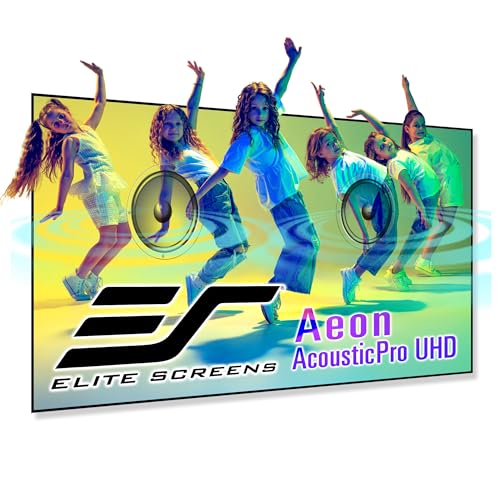
- 180-inch 16:9 edge-free fixed frame
- AcousticPro UHD, 1.0 gain surface
- Moire-free weave with 180-degree viewing angle
Best For: Large dedicated theaters using standard long-throw projectors
Best DIY Raw Material
163-inch A4K Acoustically Transparent Screen Cloth

- 163-inch 16:9 pre-cut cloth
- 1.0-gain, 170° viewing angle
- 4K/8K and active 3D ready
Best For: DIY home theater frames and custom installations
Best for Ambient Light
150-inch CineGrey 4D AT Fixed Frame

- 150-inch edge-free fixed frame
- 1.1-gain ALR/CLR material
- Includes frame and installation kit
Best For: Standard-throw projectors in brighter media rooms
Best Compact Fixed Frame
120-inch AcousticPro UHD Screen
- 120-inch borderless 16:9 design
- 1.0-gain acoustic weave
- Frame and wall brackets included
Best For: Standard-throw home theaters seeking a clean fixed installation
Balanced 120-Inch Fixed-Frame Pick – Silver Ticket STR 120-Inch Woven Acoustic
For shoppers comparing acoustically transparent projector screens, this 120-inch Silver Ticket STR screen offers a practical fixed-frame design with woven material that allows speakers to sit behind the image. Its 1.15-gain white surface, 160-degree viewing angle, and support for Full HD, 4K, 8K, HDR, and active 3D make it a flexible home-theater option.
Best For: Dedicated 16:9 home theaters that need a wall-mounted screen with behind-screen speaker placement.
Pros:
- Acoustically transparent woven surface supports speakers behind the screen.
- 1.15 gain and 160-degree viewing angle help maintain a bright, consistent image.
- Velvet-wrapped aluminum frame absorbs stray light around the image.
- Tensioning-rod assembly is designed for relatively quick installation.
Cons:
- Fixed wall-mount design has no option for legs or stands.
- Some ultra-short-throw projectors may not be compatible with the STR frame.
- Its overall width is 110.8 inches, so installation space must be measured carefully.
This is a well-rounded choice when you want a traditional, permanently mounted screen at a manageable 120-inch size. Confirm projector compatibility and image size before installation, particularly with UST equipment.
Convenient Motorized Choice – Elite Screens AcousticPro UHD 125
This Elite Screens Spectrum model is a strong option among acoustically transparent projector screens for buyers who want motorized operation. The 125-inch 16:9 screen uses AcousticPro UHD material with a 1.0 gain, 180-degree viewing angle, and perforated weave designed to let sound pass from in-wall speakers with minimal attenuation.
Best For: Wall- or ceiling-mounted home theaters that prioritize remote-controlled operation and wide seating coverage.
Pros:
- Motorized screen includes IR and RF remotes plus a wall-box controller.
- AcousticPro UHD material is rated for 4K/8K Ultra HD and active 3D projection.
- 180-degree viewing angle suits rooms with broad seating arrangements.
- 12V trigger can synchronize screen movement with a compatible projector’s power cycle.
Cons:
- Not compatible with ultra-short-throw or short-throw projectors.
- Its 1.0 gain is more neutral than the higher-gain Silver Ticket alternatives.
- The manufacturer warranty is valid in the U.S. only when purchased new.
Choose this model if automated deployment and integration features matter more than UST compatibility. Its perforated acoustic material and wide viewing angle make it particularly suitable for a conventional-throw setup with in-wall speakers.
Large-Screen Theater Upgrade – Silver Ticket STR 150-Inch Woven Acoustic
For a genuinely expansive image, this 150-inch Silver Ticket STR is one of the larger acoustically transparent projector screens in the lineup. Its woven acoustic surface accommodates speakers behind the screen, while the 1.15-gain white material and 160-degree viewing angle support a broad, immersive 16:9 presentation.
Best For: Large dedicated theaters with sufficient wall width and a projector capable of filling a 150-inch image.
Pros:
- 150-inch diagonal viewing area creates an immersive cinema-style presentation.
- Acoustically transparent material allows behind-screen speaker placement.
- 1.15 gain and 160-degree viewing angle support consistent viewing from varied seats.
- Velvet-wrapped aluminum frame helps absorb light around the image.
Cons:
- The 137.05-inch overall width requires substantial installation space.
- Fixed wall mounting offers no legs or stand option.
- Some UST projectors may not work with this STR frame.
This screen makes the most sense when room dimensions and projector brightness are already matched to a very large image. Measure the wall and test the projected image first, as recommended by the manufacturer.
Extra-Wide Motorized Display – Elite Screens AcousticPro UHD 135
This 135-inch Elite Screens Spectrum model combines a large 16:9 image with motorized deployment and acoustically transparent AcousticPro UHD material. The 1.0-gain perforated weave is designed to work with in-wall speakers, while its 180-degree viewing angle helps accommodate seating spread across a wide room.
Best For: Large wall- or ceiling-mounted theaters that want a retractable screen and conventional-throw projection.
Pros:
- 135-inch diagonal screen provides a substantial theater-style image.
- Perforated acoustic material lets sound pass with minimal attenuation.
- IR and RF remotes, wall-box control, and 12V trigger add installation flexibility.
- Supports 4K/8K Ultra HD and active 3D projection.
Cons:
- Not compatible with ultra-short-throw or short-throw projectors.
- Its 129.5-inch overall width demands a large mounting area.
- At 1.0 gain, it is designed as a neutral standard-gain surface rather than a brightness-enhancing one.
This is a practical fit for a spacious room where a large retractable screen and behind-screen audio are both important. Verify the mounting dimensions and projector throw type before buying.
Best Fixed-Frame Value – Silver Ticket STR 128-Inch Acoustic Screen
For a permanent home theater, this 128-inch Silver Ticket model is a practical choice among acoustically transparent projector screens. Its woven material lets you position speakers behind the screen, while the 1.15-gain white surface supports Full HD, 4K, and Active 3D viewing with a wide viewing angle.
Best For: Dedicated rooms using a native 16:9 projector and a wall-mounted fixed frame.
Pros:
- Acoustically transparent design supports speakers behind the screen.
- 128-inch 16:9 viewing area with a 160-degree viewing angle.
- Works with long-, short-, and ultra-short-throw projectors, with stated UST compatibility limitations.
- Velvet-wrapped aluminum frame and tensioning rods support a crisp, secure installation.
Cons:
- Fixed wall-mount design does not include legs or stands.
- Some UST projectors are not compatible; the S7 frame series is recommended for UST use.
- Requires assembly and careful sizing before purchase.
This is a strong fit when you want a large, permanently mounted screen and behind-screen audio. Confirm the projected image size and UST compatibility before ordering.
Best Motorized Option – Elite Screens 115-Inch Electric AcousticPro UHD
This 115-inch Elite Screens model adds convenient electric operation to acoustically transparent projector screens. Its AcousticPro UHD perforated weave is designed to pass sound from speakers behind the screen while maintaining 4K/8K and Active 3D readiness.
Best For: Controlled-lighting home cinemas that need a retractable, remotely operated screen.
Pros:
- AcousticPro UHD material supports speakers placed behind the screen.
- Motorized, quiet operation with IR/RF remote control and wall-switch support.
- Programmable vertical drop position with the included Swift-RC1 remote kit.
- 180-degree viewing angle and 1.0 gain surface.
Cons:
- Not compatible with ultra-short-throw or short-throw projectors.
- Recommended for rooms with controlled lighting.
- Its retractable design may be less suitable than a fixed frame for a permanently installed dedicated theater.
Choose this screen when ease of use and a clean retractable installation matter as much as behind-screen audio. Verify that your projector is a standard-throw model and that the listed screen dimensions fit your room.
Best Large Edge-Free Design – Elite Screens Aeon 180-Inch AUHD
For viewers who want a very large, borderless presentation, the 180-inch Elite Screens Aeon AUHD combines an edge-free fixed frame with an acoustically transparent projector screen surface. Its 1.0-gain AcousticPro UHD material is designed for 4K and Active 3D projection and has a 180-degree viewing angle.
Best For: Large dedicated theaters using a standard long-throw UHD or HD projector.
Pros:
- Expansive 180-inch diagonal in a 16:9 format.
- Edge-free design creates a clean, borderless appearance.
- AcousticPro UHD weave supports speakers behind the screen and is described as moire-free.
- Includes wall-mount brackets and a lightweight split aluminum frame.
Cons:
- Compatible with standard long-throw projectors only.
- Not recommended for triple-laser short-throw projectors; the notes recommend CineWhite A8K instead.
- The very large 157.7-by-89.1-inch overall footprint requires substantial wall space.
This screen is most compelling when the room can accommodate its substantial footprint and the projector is standard throw. Its edge-free frame and behind-screen audio support suit a dedicated cinema layout.
Best DIY Raw Material – 163-inch A4K Acoustically Transparent Screen Cloth
For custom home theaters, this 163-inch Designer Cut material is a flexible option among acoustically transparent projector screens. Its ultra-fine knit/weave is designed to let sound pass through while supporting 4K, 8K, and active 3D projection.
Best For: DIY installations, custom frames, and budget-conscious home theater projects requiring a very large screen surface.
Pros:
- Large 163-inch diagonal size with a 16:9 aspect ratio.
- 1.0-gain A4K material offers color neutrality and a 170-degree viewing angle.
- Moire-free, acoustically transparent construction is ready for 4K/8K and active 3D projection.
- Ships rolled to help preserve a wrinkle-free surface.
Cons:
- This is raw, pre-cut cloth rather than a complete framed screen.
- Black backing may be needed to reduce light bleed and light loss, but it is not included.
- DIY installation requires a suitable mounting solution.
The RM-163H-A4K is best viewed as a high-resolution screen material for shoppers who are comfortable building or adapting their own installation. Its expansive size and wide viewing angle are appealing, but remember to budget for backing and framing components.
Best for Ambient Light – 150-inch CineGrey 4D AT Fixed Frame
This 150-inch Aeon fixed-frame model combines acoustically transparent projector screens with angular-reflective, ceiling and ambient-light-rejecting performance. It is a strong choice for a finished installation using a compatible standard-throw projector.
Best For: Large home theaters or media rooms where ambient light control and a sleek, edge-free fixed-frame design are priorities.
Pros:
- 150-inch diagonal, 16:9 screen with a 130.8-by-73.6-inch view area.
- CineGrey 4D AT material provides acoustic transparency, 1.1 gain, and a 70-degree viewing angle.
- ISF certified and ready for 4K/8K Ultra HD and active 3D projection.
- Includes a six-piece aluminum frame, installation hardware, and wall-mount options.
Cons:
- Compatible with standard-throw projectors only.
- Not compatible with ultra-short-throw, short-throw, or triple-laser projectors.
- Its fixed-frame installation is less flexible than a raw screen material.
The AR150H-ATD4 is a polished, installation-ready option for viewers who need both sound transparency and some ambient-light rejection. Verify projector compatibility carefully before buying, since the material has specific throw-distance limitations.
Best Compact Fixed Frame – 120-inch AcousticPro UHD Screen
The Aeon AUHD Series offers a clean, borderless installation for shoppers comparing acoustically transparent projector screens in a more manageable 120-inch size. Its AcousticPro UHD perforated weave is designed for sound passage and high-resolution home theater use.
Best For: Dedicated home theaters using a standard or long-throw projector and wanting an edge-free screen with included wall-mount hardware.
Pros:
- 120-inch 16:9 screen with a 104.1-by-58.3-inch viewing area.
- 1.0-gain AcousticPro UHD material supports 4K and active 3D projection.
- Acoustically transparent, moire-free weave has a listed mean attenuation of -2.36 dB.
- Edge-free split aluminum frame and wall-mount brackets are included.
Cons:
- Designed for standard and long-throw projectors rather than short-throw setups.
- The fixed-frame format requires a permanent wall installation.
- Triple-laser short-throw projector users are directed toward a different screen material.
With its moderate 120-inch size and included frame hardware, the AR120H2-AUHD is a practical middle ground between raw material and larger specialty screens. Confirm that your projector uses a compatible throw distance before ordering.
How We Picked These Acoustically Transparent Projector Screens
We focused on screens designed to allow sound from speakers positioned behind the image, including woven, knitted, and perforated materials. We also considered screen format, available sizes, installation method, claimed high-resolution compatibility, acoustic design, and practical fit for dedicated theaters or multipurpose rooms.
Because screen performance depends heavily on projector brightness, speaker placement, seating distance, and room lighting, there is no single best model for every theater. The right choice balances image uniformity, sound transparency, viewing angle, convenience, and installation requirements.
Quick Comparison
| Screen type | Best suited to | Main advantage | Potential trade-off |
|---|---|---|---|
| Fixed-frame woven or knitted | Dedicated theaters | Stable, taut surface and simple operation | Requires permanent wall space |
| Motorized acoustic | Flexible media rooms | Retracts when not in use | More installation complexity |
| Edge-free fixed frame | Modern theater designs | Clean, borderless appearance | Needs careful alignment and mounting |
| ALR sound-transparent | Rooms with controlled ambient light | Improved contrast in brighter spaces | Viewing angle and placement matter more |
| DIY raw cloth | Custom builds | Flexible dimensions and framing | Requires accurate construction |
Key Buying Factors for Acoustically Transparent Projector Screens
Material and Acoustic Performance
Woven and knitted fabrics generally provide a smooth, theater-like surface while allowing sound to pass through with less visible perforation. Perforated screens can also work well, but speaker distance and seating distance become especially important because the hole pattern may be visible up close. Check whether the material is intended for speakers behind the screen and follow the manufacturer’s recommended spacing.
Screen Size, Aspect Ratio, and Viewing Distance
Most options here use a 16:9 format, which suits HDTV, streaming, gaming, and many projectors. Measure wall width, ceiling height, speaker locations, and the projector’s throw range before choosing a 115-, 120-, 125-, 135-, 150-, 163-, or 180-inch model. A very large screen is only an advantage if the projector can produce sufficient brightness and viewers sit far enough away for comfortable image detail.
Projector Brightness and Room Lighting
Screen gain and ambient-light performance should match the room. A standard acoustic material is often a strong choice for a dark, dedicated theater. If lights or windows remain active, an ambient-light-rejecting sound-transparent screen may improve perceived contrast, but it can impose stricter viewing-angle and projector-placement limits.
Installation and Maintenance
Fixed frames typically provide the most consistently tensioned surface and are well suited to permanent installations. Motorized models preserve wall flexibility but need power, secure mounting, and enough clearance for the housing. Keep acoustic fabric clean with the manufacturer-approved method, and avoid pressing speakers directly against the screen material.
Who Should Buy Which Acoustically Transparent Projector Screens?
- Dedicated theater owners: Choose a fixed-frame woven or knitted screen for a taut image and reliable behind-screen speaker placement.
- Multipurpose-room users: Consider a motorized acoustic screen that can disappear when the room serves another purpose.
- Design-focused buyers: Edge-free models provide a minimalist, borderless appearance when the wall and mounting surface are prepared accurately.
- Brighter-room viewers: Look at sound-transparent ALR designs, while confirming projector compatibility and acceptable viewing angles.
- Custom installers and enthusiasts: A raw DIY acoustic cloth offers sizing flexibility, but the frame must be built square and tensioned evenly.
Before ordering, verify the finished viewing-area dimensions rather than relying only on the diagonal size. Also confirm whether the package includes the frame, mounting hardware, remote, or motor controls needed for your installation.