The best field recorder with timecode can simplify production audio by keeping recordings synchronized with cameras while protecting against clipped peaks and missed takes. The options in this roundup range from compact pocket recorders to multitrack systems for professional sets.
We compare connectivity, timecode support, recording formats, channel capacity, portability, and workflow features so you can choose the right recorder for your crew, camera setup, and shooting style.
Best 10 Field Recorder with Timecode Picks for 2026
Best Integrated Recorder

- 32-bit float recording with dual ADCs
- Built-in timecode generation and sync
- Dual XLR/TRS inputs plus 3.5 mm input
Best For: Videographers seeking an all-in-one recorder with timecode
Best Dedicated Sync Pair

- Two compact Bluetooth timecode generators
- Adjustable frame-rate TC output
- Built-in microphones and rechargeable batteries
Best For: Multi-camera workflows using a separate audio recorder
Best Compact Bundle

- Two-channel 32-bit float recording
- Included adapter adds 3.5 mm timecode I/O
- Locking XLR inputs with phantom power
Best For: Compact two-microphone audio-for-video setups
Best for Multichannel Production
Zoom F6 Professional Field Recorder

- Six XLR inputs and up to 14 tracks
- 32-bit float recording with dual A/D converters
- Timecode I/O for frame-accurate sync
Best For: Professional location recording with multiple microphones
Pocket Timecode Pro

- 32-bit float WAV recording with 3.5mm input
- Includes W.Lav Pro lavalier microphone
- Up to 30 hours of AA-battery recording
Best For: Portable filmmaking, interviews, and lavalier-based production
Flexible Production Recorder

- 32-bit float recording with four-track capability
- Built-in stereo mics and two XLR/TRS inputs
- USB-C recording or streaming with SD backup
Best For: Music, podcasts, interviews, and multi-input field recording
Lavalier Timecode Specialist

- LTC Jam Sync support after firmware V2.0
- Includes TM-10L lavalier microphone
- 32-bit float recording with up to 512GB microSDXC
Best For: Discreet personal audio and synchronized video production
Compact Timecode Companion

- 32-bit float recording up to 192 kHz
- Four flexible input options
- Pocket-friendly locking design
Best For: Compact production rigs and Deity timecode workflows
Professional Sync Workhorse

- Eight combo inputs with 75 dB gain
- BNC timecode input and output
- Dual SD recording for redundancy
Best For: Film crews and multi-camera production sound
Portable Timecode Recorder
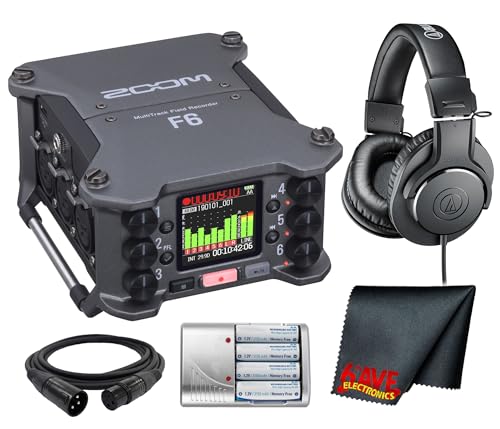
- Six locking XLR inputs
- 3.5mm TRS timecode I/O
- Compact 32-bit float recorder
Best For: Portable dialogue and location-recording rigs
Best Integrated Recorder – TASCAM FR-AV2
If you want a compact field recorder with timecode, the TASCAM FR-AV2 combines 32-bit float recording, internal timecode generation, and flexible camera-oriented connections in one portable unit. Its dual XLR/TRS inputs and 3.5 mm input suit streamlined videography setups.
Best For: Videographers who want built-in timecode without carrying a separate timecode device.
Pros:
- 32-bit float recording with dual ADCs helps support worry-free capture.
- Built-in timecode IN/OUT and generation/sync functions reduce setup complexity.
- Dual XLR/TRS combo inputs use Ultra HDDA preamps, with recording up to 192 kHz.
Cons:
- Wireless monitoring requires the optional AK-BT2 adapter.
- Runs on three AA batteries.
The FR-AV2 is a particularly practical choice when a small recorder needs to handle both high-dynamic-range audio and timecode duties. It is less appealing if wireless monitoring is essential but you do not want to purchase the compatible adapter.
Best Dedicated Sync Pair – Tentacle Sync E MKII
The Tentacle Sync E MKII is a compact two-unit timecode solution for camera and audio workflows. Rather than serving as a standalone field recorder, it focuses on generating and distributing adjustable-frame-rate timecode over Bluetooth-connected production setups.
Best For: Shooters who need a small, dedicated pair of Bluetooth timecode generators for multi-device synchronization.
Pros:
- Two compact timecode generators provide a paired synchronization setup.
- Bluetooth hardware interface supports compatible computers, tablets, smartphones, and other devices.
- Built-in microphones and included rechargeable lithium-polymer batteries add portability.
- Offers up to 35 hours of digital recording time and includes a two-year warranty.
Cons:
- It is a timecode generator pair, not a full audio field recorder.
- The supplied notes do not specify XLR audio inputs or 32-bit float recording.
Choose the Sync E MKII when synchronization is the main requirement and you already have a separate recorder or camera audio system. It complements a field recorder with timecode rather than replacing one.
Best Compact Bundle – Zoom F3 with TCA-1
This Zoom F3 bundle pairs a two-channel 32-bit float field recorder with the TCA-1 timecode adapter. It is a practical way to build a compact field recorder with timecode setup for camera synchronization while retaining locking XLR inputs and portable power options.
Best For: Small audio-for-video crews that need two-channel recording and an included timecode adapter.
Pros:
- 32-bit float recording and dual A/D converters accommodate changing sound levels.
- Two locking XLR mic/line inputs include 24/48V phantom power.
- Included TCA-1 provides 3.5 mm TRS timecode input/output with compatible firmware.
- Supports AA batteries, USB power, or an AD-17 AC adapter and microSD cards up to 1 TB.
Cons:
- Timecode functionality depends on the included adapter and compatible firmware.
- Two XLR inputs provide less simultaneous microphone capacity than larger recorders.
The F3 plus TCA-1 is a strong middle ground for compact production rigs. It offers more direct audio-recording capability than dedicated sync boxes, though larger shoots may need additional inputs.
Best for Multichannel Production – Zoom F6 Professional Field Recorder
The Zoom F6 is a professional field recorder with timecode built for productions that need multiple microphones and frame-accurate synchronization. Its six XLR inputs, 32-bit float recording, and up to 14-track capability make it suited to more involved location workflows.
Best For: Filmmakers, broadcast crews, and musicians recording several sources while keeping audio synchronized to video.
Pros:
- Six XLR inputs support simultaneous multi-microphone recording.
- 32-bit float recording and dual A/D converters are designed for a wide dynamic range.
- Timecode I/O supports frame-accurate sync with video equipment.
- Can operate as a standalone recorder or USB audio interface, with multiple power options.
Cons:
- At 2.4 pounds, it is heavier than the more compact recorder options listed here.
- Its larger input capacity may be unnecessary for simple two-channel shoots.
- It requires four AA batteries when used with batteries.
The F6 is the most capable choice here for multichannel production and location flexibility. Its size and input capacity make it better suited to professional or expanded setups than minimalist camera rigs.
Pocket Timecode Pro – Deity PR-2
The Deity PR-2 is a compact field recorder with timecode for filmmakers, journalists, and mobile production crews. Its 32-bit float recording, locking 3.5mm input, included lavalier microphone, and wireless app control make it a flexible option for capturing dialogue or feeding audio from other equipment.
Best For: Videographers and production teams needing a portable recorder with timecode support, long battery life, and lavalier-ready connectivity.
Pros:
- Supports 24-bit and 32-bit float WAV recording.
- Includes a W.Lav Pro lavalier microphone.
- Compatible with Deity timecode products and can operate as a standalone timecoder.
- Offers up to 30 hours of recording on two AA batteries, plus Bluetooth app control.
Cons:
- Uses a single locking 3.5mm stereo mic/line input rather than XLR inputs.
- Bluetooth control requires the Sidus Audio App.
The PR-2 stands out when portability, lavalier recording, and timecode compatibility matter more than a larger multi-input mixer-style design.
Flexible Production Recorder – Zoom H4 Essential
The Zoom H4 Essential is a versatile handheld recorder for music, podcasts, interviews, and video work. While the supplied details do not list built-in timecode or timecode synchronization, its 32-bit float recording, four-track workflow, stereo microphones, and dual XLR/TRS inputs make it useful for broader field-recording setups.
Best For: Musicians, podcasters, and filmmakers who need multiple recording inputs and a recorder that can also function as a USB audio interface.
Pros:
- Records with 32-bit float capture to help avoid distorted takes.
- Combines built-in stereo microphones with two XLR/TRS inputs.
- Supports four-track recording for larger projects.
- Can record or stream over USB-C while saving a backup to an SD card.
Cons:
- The supplied specifications do not identify timecode or LTC synchronization support.
- Uses two AA batteries and lists up to 10 hours of digital recording time.
The H4 Essential is a strong general-purpose recorder, but shoppers specifically seeking a field recorder with timecode should confirm synchronization requirements before choosing it.
Lavalier Timecode Specialist – TASCAM DR-10L Pro
The TASCAM DR-10L Pro is a lightweight field recorder with timecode aimed at personal audio for video. Its included lavalier microphone, 32-bit float recording, LTC Jam Sync support, and large microSDXC capacity suit productions where discreet talent-mounted recording and streamlined synchronization are priorities.
Best For: Filmmakers and content creators recording isolated lavalier audio for interviews, weddings, and multi-device video shoots.
Pros:
- Supports LTC Jam Sync for timecode synchronization after the V2.0 firmware update.
- Includes the matched TM-10L clip-on lavalier microphone.
- Records in 32-bit float and supports microSDXC cards up to 512GB.
- Can control up to five simultaneous recordings through the DR-10L Pro CONNECT App.
Cons:
- Timecode connectivity with Atomos requires the separately sold AK-BT1 adapter.
- Only the AK-BT1 adapter is compatible; the AK-BT2 is not supported.
- Its mono lavalier-focused design is less suited to stereo or multi-input recording.
Choose the DR-10L Pro when discreet personal audio and LTC-based synchronization are central to the workflow; it is less appropriate as an all-purpose stereo recorder.
Compact Timecode Companion – Deity PR-4
The Deity PR-4 is a compact option for anyone looking for a field recorder with timecode compatibility and flexible input support. Its 32-bit float recording, multiple input formats, and portable design suit lightweight production setups, though the supplied notes contain conflicting runtime information.
Best For: Compact production rigs, lavalier recording, and users working within the Deity timecode ecosystem.
Pros:
- 32-bit float recording with support up to 192 kHz.
- Four inputs supporting mic, 48V, line, AES3, AES42, and 5V mic sources.
- Triple-tap locking method helps prevent accidental recording stops.
- USB-C rechargeable design with Sidus App control noted in the listing.
Cons:
- Supplied notes do not clearly specify a dedicated timecode input or output.
- Runtime details are inconsistent, listing both up to 8 hours and nearly 30 hours.
- Some listed output configurations may require careful setup for your workflow.
The PR-4 stands out for its small footprint and broad signal compatibility. Confirm the exact timecode implementation, battery behavior, and included accessories before choosing it for a timecode-dependent production.
Professional Sync Workhorse – Zoom F8n Pro
The Zoom F8n Pro is a strong choice for buyers who need a field recorder with timecode for multi-camera shoots, production sound, and larger location setups. It combines eight high-gain inputs, 32-bit float recording, redundant SD recording, and dedicated BNC timecode connections.
Best For: Film crews, location sound mixers, and multi-camera productions needing extensive inputs and dependable synchronization.
Pros:
- Eight locking Neutrik XLR/TRS combo inputs with up to 75 dB of gain.
- 32-bit float recording with dual A/D converters helps handle wide dynamic range.
- Dedicated BNC timecode input and output with ±0.2 ppm TCXO accuracy.
- Dual SD card slots support redundant recording, while the bundle adds a microphone, headphones, card, and cables.
Cons:
- The supplied bundle is relatively large and heavy compared with compact recorders.
- Its extensive connectivity may be more than a small interview or solo rig requires.
- Accessory quality and compatibility should be checked because several bundle items are generic.
For demanding production work, the F8n Pro offers the most complete synchronization and input package in this roundup. Its BNC timecode connections and dual-card recording make it particularly well suited to workflows where dependable capture and sync matter more than minimal size.
Portable Timecode Recorder – Zoom F6
The Zoom F6 is a practical field recorder with timecode for filmmakers and location recordists who want professional synchronization in a compact sound-bag-friendly body. Its six XLR inputs, 32-bit float recording, and dedicated 3.5mm TRS timecode I/O provide a capable balance of portability and production features.
Best For: Portable dialogue rigs, ENG, filmmaking, and multi-camera shoots with moderate input requirements.
Pros:
- 32-bit float recording with dual A/D converters supports very quiet and loud sources.
- Six locking Neutrik XLR inputs with up to 75 dB of clean gain.
- Dedicated 3.5mm TRS timecode I/O and ±0.2 ppm TCXO accuracy.
- Supports six-track or 14-track modes, Ambisonics, USB audio, and SD backup recording.
Cons:
- Six inputs provide less expansion than the Zoom F8n Pro’s eight inputs.
- Timecode uses 3.5mm TRS rather than BNC connections.
- The bundle’s generic cable and included accessories may not suit every professional setup.
The F6 is a compelling middle ground: smaller and easier to carry than a larger mixer-recorder while retaining precise timecode and robust recording modes. Choose it when six inputs are sufficient and portability is a priority.
How We Picked the Best Field Recorder with Timecode
We selected these models for their usefulness in real production workflows, not simply their recording resolution. Our comparison considers timecode implementation, including built-in generators, LTC support, synchronization accessories, and compatibility with common camera workflows. We also looked at input types, channel count, 32-bit float recording, battery operation, storage, monitoring, mounting, and overall portability.
The list includes dedicated timecode tools, compact two-channel recorders, lavalier-focused units, and larger multitrack field mixers. Because production needs vary widely, the best choice depends on whether you prioritize a minimal rig, multiple microphones, wireless workflows, or maximum protection against unexpected volume changes.
Quick Comparison
| Best For | What to Prioritize |
|---|---|
| Solo filmmakers | Compact size, simple sync, and 32-bit float recording |
| Interviews and lavaliers | Small body, reliable timecode, and convenient microphone input |
| Small crews | Dual XLR/TRS inputs, camera connectivity, and easy monitoring |
| Multitrack productions | More inputs, flexible routing, and robust timecode workflows |
| Music and general recording | Versatile inputs, handheld usability, and straightforward operation |
Key Buying Factors for a Field Recorder with Timecode
Timecode Type and Workflow
Confirm whether the recorder generates, receives, or only records linear timecode. Built-in timecode is convenient, while a dedicated sync device may be preferable when several cameras and audio devices must stay locked together. Check the connectors, frame-rate support, jam-sync behavior, and how easily clips transfer into your editing software.
Inputs and Channel Capacity
Two inputs can cover a single operator, interview, or small camera rig. Larger productions may need four or more isolated channels for multiple microphones, backup feeds, or separate dialogue and ambience. XLR inputs are generally the most flexible choice for professional microphones, while compact lavalier-oriented recorders favor discreet placement.
32-Bit Float and Recording Protection
32-bit float recording can provide valuable safety when levels are difficult to predict, particularly for documentary work, events, and fast-moving scenes. It does not replace proper microphone placement or monitoring, but it can make recovery from unexpectedly loud peaks much easier.
Portability, Power, and Storage
A pocket recorder may be ideal for a hidden lavalier or lightweight camera package, whereas a multitrack unit benefits from a bag, harness, or dedicated mounting system. Compare battery life, USB power options, memory-card capacity, weight, and access to controls before buying.
Who Should Buy Which Field Recorder with Timecode?
Choose a compact recorder if you work alone, travel frequently, or need a discreet setup. A two-channel model is a practical middle ground for interviews, short films, and camera-mounted production. Lavalier-focused options make sense for presenters and documentary subjects who need a small body-pack recorder with dependable sync.
For productions with several microphones, multiple cameras, or separate backup tracks, choose a larger multitrack Field Recorder with Timecode and enough inputs for your expected setup. Musicians and podcasters may prefer a flexible handheld recorder that also supports video-oriented synchronization. Before ordering, verify the required cables, timecode accessories, microphone power, and camera compatibility so the recorder fits your complete workflow.