The best headphone amplifiers with XLR output make it easier to connect balanced audio sources, monitor a live mix, or drive headphones and in-ear monitors with greater control. The right model depends on whether you need a desktop DAC, portable IEM amplifier, or flexible preamp.
We compare 10 options across connectivity, portability, controls, output formats, and intended use so you can choose an amplifier that fits your listening or performance setup.
Best 10 Headphone Amplifiers with Xlr Output Picks for 2026
Best Balanced Desktop Pick
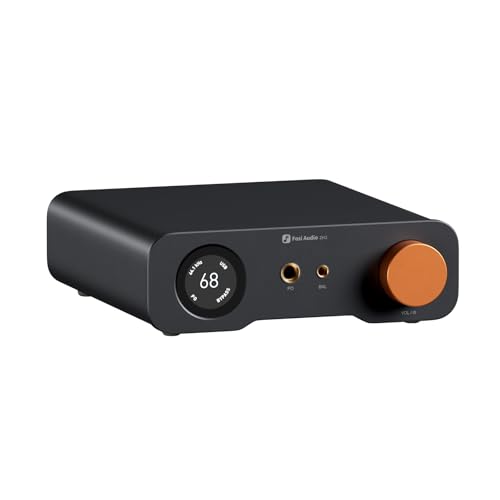
- XLR, RCA, 4.4mm, and 6.35mm outputs
- PCM 768kHz/32-bit and DSD512 support
- DAC, headphone amp, and preamp in one unit
Best For: Desktop listeners building a versatile balanced audio system
Best Portable IEM Option

- Locking XLR/TRS input
- Mono/stereo switch for monitoring flexibility
- Up to 12 hours on two AAA batteries
Best For: Performers needing portable personal in-ear monitoring
Best Compact Balanced Preamp

- XLR, RCA, and 3.5mm I/O
- 20dB signal gain with volume control
- Compact 5-by-2.4-by-1.9-inch design
Best For: Adding adjustable gain and balanced connectivity to mixed audio systems
Best Stage Mix Control

- XLR and TRS inputs with locking XLR
- Mono, dual-mono, and stereo modes
- Built-in limiter for monitor protection
Best For: Performers who need portable personal mix control on stage
Compact XLR Monitor
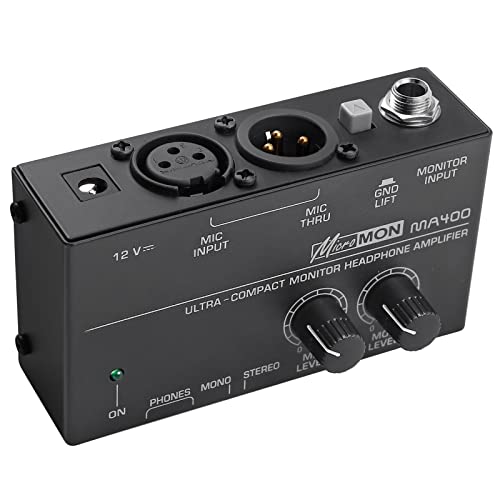
- Phantom power for condenser microphones
- Independent mic and mixer volume controls
- 6.35mm and 3.5mm headphone outputs
Best For: Portable microphone and mixer monitoring
Personal Stage Monitor
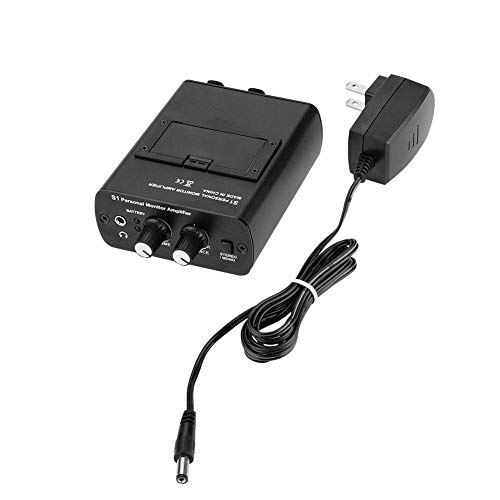
- Built for personal in-ear monitoring
- Listed XLR compatibility
- Mono and stereo output modes
Best For: Performers needing a personal IEM monitor
Battery Stage Amp

- XLR and 1/4-inch TRS inputs
- Stereo/mono switch for flexible monitoring
- Battery powered with belt clip
Best For: Cordless personal monitoring on stage
Best Portable Dual-Headphone Pick
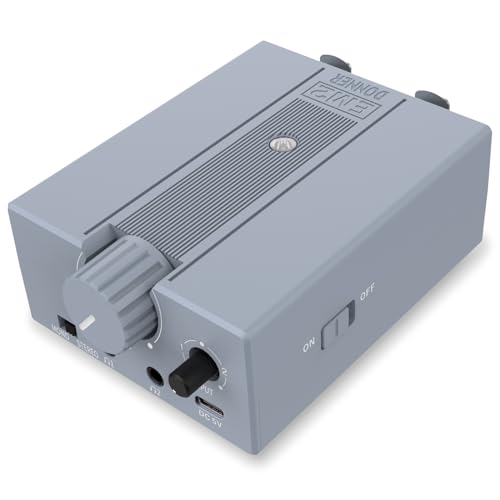
- Dual headphone outputs for shared monitoring
- XLR and TRS inputs with locking connectors
- Up to 12 hours of rechargeable battery life
Best For: Performers needing two simultaneous headphone connections
Best Battery-Swappable Performer Pick
Zenolix P2 Portable IEM Amplifier
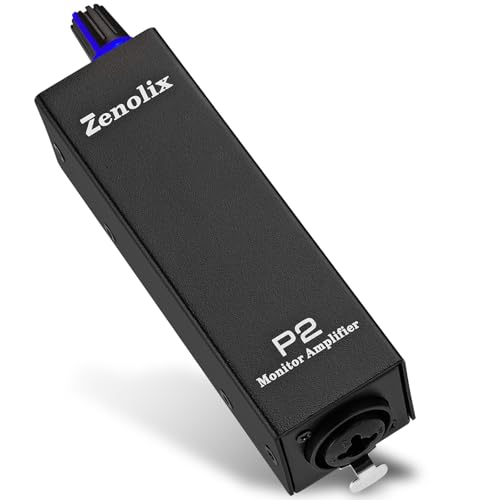
- Locking XLR/TRS inputs and 3.5mm output
- Stereo/mono modes for varied setups
- Tool-free access to replaceable AAA batteries
Best For: Performers who need quick battery changes on the go
Best Simple Rechargeable Monitor Amp
Donner EM1 Portable Monitor Amplifier

- Locking XLR and TRS inputs
- Stereo/mono source switching
- Up to 12 hours of rechargeable use
Best For: Individual performers seeking compact personal monitoring
Best Balanced Desktop Pick – Fosi Audio ZH3
For shoppers seeking headphone amplifiers with XLR output, the Fosi Audio ZH3 is a versatile desktop option that combines a DAC, headphone amplifier, and preamp. It supports USB, optical, coaxial, and RCA inputs, plus balanced XLR and 4.4mm outputs.
Best For: Desktop listeners who need a feature-rich DAC, headphone amp, and balanced preamp for headphones or active speakers.
Pros:
- Offers XLR, RCA, 4.4mm balanced, and 6.35mm outputs.
- Supports PCM up to 768kHz/32-bit and DSD512.
- Provides three gain levels for headphones from 16 to 300 ohms.
- Includes bass and treble adjustment, six filters, and swappable op-amps.
Cons:
- RCA and XLR output levels differ significantly, so system matching matters.
- EQ adjustments apply only to the headphone output.
The ZH3 is the most complete choice here for a balanced desktop setup. Its broad connectivity and high output power make it flexible, while the output-level and EQ limitations are worth considering before connecting other equipment.
Best Portable IEM Option – FZONE P4 In-Ear Monitor Amp
Among headphone amplifiers with XLR output, the FZONE P4 is designed for performers who need a compact personal monitor amp rather than a desktop listening component. It accepts XLR or TRS input and provides a standard 3.5mm stereo headphone output.
Best For: Musicians, drummers, and keyboardists who need portable wired in-ear monitoring with mono or stereo operation.
Pros:
- Includes XLR/TRS input with a locking mechanism.
- Offers selectable mono or stereo monitoring.
- Runs for up to 12 hours on two included AAA batteries.
- Features a reinforced belt clip and compact aluminum enclosure.
Cons:
- Its headphone output is a 3.5mm jack rather than an XLR output.
- It is intended for personal IEM monitoring, not as a desktop DAC or preamp.
The P4 makes sense when portability and stage practicality matter most. Its XLR connection is on the input side, while the output is for standard wired in-ear headphones through the 3.5mm jack.
Best Compact Balanced Preamp – AH-P01X XLR Balanced Preamp
The AH-P01X is a compact signal preamplifier for systems where a weak source needs line-level gain. It fits the headphone amplifiers with XLR output category through its balanced XLR input and output connections, while also supporting RCA and 3.5mm devices.
Best For: Users who need a small, adjustable-gain preamp to connect varied audio sources to headphones, receivers, mixers, or other downstream equipment.
Pros:
- Provides XLR balanced, RCA, and 3.5mm inputs and outputs.
- Offers 20dB, or 10-times, signal amplification.
- Includes a front volume adjustment knob.
- Uses a NE5532 dual op amp and noise-reduction circuit design.
Cons:
- It is a preamp and cannot drive passive speakers as a power amplifier.
- The supplied adapter is 12V, although the unit’s minimum operating voltage is 5V.
- It is a signal preamp rather than a dedicated high-power headphone amplifier.
This model is best viewed as a flexible gain stage and connection converter. It can serve headphone-related setups, but buyers wanting substantial headphone drive power or a dedicated DAC may need a different component.
Best Stage Mix Control – Coda IEM-Pro Dual-Channel Amp
The Coda IEM-Pro is a portable dual-channel monitor amplifier for performers who want direct control over a personal stage mix. It accepts locking XLR or TRS connections and supports mono, dual-mono, and stereo monitoring modes.
Best For: Live performers and rehearsal musicians who need portable mix panning, more-me control, and limiter-assisted in-ear monitoring.
Pros:
- Accepts both XLR and TRS inputs, with locking XLR connectors.
- Supports mono, dual mono, and stereo mix configurations.
- Allows users to pan instruments, metronomes, and auxiliary tracks.
- Includes a built-in limiter and compact belt-clip-friendly design.
Cons:
- The XLR connectors are inputs; the supplied notes do not identify an XLR output.
- It is a battery-powered personal monitor amp rather than a desktop DAC or preamp.
The IEM-Pro stands out for stage-oriented control rather than broad home-audio connectivity. Its flexible monitoring modes and limiter make it a practical fit for performers using in-ear monitors in loud environments.
Compact XLR Monitor – LiNKFOR MA400
The LiNKFOR MA400 is a practical choice among headphone amplifiers with XLR output needs, especially when you want microphone and mixer monitoring in a compact desktop or stage unit. It provides phantom power, independent volume controls, and both 6.35mm and 3.5mm headphone outputs.
Best For: Musicians, small studio setups, and performers needing flexible XLR microphone monitoring with common headphone connections.
Pros:
- Supports condenser microphones with phantom power and a low-noise direct connection.
- Independent microphone and mixer/Hi-Fi volume controls add useful flexibility.
- Includes 1/4-inch and 1/8-inch headphone outputs, plus mono/stereo switching.
- Compact metal housing and included 12V power adapter suit portable use.
Cons:
- Its single channel and 60mW output are geared toward personal monitoring rather than larger headphone distribution.
- Requires the included 12V DC power supply rather than battery operation.
Choose the MA400 if you value phantom power, ground-lift functionality, and dual headphone sizes in a small package. Its feature set is particularly useful for simple microphone-plus-mixer monitoring arrangements.
Personal Stage Monitor – ANLEON S1 IEM Amplifier
The ANLEON S1 is a personal in-ear monitor amplifier designed for performers who need a straightforward way to hear their stage mix. For shoppers comparing headphone amplifiers with XLR output connections, its listed XLR compatibility and mono/stereo output modes make it relevant to live performance setups.
Best For: Drummers, keyboardists, guitarists, vocalists, and bass players using a personal IEM monitoring system.
Pros:
- Designed for personal in-ear monitoring during performance.
- Listed XLR connectivity supports integration with compatible professional audio equipment.
- Offers mono and stereo audio output modes.
- Solid-state amplifier design and compact 14.08-ounce weight suit personal use.
Cons:
- The supplied notes do not specify phantom power or detailed headphone output specifications.
- Its single output channel may be limiting for more complex monitoring systems.
The S1 is best considered a focused personal IEM amplifier rather than a general-purpose headphone distribution unit. Confirm the exact connector layout and power requirements before matching it to your existing stage rig.
Battery Stage Amp – Bolanle P2 Portable IEM Amp
The Bolanle P2 stands out among headphone amplifiers with XLR output connections for its portable, battery-powered design. It accepts balanced XLR or 1/4-inch TRS inputs, switches between stereo and mono monitoring, and includes a belt clip for hands-free stage use.
Best For: Drummers and other live performers who need cordless personal monitoring from a mixer, interface, or PA system.
Pros:
- Accepts both XLR balanced and 1/4-inch TRS inputs without adapters.
- Stereo/mono switching supports immersive monitoring or single-ear operation.
- Runs on two AAA batteries for cordless use without phantom power or USB cables.
- All-metal chassis, belt clip, and line out are useful for stage and rehearsal work.
Cons:
- Battery operation requires keeping replacement AAA batteries available.
- The supplied specifications identify a single output channel.
- Its compact personal-monitoring design may not replace a multi-channel headphone amplifier.
The P2 is a strong fit when mobility matters more than rack-style expansion. Its balanced input options and mode switch make it adaptable for live monitoring, while the belt clip keeps the unit accessible during performance.
Best Portable Dual-Headphone Pick – Donner EM2
The Donner EM2 is a practical choice for shoppers comparing headphone amplifiers with XLR output-related connectivity for personal monitoring. It accepts two balanced XLR or 1/4-inch TRS inputs, supports stereo or mono operation, and can drive headphones rated from 8Ω to 250Ω.
Best For: Performers and monitor users who need two simultaneous headphone connections in a compact, rechargeable belt-pack design.
Pros:
- Two XLR and 1/4-inch TRS inputs with locking connectors.
- Two independent headphone outputs can be used at the same time.
- Rechargeable Li-ion battery provides up to 12 hours of use.
- Mono/stereo switching and mix control add setup flexibility.
Cons:
- It does not support microphones.
- Its 3.5mm headphone-oriented design may not suit users seeking an XLR headphone output.
The EM2 stands out when dual monitoring, impedance flexibility, and battery life matter more than having an XLR output for headphones. Its clip-on construction also makes it well suited to mobile performance setups.
Best Battery-Swappable Performer Pick – Zenolix P2 Portable IEM Amplifier
The Zenolix P2 is a compact option for performers researching headphone amplifiers with XLR output-related features. Its locked XLR/TRS inputs, 3.5mm headphone output, and selectable stereo/mono modes make it adaptable to rehearsals and live monitoring.
Best For: Guitarists, drummers, bass players, keyboardists, and other performers who value quick battery changes during use.
Pros:
- Combines locking XLR and TRS inputs with a 3.5mm headphone output.
- Stereo/mono switching accommodates different audio setups.
- Metal enclosure and belt clip are suited to portable use.
- Tool-free battery compartment allows fast replacement of its two AAA batteries.
Cons:
- Two AAA batteries are required and are not included.
- It provides a 3.5mm headphone output rather than an XLR headphone output.
- The supplied notes do not specify rechargeable operation or battery runtime.
The P2 is a sensible pick when input security and easy battery access are priorities. The RGB-lit volume control may also be useful for making adjustments in darker performance environments.
Best Simple Rechargeable Monitor Amp – Donner EM1 Portable Monitor Amplifier
The Donner EM1 offers a straightforward solution for shoppers comparing headphone amplifiers with XLR output-related connectivity. It uses XLR and TRS inputs with locking hardware, sends audio to a 3.5mm output, and is designed for portable in-ear or on-ear monitoring.
Best For: Individual performers who want a compact rechargeable monitor amplifier with simple volume control.
Pros:
- Accepts XLR and TRS input connections with a locking mechanism.
- Supports stereo or mono source selection.
- Rechargeable Li-ion battery runs for up to 12 hours per charge.
- Metal belt clip makes it easy to carry during performances.
Cons:
- It does not support microphones.
- The supplied information lists a 3.5mm output, not an XLR headphone output.
- Unlike the EM2, the notes do not mention dual headphone outputs or a mix control.
The EM1 keeps the feature set focused on personal monitoring, portability, and rechargeable operation. Choose it for a simpler one-person setup rather than a system requiring multiple headphone feeds.
How We Picked the Best Headphone Amplifiers with Xlr Output
We focused on models that support XLR connectivity directly or are designed for balanced audio and professional monitoring workflows. The lineup includes desktop headphone amps, compact personal IEM amplifiers, and portable units for musicians. We considered input and output flexibility, headphone connection options, stereo/mono switching, gain and volume control, power requirements, portability, and compatibility with common headphones and in-ear monitors.
Because specifications and included accessories can vary by seller or revision, verify the current product listing before buying—especially the exact XLR direction, connector type, power supply, and whether cables are included.
Quick Comparison
| Best For | What to Prioritize | Typical Format |
|---|---|---|
| Desktop listening | DAC quality, multiple digital inputs, balanced preamp outputs | USB, optical, coaxial, RCA, XLR |
| Live musicians | Portable design, durable clip, stereo/mono switching | XLR/TRS input and 3.5mm output |
| Studio monitoring | Clean gain, independent volume control, multiple outputs | XLR microphone or line input |
| IEM users | Low noise, compact size, suitable output impedance | Portable analog amplifier |
Key Buying Factors for Headphone Amplifiers with Xlr Output
Confirm the XLR Connection Type
“XLR output” can mean a balanced line output, a microphone-style input, or an XLR/TRS connection used for an instrument or monitor feed. Check the signal path carefully. A unit with XLR input is not automatically an amplifier with an XLR headphone output.
Match the Amp to Your Headphones
Check supported impedance, sensitivity, and gain range. High-impedance headphones may need more voltage, while sensitive IEMs benefit from a quiet amplifier with modest gain. Excessive gain can make volume adjustment less precise and expose background noise.
Choose the Right Power and Portability
Desktop models generally offer more connectivity and continuous power. Rechargeable or battery-powered IEM amplifiers are better for rehearsals, stage monitoring, and mobile use. Consider charging time, battery access, belt-clip durability, and whether the amplifier can operate while charging.
Look at Outputs and Controls
Useful features include 3.5mm and 6.35mm headphone outputs, stereo/mono switching, separate volume controls, balanced preamp outputs, and gain adjustment. Make sure the output configuration suits your headphones, mixer, interface, or powered speakers.
Who Should Buy Which Headphone Amplifiers with Xlr Output?
Choose a desktop DAC/headphone amp if you want one central unit for computer, optical, coaxial, and analog sources. These are best for home listening and broader system integration.
Choose a portable IEM amplifier if you are a drummer, guitarist, vocalist, keyboardist, or live performer who needs personal monitor control from an XLR or TRS feed.
Choose a compact studio or microphone amplifier if you need straightforward level control for headphones without adding a large interface. Prioritize clean gain, compatible connectors, and convenient output access.
Before ordering, compare the amplifier’s connector layout with your existing cables and confirm whether your source provides line-level, microphone-level, or instrument-level output.