The best headphone amplifiers with low noise make demanding headphones sound cleaner, fuller, and more controlled without adding distracting hiss. The right model depends on your headphones, source equipment, listening environment, and need for portability.
Our 2026 roundup covers compact desktop amps, multi-channel distribution units, gaming DAC amps, and rechargeable portable options, with practical choices for casual listeners, musicians, and critical audiophiles.
Best 10 Headphone Amplifiers with Low Noise Picks for 2026
Best Ultra-Low-Noise Performance

- 0.3uV noise and 144dB dynamic range
- Up to 2500mW output at 32Ω
- Three gain settings for varied headphones
Best For: Audiophiles seeking extremely quiet, high-power headphone amplification
Best Gaming DAC Combo
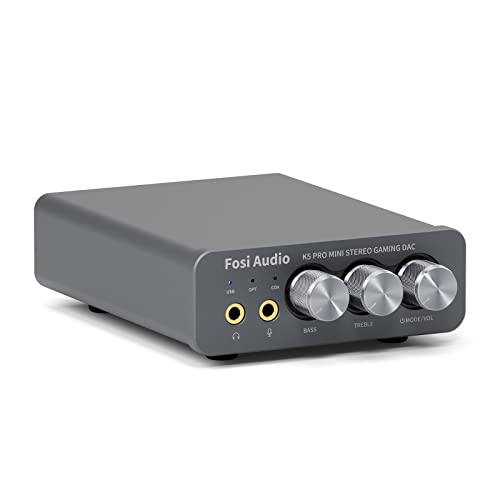
- USB-C, optical, and coaxial inputs
- Microphone input and tone controls
- Up to 1000mW at 16Ω
Best For: Gamers wanting a low-noise DAC, amp, and microphone setup
Best for Shared Listening
Mackie HM-4 Headphone Amplifier

- Four independent headphone outputs
- Separate volume for each listener
- Compact plug-and-play design
Best For: Rehearsals, tracking sessions, and shared headphone monitoring
Best Flexible Desktop Amplifier

- 0.3uVrms ultra-low noise
- 6.35mm and 3.5mm outputs
- RCA preamp input and output
Best For: Quiet desktop music and gaming systems with active monitors
Best Multi-Listener Pick
LZSIG 4-Channel Headphone Amplifier
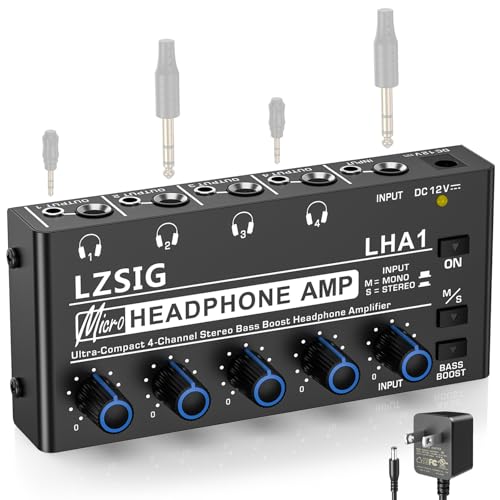
- Four independently controlled headphone outputs
- Low-noise circuitry with bass boost
- Works with 3.5mm and 6.35mm plugs
Best For: Shared studio monitoring and group listening
Best Desktop Hi-Fi Value
Douk Audio U3 Class A Headphone Amp

- Class A design with low-distortion output
- Supports many high-impedance headphones
- Upgradeable op-amp socket and compact size
Best For: Home and office desktop audio systems
Best Portable Option
Neoteck 16–300Ω Headphone Amplifier
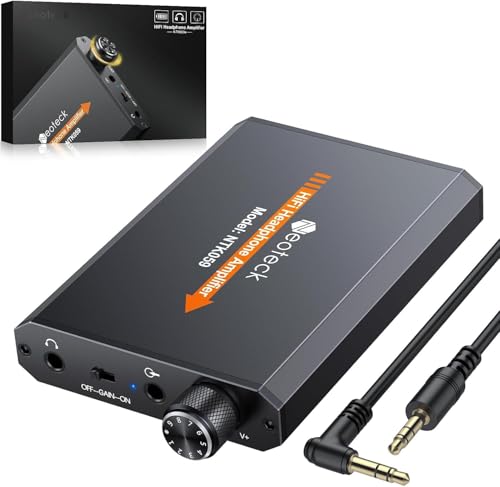
- Supports headphones from 16Ω to 300Ω
- Low-noise specifications with two-stage gain
- 12+ hours of rechargeable battery life
Best For: Portable listening with phones and laptops
Flexible Desktop Pick
TNP Portable 3.5mm Headphone Amplifier

- 3.5mm or RCA input
- 3.5mm and 6.3mm outputs
- Analog volume control
Best For: Home audio and component systems needing flexible connections
Long-Commute HiFi Pick
Neoteck Bass Boost Headphone Amplifier

- SNR above 100dB
- More than 8 hours of battery life
- Bass boost switch
Best For: Portable listeners using 16–600Ω headphones
High-SNR Compact Pick
LVY Rechargeable Headphone Amplifier
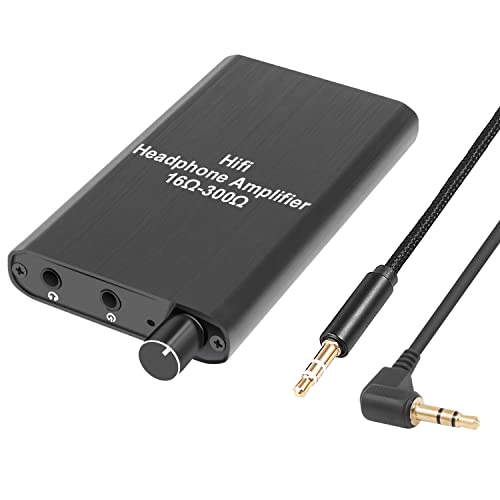
- SNR above 120dB
- Two-stage gain switch
- Supports 16–300Ω headphones
Best For: Portable 3.5mm setups needing adjustable gain
Best Ultra-Low-Noise Performance – TOPPING L30 II NFCA
For listeners comparing headphone amplifiers with low noise, the TOPPING L30 II stands out with its specified 0.3uV noise floor, 144dB dynamic range, and very low THD+N. Its three gain settings and high output capability make it a flexible choice for sensitive IEMs as well as demanding full-size headphones.
Best For: Audiophiles who want exceptionally quiet operation, broad headphone compatibility, and substantial output power.
Pros:
- 0.3uV ultra-low noise and 144dB dynamic range
- Up to 2500mW output power at 32Ω
- Three gain settings, including a -14dB option for sensitive headphones
- Can also operate as a preamp for active speakers
Cons:
- Requires a separate DAC or source for digital audio conversion
- Its high-performance specifications may exceed the needs of casual listeners
The L30 II is the strongest technical pick here for a nearly silent background and demanding headphone loads. Volume memory and dual-output functionality add useful convenience for desktop setups.
Best Gaming DAC Combo – Fosi Audio K5 Pro
The Fosi Audio K5 Pro combines a DAC, headphone amplifier, microphone input, and tone controls in one compact desktop unit. For shoppers seeking headphone amplifiers with low noise for gaming or everyday listening, its optimized circuit, 110dB SNR, and multiple digital inputs provide a practical all-in-one solution.
Best For: Gamers and desktop listeners who need microphone support, bass and treble controls, and USB, optical, or coaxial connectivity.
Pros:
- Supports USB-C, optical, and coaxial inputs
- Includes microphone input plus bass and treble controls
- Drives headphones from 16Ω to 300Ω
- Provides up to 1000mW at 16Ω and 500mW at 32Ω
Cons:
- Its stated 0.003% THD is higher than the TOPPING models in this roundup
- USB audio is limited to 24-bit/96kHz, while optical and coaxial support up to 24-bit/192kHz
The K5 Pro is less focused on ultimate amplifier measurements than the dedicated TOPPING units, but it offers more built-in functionality. It is a convenient choice when gaming features and flexible connections matter as much as clean output.
Best for Shared Listening – Mackie HM-4 Headphone Amplifier
The Mackie HM-4 is a straightforward four-channel headphone amplifier for rehearsals, tracking sessions, and shared listening. While it does not provide published ultra-low-noise measurements like some dedicated audiophile models, its plug-and-play design gives each listener independent volume control from a single source.
Best For: Small recording setups, rehearsal spaces, and desktop sessions where four people need headphone access.
Pros:
- Four independent headphone outputs
- Individual level control for each listener
- Accepts a 1/4-inch or 1/8-inch source output
- Compact metal enclosure can be mounted with Velcro
Cons:
- Does not list a specific noise-floor or distortion rating
- Designed for distribution rather than high-powered audiophile amplification
- Uses 1/4-inch output connectors, so adapters may be needed
The HM-4 is the practical choice when the priority is sending one source to multiple headphones. Its independent controls and compact construction make it useful for collaborative monitoring, though buyers specifically prioritizing measured low noise may prefer the TOPPING options.
Best Flexible Desktop Amplifier – TOPPING L30II NFCA
The TOPPING L30II is a compact linear headphone amplifier and preamp with a specified 0.3uV noise level and 141dB dynamic range. Its 6.35mm and 3.5mm headphone support, three gain settings, and RCA input/output make it a flexible option for listeners comparing headphone amplifiers with low noise.
Best For: Desktop music and gaming systems that need quiet amplification, broad headphone compatibility, and preamp functionality.
Pros:
- 0.3uVrms ultra-low noise for a quiet background
- Three gain settings from -9.9dB to 9.5dB
- Supports both 6.35mm and 3.5mm headphone connections
- Can function as a preamp with RCA input and output
Cons:
- Requires a separate DAC for digital source conversion
- Its listed warranty is 12 months, shorter than the other TOPPING listing here
- Output specifications are less detailed than those supplied for the newer L30 II listing
The L30II offers the core benefits of a quiet, powerful desktop amplifier while adding useful preamp flexibility. It is a strong fit for a compact DAC-and-amp stack used for both headphones and active monitors.
Best Multi-Listener Pick – LZSIG 4-Channel Headphone Amplifier
For shared monitoring, the LZSIG LHA2 is a practical choice among headphone amplifiers with low noise. Its four independently controlled outputs support up to four pairs of 32–100Ω headphones, while the metal chassis and compatibility with 3.5mm and 6.35mm plugs suit home studios, stages, and desktop setups.
Best For: Home studios, group listening, and monitoring sessions requiring four independently adjustable headphone feeds.
Pros:
- Four outputs with separate volume controls help each listener set a comfortable level.
- Five low-noise ROHM operational amplifiers are designed for low-noise, low-distortion sound.
- Supports both 3.5mm and 6.35mm TS/TRS headphones and input connections.
- Includes bass boost, stereo/mono switching, and a durable metal chassis.
Cons:
- It is a headphone amplifier and distributor, not a mixer.
- Its stated headphone support is limited to 32–100Ω models.
The LHA2 stands out when several people need to monitor one source without sharing a single headphone output. Choose it for flexible multi-headphone use rather than for mixing multiple sources.
Best Desktop Hi-Fi Value – Douk Audio U3 Class A Headphone Amp
The Douk Audio U3 is a compact option for listeners seeking headphone amplifiers with low noise on a home or office desktop. Its Class A output stage, RCA input, 3.5mm and 6.35mm headphone compatibility, and stated support for many high-impedance models make it a flexible small-system amplifier.
Best For: Desktop listeners who want a compact amplifier for demanding headphones and music-focused listening.
Pros:
- Class A transistor output design is specified for low distortion and a smooth, warm presentation.
- Can drive many high-impedance headphones, including HD600, HD650, K701, DT880, and similar models.
- Accepts a wide 5–20V DC input range and is rated for up to 1300mW output power.
- Pluggable op-amp socket allows experimentation with compatible op-amp upgrades.
Cons:
- It is a freestanding desktop unit rather than a portable amplifier.
- The notes specify RCA input, so users may need an appropriate source connection or adapter.
With its small footprint and upgradeable op-amp design, the U3 is appealing for a desktop system where sound character and headphone drive matter. It is best suited to stationary listening rather than travel.
Best Portable Option – Neoteck 16–300Ω Headphone Amplifier
The rechargeable Neoteck is a useful pick among headphone amplifiers with low noise for mobile listening. It supports headphones from 16–300Ω, includes two-stage gain, and combines a smartphone-sized aluminum body with more than 12 hours of stated battery life.
Best For: Travelers and smartphone, tablet, laptop, or portable-player users who need extra headphone drive and adjustable gain.
Pros:
- Broad 16–300Ω compatibility covers low-, mid-, and high-impedance headphones.
- Stated SNR above 120dB and THD+N of 0.0003% support a clean, low-noise signal.
- Two-stage gain switch, volume control, and 3.5mm input/output add practical flexibility.
- Rechargeable 1500mAh battery provides more than 12 hours of continuous use.
Cons:
- It uses 3.5mm connections rather than the larger 6.35mm headphone format.
- It is battery-powered, so it requires periodic recharging.
The Neoteck makes the most sense when portability is as important as noise performance. Its gain switch and wide impedance range also make it a versatile companion for headphones that sound underpowered from a mobile device.
Flexible Desktop Pick – TNP Portable 3.5mm Headphone Amplifier
If you need headphone amplifiers with low noise for home audio or desktop listening, the TNP model offers flexible connectivity and straightforward analog control. It supports 3.5mm or RCA input, includes both 3.5mm and 6.3mm outputs, and is powered by a 5V source.
Best For: Home audio systems, studios, music stores, and listeners who need RCA input plus multiple headphone output sizes.
Pros:
- Supports 3.5mm or RCA input, with 3.5mm and 6.3mm stereo outputs.
- Analog volume knob and power switch allow precise, convenient adjustments.
- Compact 70-gram design includes a power adapter and LED power indicator.
Cons:
- Designed for 5V power, so it is less suited to completely cable-free portable use.
- Only one input should be connected at a time.
The TNP is a practical choice when you want an uncomplicated amplifier for a component system or computer setup. Its broad connection options make it more versatile than a basic inline portable amp.
Long-Commute HiFi Pick – Neoteck Bass Boost Headphone Amplifier
For headphone amplifiers with low noise that can travel with you, the Neoteck combines a rechargeable battery with a stated SNR above 100dB and THD+N of 0.0005%. Its 3.5mm AUX design works with phones, laptops, MP3 players, and other compatible devices.
Best For: Portable listening, long commutes, and users who want a bass boost switch with support for 16–600Ω headphones.
Pros:
- Offers an SNR above 100dB and stated THD+N of 0.0005%.
- Bass switch provides an option for enhanced low-end performance.
- Rechargeable battery runs for more than 8 hours and the aluminum body is compact.
Cons:
- Uses 3.5mm AUX input and output only.
- The manufacturer advises against using it while charging.
The Neoteck is a strong fit for listeners who value portability and extended battery life. Its bass control adds flexibility, while the published noise and distortion specifications support a cleaner listening-focused setup.
High-SNR Compact Pick – LVY Rechargeable Headphone Amplifier
The LVY is a compact option for shoppers comparing headphone amplifiers with low noise for phones, computers, and other 3.5mm devices. It features a stated SNR above 120dB, distortion of 0.004%, and a two-stage gain switch for adapting the signal to different headphones.
Best For: Portable 3.5mm listening with 16–300Ω headphones and users who want adjustable gain.
Pros:
- Two-stage gain switch helps optimize performance for connected headphones.
- Published SNR is above 120dB, with stated distortion of 0.004%.
- Small matte-finish body works with MP3 players, phones, laptops, and computers.
Cons:
- Battery use is rated at more than 5 hours, shorter than some portable alternatives.
- Its supported load impedance is 16–300Ω.
- It uses 3.5mm AUX input and output rather than broader connection options.
The LVY makes sense when compact size and gain adjustment matter more than maximum battery runtime. Its high stated SNR and broad 3.5mm compatibility make it a useful everyday companion for compatible headphones.
How We Picked the Best Headphone Amplifiers with Low Noise
We focused on models that offer a useful combination of clean output, practical connectivity, headphone compatibility, and straightforward controls. Important considerations included published noise and distortion specifications where available, gain options, output power, input and output types, channel count, portability, and value.
Because amplifier performance depends on the headphones and source, specifications should be treated as part of the decision rather than the whole story. A powerful desktop amplifier may be ideal for high-impedance headphones but unnecessary for efficient in-ear monitors, while a portable model may prioritize convenience over maximum output.
Quick Comparison
| Best For | What to Look For |
|---|---|
| Critical listening | Very low noise, low distortion, precise gain control, and clean line-level connections |
| Gaming and computer audio | Built-in DAC functionality, simple volume control, and enough power for your headset |
| Multiple listeners | Four outputs, independent volume controls when available, and reliable power delivery |
| Portable use | Rechargeable battery, compact design, low output impedance, and a 3.5mm connection |
| Budget upgrades | Useful gain, bass controls, compatible inputs, and easy desktop placement |
Key Buying Factors for Low-Noise Headphone Amplifiers
Noise, Gain, and Sensitivity
Noise is easiest to hear with sensitive headphones and in-ear monitors. Look for a low-noise design and selectable gain so you can use the lowest suitable setting. Excessive gain can make volume control less precise and may reveal background hiss.
Power and Headphone Impedance
Check whether the amplifier can provide sufficient voltage and current for your headphones. High-impedance models often benefit from greater voltage swing, while low-impedance headphones need careful volume control and a low output impedance to avoid tonal changes.
Inputs, Outputs, and Compatibility
Confirm that the amplifier accepts your source, whether that is RCA, 3.5mm, USB, or another connection. A DAC amp can connect directly to a computer, while a traditional analog amplifier needs a separate DAC or line-level source. Also verify whether included adapters cover 3.5mm and 6.35mm plugs.
Controls and Extra Features
Bass boost, multiple outputs, independent channel volume, and line output can be useful, but they should not replace clean basic performance. For desktop systems, consider size, power supply requirements, and whether the unit can remain connected to powered speakers or another amplifier.
Who Should Buy Which Headphone Amplifiers with Low Noise?
Choose a precision desktop amp if you want the cleanest signal, flexible gain, and enough headroom for demanding headphones. Choose a DAC headphone amp for a simple computer or gaming setup with fewer separate components. Choose a multi-channel amplifier when several people need to listen at once or you are distributing one source in a studio or rehearsal space.
Choose a compact mini amp for an affordable desktop upgrade, especially when you already have a suitable DAC or line-level source. Choose a portable rechargeable amp if you regularly listen from a phone, MP3 player, or laptop and need more output than the device provides. For sensitive headphones, prioritize low noise and conservative gain over headline power figures.