Video editing workflows demand more than raw capacity. You need dependable ways to clone project drives, move footage between disks, and keep working files accessible without adding unnecessary downtime.
We selected 10 standout options spanning dedicated duplicators, dual- and multi-bay docking stations, and desktop storage drives. The right choice depends on your drive format, transfer-speed needs, capacity, and whether you need true offline cloning or computer-assisted copying.
Best 10 Hard Drive Duplicators for Video Editing Picks for 2026
Most Versatile
ICY BOX Triple-Bay NVMe and SATA Cloner

- Supports NVMe and 2.5/3.5-inch SATA drives
- Three tool-free bays for simultaneous access
- 10Gbps USB-C connectivity and offline cloning
Best For: Editors managing mixed NVMe and SATA media
Best for IT-Grade Workflows
StarTech SATA Duplicator and Eraser

- Clones 2.5/3.5-inch SATA HDDs and SSDs
- Includes Copy & Compare verification
- Provides multiple DoD/NIST-aligned erase modes
Best For: SATA-based post-production support and drive management
Best Simple SATA Dock

- Offline SATA cloning without a computer
- Two drives can be accessed simultaneously
- Tool-free support for 2.5/3.5-inch drives
Best For: Straightforward SATA footage transfers and upgrades
Best for Repeated SATA Copying

- Standalone operation needs no computer
- Supports 2.5/3.5-inch SATA HDDs and SSDs
- Up to 90MBps copying and DoD sanitization
Best For: Recurring SATA duplication and drive erasure
Budget Clone-and-Dock Pick
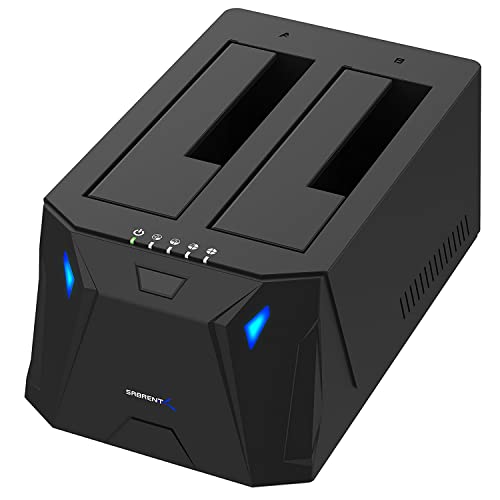
- 2.5-inch and 3.5-inch SATA HDD/SSD support
- Offline cloning without drivers
- USB 3.0 connectivity up to 5Gbps
Best For: Compact SATA drive access and basic offline cloning
High-Capacity Storage Pick

- 6TB desktop storage capacity
- USB 3.0 with USB 2.0 compatibility
- Plug-and-play Windows PC setup
Best For: Large project-file storage alongside a duplicator
Feature-Rich Duplicator Pick
MAIWO Dual-Bay 48TB SATA Cloner

- Up to 48TB across two SATA bays
- Offline cloning with progress indicators
- Three USB 3.0 hub ports
Best For: High-capacity cloning and expanded desktop connectivity
Best Bus-Powered Storage

- 8TB capacity for video files and backups
- Bus-powered USB-C connection
- Two-year warranty and Rescue Data Recovery Services
Best For: High-capacity external storage without a required wall outlet
Best Multi-Drive Cloner

- 1:4 offline duplication without a computer
- Five bays and up to 100TB stated capacity
- Supports 2.5-inch and 3.5-inch SATA drives
Best For: Batch cloning and high-volume media storage workflows
Best Compact Dual-Bay Cloner

- Offline one-to-one drive cloning
- Supports HDDs and SSDs up to 22TB per drive
- USB-C and USB-A connectivity with 5Gbps transfers
Best For: Occasional cloning and backup of individual video project drives
Most Versatile – ICY BOX Triple-Bay NVMe and SATA Cloner
For editors managing footage across NVMe, SATA SSD, and hard drives, the ICY BOX is one of the most flexible hard drive duplicators for video editing. Its three tool-free bays support offline cloning without a computer, while USB 3.2 Gen 2 connectivity reaches up to 10 Gbps for docked transfers.
Best For: Video editors and production teams working with mixed NVMe and SATA storage.
Pros:
- Supports M.2 PCIe NVMe and 2.5-inch or 3.5-inch SATA drives.
- Three independent bays allow multiple drives to be connected at once.
- One-touch offline cloning requires no software or computer setup.
- Includes USB-C and USB-A connectivity plus a 24-month warranty.
Cons:
- Its plastic enclosure may be less rugged than a metal professional duplicator.
- Offline cloning is designed for supported drive-to-drive workflows rather than general editing.
The ICY BOX stands out when a video workflow includes several drive formats. Its broad compatibility and three-bay layout make it a strong choice for studios that regularly migrate or access different storage types.
Best for IT-Grade Workflows – StarTech SATA Duplicator and Eraser
The StarTech SATDUP11 is a focused option among hard drive duplicators for video editing when your workflow uses 2.5-inch or 3.5-inch SATA media. It combines standalone cloning with drive-erasure modes, making it useful for backups, deployments, recovery, and preparing reused drives.
Best For: Editors, technicians, and post-production teams using SATA drives and needing verification or sanitization features.
Pros:
- Supports 2.5-inch and 3.5-inch SATA HDDs and SSDs of any capacity.
- Offers sector-by-sector, system-and-file, and all-partitions duplication modes.
- Includes four erase modes, including a three-pass DoD/NIST SP 800-88 Clear option.
- Copy & Compare can verify the cloned target after duplication.
Cons:
- Does not directly support NVMe without a separately sold adapter.
- Its 1:1 design handles two drives at a time.
With a menu display, verification function, and dedicated erase modes, the SATDUP11 is better suited to controlled SATA-based production support than to a mixed-format editing bench.
Best Simple SATA Dock – SABRENT Dual-Bay USB-C Cloner
The SABRENT EC-CH2B keeps drive duplication straightforward for editors using standard SATA storage. It can clone offline at the press of a button, or connect to a computer so both installed drives appear separately for file transfers and direct access.
Best For: Video editors who use bare 2.5-inch or 3.5-inch SATA drives and want a simple dual-bay dock.
Pros:
- Offline 1:1 cloning requires no computer and runs up to 60MBps.
- Both bays can be read and written simultaneously when connected over USB.
- Tool-free, hot-swappable design accommodates 2.5-inch and 3.5-inch SATA drives.
- USB-C connection supports plug-and-play use on Windows and Mac.
Cons:
- Supports SATA only; M.2, NVMe, IDE/PATA, and Molex-equipped drives are not supported.
- The target drive must be the same size as or larger than the source.
- Offline cloning is limited to 60MBps by design.
This dock is a practical choice for SATA-based footage transfers and drive upgrades. It is less suitable for editors who need NVMe support or higher-speed offline duplication.
Best for Repeated SATA Copying – Systor Standalone Duplicator
The Systor SYS101HS-DP is a standalone SATA duplicator for teams that repeatedly copy or sanitize 2.5-inch and 3.5-inch drives. It needs no computer or software and maintains a stated speed of up to 90MBps even when the number of loaded drives increases.
Best For: Small production operations and businesses performing recurring SATA drive duplication or erasure.
Pros:
- Operates independently without a computer or software.
- Supports both 2.5-inch and 3.5-inch SATA HDDs and SSDs without an adapter.
- Copies systems and files or entire drives at up to 90MBps.
- Includes DoD 5220.22-M-compliant drive sanitization.
Cons:
- Its SATA compatibility does not cover NVMe or M.2 drives.
- The product information describes a single-source duplicator rather than a multi-format dock.
- The listed warranty is one year for parts, with three years of labor.
The Systor is a sensible fit for repeatable SATA cloning and erasure tasks. Its standalone operation and consistent stated transfer rate are useful when a workflow values simple, dedicated processing over broad interface support.
Budget Clone-and-Dock Pick – Sabrent Dual-Bay SATA Cloner
For shoppers comparing hard drive duplicators for video editing, the SABRENT EC-HD2B is a straightforward dual-bay option for reading, copying, and swapping standard 2.5-inch or 3.5-inch SATA drives. It supports offline cloning without drivers and connects to a computer over USB 3.0.
Best For: Editors and home users who need a compact SATA dock with offline duplication and support for drives up to 10TB.
Pros:
- Supports both 2.5-inch and 3.5-inch SATA HDDs and SSDs.
- Offline cloning works without a computer or additional drivers.
- USB 3.0 transfer speeds reach up to 5Gbps.
- Supports up to 20TB of combined storage capacity.
Cons:
- Offline cloning is listed at up to 60Mbps, slower than its USB-connected transfer rating.
- Supports SATA drives only, rather than other drive interfaces.
The EC-HD2B is a practical choice when you want one device for drive access and basic duplication. Its dual-bay design and broad SATA form-factor support make it useful for managing editing-media drives, while the separate cloning and USB speed ratings are worth keeping in mind.
High-Capacity Storage Pick – WD Elements 6TB Desktop Drive
Although it is not a duplicator, the WD Elements Desktop is a useful companion for video editors comparing hard drive duplicators for video editing. Its 6TB capacity provides room for project files, source footage, and backups, while USB 3.0 enables plug-and-play connection to Windows PCs.
Best For: Editors who need a large, simple external destination for video files and general desktop storage.
Pros:
- Provides 6TB of desktop storage.
- Supports USB 3.0 with compatibility with USB 2.0.
- Plug-and-play setup is designed for Windows PCs.
- Includes an AC adapter, USB cable, and two-year limited warranty.
Cons:
- It is an external storage drive, not a dual-bay duplicator or offline cloner.
- The desktop form factor uses an AC adapter and is less travel-oriented than a portable drive.
The Elements Desktop makes the most sense as the storage target paired with a duplicator, rather than as the duplicator itself. Its 6TB capacity and included power supply suit a stationary editing workspace where straightforward bulk storage matters.
Feature-Rich Duplicator Pick – MAIWO Dual-Bay 48TB SATA Cloner
For hard drive duplicators for video editing that also expand a workstation, the MAIWO dual-bay cloner combines offline copying with three USB 3.0 hub ports. It accepts 2.5-inch and 3.5-inch SATA HDDs or SSDs, with each bay supporting drives up to 24TB.
Best For: Video editors and data managers who want high-capacity dual-bay cloning plus extra USB connectivity.
Pros:
- Supports up to 48TB total across two SATA drive bays.
- Offline cloning requires no computer or drivers.
- USB 3.0 provides up to 5Gbps bandwidth and works with USB 2.0 and 1.1.
- Includes three USB 3.0 Type-A hub ports, including one with 2.4A charging.
Cons:
- Designed for SATA drives, so other drive interfaces are not supported.
- Requires the included 12V 3A power adapter for operation.
- Its high-capacity support may be more than needed for occasional drive copying.
The MAIWO is the most expandable option in this group. Its large stated capacity, cloning-progress indicators, and integrated USB hub make it well suited to a busy editing desk, provided your drives use SATA and you have room for a powered desktop accessory.
Best Bus-Powered Storage – Seagate One Touch 8TB
The Seagate One Touch is a practical companion for video editors who need substantial external storage without adding another wall-powered device. Its 8TB capacity, USB-C compatibility, and 7,200-rpm mechanical drive make it useful for storing video files, assignments, project archives, and backups.
Best For: Editors who want high-capacity desktop storage with a simple USB-C connection and no required wall outlet.
Pros:
- Bus-powered USB-C design avoids a separate wall outlet.
- 8TB capacity provides room for large video libraries and project files.
- Includes Rescue Data Recovery Services and a two-year limited warranty.
- Works with most Windows and macOS systems and includes a USB cable.
Cons:
- It is a storage drive, not an offline hard drive duplicator.
- Its mechanical-drive read speed is listed at 120 MB/s, so it may not match SSD-based workflows.
- The 3.5-inch desktop form factor is less compact than a portable 2.5-inch drive.
Choose this Seagate when capacity, straightforward setup, and cable simplicity matter more than standalone drive cloning. It can serve as a dependable destination for video assets and backups, but users specifically seeking hard drive duplicators for video editing should consider a dock with dedicated offline-clone controls.
Best Multi-Drive Cloner – ORICO 5-Bay USB-C Dock
The ORICO 5-Bay Dock is the most capable option here for batch duplication. As a hard drive duplicator for video editing, it can create four copies simultaneously from one source without connecting to a computer, while its five bays accommodate 2.5-inch and 3.5-inch SATA HDDs or SSDs.
Best For: Professional editors, photographers, and media teams that need to duplicate drives or manage several high-capacity SATA disks.
Pros:
- 1:4 offline duplication works with a single button and does not require a computer.
- Five bays support up to five 20TB drives, with a stated 100TB maximum capacity.
- Supports both 2.5-inch and 3.5-inch SATA HDDs and SSDs.
- Aluminum construction and vertical design support heat dissipation; USB-C and USB-A cables are included.
Cons:
- Target disks are overwritten during cloning, so backups are required beforehand.
- The 12V power adapter means it is not a bus-powered solution.
- Its USB 3.2 Gen 1 interface is listed at up to 625 MB/s, which may limit transfers compared with faster interfaces.
This ORICO stands out when the workflow involves producing multiple working or backup copies of video drives. Its large bay count and offline operation are especially useful for repeatable media-management tasks, provided you carefully verify source and target disks before cloning.
Best Compact Dual-Bay Cloner – ORICO USB-C 2-Bay Dock
The ORICO 2-Bay Dock offers a simpler way to clone one video drive to another. This hard drive duplicator for video editing supports offline duplication of 2.5-inch and 3.5-inch HDDs or SSDs, with a 5Gbps interface for computer-connected transfers and compatibility across Windows, macOS, Linux, and several other device platforms.
Best For: Editors who need occasional one-to-one drive cloning in a compact dual-bay design.
Pros:
- Offline clone mode works without a computer after connecting the power supply.
- Supports 2.5-inch and 3.5-inch HDDs and SSDs with up to 22TB per drive stated.
- USB-C and USB-A connectivity supports a broad range of computers and devices.
- UASP and TRIM support, LED status indicators, and automatic sleep after 10 minutes add convenience.
Cons:
- It clones only one source drive to one target drive at a time.
- The target disk must have greater capacity than the source disk.
- The USB interface is rated at 5Gbps, below the throughput of newer high-speed standards.
For a small editing setup, this ORICO provides the essential cloning controls without the footprint of a five-bay unit. It is a good fit for replacing or backing up individual project drives, as long as the destination disk meets the required capacity and you confirm the correct drive positions before starting.
How We Picked the Best Hard Drive Duplicators for Video Editing
We focused on the features that matter in real editing and media-management workflows: drive compatibility, cloning method, sustained transfer potential, bay count, connection standard, capacity, and ease of use. The selection includes SATA duplicators for common 2.5-inch and 3.5-inch drives, NVMe-compatible hardware, multi-bay docks, and large desktop drives for project storage or backup.
Dedicated 1:1 duplicators were considered for offline disk-to-disk copying and erasing, while docking stations were assessed as more flexible tools for attaching multiple drives to a computer. External hard drives are included as practical companions for storing footage, exports, and backup copies, although they are not standalone cloners.
Quick Comparison
| Type | Best Use | What to Check |
|---|---|---|
| Standalone duplicator | Offline cloning or drive erasure | Source-target compatibility and copy speed |
| Dual-bay docking station | Cloning plus computer-connected transfers | USB speed, SATA support, and capacity limit |
| Multi-bay dock | Managing several project drives | Independent drive access, cooling, and power |
| External desktop HDD | Bulk footage and archive storage | Capacity, backup plan, and interface |
Key Buying Factors for Hard Drive Duplicators for Video Editing
Drive Format and Compatibility
Confirm whether your workflow uses 2.5-inch SATA SSDs, 3.5-inch desktop HDDs, M.2 NVMe drives, or a combination. A SATA-only duplicator will not accept an NVMe drive without the appropriate hardware, and physical bay size matters even when the interface is compatible.
Cloning Method
Offline duplicators can copy one drive directly to another without a computer, which is useful for drive upgrades, disaster recovery, and repeatable maintenance. Docking stations generally rely on software for cloning but offer more flexibility for browsing files and moving selected media.
Speed and Connectivity
USB 3.0 is adequate for many HDD-based workflows, while USB-C 10Gbps can reduce transfer times when both the dock and computer support it. Real-world performance depends on the slower drive, file sizes, thermals, and the quality of the host connection.
Capacity and Reliability
Check the dock’s stated maximum capacity and avoid treating a single destination drive as a complete backup strategy. For valuable footage, maintain at least one additional copy, preferably on a separate device or in another location.
Who Should Buy Which Hard Drive Duplicators for Video Editing?
Choose a standalone duplicator if you regularly clone boot, cache, or project drives without opening a computer. Choose a dual-bay dock if you want a balance of cloning, file access, and straightforward computer connectivity. Choose a multi-bay dock if you rotate several source drives or need simultaneous access to a larger media library. Choose a high-capacity external HDD when your priority is affordable bulk storage rather than direct drive cloning.