Upgrading a Windows PC, replacing a failing drive, or preparing reliable backups is easier with the right hard drive duplicator. The models in this roundup cover simple USB docking stations, offline SATA cloners, and newer options for NVMe SSDs.
We selected these products for compatibility, connection speed, drive support, duplication features, and practical value, so you can choose a duplicator that matches your hardware and workflow.
Best 10 Hard Drive Duplicators for Windows Picks for 2026
Best Value
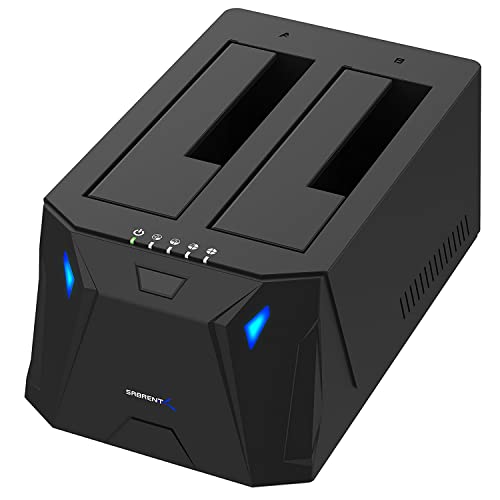
- Offline cloning for 2.5-inch and 3.5-inch SATA drives
- Supports drives up to 10TB
- USB 3.0 connectivity with no drivers required
Best For: Budget-conscious home users needing basic SATA cloning
Best for IT Workflows
StarTech Dual-Bay Drive Duplicator
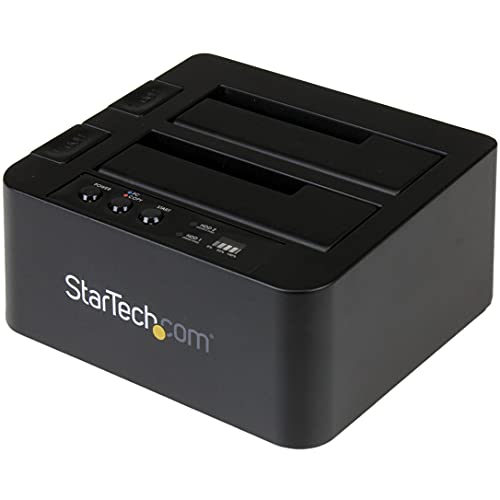
- Standalone sector-by-sector cloning
- Supports 4Kn, TRIM, and SATA III drives
- Up to 28GB/min with USB 3.2 Gen 2
Best For: IT professionals handling recurring drive-copying tasks
Best USB-C Pick

- Offline 1-to-1 cloning without a computer
- USB-C connection with dual-drive access
- Fits 2.5-inch and 3.5-inch SATA drives
Best For: USB-C Windows users working with bare SATA drives
Best for Sanitization
Systor Standalone HDD/SSD Duplicator

- Standalone duplication and erasing
- Supports 2.5-inch and 3.5-inch SATA drives
- DoD 5220.22-M data sanitization
Best For: Businesses and technicians managing drive disposal and cloning
Best Overall
ORICO Dual-Bay SATA Hard Drive Cloner

- Offline cloning without a computer
- Supports 2.5-inch and 3.5-inch SATA drives
- USB 3.0 transfers up to 5Gbps
Best For: Windows users cloning SATA HDDs and SSDs
Best for NVMe
FIDECO 3-Bay NVMe and SATA Cloner

- Supports two NVMe and one SATA drive
- Clones NVMe-to-NVMe or SATA-to-NVMe
- USB 3.2 Gen 2 reaches 10Gbps
Best For: Windows users managing NVMe and SATA storage
Best Budget SATA Option

- Offline cloning with no drivers required
- Supports 2.5-inch and 3.5-inch SATA drives
- UASP support reaches up to 6Gbps
Best For: Simple Windows-based SATA drive duplication
Most Versatile
ICY BOX Triple-Bay NVMe/SATA Cloner

- Three tool-free bays for NVMe and SATA drives
- One-touch offline cloning without a computer
- USB 3.2 Gen 2 speeds up to 10 Gbps
Best For: Windows users handling mixed NVMe and SATA storage
Best Dual-Bay Value
WAVLINK SATA Offline Clone Dock

- Dual bays fit 2.5-inch and 3.5-inch SATA drives
- Offline cloning works without a computer
- Supports up to 20TB per bay
Best For: Windows users focused on SATA drive cloning
Simple SATA Pick
FIDECO Dual-Bay Hard Drive Dock

- Dual bays support 2.5-inch and 3.5-inch SATA drives
- Computer-free offline cloning with one button
- USB 3.0 and UASP support up to 5 Gbps
Best For: Basic SATA cloning and drive access across Windows and Linux
Best Value – SABRENT Dual-Bay SATA Cloner
For shoppers comparing hard drive duplicators for windows, the SABRENT EC-HD2B is a straightforward dual-bay dock for cloning or accessing standard 2.5-inch and 3.5-inch SATA drives. It supports up to 10TB per drive and works without extra drivers.
Best For: Home users who need an affordable offline SATA cloning dock and everyday drive reader.
Pros:
- Supports both 2.5-inch and 3.5-inch SATA HDDs and SSDs.
- Offline cloning requires no computer.
- USB 3.0 transfer speeds reach up to 5Gbps.
- Supports drives up to 10TB and includes a one-year warranty, extendable to two years with registration.
Cons:
- Offline cloning is rated up to 60Mbps, which is slower than its USB connection speed.
- Designed for SATA drives rather than IDE, M.2, or NVMe formats.
The EC-HD2B is a practical pick when you want simple, tool-free SATA cloning at a reasonable price. Its dual-bay design also makes it useful for reading drives when connected to a computer.
Best for IT Workflows – StarTech Dual-Bay Drive Duplicator
The StarTech SDOCK2U313R is a feature-rich option for users evaluating hard drive duplicators for windows. It performs standalone, sector-by-sector cloning without a computer and doubles as a USB-connected SATA dock.
Best For: IT professionals and technical users who need sector-by-sector copying, 4Kn support, and flexible USB connectivity.
Pros:
- Clones 2.5-inch and 3.5-inch SATA HDDs or SSDs without a computer.
- Supports drives of any capacity, with a target drive equal to or larger than the source.
- Sector-by-sector copying works with any file format and reaches up to 28GB per minute.
- Includes USB 3.2 Gen 2 connectivity, 4Kn compatibility, TRIM, and a two-year warranty.
Cons:
- Copies the entire drive, including empty sectors, which may take longer than file-level copying.
- IDE drives require a separately sold adapter.
With its stronger professional feature set and included USB-C and USB-A cables, this StarTech dock is well suited to repeat cloning, recovery, and drive-management tasks.
Best USB-C Pick – SABRENT USB-C SATA Cloner
The SABRENT EC-CH2B is a compact choice among hard drive duplicators for windows, combining offline cloning with a USB-C connection. It accepts bare 2.5-inch and 3.5-inch SATA drives and mounts both bays as separate drives when connected to a computer.
Best For: Windows users with USB-C computers who want a tool-free dock for cloning and transferring files between two SATA drives.
Pros:
- Copies one SATA drive to another without a computer.
- Supports both 2.5-inch and 3.5-inch SATA HDDs and SSDs.
- Both bays can be read and written simultaneously over USB.
- Includes a USB-C cable and offers plug-and-play operation on Windows and Mac.
Cons:
- Does not support IDE/PATA, M.2, NVMe, or four-pin Molex drives.
- The included cable connects via USB-C at the dock end; USB-A users need their own adapter or cable.
- Offline cloning runs at up to 60Mbps rather than the dock’s 5Gbps USB rating.
This model is a strong fit for newer computers with USB-C ports. Confirm your drive type and host-port compatibility before buying, especially if you use older interfaces.
Best for Sanitization – Systor Standalone HDD/SSD Duplicator
The Systor SYS101HS-DP takes a more specialized approach to hard drive duplicators for windows, operating as a standalone copier and eraser without a computer or software. It handles 2.5-inch and 3.5-inch SATA drives and supports DoD 5220.22-M data sanitization.
Best For: Businesses and technicians that need standalone duplication plus drive-erasing capabilities.
Pros:
- Requires no computer or software for duplication or erasure.
- Supports both 2.5-inch and 3.5-inch SATA HDDs and SSDs without an adapter.
- Copies systems and files or duplicates an entire drive.
- Offers speeds up to 90MB per second and DoD 5220.22-M-compliant sanitization.
Cons:
- Supports SATA drives rather than a broad range of modern interfaces.
- Its specialized erasing and duplication features may be more than casual users need.
The SYS101HS-DP stands out when secure drive retirement matters as much as cloning. Its metal enclosure, hot-swappable design, and lifetime technical support add practical value for repeated workplace use.
Best Overall – ORICO Dual-Bay SATA Hard Drive Cloner
The ORICO dual-bay dock is a practical choice among hard drive duplicators for Windows when you need to clone 2.5-inch or 3.5-inch SATA drives without connecting to a computer. It supports offline cloning, USB 3.0 transfers, and up to 44TB across two bays.
Best For: Windows users cloning or transferring data between SATA HDDs and SSDs.
Pros:
- Offline cloning starts with a dedicated button and requires no computer connection.
- Supports 2.5-inch and 3.5-inch SATA I/II/III drives, with up to 44TB total capacity.
- USB 3.0, UASP, and TRIM support provide transfers up to 5Gbps.
- Includes a 36W power supply, automatic sleep mode, and tool-free drive swapping.
Cons:
- The target disk must be larger than the source disk for offline cloning.
- The dock will not power on without a hard drive inserted.
- Offline cloning is limited to compatible SATA drives rather than M.2 NVMe SSDs.
Choose this ORICO model if you want a straightforward SATA duplicator with broad device compatibility and a compact design. Its main limitation is that it does not support NVMe drives, but it is well suited to routine Windows backups, upgrades, and drive duplication.
Best for NVMe – FIDECO 3-Bay NVMe and SATA Cloner
The FIDECO MS02 is one of the more versatile hard drive duplicators for Windows, combining two M.2 NVMe bays with a 2.5-inch/3.5-inch SATA bay. It can clone NVMe-to-NVMe or SATA-to-NVMe offline and also works as a high-speed multi-drive reader.
Best For: Windows users working with M.2 NVMe SSDs alongside traditional SATA drives.
Pros:
- Supports M-Key and M+B Key PCIe NVMe SSDs plus 2.5-inch and 3.5-inch SATA drives.
- Offers flexible offline cloning between NVMe drives or from SATA to NVMe.
- USB 3.2 Gen 2 provides up to 10Gbps transfer speeds for NVMe storage.
- Built-in foldable cooling fan helps manage heat during demanding use.
Cons:
- The target drive must have capacity equal to or greater than the source drive.
- New drives may need to be initialized in Windows Disk Management before recognition.
- Offline cloning requires selecting the supported clone direction with the conversion switch.
This is the strongest fit for mixed-drive setups or users upgrading to NVMe storage. Its three-bay layout and cooling fan add flexibility, while Windows, macOS, and Linux support make it useful beyond a single computer.
Best Budget SATA Option – WAVLINK Dual-Bay SATA Dock
The WAVLINK dual-bay dock is a simple option for hard drive duplicators for Windows, supporting 2.5-inch and 3.5-inch SATA HDDs and SSDs. Its offline clone function, UASP support, and USB 3.0/USB-C connectivity cover common drive-copying and file-transfer tasks.
Best For: Windows users who need an uncomplicated dual-bay SATA cloning dock.
Pros:
- Works with 2.5-inch and 3.5-inch SATA-I/II/III HDDs and SSDs.
- Supports offline cloning without drivers or a computer connection.
- UASP enables speeds up to 6Gbps, while USB 3.0 supports up to 5Gbps.
- Offers hot-swapping, tool-free setup, automatic sleep mode, and a built-in power switch.
Cons:
- The target disk must be equal to or larger than the source disk.
- Offline cloning is limited to a stated speed of up to 60Mbps.
- It is not compatible with M1/M2-based Macs, although Windows and Linux are supported.
The WAVLINK is a sensible pick when your drives are SATA and you prefer a straightforward dock with offline duplication. It lacks NVMe support and has narrower Mac compatibility, but its dual-bay design and no-driver setup suit routine Windows drive work.
Most Versatile – ICY BOX Triple-Bay NVMe/SATA Cloner
For shoppers comparing hard drive duplicators for Windows, the ICY BOX stands out as a flexible option for mixed storage setups. Its three tool-free bays support M.2 PCIe NVMe drives alongside 2.5-inch and 3.5-inch SATA SSDs and HDDs, while one-touch offline cloning avoids software installation.
Best For: Windows users who need to clone or access multiple NVMe and SATA drives from one station.
Pros:
- Supports cloning between NVMe and SATA drive types.
- Three independent bays allow multiple drives to be connected at once.
- USB 3.2 Gen 2 provides transfer rates up to 10 Gbps.
- Includes both USB-C and USB-A connectivity through the supplied cable.
Cons:
- Its broad feature set may be more than needed for SATA-only cloning.
- Offline cloning is limited to supported drive configurations and does not replace a backup strategy.
The ICY BOX is the strongest choice here for Windows users managing both modern NVMe storage and traditional SATA drives. It costs some desk space compared with simpler docks, but the third bay and cross-interface support add useful flexibility.
Best Dual-Bay Value – WAVLINK SATA Offline Clone Dock
The WAVLINK is a practical pick among hard drive duplicators for Windows if you mainly work with 2.5-inch or 3.5-inch SATA drives. Its dual bays support offline cloning without a computer, and the fixed bezels help keep inserted drives stable during use.
Best For: Windows users cloning and transferring SATA HDDs or SSDs with a straightforward two-drive dock.
Pros:
- Supports 2.5-inch and 3.5-inch SATA I/II/III HDDs and SSDs.
- Offline cloning starts from the dock after holding the Clone button for about five seconds.
- Supports drives up to 20TB in each bay, according to the supplied specifications.
- Works with Windows 7/8/10/11 and requires no driver for plug-and-play use.
Cons:
- It supports SATA drives only, not M.2 NVMe storage.
- The target drive capacity must be at least as large as the source drive for cloning.
- USB 3.0 performance is rated below the 10 Gbps interface offered by the ICY BOX.
Choose the WAVLINK when reliable SATA duplication is more important than newer NVMe support. Its two-bay layout, fixed bezels, and broad Windows compatibility make it a sensible everyday dock for drive upgrades and file transfers.
Simple SATA Pick – FIDECO Dual-Bay Hard Drive Dock
FIDECO offers a straightforward solution for shoppers seeking hard drive duplicators for Windows and other common operating systems. This dual-bay SATA dock reads two 2.5-inch or 3.5-inch drives at once and supports offline cloning with a dedicated Clone button.
Best For: Budget-conscious users who need basic SATA drive access, transfers, and computer-free cloning.
Pros:
- Supports simultaneous use of two 2.5-inch or 3.5-inch SATA HDDs or SSDs.
- Offline cloning requires no computer or additional cloning software.
- USB 3.0 supports transfer rates up to 5 Gbps and UASP.
- Compatible with Windows XP through Windows 10, Mac OS, and Linux.
Cons:
- It supports SATA drives only and does not accommodate NVMe drives.
- New drives must be initialized before a computer can recognize them.
- The listed Windows compatibility does not specifically mention Windows 11.
The FIDECO is a good fit when you want essential dual-bay SATA functionality without moving to a more advanced NVMe-capable unit. Its simple controls and wide operating-system support suit routine backups, drive reading, and upgrades.
How We Picked the Best Hard Drive Duplicators for Windows
We focused on hardware that can work smoothly with Windows systems while also supporting common upgrade and backup tasks. Our selection includes dual-bay SATA docks, dedicated 1:1 duplicators, USB 3.0 and USB-C models, and multi-interface units that support M.2 NVMe drives.
Key considerations included source-to-target cloning, offline operation, drive-size compatibility, transfer interfaces, UASP support, erasing functions, and the ability to read both 2.5-inch and 3.5-inch drives. A duplicator does not need a Windows application to clone drives, but its connected-reader functions should be compatible with Windows and your computer’s available ports.
Quick Comparison
| Best For | Look For | Recommended Type |
|---|---|---|
| Simple SATA upgrades | Dual bays and offline cloning | USB SATA docking station |
| Faster computer connections | USB-C and UASP | USB-C dual-bay dock |
| NVMe upgrades | M.2 NVMe support | NVMe/SATA multi-bay cloner |
| Repeated drive work | Standalone controls and erasing | Dedicated 1:1 duplicator |
| Mixed drive collections | 2.5-inch, 3.5-inch, SATA, and NVMe compatibility | Multi-format docking station |
Key Buying Factors for Hard Drive Duplicators for Windows
Drive Type and Physical Size
Confirm whether your source and destination drives are SATA HDDs, SATA SSDs, or M.2 NVMe SSDs. A standard SATA dock cannot clone an NVMe drive unless it specifically includes NVMe support. Check bay dimensions as well: 2.5-inch laptop drives and 3.5-inch desktop drives use different physical formats.
Offline Cloning Versus Software Cloning
Offline duplicators clone directly from one installed drive to another, often without requiring Windows or third-party software. This is useful when replacing a system drive. For selective file transfers, partition management, or cloning to a smaller disk, Windows cloning software may offer more control.
Connection Speed and Ports
USB 3.0 is sufficient for many SATA drives, while USB-C and USB 3.2-class connections can improve compatibility and reduce bottlenecks when your computer supports them. The actual speed also depends on the drive, enclosure controller, cable, and Windows system.
Capacity, Indicators, and Safety
The target drive should generally be at least as large as the source drive for straightforward sector-by-sector duplication. Look for clear power and progress indicators, stable drive seating, adequate cooling, and safeguards against accidentally selecting the wrong source or target.
Who Should Buy Which Hard Drive Duplicators for Windows?
Choose a basic dual-bay SATA dock if you mainly work with 2.5-inch or 3.5-inch HDDs and SATA SSDs. It is the most practical choice for occasional upgrades, drive access, and backups. Select a USB-C model when your Windows laptop or desktop has USB-C and you want a newer connection interface.
Buy an NVMe-capable or multi-bay model if your system uses M.2 storage or you regularly handle several drive formats. For technicians, refurbishers, and users who need repeatable standalone duplication or secure erasing, a dedicated 1:1 duplicator is usually the better fit. Before ordering, verify drive compatibility, target capacity, connector requirements, and whether the advertised cloning mode matches your intended Windows migration.