Hard drive duplicators can help small businesses deploy replacement drives, standardize workstation storage, and preserve critical data without relying on a separate computer for every clone.
We compared 10 standalone duplicators and docking stations across drive compatibility, cloning speed, capacity, erasing features, and everyday usability to help you choose the right setup for your team.
Best 10 Hard Drive Duplicators for Small Businesses Picks for 2026
Best Multi-Drive Workstation
4-Bay HDD/SSD Duplicator and Eraser

- 1:3 standalone cloning
- SATA and IDE drive support
- Secure erase with docking functions
Best For: IT teams processing multiple drives and interfaces
Best Fast Two-Drive Option
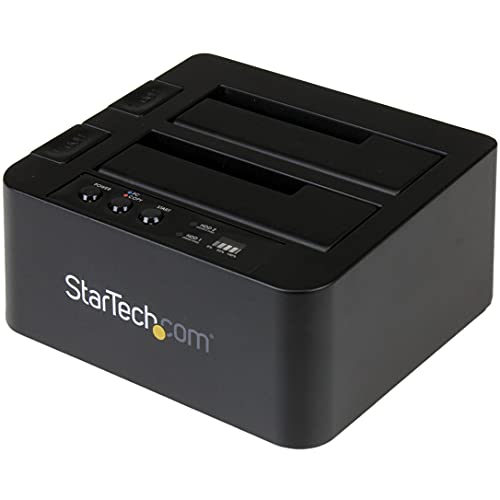
- Up to 28 GB/min cloning
- 2.5- and 3.5-inch SATA support
- USB 3.2 Gen 2 host connection
Best For: Routine one-to-one SATA cloning and drive access
Best High-Volume Copier

- Copies to five targets
- 150 MB/s or 9 GB/min rate
- DoD 5220.22-M erasure
Best For: Batch copying and sanitizing SATA drives
Best for Mixed Modern Drives

- Supports NVMe, M.2 SATA, and SATA
- Configurable duplication modes
- Five erase modes with NIST options
Best For: Mixed-drive upgrades and secure one-to-one transfers
Best Standalone Workhorse
Systor SYS101HS-DP 1:1 HDD/SSD Duplicator

- Standalone copying requires no computer or software
- Supports 2.5-inch and 3.5-inch SATA drives
- Copies at up to 90MB/s and supports DoD erasure
Best For: Routine drive duplication and sanitization
Best Budget Docking Station
SABRENT EC-HD2B Dual-Bay Cloner
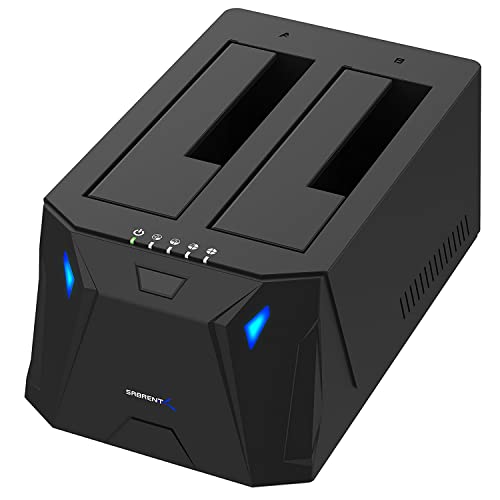
- Dual-bay dock supports 2.5-inch and 3.5-inch SATA drives
- Offers offline cloning without drivers
- USB 3.0 connectivity supports up to 5Gbps
Best For: Occasional cloning and drive access
Best for IT Deployment
StarTech SATDUP11 SATA Duplicator and Eraser

- Includes three duplication and four erase modes
- Supports 2.5-inch and 3.5-inch SATA drives
- Adds Copy & Compare verification and LCD controls
Best For: IT deployment, recovery, and sanitization
Best Compact Cloner

- Offline 1-to-1 cloning without a computer
- Supports 2.5-inch and 3.5-inch SATA drives
- Dual-drive USB access with tool-free bays
Best For: Small offices managing SATA HDDs and SSDs
Best High-Volume Duplicator
Vinpower Digital HDDShark 1-to-8

- Standalone duplication to up to eight target drives
- Supports 2.5-inch and 3.5-inch SATA storage
- Includes secure erase for drive reuse or disposal
Best For: Batch SATA drive deployment and archival work
Best Versatile Dock
ICY BOX Triple-Bay NVMe/SATA Cloner

- Clones between NVMe and SATA drive types
- Three tool-free bays for simultaneous drive access
- USB 3.2 Gen 2 with USB-C and USB-A cable options
Best For: Mixed NVMe and SATA storage environments
Best Multi-Drive Workstation – 4-Bay HDD/SSD Duplicator and Eraser
For small businesses handling drive upgrades, recovery, or decommissioning, this StarTech.com unit combines a 1:3 standalone duplicator, four-bay SATA dock, and drive eraser. It supports 2.5- and 3.5-inch SATA drives, with included adapters for IDE drives.
Best For: IT teams that need to duplicate or sanitize several SATA drives while also accessing them through USB or eSATA.
Pros:
- Duplicates one drive to up to three targets without a computer.
- Supports SATA HDDs/SSDs and includes 40-pin and 44-pin IDE adapters.
- Offers Quick Erase and NIST SP 800-88 Rev. 1 Purge-compliant Secure Erase.
- Works as a USB or eSATA docking station and includes a menu LCD.
Cons:
- Targets must be equal to or larger than the source drive.
- Its four-bay footprint may be more than needed for occasional one-drive jobs.
With broad interface support and standalone cloning and wiping, this is a flexible choice for small-business IT desks that regularly process multiple drive types.
Best Fast Two-Drive Option – Dual-Bay SATA Duplicator Dock
This dual-bay StarTech.com dock is a straightforward option for small businesses seeking hard drive duplicators for small businesses without adding a dedicated computer to the workflow. It clones 2.5- and 3.5-inch SATA drives sector by sector and can also connect drives to a host over USB.
Best For: Offices and repair benches that need quick one-to-one SATA cloning and occasional drive access.
Pros:
- Standalone operation requires no PC or software for cloning.
- Supports 2.5- and 3.5-inch SATA HDDs and SSDs of any capacity.
- Advertised cloning speed reaches up to 28 GB/min.
- Includes SATA III, USB 3.2 Gen 2, 4Kn, and TRIM support.
Cons:
- It is limited to two drives and one-to-one duplication.
- IDE support requires the separately sold SAT2IDEADP adapter.
- Sector-by-sector copying also copies empty sectors.
Its trayless two-bay design keeps routine SATA duplication simple, while USB connectivity adds useful value when the dock is not being used as a standalone copier.
Best High-Volume Copier – 1:5 HDD/SSD Duplicator
The Systor SYS205HS-DP is built for small-business workflows that need several copies or sanitization jobs at once. It operates without a computer or software, accepts 2.5- and 3.5-inch drives without adapters, and maintains its listed transfer rate as the number of loaded drives increases.
Best For: IT departments and service providers producing multiple drive copies or erasing batches of HDDs and SSDs.
Pros:
- Copies one source drive to up to five targets simultaneously.
- Supports 2.5- and 3.5-inch drives without an adapter.
- Copies at up to 150 MB/s, or 9 GB/min, according to the supplied specifications.
- Offers whole-drive or data-only copying and DoD 5220.22-M erasure.
Cons:
- Its duplication workflow is limited to the listed SATA connectivity.
- The supplied notes do not specify an LCD or on-screen menu interface.
For repetitive deployment or retirement work, the five-target capacity can reduce hands-on cycles and make this a practical production-oriented duplicator.
Best for Mixed Modern Drives – M.2 NVMe/SATA Duplicator
Businesses managing both modern M.2 storage and conventional SATA disks can use this StarTech.com duplicator for one-to-one copying and erasure without a PC or software. It supports M.2 PCIe NVMe, M.2 SATA, and 2.5- or 3.5-inch SATA drives, with selectable duplication and wipe modes.
Best For: IT teams upgrading laptops and desktops that use a mixture of M.2 NVMe, M.2 SATA, and standard SATA drives.
Pros:
- Handles M.2 NVMe, M.2 SATA, and 2.5-/3.5-inch SATA drives.
- Supports system/file, partition, whole-drive, and percentage duplication modes.
- Provides five erase modes, including NIST SP 800-88 Rev. 1 Clear/Purge options.
- Includes an on-screen display, error reporting, and adjustable HPA settings.
Cons:
- It duplicates only one source to one target at a time.
- IDE and mSATA support requires separately sold adapters.
- Compatibility depends on the M.2 drive using the supported key and form factors.
This is the most versatile choice here for mixed-generation storage environments, especially where configurable copying and documented erasure modes matter more than multi-target throughput.
Best Standalone Workhorse – Systor SYS101HS-DP 1:1 HDD/SSD Duplicator
For small businesses that need repeatable drive imaging without tying up a computer, the Systor SYS101HS-DP is a practical choice among hard drive duplicators for small businesses. It works with 2.5-inch and 3.5-inch SATA HDDs and SSDs, and its standalone design supports both duplication and drive erasure.
Best For: Businesses performing recurring SATA drive copies, upgrades, or data sanitization without dedicated cloning software.
Pros:
- Standalone operation requires no computer or software.
- Supports both 2.5-inch and 3.5-inch SATA drives without an adapter.
- Maintains speeds up to 90MB per second even as the number of loaded drives increases.
- Offers DoD 5220.22-M-compliant drive sanitization and lifetime technical support.
Cons:
- Limited to SATA HDDs and SSDs.
- Its 1:1 duplicator design may be less suitable for larger batch-copying workflows.
The Systor stands out when simplicity, consistent throughput, and erasure capability matter more than software-based flexibility. Its hot-swappable design and multi-drive support can also help streamline routine maintenance.
Best Budget Docking Station – SABRENT EC-HD2B Dual-Bay Cloner
The SABRENT EC-HD2B combines a two-drive dock with offline cloning, making it a convenient option for small businesses seeking hard drive duplicators for small businesses without a more specialized standalone chassis. It supports standard 2.5-inch and 3.5-inch SATA HDDs or SSDs and connects to a computer over USB 3.0.
Best For: Small offices that need occasional offline cloning plus a reusable SATA drive dock and reader.
Pros:
- Supports standard 2.5-inch and 3.5-inch SATA hard drives and SSDs.
- Provides offline cloning without requiring drivers.
- Supports drives up to 10TB and USB 3.0 transfer speeds up to 5Gbps.
- Includes a power supply, USB 3.0 cable, and one-year warranty, extendable to two years with registration.
Cons:
- Offline cloning is rated at up to 60Mbps, below its maximum USB transfer rate.
- It supports two drives, so it is less suited to higher-volume duplication.
- It relies on a computer for USB-connected docking and file access.
This SABRENT is a flexible, space-conscious pick for teams that want one device for cloning and everyday drive access. Its dual-bay format is convenient, though businesses with frequent deployment work may prefer a faster dedicated duplicator.
Best for IT Deployment – StarTech SATDUP11 SATA Duplicator and Eraser
For IT teams that need both cloning and controlled data removal, the StarTech SATDUP11 is one of the more versatile hard drive duplicators for small businesses. This standalone SATA duplicator supports 2.5-inch and 3.5-inch drives, multiple copy modes, and four erase modes, including a three-pass overwrite option.
Best For: IT professionals handling disk backup, system deployment, recovery, and documented drive sanitization.
Pros:
- Supports sector-by-sector, system-and-file, and all-partitions duplication modes.
- Provides quick, secure, single-pass, and three-pass erase modes.
- Works with 2.5-inch and 3.5-inch SATA HDDs and SSDs of any capacity.
- Includes Copy & Compare verification, an LCD menu, and two years of support.
Cons:
- eSATA, mSATA, IDE, and M.2 SATA compatibility requires separately sold adapters where applicable.
- It is designed for two-drive, 1:1 workflows rather than large-scale batch duplication.
The SATDUP11 is a strong fit when a business needs more than basic cloning. Its selectable copy and erase modes, verification feature, and standalone operation give IT staff better control over deployment and end-of-life drive handling.
Best Compact Cloner – SABRENT Dual-Bay USB-C Dock
For small businesses looking for hard drive duplicators for small businesses, the SABRENT EC-CH2B is a compact, straightforward option for duplicating or accessing two bare SATA drives. Its offline cloning button works without a computer, while USB-C connectivity lets both mounted drives appear separately when connected to a PC or Mac.
Best For: Small offices and technicians migrating or managing 2.5-inch and 3.5-inch SATA HDDs and SSDs.
Pros:
- Offline 1-to-1 cloning requires no computer.
- Supports both 2.5-inch and 3.5-inch SATA drives.
- Both bays can be read and written simultaneously over USB.
- Tool-free, hot-swappable design with separate drive-access LEDs.
Cons:
- Does not support IDE/PATA, M.2, or NVMe drives.
- The target drive must be the same size as or larger than the source.
- The included cable is USB-C to USB-C, so a USB-A adapter or cable may be needed for some computers.
The EC-CH2B is a practical choice when your business primarily uses SATA storage and needs occasional standalone cloning without the cost or footprint of a larger duplicator. Its 60MBps offline cloning speed is functional, though not intended for maximum-throughput workflows.
Best High-Volume Duplicator – Vinpower Digital HDDShark 1-to-8
Businesses that need to create several SATA drive copies at once may prefer the Vinpower Digital HDDShark Turbo. This standalone hard drive duplicator handles one source drive and up to eight target drives without a PC, making it better suited to repeatable deployment, archival, or migration tasks than a basic two-bay dock.
Best For: Small businesses and service teams duplicating multiple 2.5-inch or 3.5-inch SATA HDDs and SSDs in batches.
Pros:
- Copies one source drive to up to eight targets without a computer.
- Supports 2.5-inch and 3.5-inch SATA HDDs and SSDs.
- Works with SATA I, SATA II, and SATA III interfaces.
- Includes a secure-erase feature for removing data before reuse or disposal.
Cons:
- Its 1-to-8 capacity may be more equipment than occasional single-drive jobs require.
- It is a larger, heavier unit than a compact docking station.
- The supplied notes identify SATA support but do not indicate compatibility with M.2 or NVMe drives.
With support for large-capacity drives, including 3TB and larger formats, the HDDShark is a strong fit for businesses that regularly prepare multiple storage devices. Its standalone operation and secure erase function also make it useful for controlled hardware refreshes and data-handling procedures.
Best Versatile Dock – ICY BOX Triple-Bay NVMe/SATA Cloner
For mixed storage environments, the ICY BOX Triple-Bay Cloner is one of the more flexible hard drive duplicators for small businesses. Its three independent bays support M.2 PCIe NVMe drives alongside 2.5-inch and 3.5-inch SATA HDDs and SSDs, with one-touch offline cloning and USB 3.2 Gen 2 connectivity.
Best For: Offices and IT teams working with both NVMe and SATA storage across Windows and macOS systems.
Pros:
- Supports cloning between NVMe and SATA drive types, including SATA-to-NVMe.
- Three independent slots allow multiple drives to be connected at once.
- One-touch offline cloning avoids software installation and complex setup.
- Includes USB-C and USB-A connectivity through a dual-purpose cable.
Cons:
- The plastic enclosure may be less rugged than an aluminum unit.
- Actual transfer speeds depend on the drives and setup; the stated 10Gbps is the USB interface rating.
- Its broader feature set may be unnecessary for businesses using SATA drives exclusively.
The ICY BOX is the most adaptable option here for businesses upgrading from SATA to NVMe or maintaining a mixed inventory. Its triple-bay layout, broad operating-system compatibility, and two-year warranty make it a convenient general-purpose workstation for storage migration and drive access.
How We Picked the Best Hard Drive Duplicators for Small Businesses
We focused on the needs of small IT teams, repair shops, offices, and growing businesses that need repeatable drive-to-drive transfers. The lineup includes standalone duplicators, USB-connected docking stations, and models that support SATA, M.2 SATA, or NVMe drives.
Our main criteria were supported drive sizes and interfaces, source-to-target cloning capability, stated transfer speed, number of simultaneous target drives, offline operation, erasing functions, connectivity, and practical value. A faster duplicator is not automatically better if it lacks the drive format your business uses.
Quick Comparison
| Best For | What to Look For |
|---|---|
| Occasional office upgrades | Dual-bay dock with simple offline cloning |
| Frequent workstation deployment | Standalone duplicator with multiple target bays |
| Mixed modern storage | Support for SATA, M.2 SATA, and NVMe drives |
| Secure drive retirement | Built-in erasing modes and clear status controls |
| Large cloning workloads | Higher rated transfer speed and several target bays |
Key Buying Factors for Hard Drive Duplicators for Small Businesses
Drive Compatibility
Confirm whether you need 2.5-inch SATA SSDs, 3.5-inch hard drives, M.2 SATA modules, NVMe drives, or a combination. SATA and NVMe are different protocols, so an M.2 slot alone does not guarantee compatibility with every M.2 drive.
Capacity and Workflow
A 1:1 duplicator suits occasional replacements, while a 1:3, 1:5, or 1:8 unit can reduce repetitive work when preparing multiple systems. More bays usually mean a larger footprint and higher cost, so match capacity to your actual deployment volume.
Speed and Connection Type
Manufacturers’ speed ratings are ideal figures and can vary with the source drive, target drive, file structure, and interface. USB 3.0, USB-C, eSATA, and USB 10Gbps connections affect computer-based transfers, while standalone units may use their own internal cloning path.
Erasing and Verification Features
If your business handles returned, replaced, or leased drives, look for secure erase options and clear progress indicators. Cloning verification, sector-by-sector modes, and support for drives of different capacities can also matter in professional workflows.
Who Should Buy Which Hard Drive Duplicators for Small Businesses?
Choose a dual-bay dock if one person occasionally clones or reads drives and you want a compact, affordable tool. These models are convenient for IT desks and general troubleshooting.
Choose a multi-bay standalone duplicator if you regularly provision several computers, maintain spare-drive inventory, or need cloning without connecting to a host computer. Higher-capacity models are especially useful for repair and deployment businesses.
Choose a mixed-interface model if your organization is moving from 2.5-inch SATA storage to M.2 SATA or NVMe SSDs. Check the exact slot and protocol specifications before ordering.
For most small businesses, prioritize compatibility and workflow fit over the highest advertised speed. The best Hard Drive Duplicators for Small Businesses are the ones that support your current drives, reduce hands-on steps, and provide the controls needed for reliable deployment or responsible data disposal.