The best KVM over IP switches let you control computers and servers remotely as though you were connected locally, including access during boot, in BIOS, or when an operating system is unavailable.
This roundup covers compact single-device KVMs, PoE and Wi-Fi models, quad-port systems, and enterprise rackmount switches. The right choice depends on port count, video resolution, remote-access security, virtual media, and how many users or systems you need to support.
Best 10 Kvm Over Ip Switches Picks for 2026
Flexible Wireless Pick
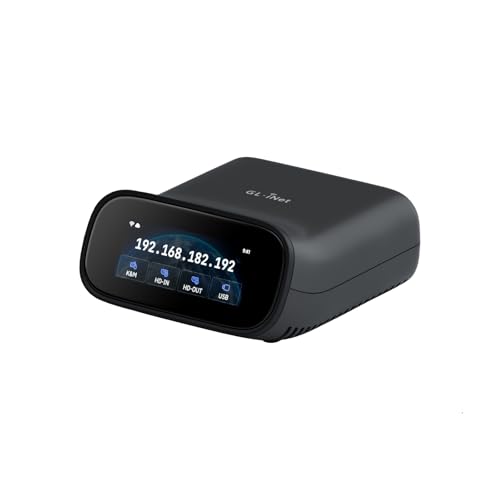
- Wi-Fi 6 and Ethernet connectivity
- 4K@30FPS passthrough with two-way audio
- Tailscale and self-hosted cloud support
Best For: Wireless remote access for home labs, offices, and IT support
Open-Source Value

- 1080p at 60FPS with 30–60ms latency
- Browser, cloud, and Wake on LAN access
- Expandable Linux and open-source platform
Best For: Open-source remote control and computer recovery
PoE Deployment Pick

- PoE and Type-C dual power
- 4K streaming at 30FPS
- Tailscale and remote BIOS reinstall
Best For: Compact single-device KVM deployments with PoE infrastructure
Rackmount Enterprise Option
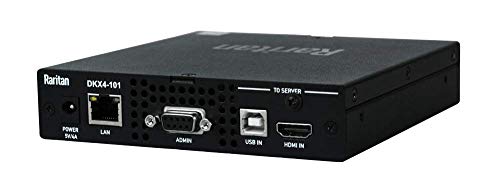
- 4K KVM-over-IP support
- Rack-mountable one-port design
- Ethernet remote control with USB support
Best For: Rack-based single-device remote management
Best Compact Remote KVM

- BIOS-level remote control without host software
- 4K 30Hz video with remote audio
- Compact single-host design
Best For: Remote support and single-computer management
Best Rackmount KVM Switch
Tripp Lite NetDirector 16-Port IP KVM

- Controls 16 systems and daisy-chains up to 264
- Supports LAN, WAN, and internet access
- Rack-mount design with 64 user accounts
Best For: Data centers and multi-server IT racks
Best Multi-Port PoE KVM
GL.iNet Comet X Quad-Port Remote KVM

- Controls four HDMI host systems
- PoE with 5V USB-C backup power
- 4K 30Hz loop-out and 64GB eMMC
Best For: Home labs and compact server racks
Enterprise Control

- 8-port rack-mount KVM over IP switch
- Supports USB, PS/2, Sun Legacy, and RS-232
- Works with Windows, Mac, Sun, and Linux
Best For: Mixed-device rack management
Compact Remote Access
Tripp Lite NetCommander 8-Port

- 1U Cat5 rack-mount design
- One local and one remote user simultaneously
- IPv4, IPv6, RADIUS, and LDAP/S support
Best For: Small server rooms with remote access
Virtual Media Capacity
Tripp Lite 16-Port KVM Over IP

- Controls up to 16 computers or servers
- Virtual media supports remote drives
- Dual redundant C14 power inlets
Best For: Larger server groups and remote maintenance
Flexible Wireless Pick – GL-RM10 Comet Pro
The GL.iNet GL-RM10 Comet Pro is a flexible choice among kvm over ip switches for home labs, offices, and remote support. Dual-band Wi-Fi 6, Ethernet connectivity, 4K passthrough, and browser-based access make it suitable for managing a computer even when software-based remote tools are unavailable.
Best For: Users who want wireless remote KVM access with 4K passthrough, two-way audio, and flexible cloud or self-hosted management.
Pros:
- Supports 2.4 GHz and 5 GHz Wi-Fi 6 alongside wired connectivity.
- Provides 4K at 30FPS video passthrough and two-way audio.
- Includes built-in Tailscale and optional self-hosted cloud deployment.
- Supports BIOS access, OS reinstallations, and optional remote power control with extensions.
Cons:
- ATX Board and Fingerbot power-control accessories are sold separately.
- Its 4K passthrough is limited to 30FPS.
The Comet Pro stands out when wireless flexibility and privacy-conscious remote management matter more than a conventional rack-mounted design. Its touchscreen and broad device support also make setup approachable.
Open-Source Value – JetKVM IP KVM
The JetKVM is a compact Ethernet-based option for shoppers comparing kvm over ip switches. It connects through USB-C and HDMI, offers browser and optional cloud access, and adds Wake on LAN for remotely waking a compatible computer.
Best For: Tinkerers and IT users who want an open-source, low-latency IP KVM with flexible power and expansion options.
Pros:
- Offers local browser access, optional cloud access, and Wake on LAN.
- Streams up to 1920×1080 at 60FPS with stated 30–60ms latency.
- Supports multiple power methods, including USB-C, 5V power, and optional extensions.
- Open-source Linux design supports customization through SSH and expansion hardware.
Cons:
- Video resolution is limited to 1080p at 60FPS rather than 4K.
- Remote power and serial-console features require compatible extension hardware.
JetKVM is a practical fit for remote troubleshooting and recovery, particularly for users comfortable with open-source tools. Its selectable video quality can help balance responsiveness and bandwidth.
PoE Deployment Pick – GL-RM1PE Comet PoE
The GL.iNet Comet PoE GL-RM1PE is designed for streamlined deployments where Ethernet and power infrastructure are already available. As one of the more installation-friendly kvm over ip switches, it combines PoE with Type-C power, 4K streaming, Tailscale, and remote BIOS recovery features.
Best For: Server rooms and network installations that can benefit from PoE, remote BIOS access, and compact single-device management.
Pros:
- Supports PoE and Type-C dual power options.
- Provides 4K streaming at 30FPS.
- Includes Tailscale and remote BIOS reinstall capability.
- Offers USB support for optional ATX and Fingerbot accessories.
Cons:
- Supports a maximum of one device.
- Remote power-control functions use optional ATX or Fingerbot accessories.
- Its 4K streaming is specified at 30FPS.
The Comet PoE makes the most sense when simplified cabling and centralized network power are priorities. Its compact enclosure and dual-power design suit distributed server or workstation setups.
Rackmount Enterprise Option – Raritan Dominion KX IV-101
Raritan Dominion KX IV-101 Ultra High Performance 1-Port 4K KVM-Over-IP Switch
Check Price On AmazonThe Raritan Dominion KX IV-101 is a rack-mountable one-port solution for buyers seeking a traditional, high-performance kvm over ip switch. It uses Ethernet for remote control and supports USB-connected devices in a sturdier installation-oriented form factor.
Best For: Rack-based environments that need a dedicated one-port 4K KVM-over-IP unit.
Pros:
- Supports 4K KVM-over-IP operation.
- Rack-mount design suits structured equipment installations.
- Provides remote control over Ethernet with USB device compatibility.
- Includes a stated two-year warranty.
Cons:
- Designed for one connected device.
- Less suitable for desktop users seeking Wi-Fi or wireless access.
- The supplied notes provide limited detail about video performance and software features.
The Dominion KX IV-101 is best considered when rack mounting and dedicated Ethernet management are more important than wireless flexibility. Its single-port design keeps the deployment focused and straightforward.
Best Compact Remote KVM – GL.iNet Comet GL-RM1
The GL.iNet Comet GL-RM1 is a compact choice for users comparing kvm over ip switches for remote PC, server, or home-lab access. It provides BIOS-level control, remote rebooting, OS installation, file transfer, and 4K 30Hz video without requiring software on the controlled computer.
Best For: Remote IT support, server maintenance, smart-home setups, and managing a single computer from anywhere.
Pros:
- Supports BIOS-level access, remote rebooting, and power-on control.
- Works with laptops, desktops, servers, and other compatible devices without host software.
- Provides 3840×2160 at 30Hz, low-latency video, remote audio, and file transfer.
- Compact 85-gram design with Ethernet, HDMI, USB 2.0, and USB-C interfaces.
Cons:
- Provides one KVM connection rather than multi-host switching.
- PD adapters cannot be used.
- The listed minimum operating system requirement is Windows 10.
Choose the GL-RM1 when you need straightforward, software-free remote access to one host. Its small footprint and BIOS control are particularly useful for off-site troubleshooting, though multi-server environments may need a higher-port-count model.
Best Rackmount KVM Switch – Tripp Lite NetDirector 16-Port IP KVM
The Tripp Lite NetDirector is a rack-ready option for buyers evaluating kvm over ip switches for larger server environments. Its 16-port design supports control of computers or servers through LAN, WAN, or the internet, with daisy-chaining for up to 264 devices and support for up to 64 secure user accounts.
Best For: Data centers, IT departments, and rack-based installations that need centralized access to multiple servers.
Pros:
- Controls up to 16 computers or servers directly, with daisy-chaining up to 264 devices.
- Supports remote access over LAN, WAN, or the internet.
- Accommodates both USB and PS/2 connections and works with major operating systems.
- Offers up to 64 secure user accounts in a 1U rack-mount chassis.
Cons:
- Designed for rack installations rather than compact desktop use.
- Its 16-port capacity may be more than needed for a single system.
- The supplied details list conflicting warranty information: a product title states three years, while the specifications state one year limited.
This Tripp Lite model is the practical pick when port count, user access, and rack integration matter most. Confirm the current warranty terms before purchase, especially if deploying it in a business environment.
Best Multi-Port PoE KVM – GL.iNet Comet X Quad-Port Remote KVM
The GL.iNet Comet X is a flexible choice among kvm over ip switches for home labs and professional server rooms. It connects up to four host systems, supports PoE networking and 5V USB-C backup power, and combines browser-based remote control with local touchscreen and HDMI loop-out access.
Best For: Home labs, IT professionals, and rack installations managing up to four HDMI-equipped host systems.
Pros:
- Provides four HDMI inputs and four dedicated USB-C device ports for multi-host control.
- Supports PoE power with 5V USB-C backup for flexible installation.
- Offers 4K 30Hz HDMI loop-out for simultaneous local display and remote access.
- Includes a touchscreen, rack brackets, HTTPS browser access, and 64GB eMMC storage.
Cons:
- Limited to four connected host systems.
- 4K loop-out operates at 30Hz.
- Its 8-watt maximum power and 5V design may require careful power planning for the installation.
Comet X stands out for combining multi-host switching, local controls, PoE, and self-hosted browser access in a compact rack-ready chassis. It is a strong fit when four systems are enough and integrated storage is useful for images and deployment files.
Enterprise Control – ATEN KN1108VA
The ATEN KN1108VA is an 8-port option for buyers comparing kvm over ip switches for mixed-device environments. Its rack-mount design and remote control support make it suited to centralized access for Windows, Mac, Sun, and Linux systems using USB, PS/2, Sun Legacy, or RS-232 connections.
Best For: Rack-based management of up to eight compatible computers or servers across mixed legacy and current platforms.
Pros:
- Supports eight connected positions with remote control.
- Compatible with Windows, Mac, Sun, and Linux devices.
- Accepts USB, PS/2, Sun Legacy, and RS-232 connections.
- Rack-mount form factor measures 17.3 x 11.3 x 1.7 inches.
Cons:
- Supplied details identify Wi-Fi as the connectivity protocol but do not specify remote video features.
- At 7.8 pounds, it is heavier than some compact switching hardware.
Choose this ATEN model when broad device compatibility and eight-port capacity matter more than a minimal desktop footprint. Its remote-only control approach is practical for centralized rack installations.
Compact Remote Access – Tripp Lite NetCommander 8-Port
The Tripp Lite NetCommander is a compact 8-port choice among kvm over ip switches, using Cat5 cabling and a 1U rack-mount design. It supports one local and one remote user simultaneously, with browser-based access over a secure IP connection and support for both IPv4 and IPv6.
Best For: Small server rooms needing flexible local and remote access with reduced rack cable clutter.
Pros:
- Supports one local and one remote user at the same time.
- Cat5 connectivity helps reduce cable clutter at the rack.
- Supports IPv4 and IPv6, plus RADIUS and LDAP/S remote authentication.
- Can be cascaded to control up to 128 servers from one station.
Cons:
- The supplied warranty details conflict, listing both two-year and three-year coverage.
- Compatible-device information is limited to PC systems.
This NetCommander stands out for compact rack deployment and simultaneous local-plus-remote operation. Its cascading and authentication features make it a practical fit for growing environments.
Virtual Media Capacity – Tripp Lite 16-Port KVM Over IP
Tripp Lite Cat5 KVM Switch Over IP 16-Port W/Virtual Media 2 Users 1URM TAA (B064-016-01-IPG)
Check Price On AmazonThe Tripp Lite B064-016-01-IPG is a 16-port choice for buyers evaluating kvm over ip switches for larger server groups. It supports one local and one remote user, while virtual media enables access to remote DVD/CD drives and flash drives.
Best For: Managing up to 16 computers or servers where remote storage access and power redundancy are important.
Pros:
- Controls up to 16 computers or servers.
- Supports one local and one remote user simultaneously.
- Virtual media provides access to remote DVD/CD drives and flash drives.
- Dual redundant C14 power inlets help maintain operation if one power supply fails.
Cons:
- The supplied details do not list supported operating systems or network protocols.
- It requires product-specific batteries according to the supplied specifications.
With twice the port capacity of an 8-port model, this Tripp Lite is aimed at denser installations. Virtual media and redundant power make it especially useful for remote maintenance and higher-availability setups.
How We Picked These Kvm Over Ip Switches
We selected models across several common use cases rather than treating every KVM over IP switch as interchangeable. The lineup includes portable and home-lab devices, PoE-powered options, multi-port rackmount units, and enterprise-grade hardware for data centers and IT departments.
Our comparison focuses on practical capabilities: remote BIOS-level control, video passthrough or streaming quality, network connectivity, port capacity, user access, virtual media, rack integration, compatibility with modern networks, and management features such as Tailscale, IPv4/IPv6 support, or secure multi-user access. Because requirements vary widely, the “best” option depends on the number of computers, deployment environment, and level of centralized administration required.
Quick Comparison
| Best for | Look for |
|---|---|
| One computer or a compact home lab | Single-port remote KVM, easy setup, low power use, and reliable browser or app access |
| PoE-enabled installations | PoE input, 4K streaming, and a network location that benefits from one-cable deployment |
| Several nearby systems | Quad-port or multi-port KVM hardware with straightforward switching and cabling |
| Server rooms and data centers | Rack mounting, virtual media, user permissions, high port counts, and centralized management |
| Mixed modern networks | IPv6 support, secure authentication, encryption, and compatibility with existing network policies |
Key Buying Factors for Kvm Over Ip Switches
Port Count and Expansion
Choose a single-port unit when you only need emergency access to one workstation, server, or appliance. For multiple systems, count current connections and allow room for expansion. Daisy-chaining can be useful in larger deployments, but verify compatibility and switching limits before building around it.
Video Quality and Remote Responsiveness
4K support is valuable for detailed interfaces, while lower resolutions can be sufficient for server administration. Check whether 4K applies to local passthrough, remote streaming, or both. Refresh rate, network latency, and compression also affect how responsive the remote console feels.
True Out-Of-Band Control
A useful KVM over IP switch should work before the operating system loads and provide keyboard and mouse control in BIOS or recovery environments. Confirm that the product supports the computer’s video output and USB connection, especially with newer systems and unusual display adapters.
Security and Remote Access
Prioritize encrypted connections, strong authentication, role-based permissions, firmware updates, and audit or logging features when available. Avoid exposing a KVM directly to the public internet; use a VPN, secure overlay network, firewall rules, and separate administrative credentials.
Virtual Media and Installation Work
Virtual media lets an administrator mount an ISO or removable drive remotely for operating-system installation, diagnostics, and recovery. It can be one of the most important features for data-center use, but may be unnecessary for simple remote console access.
Who Should Buy Which Kvm Over Ip Switches?
Choose a compact single-port model for a home lab, remote workstation, test bench, or one server that needs reliable emergency access. A PoE model makes sense when the installation already has PoE networking or when minimizing local power adapters is important. Quad-port hardware suits enthusiasts and small IT teams managing several nearby machines.
For server rooms, select a rackmount multi-port switch with virtual media, strong user controls, and enough capacity for future systems. Enterprise environments should also evaluate vendor support, firmware lifecycle, authentication integration, redundancy expectations, and compliance requirements before purchasing. Finally, confirm the included cables, mounting hardware, network interface, and remote-access method so the switch fits your infrastructure without requiring unexpected adapters or subscriptions.