Managing cards from cameras, drones, recorders, and other devices is easier with a reader that supports multiple formats and simultaneous transfers. The right model can reduce cable clutter and make importing media more efficient.
This roundup compares 10 multi-slot readers, including compact USB 3.0 adapters, USB-C hubs, and higher-speed options for CFexpress cards. Use the guide below to match slot capacity, connectivity, and workflow needs.
Best 10 Memory Card Reader with Multiple Simultaneous Slots Picks for 2026
Best All-Around Choice
UGREEN 4-Slot USB 3.0 Card Reader
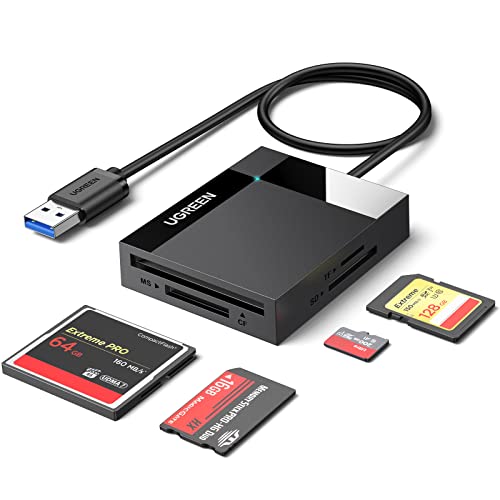
- Reads and writes four cards simultaneously
- Supports SD, microSD, CF, and MS formats
- Compatible with Windows, macOS, Linux, and ChromeOS
Best For: Everyday multi-format card transfers
Best for Professional Formats
Rocketek 8-Slot CFexpress Card Reader

- Eight independent slots for professional and common formats
- Supports CFexpress Type A/B and XQD
- USB 3.2 Gen 2 supports up to 10Gbps
Best For: Professional photo and video card management
Best for SD and microSD Volume
Cbcuyle 8-Slot SD/TF Card Reader

- Provides four SD and four microSD/TF slots
- Supports simultaneous reading and writing
- Includes USB-A and USB-C connectivity
Best For: SD-heavy event and multi-camera workflows
Best Format Coverage on a Budget

- Seven slots cover SD, CF, TF, xD, and MS formats
- Supports simultaneous reading and writing
- Includes USB-A and USB-C cables
Best For: Mixed-format camera card collections
Most Versatile
JOOPSHEE 8-in-1 Multi-Card Reader

- Supports SD, TF, CF, MS, XD, and CFast formats
- Reads multiple cards simultaneously
- Includes USB-A, USB-C, and card storage case
Best For: Multi-format card users who need portable storage
Best for Photographers
UTECHMIX 4-Slot Simultaneous Reader

- Reads up to four SD-family cards at once
- Supports USB 3.0, UHS-I, and UHS-II cards
- Includes USB-C, USB-A, adapters, and LED indicators
Best For: Multi-camera shoots and large photo offloads
Best Legacy-Format Coverage

- Supports CF, SD, microSD, XD, and MS formats
- Reads and writes up to five cards simultaneously
- Works through USB-A or USB-C without extra drivers
Best For: Mixed-format camera card workflows
Best All-Format Pick
6-in-1 Simultaneous Card Reader
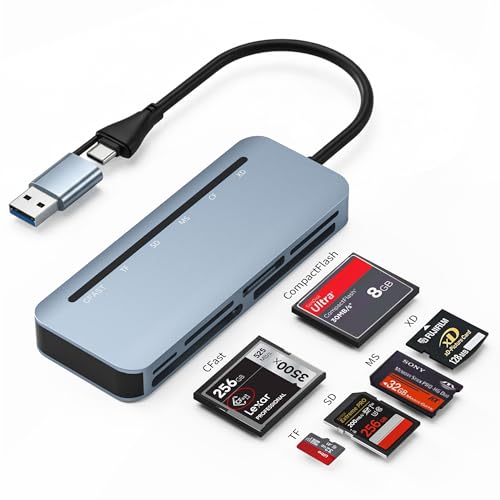
- Reads six card formats simultaneously
- USB 3.0 up to 5Gbps
- USB-C and USB-A connectors
Best For: Mixed camera-card workflows and legacy media
Best for Everyday Camera Transfers

- Simultaneous read/write for five cards
- USB-C and USB-A connectivity
- Individual LED indicators per slot
Best For: Camera, trail-camera, and dash-cam transfers
Best Professional High-Speed Pick

- Supports eight formats simultaneously
- USB 3.2 up to 10Gbps
- Includes CFexpress Type A and Type B support
Best For: Professional RAW, CFexpress, and 8K workflows
Best All-Around Choice – UGREEN 4-Slot USB 3.0 Card Reader
If you need a memory card reader with multiple simultaneous slots for common camera and mobile cards, the UGREEN reader is a practical option. Its four slots support SD, microSD, CompactFlash, and Memory Stick formats, and it can read and write four different cards at once. USB 3.0 provides up to 5Gbps transfer bandwidth.
Best For: Photographers, mobile workflows, and users who regularly handle several common card formats.
Pros:
- Reads and writes four cards simultaneously.
- Supports SD, microSD, CF, MS, and related card types.
- Works with Windows, macOS, Linux, and ChromeOS.
- Compact body with a 1.7-foot cable.
Cons:
- Uses a USB connection rather than a built-in USB-C plug.
- Its 5Gbps interface is slower than newer 10Gbps readers.
The UGREEN is a strong everyday pick when broad compatibility and simultaneous access matter more than specialized high-speed formats. Its straightforward plug-and-play design also suits travel and home-office use.
Best for Professional Formats – Rocketek 8-Slot CFexpress Card Reader
For demanding camera workflows, this memory card reader with multiple simultaneous slots expands beyond standard SD support. It has eight independent slots for CFexpress Type A/B, XQD, SD, TF, MS, XD, and CF cards, with USB 3.2 Gen 2 connectivity rated up to 10Gbps.
Best For: Photographers and videographers working with mixed professional media cards and large footage transfers.
Pros:
- Supports eight card formats and simultaneous multi-card reading.
- Includes CFexpress Type A/B and XQD support.
- Aluminum housing helps with heat dissipation.
- Includes USB-A and USB-C connection options.
Cons:
- Actual transfer speeds depend on the card and host device.
- Its specialized format support may be unnecessary for basic SD users.
This Rocketek reader is the most capable choice here for mixed professional media, especially when CFexpress or XQD cards are part of the workflow. Plug-and-play support for Windows, macOS, iPadOS, and Android adds field flexibility.
Best for SD and microSD Volume – Cbcuyle 8-Slot SD/TF Card Reader
This memory card reader with multiple simultaneous slots is designed for users handling many SD-family cards. It provides four SD slots and four microSD/TF slots, supports simultaneous reading and writing, and connects through USB-A or USB-C.
Best For: Event photographers, content creators, and multi-camera users managing several SD and microSD cards.
Pros:
- Offers eight total slots: four SD and four TF/microSD.
- Supports simultaneous read and write operations.
- USB 3.0 provides up to 5Gbps bandwidth.
- Aluminum construction supports heat dissipation.
Cons:
- Focused on SD and microSD formats rather than CF or XQD.
- Advertised speeds depend on compatible cards and hardware.
The Cbcuyle is a useful high-capacity option when a workflow involves multiple SD and microSD cards at the same time. Dual USB-A and USB-C compatibility makes it easier to use across laptops, phones, tablets, and desktops.
Best Format Coverage on a Budget – Kxable 7-in-1 Card Reader
The Kxable is a flexible memory card reader with multiple simultaneous slots for users who need broad legacy and current format coverage. Its seven slots include two SD, CF, TF, microSD, xD, and MS positions, while USB 3.0 supports up to 5Gbps transfers.
Best For: Users with mixed camera cards who want wide compatibility and both USB-A and USB-C cable options.
Pros:
- Supports simultaneous reading and writing.
- Covers SD, CF, TF, microSD, xD, MS, and related formats.
- Includes separate USB-A and USB-C cables.
- Compact metal body weighs about 45 grams.
Cons:
- Only two dedicated SD slots are provided.
- Transfer bandwidth is limited to the USB 3.0 class.
- The supplied cables are detachable rather than an integrated connector.
This Kxable model makes sense for photographers with older xD, MS, or CF media alongside SD and microSD cards. Its compact design and two cable choices are convenient for travel, though users needing CFexpress should choose a specialized reader instead.
Most Versatile – JOOPSHEE 8-in-1 Multi-Card Reader
If you need a memory card reader with multiple simultaneous slots and broad device compatibility, the JOOPSHEE 8-in-1 is built for flexible file transfers. It supports SD, TF, CF, MS, XD, CFast, and Memory Stick Pro Duo formats, with USB-A, USB-C, and phone-oriented connectivity. Its included storage case holds up to six TF cards and two SD cards.
Best For: Users who work with several card formats and want built-in card storage for travel or office use.
Pros:
- Supports multiple card types, including SD, TF, CF, MS, XD, and CFast.
- Can read different cards simultaneously and offers up to eight slots.
- Works with Windows, Mac, Linux, iOS, and Android devices without requiring an application.
- Includes USB-A, USB-C, and phone-oriented connections plus a card storage case.
Cons:
- When multiple cards are used at once, the adapter should be charged to help maintain read/write speed.
- It does not charge external devices connected to the adapter.
- Actual transfer performance depends on the connected device and card.
The JOOPSHEE stands out for format coverage and portability rather than a minimalist design. It is a practical choice for photographers or users managing cards from several cameras and devices.
Best for Photographers – UTECHMIX 4-Slot Simultaneous Reader
The UTECHMIX is a memory card reader with multiple simultaneous slots designed for fast shoot offloads. It can read up to four SD-family cards at once, including combinations of SD and microSD, while USB-C and USB-A connectivity makes it useful across computers, phones, and tablets.
Best For: Photographers and content creators transferring cards from multi-camera weddings, events, sports, or travel shoots.
Pros:
- Reads up to four cards simultaneously, including four SD cards or two SD and two microSD cards.
- Supports USB 3.0 with UHS-I and UHS-II memory cards.
- Includes two microSD adapters for using microSD cards in SD slots.
- Four independent LED indicators show card detection and transfer activity.
Cons:
- The reader is focused on SD and microSD formats rather than a wide range of legacy card types.
- SD cards are not included.
- Actual speeds vary by the memory card and connected device.
With four independent slots and clear activity indicators, this model is particularly convenient when several cards need to be checked or copied without constant swapping. Its main limitation is narrower format support than an all-in-one reader.
Best Legacy-Format Coverage – Rocketek 7-in-1 Card Reader
For shoppers seeking a memory card reader with multiple simultaneous slots and extensive format support, the Rocketek 7-in-1 covers both current and older media. It includes CF, SD, TF, microSD, XD, and MS slots, can read and write up to five cards at the same time, and connects through USB-A or USB-C.
Best For: Users transferring files from cameras and devices that use a mix of SD, CF, XD, MS, and microSD cards.
Pros:
- Supports a broad range of formats, including CF, UDMA CF, SDXC, microSDXC, XD, and Memory Stick variants.
- Reads and writes up to five cards simultaneously.
- Offers USB-A and USB-C connectors for laptops, tablets, and phones.
- Provides plug-and-play operation across Windows, Mac OS, Linux, Chrome OS, and Android.
Cons:
- Its simultaneous operation is limited to up to five cards despite having seven listed slots.
- Compatibility and transfer performance can vary by device, operating system, and card type.
- The supplied notes do not identify independent activity indicators.
The Rocketek is a strong fit for mixed-format workflows, especially when older camera media is still part of the process. Its seven-slot layout and dual connector design provide flexibility without requiring extra drivers.
Best All-Format Pick – 6-in-1 Simultaneous Card Reader
If you need a memory card reader with multiple simultaneous slots for mixed camera-card workflows, this six-slot model can read CFast, CompactFlash, SD, MicroSD, MS, and xD cards at once. Its USB 3.0 connection supports transfers up to 5Gbps, while the USB-C and USB-A connectors cover newer phones and computers as well as legacy PCs.
Best For: Photographers and videographers managing several card formats, including older camera media, across phones, tablets, Macs, and PCs.
Pros:
- Reads up to six different card types simultaneously.
- Supports CFast 2.0, CF, SDXC/MicroSD, MS Pro Duo, and xD formats.
- USB 3.0 delivers up to 5Gbps and the dual connectors support USB-C and USB-A devices.
- Aluminum housing is compact and designed to dissipate heat.
Cons:
- Its six-format design may be more than needed for users with only SD cards.
- The listed warranty is six months.
This is a versatile choice when your workflow spans current and legacy media. It offers broad format coverage and convenient simultaneous access, though users seeking the highest listed transfer speed or a longer warranty may want to compare alternatives.
Best for Everyday Camera Transfers – 5-Slot Multi-Card Reader
This memory card reader with multiple simultaneous slots is designed for straightforward transfers from camera, trail-camera, dash-cam, and other media. It provides independent SD, CF, MicroSD, xD, and MS slots, supports simultaneous read/write across five cards, and connects through either USB-C or USB-A.
Best For: Content creators and photographers who want clear slot activity indicators and broad everyday compatibility without installing drivers or apps.
Pros:
- Reads and writes five different cards simultaneously.
- Supports SD, SDHC, SDXC, MicroSD, CF, xD, MS, MS Pro, and MS Pro Duo formats.
- USB 3.0 transfer speeds are rated up to 5Gbps.
- Individual LED indicators show each slot’s recognition and transfer status.
Cons:
- It has five slots rather than the six or eight offered by some alternatives.
- The supplied information lists both a 12-month service statement and a two-year warranty description, so buyers may want to confirm the applicable coverage.
The independent LEDs make this a practical option when several cards are connected at once and you want quick visual confirmation of activity. Its format support is broad, while the five-slot capacity keeps the design focused on common camera and storage media.
Best Professional High-Speed Pick – 8-Slot CFexpress Reader
For demanding production work, this memory card reader with multiple simultaneous slots supports eight formats, including CFexpress Type B and Type A, XQD, SD, TF, MS, XD, and CF. Its USB 3.2 connection is rated up to 10Gbps, making it the fastest option here for offloading large photo and video files when the cards and host device can support those speeds.
Best For: Professional photographers, filmmakers, and creators working with CFexpress media, RAW files, or 8K footage.
Pros:
- Supports eight card formats with simultaneous multi-card reading.
- USB 3.2 Gen 2 provides up to 10Gbps transfer speeds.
- Works with Windows, macOS, Linux, iPadOS, iOS, and Android without extra software.
- Aluminum construction and heat dissipation are designed for heavy workloads.
Cons:
- Actual transfer speed depends on the card, computer, and port hardware.
- Only USB-protocol XQD cards are supported.
- Its professional format support may be unnecessary for basic SD-card users.
This is the strongest fit for high-volume workflows that use newer professional media. The eight-slot layout and 10Gbps interface reduce bottlenecks, but compatibility details—especially the USB-protocol XQD limitation—should be checked before purchase.
How We Picked the Best Memory Card Reader with Multiple Simultaneous Slots
We focused on readers that support several card formats or multiple cards at once, with particular attention to simultaneous read and write claims. The selection covers common SD and microSD workflows as well as CF, CompactFlash, CFexpress, XQD, XD, and Memory Stick compatibility. We also considered connection standards, advertised transfer speeds, portability, build materials, and compatibility with modern USB-C and legacy USB-A devices.
Advertised speeds are theoretical maximums. Actual performance depends on the card, computer, cable, file type, and whether several cards are being accessed simultaneously.
Quick Comparison
- Best for broad format support: Choose a multi-format reader covering SD, microSD, CF, and older card types.
- Best for several SD or microSD cards: Look for four-slot designs that can read or write multiple cards concurrently.
- Best for newer professional media: Select a CFexpress Type A or Type B reader with a 10Gbps USB connection.
- Best for travel: Prioritize a compact aluminum adapter, integrated cable, or included storage case.
Key Buying Factors for a Memory Card Reader with Multiple Simultaneous Slots
Slot Layout and Real Simultaneous Access
Check the exact slot combination before buying. Some readers have many physical openings but limit which slots can operate together. If your workflow involves several SD or TF cards, confirm that the product specifically supports simultaneous reading or writing across those slots.
Card Compatibility
SDXC and microSDXC support is important for current cameras and mobile devices, while CF, CFast, XQD, XD, and CFexpress support matters for specialized equipment. CFexpress Type A and Type B are different formats and are not interchangeable, so verify the required type.
Connection Speed and Host Ports
USB 3.0 or USB 3.2 readers generally offer more bandwidth than older USB 2.0 models. A 10Gbps-rated reader may be worthwhile for fast CFexpress cards, but only when connected to a compatible computer port. USB-C models are convenient for newer laptops and tablets; USB-A compatibility may require an adapter or dual-interface cable.
Power, Durability, and Portability
Most standard card readers draw power from the host device, but multiple high-speed cards can increase demand. Look for stable construction, secure slot tolerances, heat management, and a cable that will not obstruct neighboring ports.
Who Should Buy Which Memory Card Reader with Multiple Simultaneous Slots?
Photographers with mixed camera gear should choose a broad-format reader with SD, microSD, and CF support. Content creators handling several cards will benefit from four- or eight-slot designs that support simultaneous transfers. Professional video users should prioritize CFexpress compatibility and a 10Gbps connection. Traveling users should favor compact USB-C readers with an included case or storage solution. Finally, buyers who only transfer one common SD card at a time may save money and space with a simpler single-slot reader.