The best memory card readers for Mac make it easier to move photos, videos, and other files from removable storage without relying on cloud uploads or awkward adapters. The right model depends on your Mac’s ports, the cards you use, and whether you need extra connectivity.
We compared 10 versatile readers, from Apple’s straightforward USB-C option to multi-format adapters with SD, microSD, CompactFlash, and USB support. Use the guide below to narrow the choices by compatibility, speed, portability, and value.
Best 10 Memory Card Readers for Mac Picks for 2026
Versatile Four-Card Pick

- Reads SD, microSD, MS, and CF cards
- USB-C and USB 3.0 connectivity
- Reads four cards simultaneously
Best For: Multi-format Mac workflows and frequent file transfers
Apple-Matched Speed Choice

- Supports UHS-II SD card speeds
- Works with USB-C Mac, iPad, and iPhone
- Designed not to block adjacent ports
Best For: Fast SD transfers on USB-C Apple devices
Compact Dual-Slot Option
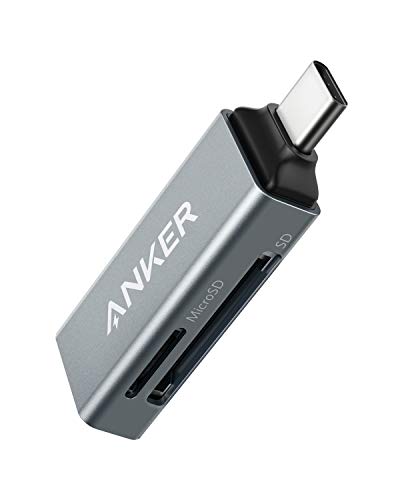
- Dedicated SD and microSD slots
- Small design for crowded USB-C ports
- Supports Mac OS and UHS-I cards
Best For: Portable SD and microSD transfers
Cross-Device Format Hub

- Supports SD, microSD, CF, and MS cards
- Includes USB-C and USB connectivity
- Works across macOS, iOS, Android, and Windows
Best For: Cross-platform transfers with multiple card formats
Best Dual-Interface Pick

- USB-A and USB-C connectors
- Simultaneous SD and microSD reading
- Up to 5Gbps USB 3.0 transfers
Best For: Mac users needing flexible ports and dual-card access
Best Multi-Format Pick

- Seven slots cover major card formats
- USB-C and USB-A connectivity
- Reads and writes up to five cards at once
Best For: Mac photographers using varied camera card types
Best Simple USB-C Pick
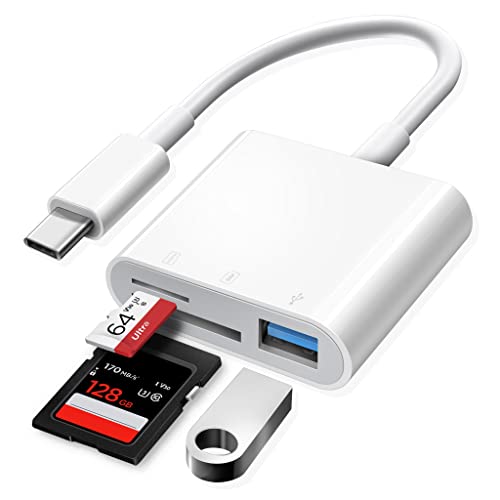
- Built-in USB-C cable
- No drivers or extra app required
- Supports SD and microSD cards
Best For: Everyday photo transfers on USB-C Macs and Apple devices
Most Versatile Pick
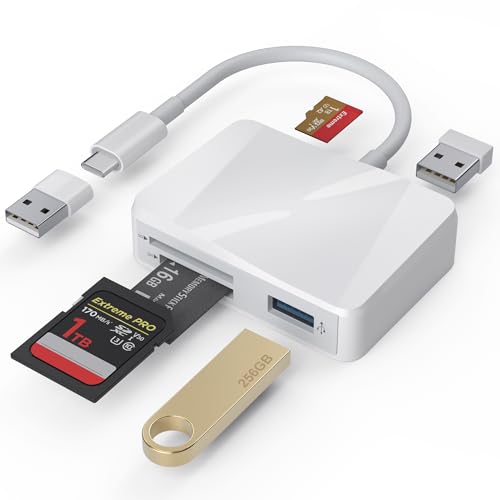
- Reads SD, microSD, and Memory Stick cards
- Includes USB-C and detachable USB-A connectors
- Adds two USB-A ports for peripherals
Best For: Photographers and Mac users needing broad format and port compatibility
Compact USB-C Choice

- Supports SD and microSD card formats
- Built-in USB-C cable saves space
- Adds a USB-A port for accessories
Best For: USB-C MacBook and iPad users who prioritize portability
Speed-Focused Pick

- USB 3.0 Type-C interface for fast transfers
- Supports SD and microSD cards
- Includes a USB-A port and simultaneous card reading
Best For: Photographers transferring large files to USB-C Macs
Versatile Four-Card Pick – BENFEI 4-in-1 Card Reader
For shoppers comparing memory card readers for Mac, the BENFEI 4-in-1 is a flexible choice when you need support for several card formats. Its USB-C and USB 3.0 connections work with newer Macs and computers with traditional USB ports, while the four slots can read and write cards simultaneously.
Best For: Mac users who work with SD, microSD, Memory Stick, and CompactFlash cards.
Pros:
- Supports SD, microSD, Memory Stick, and CompactFlash cards.
- USB-C and USB 3.0 connectors improve compatibility across newer and older computers.
- Can read four cards at the same time.
- Supports UHS-I transfer rates up to 160MB/sec, depending on the card and port.
Cons:
- Not compatible with standard Memory Stick, Memory Stick Micro (M2), or CF Type I cards.
- Older Mac operating systems may not support exFAT-formatted SDXC cards.
The BENFEI stands out for broad format support and simultaneous card access. It is a practical all-purpose option if your Mac workflow includes more than standard SD cards.
Apple-Matched Speed Choice – Apple USB-C to SD Card Reader
The Apple USB-C to SD Card Reader is a straightforward option among memory card readers for Mac, especially for users who want a compact reader focused on full-size SD cards. It transfers high-resolution photos and videos at UHS-II speeds to compatible USB-C Macs, iPads, and iPhones.
Best For: Mac photographers and creators using UHS-II SD cards.
Pros:
- Supports high-resolution photo and video transfers at UHS-II speeds.
- Works with USB-C enabled Mac, iPad, and iPhone devices.
- Compatible with UHS-II SD cards as well as other SD cards and adapters.
- Designed to avoid blocking adjacent ports.
Cons:
- Designed for SD cards rather than microSD, CF, or Memory Stick cards.
- Its focused single-card design offers less format flexibility than multi-slot readers.
This reader is a strong fit when fast SD-card transfers and Apple-device compatibility matter more than supporting multiple card types. Its compact design also suits crowded Mac setups.
Compact Dual-Slot Option – Anker USB-C SD Card Reader
For anyone seeking compact memory card readers for Mac, the Anker USB-C SD Card Reader offers two useful slots in a small body. It supports one standard SD card and one microSD card, making it convenient for moving files between cameras, phones, and USB-C computers.
Best For: Mac users who regularly switch between SD and microSD cards.
Pros:
- Includes dedicated SD and microSD slots.
- Compact design works alongside other USB-C peripherals.
- Compatible with Mac OS and a broad range of USB-C devices.
- Supports SDHC, SDXC, microSDHC, microSDXC, and UHS-I cards.
Cons:
- USB-C connection may require removing a device case.
- Does not provide slots for CompactFlash or Memory Stick cards.
The Anker is a sensible everyday reader for standard and microSD media. Its two-slot layout keeps the design portable while allowing convenient card-to-card file management.
Cross-Device Format Hub – RRSITIAU 4-in-1 Card Reader
The RRSITIAU 4-in-1 reader is a versatile pick among memory card readers for Mac when you need to connect several card formats and device types. Its USB-C connector and detachable USB adapter support USB-C and traditional USB ports, while the four slots handle SD, microSD, CompactFlash, and Memory Stick media.
Best For: Mac owners who transfer files across cameras, phones, tablets, and older computers.
Pros:
- Supports SD, microSD, CompactFlash, and Memory Stick cards.
- Includes a detachable USB-C to USB adapter for broader computer compatibility.
- Works with macOS, Windows, iOS, and Android devices.
- Plug-and-play operation requires no additional driver or software.
Cons:
- Does not support Wi-Fi SD cards.
- The listed data transfer rate is 480 megabits per second, which may be less suitable for the fastest card workflows.
This reader emphasizes connection flexibility and broad media support rather than a minimalist design. It is useful for households or creators moving files among newer USB-C devices and older USB-equipped computers.
Best Dual-Interface Pick – Acer USB-C SD Card Reader
If you need memory card readers for Mac that work with both newer USB-C devices and standard USB-A ports, the Acer dual-slot reader is a practical option. It supports SD and microSD cards, offers USB 3.0 transfer speeds up to 5Gbps, and can read and write both card types simultaneously.
Best For: MacBook users, photographers, and video editors who want dual USB-A/USB-C connectivity and simultaneous SD and microSD access.
Pros:
- USB-A and USB-C connectors support a broad range of Macs and other devices.
- Dual slots can read and write SD and microSD cards at the same time.
- Plug-and-play design requires no drivers or software.
- Compact aluminum body includes protective covers and an attached cord.
Cons:
- Does not support CF Express, SIM, XQD, MS, or Memory Stick cards.
- SD and microSD cards cannot be used simultaneously if a thick case prevents full insertion.
- Not compatible with Lightning-port devices.
For Mac users who regularly move files between SD and microSD media, this Acer reader combines useful dual-card functionality with flexible port compatibility. It is less suitable if you need professional CF or legacy card formats.
Best Multi-Format Pick – Rocketek 7-in-1 Card Reader
For shoppers comparing memory card readers for Mac across multiple camera formats, the Rocketek 7-in-1 reader offers unusually broad coverage. It includes slots for CF, SD, microSD, XD, and MS cards, with USB-C and USB-A connectivity and transfer speeds up to 5Gbps.
Best For: Mac users, photographers, and editors who work with several memory card standards and need simultaneous multi-card transfers.
Pros:
- Supports CF, SD, microSD, XD, and MS card formats.
- USB-C and USB 3.0 connectors work with newer and older computers.
- Can read and write up to five cards simultaneously.
- Plug-and-play compatibility includes macOS, Windows, Linux, Chrome OS, and Android.
Cons:
- The multi-slot design may be more than needed for users who only use SD cards.
- Its listed compatibility and speed depend on the card, port, and host device.
This Rocketek model is the strongest choice here for legacy and professional media formats. Its seven-slot design can simplify a mixed-card workflow, while the dual connector setup makes it convenient for MacBooks and other USB-equipped devices.
Best Simple USB-C Pick – Oyuiasle SD Card Reader
If you want a straightforward memory card reader for Mac with a built-in USB-C cable, the Oyuiasle adapter keeps the setup simple. It supports SD and microSD cards, works without drivers or extra apps, and is designed for USB-C Macs, iPads, iPhones 15 and 16, and compatible Android devices.
Best For: MacBook, iMac, iPad, and USB-C phone users who mainly transfer photos and videos from SD or microSD cards.
Pros:
- Built-in USB-C cord helps avoid blocking nearby ports.
- Plug-and-play operation requires no driver, network, or external power.
- Supports two-way file transfers between cards and compatible devices.
- Can also connect USB peripherals such as flash drives, keyboards, mice, and hard disks.
Cons:
- SD and microSD cards cannot be read simultaneously.
- The listed data transfer rate is 30Mbps, slower than the other readers here.
- It uses USB-C only and does not provide a USB-A connector.
The Oyuiasle is a compact, convenient fit for everyday photo transfers on USB-C Macs and Apple mobile devices. Choose another model if you need simultaneous SD and microSD use, faster listed transfer performance, or broad legacy card support.
Most Versatile Pick – 5-in-1 USB-C/USB Card Reader
If you need memory card readers for Mac that also work across phones, tablets, and older USB devices, this 5-in-1 adapter is a flexible option. It combines SD, microSD, and Memory Stick slots with dual USB-A ports, plus both USB-C and USB connectivity.
Best For: Photographers and Mac users who need broad card compatibility and extra USB ports.
Pros:
- Supports SD, microSD, and Memory Stick formats.
- Includes USB-C and detachable USB-A connectivity.
- Offers two USB-A ports for peripherals or storage devices.
- Plug-and-play support for macOS, Windows, Chrome, and Linux.
Cons:
- The listed transfer rate is 480 MB/s, so performance may vary by device and card.
- Its several ports make it less minimal than a basic card reader.
This is the strongest choice when one adapter needs to cover multiple card formats and both newer and older computers. Its extra ports add convenience for a MacBook or iPad workspace.
Compact USB-C Choice – Dual-Slot SD Card Adapter
For Mac owners seeking memory card readers for Mac with a compact design, this USB-C model keeps the setup straightforward. It has dedicated SD and microSD slots, a USB-A expansion port, and a built-in USB-C cable.
Best For: MacBook, iPad, and USB-C device users who want a portable reader with one extra USB-A port.
Pros:
- Works with Mac, MacBook, iPad, Android, Windows, Linux, and Chrome OS devices with USB-C.
- Supports SD, SDHC, SDXC, microSD, microSDHC, and microSDXC cards.
- Built-in cable saves space and avoids carrying a separate adapter.
- Plug-and-play operation does not require an additional app or driver.
Cons:
- Does not support Lightning-equipped iPhones.
- Cannot read an SD card and microSD card simultaneously.
- The listed data transfer rate is 54 MB/s.
This reader is a practical travel option for newer Macs and USB-C iPads. Choose it when portability and simple card access matter more than simultaneous card reading or multiple expansion ports.
Speed-Focused Pick – USB 3.0 SD/microSD Reader
This USB 3.0 reader is a sensible pick among memory card readers for Mac when faster transfers are a priority. It connects through USB-C, supports SD and microSD cards, and includes a USB-A port for added flexibility.
Best For: Mac and iPhone 15–17 Pro users transferring camera photos, videos, or other large files.
Pros:
- Uses a USB 3.0 Type-C interface with a listed transfer rate of up to 5 Gb/s.
- Supports SD and microSD card formats, including SDXC and microSDXC.
- Can read and write two cards simultaneously according to the supplied notes.
- Includes a USB-A port for flash drives and peripherals.
Cons:
- Offers fewer card-format options than a reader with Memory Stick support.
- Actual speeds depend on the card, host device, and files being transferred.
- Its compatibility notes include older operating-system versions, so newer devices should be checked before purchase.
With USB 3.0 connectivity and simultaneous SD/microSD support, this model is aimed at users moving sizable media libraries. It is especially attractive for photographers using compatible USB-C Macs or newer iPhone Pro models.
How We Picked These Memory Card Readers for Mac
We focused on practical compatibility first: every option should connect sensibly to a modern Mac, particularly USB-C MacBook and iPad setups. We also considered card-format support, transfer convenience, portability, build simplicity, and whether a reader adds useful USB ports or hub functionality.
Multi-slot models can be especially useful for photographers and videographers who work with several card types, while compact single-card readers are often better for everyday transfers. Because advertised performance can vary with the card, computer, and file type, this guide emphasizes useful features rather than promising a specific real-world speed.
Quick Comparison
| Best For | Recommended Type | Why It Makes Sense |
|---|---|---|
| Apple-focused simplicity | Apple USB-C to SD Card Reader | Minimal design and direct SD support |
| SD and microSD users | Dual-slot USB-C reader | Convenient for cameras, drones, and phones |
| Mixed professional media | Four-in-one or seven-in-one reader | Supports formats such as CF, MS, XD, and SD |
| Travel and flexible setups | Reader with USB-A and USB-C support | Works with more computers and accessories |
Key Buying Factors for Memory Card Readers for Mac
Port and Connector Compatibility
Check whether your Mac has USB-C, USB-A, or both. A USB-C reader is the simplest match for newer MacBook models, while an included adapter can help when you still use older accessories. Also confirm connector clearance if your Mac has ports close together.
Card Formats and Slot Layout
SD and microSD cover many cameras, action cameras, drones, and phones. CompactFlash, Memory Stick, and XD support matter mainly if you use older or specialized equipment. If you need to read two cards at once, verify that the product explicitly supports simultaneous access rather than merely listing multiple slots.
Transfer Speed and Reliability
USB 3.0 or faster connectivity is preferable for large photo libraries and video files, but the memory card’s own speed rating remains a major limit. Look for secure connections, a durable cable or housing, and a reader that does not require extra software on macOS.
Size and Extra Ports
A tiny reader is easy to keep in a camera bag, whereas a hub-style model may provide USB ports for drives, keyboards, or other peripherals. Choose the smallest design that still covers your workflow; unnecessary slots add bulk without improving transfers.
Who Should Buy Which Memory Card Readers for Mac?
Choose Apple’s reader if you want a simple, brand-matched solution for standard SD cards and value a streamlined setup. Choose a dual-slot USB-C model if you regularly alternate between full-size SD and microSD cards. Choose a four-in-one or seven-in-one reader if your cameras use multiple formats or you want one adapter for home and travel.
For buyers who connect phones, iPads, and Macs, a reader with USB-C plus USB-A ports offers more flexibility. Before ordering, confirm your card type, Mac port, desired simultaneous-reading capability, and the reader’s physical dimensions. Those checks matter more than headline feature counts when choosing among these Memory Card Readers for Mac.