A mini PC with Ryzen can deliver strong everyday performance in a compact, quiet, and energy-efficient design. The right model can handle office apps, streaming, creative workloads, and even some gaming without taking up much desk space.
These 10 picks span entry-level Ryzen 3 systems, efficient Ryzen 5 and Ryzen 7 models, and higher-performance machines with faster DDR5 memory and gaming-focused processors. Use the guide below to match features, connectivity, and performance to your setup.
Best 10 Mini PC with Ryzen Picks for 2026
High-Performance Compact Pick

- Ryzen 9 6900HX and 24GB LPDDR5X memory
- Triple 4K display support
- Dual LAN and expandable PCIe 4.0 storage
Best For: Power users, creators, and home-lab builders
Upgradeable Workstation Pick
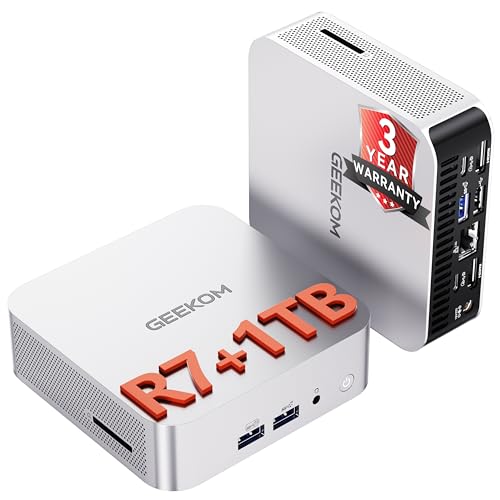
- Ryzen 7 8745HS with Radeon 780M graphics
- RAM upgradeable to 128GB
- 0.5-liter chassis with VESA mount
Best For: Creative work, coding, and expandable business systems
Value Home-Lab Pick
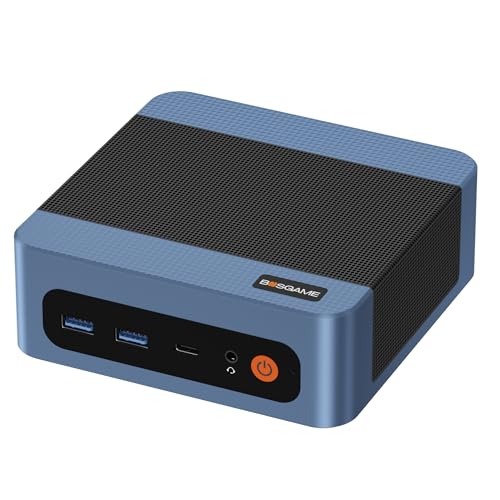
- Affordable everyday Ryzen performance
- Triple-display support with 4K output
- Dual 2.5GbE ports and extra M.2 slot
Best For: Office work, basic multitasking, and home networking
Performance Pick
GMKtec M5 Ultra Ryzen 7 Mini PC

- 8-core Ryzen 7 7730U processor
- 32GB RAM and expandable storage
- Dual 2.5Gbps LAN with triple-display support
Best For: Multitasking, office work, light gaming, and networking
Light Gaming Pick

- Ryzen 7 7735HS with 8 cores and 16 threads
- Radeon 680M integrated graphics
- 24GB LPDDR5 RAM and 512GB SSD
Best For: Light gaming, multitasking, and compact workstations
Best Performance Value
GMKtec M6 Ultra Ryzen 5 7640HS

- Ryzen 5 7640HS with up to 5.0GHz boost
- 32GB DDR5 RAM and 1TB PCIe SSD
- Triple-display support with 2.5GbE LAN
Best For: Multitasking, light gaming, and multi-monitor productivity
Best for Multitasking
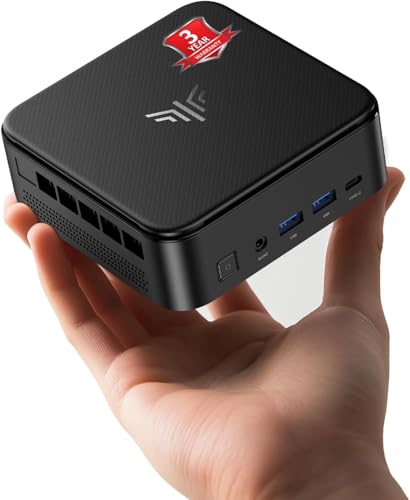
- 8-core/16-thread Ryzen 7 processor
- Fast 16GB LPDDR5 memory
- Two M.2 slots and triple-display support
Best For: Programming, content creation, and sustained multitasking
High-Performance Compact Pick – BOSGAME P6 Ryzen 9 6900HX
The BOSGAME P6 is a strong mini PC with Ryzen for users who need fast multitasking in a small, travel-friendly design. Its Ryzen 9 processor, 24GB of LPDDR5X memory, and 1TB PCIe 4.0 SSD are well suited to professional work, light content creation, and everyday power-user tasks.
Best For: Creators, developers, remote workers, and users building multi-monitor or home-lab setups.
Pros:
- Ryzen 9 6900HX with 8 cores and 16 threads for demanding multitasking.
- Supports three simultaneous 4K displays through HDMI, DisplayPort, and USB-C.
- Includes 24GB LPDDR5X memory, a 1TB PCIe 4.0 SSD, dual 1Gbps Ethernet, and Wi-Fi 6E.
Cons:
- Memory is onboard, limiting future RAM upgrades.
- Bluetooth 5.3 requires a current driver download; otherwise it defaults to Bluetooth 5.2.
The P6 combines substantial processing power with quiet operation and useful connectivity. It is a practical choice when you want a compact workstation without moving to a full-size desktop.
Expansion-Focused Pick – GMKtec M8 Ryzen PRO 6650H
The GMKtec M8 is a flexible mini PC with Ryzen that emphasizes expansion and networking. Its Ryzen 5 PRO 6650H, fast LPDDR5 memory, OCuLink, USB4, and dual 2.5GbE ports make it a capable foundation for office productivity, storage projects, and future upgrades.
Best For: Multi-monitor offices, home servers, virtualization setups, and users planning external GPU expansion.
Pros:
- Ryzen 5 PRO 6650H provides 6 cores and 12 threads with speeds up to 4.5GHz.
- OCuLink and USB4 offer high-speed options for external graphics and peripherals.
- Dual M.2 slots support up to 8TB total storage, while dual 2.5GbE ports suit advanced networks.
Cons:
- Ships with 16GB of LPDDR5 memory, which is not described as user-upgradeable.
- Its feature-rich networking and expansion ports may be more than basic users need.
With selectable 28W, 35W, and 40W performance modes, the M8 can be tuned for quieter everyday use or heavier workloads. It is especially appealing to buyers who value connectivity and expansion over the simplest setup.
Upgradeable Workstation Pick – GEEKOM A8 Ryzen 7 8745HS
The GEEKOM A8 is a premium mini PC with Ryzen aimed at demanding creative and professional work. Its Ryzen 7 8745HS, Radeon 780M graphics, upgradeable DDR5 memory, and 1TB PCIe 4.0 SSD provide a strong starting point for video editing, coding, and long-term productivity.
Best For: Creative professionals, engineers, business users, and buyers who want substantial memory and storage upgrade headroom.
Pros:
- Ryzen 7 8745HS offers 8 cores, 16 threads, and speeds up to 4.9GHz.
- Upgradeable DDR5 memory supports up to 128GB, with storage expansion up to 4TB.
- Radeon 780M graphics, a 0.5-liter chassis, VESA mounting, and 2.5GbE support.
Cons:
- Its 60W power consumption is higher than simpler everyday mini PCs.
- It uses integrated graphics rather than a dedicated graphics card.
The A8 stands out for combining workstation-oriented performance with a very compact, mountable design. Its upgrade path and three-year limited warranty make it a sensible option for users planning to keep the system for several years.
Value Home-Lab Pick – BOSGAME E5 Ryzen 3 5300U
The BOSGAME E5 is an accessible mini PC with Ryzen for office work, home use, and basic multi-screen setups. Its Ryzen 3 5300U, 16GB of DDR4 memory, 512GB NVMe SSD, and dual 2.5GbE networking give it a practical feature set for everyday computing and home-lab projects.
Best For: Office users, video conferencing, light multitasking, NAS projects, and soft-router or home-lab setups.
Pros:
- Compact system with a Ryzen 3 5300U processor and pre-installed Windows 11 Pro.
- Supports three displays through HDMI, DisplayPort, and USB-C, including 4K output.
- Dual 2.5GbE ports, an extra M.2 slot, Wi-Fi 5, and an included VESA mount.
Cons:
- Ryzen 3 performance is better suited to everyday workloads than demanding creation tasks.
- The supplied details list 16GB as the maximum memory, despite upgrade language elsewhere in the notes.
The E5 is a sensible choice when connectivity and compactness matter more than high-end performance. Its dual LAN ports and three-display support give this budget-oriented system unusual flexibility for work and networking projects.
Performance Pick – GMKtec M5 Ultra Ryzen 7 Mini PC
For shoppers seeking a mini pc with ryzen for demanding everyday work, light gaming, and multitasking, the GMKtec M5 Ultra combines an 8-core Ryzen 7 7730U processor with 32GB of dual-channel RAM. Its dual 2.5Gbps Ethernet ports and triple-display support also make it useful beyond a typical home office.
Best For: Multitasking, office productivity, light gaming, multi-monitor workstations, and compact server or networking setups.
Pros:
- Ryzen 7 7730U with 8 cores and 16 threads, boosting up to 4.5GHz.
- 32GB dual-channel DDR4 memory and a 512GB PCIe SSD, with expansion support.
- Supports three displays, including 4K at 60Hz, and includes integrated Radeon graphics.
- Dual 2.5Gbps LAN ports, Wi-Fi 6E, and Bluetooth 5.2 provide flexible connectivity.
Cons:
- Integrated graphics are better suited to light gaming than demanding modern titles.
- The included SSD uses PCIe 3.0 rather than a newer PCIe generation.
The M5 Ultra is a strong all-around choice when memory, networking, and display flexibility matter as much as processor performance. Its upgradeable storage and RAM help extend its usefulness, while the compact 35-watt design keeps it practical for everyday deployment.
Compact Value Choice – KAMRUI Pinova P2 Ryzen 3 Mini PC
The KAMRUI Pinova P2 is a practical mini pc with ryzen for home offices, remote work, and basic productivity. Its efficient Ryzen 3 7330U, compact case, included VESA mount, and triple-4K display capability make it especially appealing when desk space and power efficiency are priorities.
Best For: Everyday office tasks, remote work, presentations, media playback, and space-constrained desks.
Pros:
- Ryzen 3 7330U provides 4 cores, 8 threads, and up to 4.3GHz.
- Compact 5.05-inch-square chassis with an included VESA mounting option.
- Supports three simultaneous 4K displays through HDMI, DisplayPort, and USB-C.
- Includes 16GB LPDDR4X RAM and two M.2 storage expansion slots.
Cons:
- The 256GB SSD offers less starting storage than the other listed options.
- Its Ryzen 3 processor is aimed more at productivity than demanding gaming or content creation.
This KAMRUI model emphasizes efficient everyday performance and flexible placement rather than maximum power. It is a sensible fit for a clean workstation, multi-screen office setup, or compact home computer, with storage expansion available when needed.
Light Gaming Pick – ACEMAGIC K1 Ryzen 7 Mini PC
For buyers wanting a mini pc with ryzen that leans toward light gaming, the ACEMAGIC K1 pairs a Ryzen 7 7735HS processor with Radeon 680M integrated graphics. Its 24GB LPDDR5 memory, 512GB SSD, and Windows 11 Pro provide a capable starting point for office work, multitasking, and casual games.
Best For: Light gaming, multitasking, compact office setups, and users who want a faster integrated graphics solution.
Pros:
- Ryzen 7 7735HS offers 8 cores, 16 threads, and speeds up to 4.75GHz.
- Radeon 680M graphics are designed for smoother light gaming and 4K visuals.
- 24GB LPDDR5 RAM and a 512GB M.2 SSD support responsive multitasking.
- Triple-display output, Windows 11 Pro, and included VESA mounting bracket add convenience.
Cons:
- Memory is onboard and listed as non-upgradable, limiting future RAM expansion.
- Integrated graphics are intended for light gaming rather than a dedicated gaming-PC experience.
The K1 is the strongest gaming-oriented option in this group because of its Ryzen 7 HS processor and Radeon 680M graphics. It remains compact and efficient, but buyers should view it as a light-gaming and productivity system rather than a replacement for a desktop with a discrete GPU.
Best Performance Value – GMKtec M6 Ultra Ryzen 5 7640HS
For shoppers seeking a mini pc with ryzen power for demanding everyday work and light-to-moderate gaming, the GMKtec M6 Ultra combines a Ryzen 5 7640HS processor with generous memory and storage. Its Radeon 760M graphics, 2.5GbE networking, and multi-display support make it a flexible compact desktop.
Best For: Multitasking, light gaming, multi-monitor workspaces, and users who want upgradeable RAM and storage.
Pros:
- Ryzen 5 7640HS delivers up to 5.0GHz boost performance.
- Includes 32GB DDR5 RAM and a 1TB PCIe SSD.
- Supports up to three displays, including up to 8K through USB4.
- Features dual 2.5GbE LAN ports, Wi-Fi 6, and Bluetooth 5.2.
Cons:
- Integrated Radeon 760M graphics are intended for moderate rather than high-end gaming.
- The listed details contain varying RAM expansion information, so buyers should confirm the exact configuration.
This is a strong all-around choice when you want higher memory capacity, fast networking, and plenty of display flexibility in a small chassis. It offers a particularly appealing balance for productivity users who also want casual gaming capability.
Best for Multitasking – KAMRUI Ryzen 7 7735HS Mini PC
The KAMRUI is a capable mini pc with ryzen for buyers prioritizing processor threads, fast memory, and sustained workloads. Its Ryzen 7 7735HS, dual-channel LPDDR5 RAM, enhanced cooling design, and three-display support suit office work, programming, content creation, and light gaming.
Best For: Heavy multitasking, programming, office productivity, content creation, and light gaming.
Pros:
- Ryzen 7 7735HS provides 8 cores and 16 threads with up to 4.75GHz boost.
- 16GB dual-channel LPDDR5 memory runs at up to 5500MT/s.
- Two M.2 slots allow storage expansion up to 4TB.
- Includes 2.5GbE, Wi-Fi 6, Bluetooth 5.2, and triple-display connectivity.
Cons:
- Ships with 512GB of storage, which may be limited for large media libraries.
- Integrated Radeon graphics are positioned for light gaming rather than demanding games.
Choose this model if sustained multitasking and connectivity matter more than maximum included storage. Its eight-core processor and airflow-focused cooling make it a practical fit for compact workstations that stay busy throughout the day.
Best Compact Office Pick – Getorli Ryzen 5 6600H Mini PC
For everyday work in a small footprint, this Getorli mini pc with ryzen pairs a six-core Ryzen 5 6600H with fast LPDDR5 memory and an NVMe SSD. Triple-display support, dual LAN, and Wi-Fi 6 make it well suited to home offices, business use, education, and casual entertainment.
Best For: Office productivity, remote work, browsing, 4K playback, and entry-level gaming.
Pros:
- Ryzen 5 6600H offers 6 cores, 12 threads, and up to 4.5GHz boost.
- 16GB LPDDR5 memory runs at 6400MT/s.
- 512GB NVMe storage can be expanded up to 4TB.
- Supports three displays and includes dual LAN, Wi-Fi 6, and Bluetooth 5.3.
Cons:
- Memory is listed as 16GB maximum, limiting future RAM upgrades.
- Radeon 660M integrated graphics are aimed at entry-level gaming and general media use.
This model makes sense for users who want a compact, connected desktop without paying for discrete graphics. Its fast memory, expandable storage, and multiple display outputs provide a useful setup for productive home or office work.
How We Picked the Best Mini PC with Ryzen
We focused on the factors that matter most in a compact Windows desktop: processor generation, core and thread count, memory capacity, storage, upgrade potential, display support, wireless connectivity, and overall use case. The selection includes efficient systems for everyday computing as well as more powerful models suited to demanding multitasking, content creation, and light gaming.
We also considered configuration value. A larger SSD or 32GB of RAM can reduce the need for immediate upgrades, while newer Ryzen chips with DDR5 support may offer better responsiveness and longer useful life. Because specifications can vary by seller, verify the exact RAM, storage, operating system, and port configuration before buying.
Quick Comparison
- Best overall performance: Ryzen 7 and Ryzen 9 models such as the BOSGAME P6, GEEKOM A8, and GMKtec M6 Ultra.
- Best for multitasking: Systems with 24GB or 32GB of memory, including the BOSGAME P6, GMKtec M5 Ultra, and GMKtec M6 Ultra.
- Best for compact everyday work: Ryzen 5 and Ryzen 7 U-series systems with modest power demands.
- Best for light gaming: Ryzen 7 7735HS or Ryzen 7 7640HS models with fast integrated graphics and dual-channel memory.
- Best budget-oriented choice: A Ryzen 3 or Ryzen 5 system can cover browsing, office work, streaming, and remote work at a lower price.
Key Buying Factors for a Mini PC with Ryzen
Processor and Graphics Performance
Ryzen model numbers are not interchangeable. H- and HS-series chips generally target higher performance, while U-series processors prioritize efficiency and cooler operation. For everyday tasks, a Ryzen 5 is usually sufficient. Choose Ryzen 7 or Ryzen 9 when you regularly edit photos or video, compile code, run virtual machines, or play games using integrated graphics.
RAM and Storage
Choose at least 16GB of RAM for a modern Windows system. For heavy multitasking, 24GB or 32GB is more comfortable. DDR5 memory can improve bandwidth, but confirm whether it is replaceable or soldered. A 512GB SSD works for general use; a 1TB PCIe NVMe drive is better for large applications, games, and media libraries.
Ports, Displays, and Upgrades
Check for the ports you actually need, including USB-C, USB-A, HDMI, DisplayPort, Ethernet, and audio. Triple-display support can be valuable for productivity, but it depends on the specific outputs and supported resolutions. Also check whether the memory, SSD, and wireless card can be upgraded, and whether the chassis includes adequate cooling.
Thermals and Connectivity
A small chassis can limit sustained performance if cooling is weak. Look for an effective fan design and sensible ventilation. Wi-Fi 6 or newer and Bluetooth 5-class connectivity are useful for modern networks and peripherals, while 2.5Gb Ethernet is beneficial for fast local file transfers.
Who Should Buy Which Mini PC with Ryzen?
Office workers and students should prioritize a Ryzen 5 or efficient Ryzen 7 system with 16GB of RAM, a 512GB SSD, and the ports needed for their monitor and accessories. Power users should move to 24GB or 32GB of memory and a Ryzen 7 or Ryzen 9 processor, especially for development, creative applications, and heavy multitasking.
Casual gamers should choose a Ryzen 7 HS-series model with fast dual-channel memory, while understanding that integrated graphics are best suited to esports, older games, and reduced settings rather than demanding modern AAA titles. Home theater and secondary-PC buyers can save money with a quieter, lower-power U-series model, provided it has the required display outputs and storage.