A power amplifier with balanced inputs can reduce noise, simplify longer cable runs, and make it easier to connect modern DACs, preamps, mixers, and studio equipment. The right model depends on your speakers, listening space, power requirements, and preferred features.
We compared 10 balanced-input amplifiers ranging from compact desktop stereo units and monoblocks to rack-mount professional designs. Use the guide below to narrow the choices by connectivity, output, system type, and everyday usability.
Best 10 Power Amplifier with Balanced Inputs Picks for 2026
High-Power Audiophile Pick
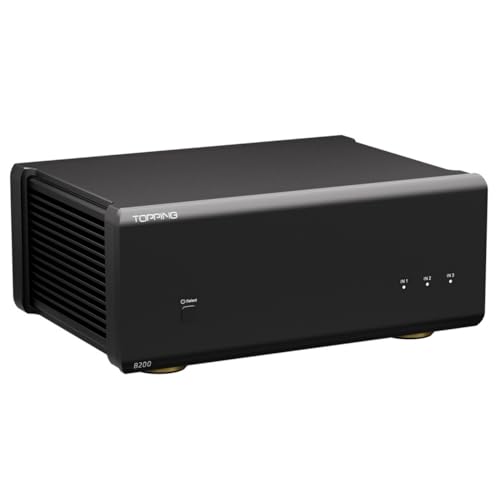
- 200W mono output
- Three XLR/TRS balanced inputs
- High/low gain and 12V trigger
Best For: Audiophile stereo systems using separate mono amplifiers
Compact Balanced Stereo Value

- 150W x 2 at 4 ohms
- XLR and RCA inputs
- Compact passive-cooled aluminum chassis
Best For: Space-conscious home stereo systems
Professional DSP Choice
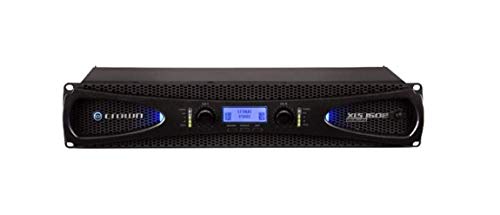
- 525W per channel at 4 ohms
- XLR, TRS, and RCA inputs
- DSP filters and Peakx limiters
Best For: Live sound and rack-mounted installations
Flexible 2.1 System Pick
AIYIMA A20 Balanced Stereo Amplifier

- Fully balanced XLR/RCA inputs
- Adjustable 60–200Hz high-pass filter
- Subwoofer output and 12V trigger
Best For: Flexible home stereo and 2.1 systems
Best Rack-Mount Value

- 2,000W peak bridged output
- XLR and TRS balanced inputs
- Bluetooth and multiple speaker outputs
Best For: PA systems and event audio
Best Compact Balanced Amp

- Fully balanced Class-D architecture
- 140W × 2 at 4 ohms
- TRS and RCA input compatibility
Best For: Desktop hi-fi and studio monitoring
Best High-Power Hi-Fi Choice

- 250W per channel at 4 ohms
- XLR, RCA, and XLR mono inputs
- Mono-bridge pairing supports 500W at 4 ohms
Best For: Demanding home hi-fi speaker systems
Flexible Balanced Mini Amp

- Stereo/mono modes with up to 235W mono output
- XLR/1/4-inch TRS balanced combo input
- 12V trigger, cooling upgrades, and op-amp rolling
Best For: Flexible desktop, passive-speaker, and compact home-theater systems
Dual-Mono Power System

- Includes two 240W monoblock amplifiers
- Balanced XLR/TRS and RCA inputs
- PFFB technology with reported 101dB SINAD
Best For: Stereo listeners and scalable multi-channel home-theater systems
Compact Monoblock Value

- Up to 240W at 4 ohms per channel
- XLR/TRS balanced and RCA inputs
- Compact design for AVR and multi-channel expansion
Best For: Single-channel upgrades and expandable home-theater systems
High-Power Audiophile Pick – TOPPING B200 Mono Amplifier
The TOPPING B200 is a strong choice if you need a power amplifier with balanced inputs for a high-fidelity speaker system. Its mono design delivers 200W, while three XLR/TRS input sets, selectable gain, and a 12V trigger support flexible system integration.
Best For: Audiophiles building a powerful stereo system with two mono amplifiers.
Pros:
- 200W mono output for demanding passive speakers
- Three sets of XLR/TRS balanced inputs
- Very high stated 145dB SNR and low THD+N
- High/low gain modes and 12V trigger add flexibility
Cons:
- A stereo setup requires two amplifiers
- Mono operation may be less convenient for simpler systems
Choose the B200 when clean power and balanced connectivity are priorities. Its mono configuration is especially suitable for enthusiasts who want to build a carefully matched, high-output stereo setup.
Compact Balanced Stereo Value – Rockville LUX 300
The Rockville LUX 300 is a compact power amplifier with balanced inputs for home stereo setups that need substantial output without a large chassis. It provides an XLR input, RCA connectivity, flexible stereo or BTL operation, and a passive-cooling aluminum enclosure.
Best For: Compact home systems needing flexible input and output configurations.
Pros:
- 150W per channel at 4 ohms and 300W BTL output
- XLR balanced and Tiffany-style RCA inputs
- Compact 4.5-pound aluminum chassis
- Gold-plated 5-way binding posts
Cons:
- Only one XLR input is specified
- BTL mode requires appropriate system matching
The LUX 300 stands out for buyers who want balanced-source compatibility in a small home-audio amplifier. Its BTL option adds flexibility, while the compact aluminum chassis helps it fit into space-constrained installations.
Professional DSP Choice – Crown XLS1502 Power Amplifier
The Crown XLS1502 is a practical power amplifier with balanced inputs for professional and installed audio applications. Its two channels offer multiple power levels, while XLR, TRS, and RCA inputs, DSP filters, and Peakx limiters provide useful control over system performance.
Best For: Live sound, rack-mounted systems, and installations needing DSP-based control.
Pros:
- 525W per channel at 4 ohms and up to 1,550W bridged
- Balanced XLR, 1/4-inch TRS, and RCA inputs
- Band-pass filters, crossover system, and Peakx limiters
- Lightweight Class D design under 11 pounds
Cons:
- Rack-mount format is less suited to minimalist home setups
- Forced-air fans may be less desirable in quiet listening rooms
- Professional controls may exceed basic system needs
For buyers who need power, protection, and configuration options, the XLS1502 is the most installation- and performance-oriented choice here. Its input flexibility and DSP features make it easier to adapt to varied speaker and venue requirements.
Flexible 2.1 System Pick – AIYIMA A20 Balanced Stereo Amplifier
The AIYIMA A20 is a fully balanced power amplifier with balanced inputs designed for adaptable home audio systems. Along with XLR and RCA inputs, it offers an adjustable high-pass filter, subwoofer output, bypass mode, gain selection, and a 12V trigger for broader system integration.
Best For: Home listeners building a flexible stereo or 2.1 system.
Pros:
- Fully balanced design with XLR/RCA input selection
- Adjustable 60–200Hz high-pass filter for 2.1 integration
- Subwoofer output, bypass mode, and 12V trigger
- Stated 116dB SNR and 0.002% THD+N
Cons:
- Its feature set may require more setup than a basic amplifier
- Supplied power adapter is externally housed
The A20 is a good fit when balanced connectivity is only part of the requirement. Its filtering and subwoofer features make it particularly useful for tailoring a two-channel system around a subwoofer, while bypass and gain controls support more advanced configurations.
Best Rack-Mount Value – Pyle PTA1000BT
The Pyle PTA1000BT is a practical power amplifier with balanced inputs for PA systems, installations, and larger speaker setups. Its two XLR and two TRS inputs, bridgeable design, Bluetooth, and multiple speaker outputs make it a flexible option when connectivity matters as much as output.
Best For: Rack-mounted PA systems, event audio, and users who want Bluetooth plus wired balanced inputs.
Pros:
- Up to 2,000 watts peak power in bridged mode or 1,000 watts per stereo channel.
- Includes XLR and 1/4-inch TRS inputs, Speakon outputs, and binding-post terminals.
- Built-in cooling fans, LED level indicators, and Bluetooth streaming add practical convenience.
Cons:
- Its rack-mount format is less suited to compact desktop systems.
- The listed voltage information includes 220 volts, so users should verify system compatibility.
The PTA1000BT emphasizes versatility and high output rather than minimalist hi-fi styling. It is a strong fit when you need balanced-source connectivity, flexible speaker connections, and straightforward front-panel monitoring.
Best Compact Balanced Amp – TOPPING Mini300
The TOPPING Mini300 is a compact power amplifier with balanced inputs designed for desktop hi-fi and studio monitoring. Its fully balanced Class-D architecture, TRS and RCA connectivity, and low distortion make it appealing for listeners who want clean amplification in a small aluminum chassis.
Best For: Desktop audio systems, studio monitors, and compact setups using balanced TRS sources.
Pros:
- Fully balanced Class-D design with claimed distortion below 0.0004% THD+N at 8 ohms and 5 watts.
- Provides up to 140 watts per channel at 4 ohms.
- Supports balanced TRS and unbalanced RCA inputs without an adapter.
- Compact aluminum chassis includes cooling vents and overheat and overcurrent protection.
Cons:
- Its 140-watt-per-channel rating is lower than larger PA-oriented amplifiers.
- It requires a 12-volt DC power source.
With its small footprint, quiet operation, and trigger-based power synchronization, the Mini300 is tailored to refined desktop or nearfield systems. Choose it when balanced connectivity and compact size are higher priorities than maximum room-filling power.
Best High-Power Hi-Fi Choice – SMSL PA400
The SMSL PA400 is a high-output power amplifier with balanced inputs for home audio systems that need substantial driving power. It accepts XLR and RCA sources, delivers 250 watts per channel at 4 ohms in stereo, and can be paired with a second unit for XLR mono operation.
Best For: High-power home hi-fi, floor-standing speakers, and systems built around XLR-equipped DACs or preamps.
Pros:
- Delivers 250 watts per channel at 4 ohms in stereo mode.
- Supports balanced XLR, unbalanced RCA, and XLR mono inputs.
- Two units can operate together in mono-bridge mode for up to 500 watts at 4 ohms.
- CNC-machined aluminum construction is designed to provide rigidity and heat dissipation.
Cons:
- Mono-bridge operation requires two PA400 amplifiers.
- Its high output may be more than needed for smaller desktop systems.
The PA400 is the most power-focused option here, combining balanced connectivity with a substantial stereo rating and a scalable mono configuration. It makes the most sense for demanding speakers and larger listening spaces where amplifier headroom is important.
Flexible Balanced Mini Amp – Fosi Audio ZA3
The Fosi Audio ZA3 is a versatile power amplifier with balanced inputs for desktop audio, passive speakers, subwoofer systems, and compact home theaters. Its stereo/mono switching, 48V supply, and XLR/1/4-inch TRS combo input make it adaptable, while the TPA3255 platform supports high output in a small chassis.
Best For: Listeners who want one compact amplifier that can switch between stereo playback and higher-power mono operation.
Pros:
- Switchable stereo output up to 180W or mono output up to 235W.
- Balanced combo input accepts XLR and 1/4-inch TRS connections.
- Includes 12V trigger input, improved ventilation, and op-amp rolling support.
- Uses a TPA3255 Class-D chip with reported 89dB SINAD and 106dB SNR.
Cons:
- Only one amplifier is included, so dual-mono operation requires a second ZA3.
- Op-amp rolling is intended for users comfortable with component customization.
The ZA3 stands out when flexibility matters more than a single fixed configuration. It is a strong fit for systems that may evolve from stereo listening to mono amplification or subwoofer-focused use.
Dual-Mono Power System – Fosi Audio V3 Mono 2-Pack
This two-pack is designed for listeners building a powerful dual-mono system around a power amplifier with balanced inputs. Each Fosi Audio V3 Mono can deliver up to 240W at 4 ohms, making the pair suitable for stereo passive speakers, multi-channel expansion, or high-power home-theater setups.
Best For: Audiophiles who want two matching monoblocks for stereo speakers or scalable multi-channel systems.
Pros:
- Two monoblocks provide a straightforward foundation for a stereo system.
- Each amplifier delivers up to 240W at 4 ohms.
- Supports XLR/1/4-inch TRS balanced and RCA single-ended inputs.
- PFFB technology and the TPA3255 chip support low reported distortion and stable performance.
Cons:
- The two-amplifier setup requires more space and cabling than a single stereo amp.
- Op-amp customization may be unnecessary for buyers seeking a plug-and-play system.
For a buyer specifically seeking balanced connectivity and separate amplification for each speaker, this package offers a ready-made path to dual-mono power. Its auto power/signal sensing and cooling design add practical convenience for extended use.
Compact Monoblock Value – Fosi Audio V3 Mono
The Fosi Audio V3 Mono is a compact power amplifier with balanced inputs for driving one passive speaker at a time. Its 240W-at-4-ohms rating, RCA/XLR/1/4-inch TRS input options, and compatibility with AV receivers make it useful as a building block for stereo, multi-channel, or home-theater systems.
Best For: Buyers who want an affordable single monoblock to add power to an AVR or gradually build a multi-channel setup.
Pros:
- Delivers up to 240W at 4 ohms from a small metal chassis.
- Accepts balanced XLR/1/4-inch TRS or RCA single-ended connections.
- PFFB technology is designed to improve frequency response and reduce load-related issues.
- Offers auto power/signal sensing and replaceable DIP8 dual op-amps.
Cons:
- This listing includes one monoblock, so stereo operation requires a second amplifier.
- It is intended to drive a single passive speaker rather than provide multiple channels from one chassis.
- Speaker cables should be connected only while the amplifier is powered off.
The V3 Mono is a practical choice when system expansion is the priority. Buy one for a single high-power channel or add matching units as your stereo or theater system grows.
How We Picked the Best Power Amplifier with Balanced Inputs
We focused on amplifiers with genuine balanced connectivity, typically through XLR or combo XLR/TRS inputs, and considered how well each model fits its intended use. Our comparison weighs rated power, channel configuration, amplifier class, input and output options, size, controls, protection features, and practical system compatibility.
Because power ratings can vary by impedance, distortion limit, and test conditions, treat wattage as a starting point rather than a guarantee of real-world performance. Speaker sensitivity, impedance, room size, and listening habits matter just as much.
Quick Comparison
| Best For | Recommended Type | What to Prioritize |
|---|---|---|
| Desktop or nearfield listening | Compact stereo amplifier | Low noise, size, gain control, and balanced input quality |
| High-output stereo home audio | Class-D stereo amplifier | Continuous power, speaker impedance support, and thermal management |
| Dedicated left/right channels | Monoblock pair | Power supply capacity, matching, and placement flexibility |
| Subwoofer or custom systems | Mono amplifier | Bridging options, filter controls, and trigger compatibility |
| Rack or installation use | Professional two-channel amplifier | Cooling, protection circuits, DSP, and rack compatibility |
Key Buying Factors for a Power Amplifier with Balanced Inputs
Input and System Compatibility
Confirm that your source actually provides balanced output and check whether the amplifier uses XLR, XLR/TRS combo, or a proprietary balanced arrangement. Also verify whether RCA inputs are included if you plan to connect consumer electronics. A balanced input does not automatically make every cable or source connection balanced.
Power, Impedance, and Channel Design
Match the amplifier to your speakers’ nominal and minimum impedance. Stereo amplifiers are convenient for two-channel systems, while monoblocks can offer easier placement and dedicated power supplies. For demanding speakers, look beyond the headline wattage and check the manufacturer’s ratings at 4 and 8 ohms.
Noise, Gain, and Protection
Low distortion and a high signal-to-noise ratio are useful, but system gain and speaker sensitivity also affect audible hiss. Gain switches, input sensitivity controls, clipping protection, thermal protection, and DC protection can make an amplifier easier and safer to integrate.
Features and Installation
Look for 12V trigger support, filters, DSP, Bluetooth, USB, or bridge mode only when you need them. Rack users should consider ventilation and fan noise, while desktop buyers should prioritize compact dimensions, a quiet power supply, and accessible controls.
Who Should Buy Which Power Amplifier with Balanced Inputs?
Choose a compact balanced stereo amplifier for a desktop, nearfield, or small-room setup. Select a higher-powered stereo model when driving less-sensitive speakers or filling a larger room. Monoblocks are a strong choice when you want one amplifier per speaker, plan to upgrade gradually, or need flexible placement. A professional rack-mount unit makes the most sense for installations, mixers, PA equipment, or systems that benefit from DSP and robust protection features.
Before buying, confirm the amplifier’s output at your speakers’ impedance, connector requirements, physical dimensions, cooling needs, and return policy. Those checks are more important than choosing solely by the largest advertised wattage.