Choosing among the best power amplifiers for home studios means balancing clean output, speaker compatibility, connectivity, and practical size. The right amp should deliver enough headroom for your monitors or passive speakers without adding unnecessary complexity to your setup.
We compare 10 options across compact Class D designs, Bluetooth-enabled integrated amplifiers, studio-friendly models, and higher-powered rack units so you can match performance and features to your room, speakers, and budget.
Best 10 Power Amplifiers for Home Studios Picks for 2026
Best Compact Wireless Pick
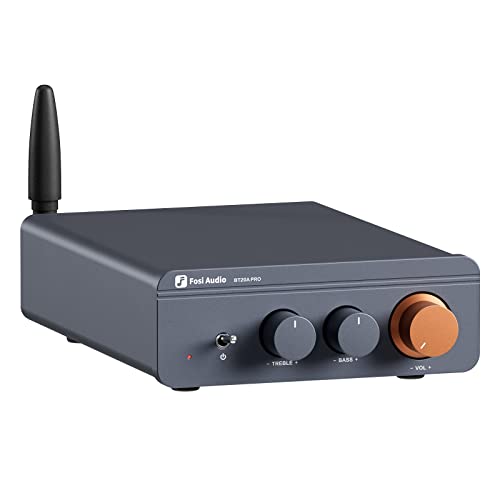
- 300W x2 TPA3255 Class D output
- Bluetooth 5.0 and replaceable op-amps
- Compact passive-speaker design with tone controls
Best For: Desktop passive-speaker setups needing wireless playback
Best DSP-Equipped Pro Option
Crown CDi 1000 Power Amplifier

- 500W two-channel output
- Works with low-impedance and 70V/140V systems
- Built-in DSP with up to 20 presets
Best For: Complex studio or installed speaker systems needing DSP
Best Vinyl-Friendly Desktop Pick

- 300W x2 TPA3255 Class D output
- MM phono input plus RCA connectivity
- Compact chassis with subwoofer passthrough
Best For: Small passive-speaker studios that also use turntables
Best High-Headroom Rack Option
Gemini XGA-3000 Power Amplifier
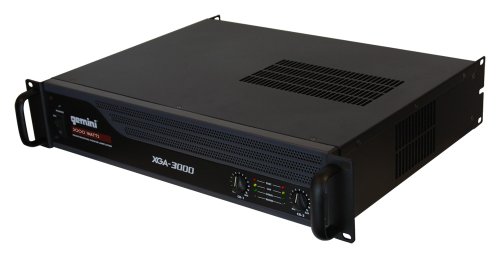
- 3000W two-channel rack-mount output
- XLR, 1/4-inch, RCA, Speakon, and binding posts
- Bridge mode and multiple protection circuits
Best For: Large studio, PA, DJ, and live-sound systems
Best Desktop Monoblock
GaN Mono 300W Class D Amplifier

- 300W single-channel output
- XLR/TRS and RCA inputs
- Fanless desktop design
Best For: Quiet desktop studios using one amplifier per passive speaker
Best All-in-One PA Mixer

- 500W peak stereo output
- Bluetooth, USB, optical, and coaxial inputs
- Two mic inputs with mixing controls
Best For: Studios combining playback, microphones, karaoke, or PA duties
Best Compact Stereo Value
Fosi Audio TB10D 2-Channel Amplifier

- Two-channel Class D design
- 300W per channel stated output
- Bass and treble controls
Best For: Compact RCA-based studio, desktop, or bass-shaker systems
High-Power Rack Pick

- 2,000W bridged or 1,000W per channel
- TRS, XLR, Speakon, and binding-post connections
- Bluetooth, USB playback, and built-in cooling
Best For: High-output rack-mounted studio and speaker setups
Flexible Four-Channel Choice

- Four independently controlled channels
- 440W peak output for 4–16-ohm speakers
- Bluetooth 5.0, USB, SD, RCA, AUX, and FM
Best For: Multi-source home studios with microphones and passive speakers
Compact Mixer Amplifier

- 120 watts per channel for 4-ohm speakers
- Multiple RCA inputs plus mic and headphone connections
- Pager and mixing modes with adjustable EQ
Best For: Small wired studio, PA, and microphone-mixing setups
Best Compact Wireless Pick – BT20A Pro Bluetooth Amplifier
For buyers seeking power amplifiers for home studios, the Fosi Audio BT20A Pro is a compact option with Bluetooth 5.0, 300 watts per channel, and simple bass and treble controls. Its replaceable op-amps also allow experimentation with different compatible components.
Best For: Desktop setups, passive speakers, and listeners who want wireless convenience in a small enclosure.
Pros:
- 300W x2 output with the TPA3255 Class D chip
- Bluetooth 5.0 with pairing memory
- Replaceable NE5532 op-amps for customization
- Low stated distortion of 0.005% and SNR of at least 108dB
Cons:
- Designed for passive speakers rather than direct studio-monitor connectivity
- Only bass and treble controls are provided
The BT20A Pro makes the most sense when a compact, wireless amplifier is more important than extensive studio routing or onboard processing.
Best DSP-Equipped Pro Option – Crown CDi 1000 Power Amplifier
The Crown CDi 1000 is a two-channel power amplifier for home studios that need flexible speaker compatibility and built-in signal processing. It supports 2-, 4-, and 8-ohm loads as well as 70V and 140V outputs, with an LCD for configuration.
Best For: Advanced installations and studio systems that benefit from onboard crossover, EQ, delay, limiting, and multiple presets.
Pros:
- 500-watt, two-channel design
- Supports 2Ω, 4Ω, and 8Ω loads
- 70V and 140V output capability
- Onboard DSP and up to 20 user-defined presets
Cons:
- Its 22-pound chassis and 12.3 x 19 x 3.5-inch dimensions are less suited to small desktops
- More functionality than a basic home stereo amplifier may require
Choose the CDi 1000 when configuration flexibility and DSP are priorities; its feature set is especially useful for more complex speaker systems.
Best Vinyl-Friendly Desktop Pick – Nobsound NS-13G MAX Amplifier
The Nobsound NS-13G MAX combines 300 watts per channel with an MM phono input, making it a practical choice among power amplifiers for home studios that also serve as music-listening systems. Its compact aluminum chassis includes RCA connectivity, tone controls, and a 48V/5A power supply.
Best For: Small studio desks, passive speakers, turntable-based setups, and home systems that need several RCA source options.
Pros:
- 300W x2 output from a TPA3255 chip
- Built-in MM phono input for turntables
- Compact 5.1 x 4 x 1.5-inch enclosure
- 3.5mm AUX passthrough for a volume-synced subwoofer or additional setup
Cons:
- RCA-focused connectivity may not suit balanced studio wiring
- Designed for passive speakers rather than powered monitors
The NS-13G MAX is a strong fit when desktop size, phono support, and flexible consumer-style inputs matter as much as amplifier output.
Best High-Headroom Rack Option – Gemini XGA-3000 Power Amplifier
The Gemini XGA-3000 is a rack-mount, two-channel amplifier built for systems that need substantial output headroom. It provides 3000 watts, balanced XLR and 1/4-inch inputs, RCA inputs, bridge mode, and protection circuits for demanding live or installed audio work.
Best For: Larger studio, PA, DJ, and live-sound rigs using rack equipment and speakers rated for high amplifier output.
Pros:
- 3000-watt two-channel output with stereo, mono, and bridge modes
- Balanced XLR and 1/4-inch inputs plus RCA
- Speakon outputs and five-way binding posts
- DC, short-circuit, and limiter protection with front status LEDs
Cons:
- Its high output can be excessive for a small home studio
- Rack-mount 2U format is less convenient for desktop use
- Cooling relies on a variable-speed fan
The XGA-3000 is best reserved for appropriately rated speakers and larger systems where high output, bridge capability, and flexible connections justify its rack-oriented design.
Best Desktop Monoblock – GaN Mono 300W Class D Amplifier
For power amplifiers for home studios built around a single passive near-field speaker, the GaN Mono offers a compact, fanless Class D design with professional and consumer-friendly inputs. Remember that this is a one-channel monoblock, so a standard stereo setup requires two amplifiers. A power supply is not included.
Best For: Modern desktop studios, Mac mini or DAC-based systems, and quiet near-field listening with passive speakers.
Pros:
- 300 watts of output from a compact, efficient GaN/Class D design
- Balanced XLR/TRS and unbalanced RCA inputs support interfaces, DACs, preamps, and streamers
- Fanless operation, adjustable gain, 12V trigger, and signal-sensing auto mode suit desktop use
Cons:
- Single-channel design requires two units for stereo
- Power adapter is not included
- Full output requires an appropriate 48V supply
This is a specialized choice for a clean, quiet desktop system rather than a conventional all-in-one stereo amplifier. Its connectivity and control options are particularly useful when integrating a professional audio interface with passive monitors.
Best All-in-One PA Mixer – Pyle PMX3500PH 500W Amplifier
Among power amplifiers for home studios, the Pyle PMX3500PH stands out as an integrated stereo mixing amplifier with extensive source and microphone connections. It combines Bluetooth, USB, analog, optical, coaxial, and AC-3 inputs with a built-in display and front-panel controls.
Best For: Home studios that also handle karaoke, presentations, vocal microphones, or varied entertainment sources.
Pros:
- 500-watt peak output for compatible 4-ohm speakers
- Two microphone inputs with level controls, talk-over, echo, and microphone priority
- Broad connectivity including Bluetooth, USB, AUX, optical, coaxial, and 70V/100V outputs
- Rack-mount design includes a remote control and FM antenna
Cons:
- Its PA and karaoke feature set may be more than needed for a simple monitoring chain
- The supplied notes specify peak power rather than continuous output power
- It is a two-channel integrated mixer amplifier, not a minimalist power amp
The PMX3500PH makes the most sense when your studio needs flexible playback and microphone handling in one chassis. For straightforward interface-to-passive-monitor operation, its extra mixing and entertainment features may be unnecessary.
Best Compact Stereo Value – Fosi Audio TB10D 2-Channel Amplifier
The Fosi Audio TB10D is a straightforward option among power amplifiers for home studios, pairing a compact Class D chassis with two-channel passive-speaker output. Its RCA input, bass and treble controls, and stated 300 watts per channel make it suitable for simple desktop, gaming, or personal studio systems.
Best For: Users who want a compact stereo amplifier for passive speakers, bass shakers, or an existing source with RCA output.
Pros:
- Two-channel design avoids the need for separate monoblocks in stereo setups
- Supports passive speakers rated from 2 to 8 ohms according to the supplied notes
- Bass and treble controls provide convenient sound adjustment
- Built-in protection circuits and a 24-month manufacturer warranty add reassurance
Cons:
- Connectivity is limited to an RCA input and passive-speaker output
- No balanced XLR/TRS input is listed for professional interfaces
- The 600-watt figure is presented as 300 watts per channel; real results depend on the speakers and setup
The TB10D is a practical stereo choice when simplicity and size matter more than professional balanced connectivity. It can fit a personal studio or desktop system well, especially when your source already provides the required RCA signal.
High-Power Rack Pick – PTA1000BT
For home studios that need substantial output and flexible connections, the Pyle PTA1000BT is one of the more powerful power amplifiers for home studios in this group. It offers two channels, bridge mode, TRS and XLR inputs, Speakon outputs, Bluetooth, and active cooling in a rack-mountable metal chassis.
Best For: Home studios or small setups needing high output, rack mounting, and multiple speaker connection options.
Pros:
- Up to 2,000 watts in bridged mode or 1,000 watts per channel in stereo
- TRS, XLR, Speakon, and binding-post connections support varied setups
- Bluetooth, USB-A MP3 playback, LED level meters, and built-in cooling fans
Cons:
- The listed voltage information includes 220 volts and a 120-volt AC minimum, so compatibility should be checked before purchase
- Its rack-mountable design may be more equipment than a compact desktop studio needs
The PTA1000BT stands out when power headroom and connection flexibility matter most. Its bridgeable two-channel design makes it versatile, while the cooling fan and front-panel monitoring suit longer or louder sessions.
Flexible Four-Channel Choice – Donner MAMP5
The Donner MAMP5 is a versatile option for home studios that also function as presentation, karaoke, or home theater spaces. Among power amplifiers for home studios, it is notable for four independently controlled channels, Bluetooth 5.0, USB and SD playback, multiple RCA inputs, microphone inputs, and an included remote.
Best For: Multi-source studio or home audio setups that need independent channel control and microphone support.
Pros:
- Four independently controlled channels with 440 watts of peak power
- Bluetooth 5.0, USB, SD, RCA, AUX, FM radio, and dual microphone inputs
- Includes an LED display, remote control, treble and bass controls, and speaker selection
Cons:
- It must be connected to passive speakers to play audio
- The remote controls only MP3, Bluetooth, and FM volume
- The supplied notes mention some wind noise when no speaker is connected
The MAMP5 is best viewed as an all-in-one receiver and amplifier rather than a minimalist studio power amp. Its four-channel layout and broad source selection are useful when one system needs to handle several audio roles.
Compact Mixer Amplifier – Pyle PTA4
The Pyle PTA4 is a compact two-channel amplifier for smaller home studio, PA, and theater systems. It provides 2 x 120 watts, multiple RCA inputs, a microphone input, headphone connectivity, basic EQ controls, and pager or mixing modes in a small desktop-friendly enclosure.
Best For: Compact home studios and small amplified-speaker systems needing straightforward wired inputs and microphone mixing.
Pros:
- Delivers 120 watts per channel for compatible 4-ohm speakers
- Offers three pairs of RCA inputs, a microphone input, headphone jack, and REC output
- Includes bass, treble, balance, microphone, master-volume, and input controls
Cons:
- Its 2 x 120-watt output is lower than the other amplifiers in this group
- The supplied details list a 90-day warranty
- Speaker impedance must be at least 4 ohms per channel in stereo mode
The PTA4 makes sense when simplicity and size are more important than maximum power or wireless features. Its pager and mixing modes add useful microphone functionality for voice, meetings, and karaoke-style applications.
How We Picked the Best Power Amplifiers for Home Studios
We evaluated these amplifiers by looking at power ratings, impedance support, input and output options, form factor, and intended use. Because published wattage can vary by impedance, channel count, and measurement conditions, we treated maximum power as only one part of the decision. We also considered whether each model is better suited to desktop listening, passive studio monitors, home theater, rehearsal use, or larger installations.
Models with Bluetooth, USB, phono, microphone, XLR, TRS, RCA, or optical inputs were assessed for practical flexibility. We also gave attention to cooling, rack compatibility, bridgeable operation, and whether the amplifier is an integrated receiver or a dedicated power amp.
Quick Comparison
- Compact desktop systems: Fosi Audio, Nobsound, and similar Class D models save space and work well with compatible passive speakers.
- Studio connectivity: Look for balanced XLR or TRS inputs when your interface or mixer supports them.
- High-output applications: Crown, Gemini, and Pyle rack amplifiers are better suited to demanding speakers, venues, or distributed audio.
- All-in-one convenience: Bluetooth receivers and mixer amplifiers reduce the number of separate components needed.
Key Buying Factors for Power Amplifiers for Home Studios
Power and Speaker Matching
Check your speakers’ continuous power handling and nominal impedance before choosing an amplifier. A model that is too weak may clip when pushed, while excessive power can damage speakers if used carelessly. Aim for useful headroom and confirm the amplifier’s output at your speakers’ impedance rather than relying only on the largest advertised number.
Inputs and System Compatibility
RCA inputs suit consumer sources, while XLR and TRS connections are preferable for many studio interfaces because balanced cables can reduce noise over longer runs. Bluetooth, USB, optical, phono, and microphone inputs are convenient, but they matter only if they fit your workflow. Confirm whether the amplifier accepts line-level signals or requires a particular source type.
Size, Cooling, and Noise
Mini Class D amplifiers are easy to place on a desk and generally use less power, but rack units offer more output and installation flexibility. Consider fan noise, ventilation clearance, heat buildup, and whether the amplifier will sit close to microphones or a listening position.
Channels and Future Expansion
A two-channel amplifier is usually the simplest choice for stereo monitors. Monoblocks can make sense for dedicated channels, while four-channel or bridgeable models may support future expansion. Verify the required speaker wiring and operating mode before buying.
Who Should Buy Which Power Amplifiers for Home Studios?
Choose a compact integrated Class D amp for a small desk, passive speakers, casual monitoring, or a simple second system. Choose a balanced-input studio-oriented amp when low-noise connections from an audio interface are the priority. Choose a rack-mount amplifier for higher output, installation flexibility, or demanding passive speakers. Choose a mixer or Bluetooth amplifier if microphones, wireless playback, USB media, or multiple everyday sources are more important than a minimal studio signal path.