The best voice recorders for musicians make it easier to capture songwriting ideas, rehearsals, interviews, lessons, and live performances before inspiration disappears. The right model depends on whether you need simple speech recording or higher-quality stereo audio with dependable controls.
Our selection includes compact Zoom and Xvive handheld recorders alongside high-capacity digital dictaphones, giving musicians options for quick notes, detailed recordings, and everyday portability.
Best 10 Voice Recorders for Musicians Picks for 2026
Best Modular Pick
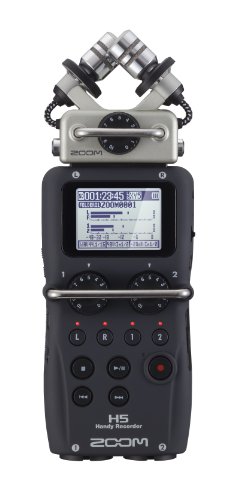
- Interchangeable input capsules
- Four-track simultaneous recording
- Two XLR/TRS inputs with phantom power
Best For: Expandable recording setups and multitrack musical projects
Best Simple Voice Recorder

- 64GB storage capacity
- Voice activation with seven sensitivity levels
- Up to 32 hours of continuous recording
Best For: Quick musical ideas, lessons, and spoken notes
Best Clip-Free Capture

- 32-bit float recording
- Built-in stereo mics and two XLR/TRS inputs
- Four-track recording with USB-C
Best For: Live performances and projects with changing volume levels
Best High-Capacity Option

- 128GB storage capacity
- Voice activation with six sensitivity levels
- Password protection and four-folder organization
Best For: Long-term storage of voice notes, lessons, and mono recordings
Best All-Around Pick

- 32-bit float recording for clip-free capture
- X/Y stereo microphones for music and ambience
- USB-C microphone mode with up to 10-hour battery life
Best For: Musicians needing a versatile stereo recorder for performances, rehearsals, and content
Best for AI Notes

- Transcribes in 113 languages with AI summaries
- 128GB storage and up to 33 hours of recording
- One-touch operation with wired OTG phone transfer
Best For: Musicians who want lessons, ideas, and conversations turned into organized notes
Best for High-Volume Sources

- 32-bit float recording for high dynamic range
- X/Y microphones support sources up to 130 dB SPL
- Up to 96 kHz WAV and USB microphone modes
Best For: Recording concerts, loud instruments, and high-fidelity stereo performances
Best Field Recording Bundle
Zoom H1essential Recorder Bundle
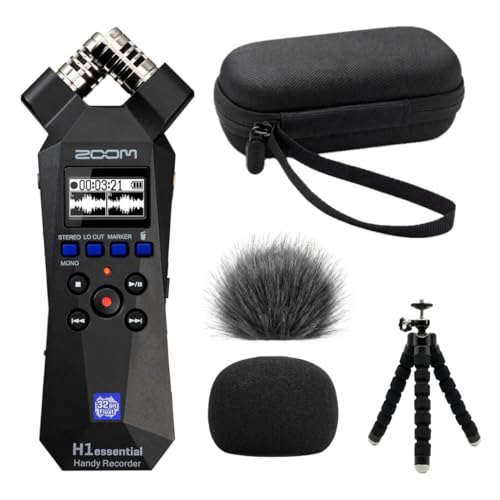
- 32-bit float stereo recording
- X/Y mics support up to 120 dB SPL
- Includes case, windscreens, and tripod
Best For: Portable instrument, vocal, rehearsal, and field recording
Best High-Capacity Everyday Recorder

- 72GB storage for extensive recordings
- Up to 35 hours of continuous use
- One-touch and voice-activated recording
Best For: Songwriting notes, lessons, rehearsals, and everyday audio capture
Best Long-Battery Recorder
Tonfarb 136GB Digital Recorder

- Up to 68 hours of continuous recording
- 1536 kbps PCM with WAV and MP3 support
- 136GB stated storage with included TF card
Best For: Extended practice sessions, songwriting ideas, and frequent recording
Best Modular Pick – Zoom H5 for Musicians
The Zoom H5 is a flexible choice among voice recorders for musicians who need more than a built-in microphone. Its interchangeable capsule system, four-track recording, and two XLR/TRS inputs make it suitable for rehearsals, live performances, instruments, and connected microphones.
Best For: Musicians who want expandable inputs and multitrack recording in a portable recorder.
Pros:
- Interchangeable input capsules support a more adaptable recording setup.
- Records up to four tracks simultaneously.
- Two XLR/TRS combo inputs include selectable phantom power and a -20 dB pad.
- Works as a multichannel or stereo USB audio interface for PC, Mac, and iPad.
Cons:
- Records to SD/SDHC cards up to 32GB, which is less storage than some standalone voice recorders.
- Requires two AA batteries.
The H5 is a strong fit when input flexibility matters more than maximum onboard storage. Its capsule compatibility and external-input options give musicians room to build a more capable recording workflow.
Best Simple Voice Recorder – EVISTR L357 64GB
The EVISTR L357 is a compact option among voice recorders for musicians who prioritize straightforward operation, long battery life, and abundant storage. Its built-in microphone, adjustable gain, voice activation, and WAV/MP3 support work well for capturing ideas, lessons, rehearsals, and spoken notes.
Best For: Musicians who want an easy-to-use portable recorder for practice notes, lessons, and voice memos.
Pros:
- 64GB capacity can store up to 4,660 hours at 32Kbps, according to the supplied notes.
- Offers adjustable seven-level recording gain and voice activation.
- Supports WAV and MP3 recording plus variable-speed playback and A-B repeat.
- Provides up to 32 hours of continuous recording on a full charge.
Cons:
- Uses a built-in microphone rather than XLR/TRS inputs for external music gear.
- Its feature set is oriented toward voice recording rather than multitrack music production.
The L357 is practical for musicians who need to capture ideas quickly without managing a more complex audio interface. It is less suited to connecting studio microphones or recording multiple sources at once.
Best Clip-Free Capture – Zoom H4 Essential
The Zoom H4 Essential is a versatile choice among voice recorders for musicians who record loud performances, rehearsals, podcasts, or field audio. Its 32-bit float recording is designed to help avoid distorted takes, while the built-in stereo microphones and two XLR/TRS inputs support both quick captures and connected gear.
Best For: Musicians recording live performances, instruments, interviews, or larger projects that benefit from clip-free 32-bit float audio.
Pros:
- 32-bit float recording helps protect against distorted takes.
- Combines built-in stereo microphones with two XLR/TRS inputs.
- Records four tracks and can save audio to an SD card while connecting by USB-C.
- Spoken menu guidance can make operation more accessible.
Cons:
- Requires two AA batteries.
- Its broader feature set may be more than needed for simple voice memos.
The H4 Essential is the most production-oriented option here for musicians who want flexible inputs and extra protection when recording unpredictable volume levels. USB-C connectivity also makes it useful for recording or streaming to compatible devices.
Best High-Capacity Option – EVIDA 128GB Voice Recorder
The EVIDA 128GB recorder is a storage-focused choice among voice recorders for musicians who want to keep many practice notes, lessons, interviews, or songwriting ideas on one device. Its built-in noise-cancelling microphone, voice activation, password protection, and folder system emphasize convenient everyday recording.
Best For: Musicians who need extensive storage for voice notes, lessons, meetings, and other mono recordings.
Pros:
- 128GB capacity is specified for up to 9,296 hours of recording at the stated settings.
- Supports MP3 recording at multiple bit rates and WAV at 1536Kbps.
- Voice activation offers six sensitivity levels to reduce silent sections.
- Includes password protection, bookmarks, four-folder file management, and MP3 playback.
Cons:
- Uses a built-in mono microphone rather than external instrument or XLR inputs.
- The supplied details list no headphone jack.
- Its advertised 54-hour recording time is lower than its total storage capacity suggests for extended sessions.
The EVIDA is best viewed as a high-capacity memo and lecture recorder rather than a multitrack music recorder. It makes sense for musicians who value organized, long-term storage more than stereo instrument capture or external microphone connectivity.
Best All-Around Pick – Zoom H1 Essential
For musicians seeking versatile voice recorders for musicians, the Zoom H1 Essential combines X/Y stereo microphones with 32-bit float recording to capture rehearsals, songwriting sessions, lessons, acoustic performances, and live music without requiring constant gain adjustments. It can also serve as a USB-C microphone for calls, streaming, and voiceovers.
Best For: Musicians who want a compact stereo recorder for music, content creation, interviews, and everyday audio capture.
Pros:
- 32-bit float recording helps provide clip-free audio in changing volume conditions.
- X/Y stereo microphones are suited to rehearsals, performances, ambience, and room sound.
- USB-C microphone mode works with computers, smartphones, calls, and livestreams.
- Up to 10 hours of recording time and a lightweight 92 g design support portable use.
Cons:
- Requires two AAA batteries.
- Its 1 TB storage specification is not explained in the supplied details.
The H1 Essential is the strongest general-purpose choice here for musicians who need stereo recording and flexible USB connectivity in one small device.
Best for AI Notes – EVISTR L359 Voice Recorder
The EVISTR L359 takes a different approach to voice recorders for musicians, emphasizing organized speech capture rather than stereo music recording. Its built-in microphone, noise reduction, voice-activated recording, and AI transcription features make it useful for documenting lessons, songwriting ideas, rehearsals, and spoken notes.
Best For: Musicians, students, and professionals who prioritize long recording capacity, transcription, and searchable spoken notes.
Pros:
- AI features support transcription in 113 languages, summaries, speaker identification, and Ask AI insights.
- 128GB storage and up to 33 hours of continuous recording suit extended note-taking sessions.
- One-button recording, a HOLD switch, and password encryption add convenience and privacy.
- OTG connectivity enables wired transfers to a phone for processing in the AI DVR Link app.
Cons:
- The built-in microphone operates in mono or speech-recognition modes rather than stereo.
- Its feature set is more focused on voices and notes than detailed music recording.
Choose the L359 when transcription and storage matter more than stereo imaging or high-dynamic-range music capture; it is particularly practical for lessons, meetings, and spoken musical ideas.
Best for High-Volume Sources – Xvive XV1-R Stereo Recorder
The Xvive XV1-R is one of the more performance-focused voice recorders for musicians, pairing X/Y microphones with 32-bit float recording, support for sources up to 130 dB SPL, and recording up to 96 kHz. Auto-record, pre-record, noise reduction, and USB microphone functionality add flexibility for concerts, rehearsals, podcasts, and live content.
Best For: Musicians and creators recording loud performances, high-dynamic-range sources, or high-fidelity stereo audio.
Pros:
- 32-bit float recording reduces the need to set gain precisely before recording.
- X/Y microphones are rated to capture audio up to 130 dB SPL without distortion.
- Supports WAV at up to 96 kHz plus AAC recording for more storage-efficient files.
- USB microphone mode works with PC, Mac, iOS, and Android devices.
Cons:
- There is no headphone jack for direct monitoring.
- Requires two AA batteries and records for up to 12 hours.
- Uses removable microSD media rather than built-in storage.
The XV1-R is a compelling pick for concerts and loud instruments, especially when 32-bit float recording and high sample rates are more important than headphone monitoring.
Best Field Recording Bundle – Zoom H1essential Recorder Bundle
For musicians comparing voice recorders for musicians, the Zoom H1essential bundle stands out as a purpose-built stereo recorder with accessories for portable recording. Its 32-bit float capture, X/Y microphones, and included windscreens make it useful for rehearsals, songwriting ideas, instruments, and outdoor takes.
Best For: Musicians who want a compact recorder bundle for instruments, vocals, rehearsals, and field recording.
Pros:
- 32-bit float recording helps capture takes without clipping or distortion.
- X/Y stereo microphones handle sound levels up to 120 dB SPL and record up to 96 kHz.
- Includes a hard case, furry and foam windscreens, and flexible tripod.
- Can function as a USB microphone with computers and mobile devices.
Cons:
- Uses two AAA batteries rather than a built-in rechargeable battery.
- The 0.96-inch screen is compact and may offer limited on-device visibility.
This is the strongest choice here for musicians who prioritize stereo capture and recording flexibility over maximum built-in storage. The accessory bundle also reduces the need to purchase basic protection and wind protection separately.
Best High-Capacity Everyday Recorder – 72GB USB-C Voice Recorder
For musicians seeking voice recorders for musicians that are simple to operate and easy to transfer, this 72GB model focuses on long-running everyday use. One-touch recording, voice activation, USB-C connectivity, and headphone playback make it practical for capturing musical ideas, lessons, rehearsals, and spoken notes.
Best For: Musicians who need substantial storage, long battery life, and straightforward recording for practice or songwriting notes.
Pros:
- 72GB storage can hold up to 7,600 hours at low bitrate settings.
- Provides up to 35 hours of continuous recording.
- Voice activation can reduce quiet sections during longer sessions.
- Built-in USB-C supports file transfer and OTG playback with compatible devices.
Cons:
- Its built-in omnidirectional microphone is designed for general sound capture rather than dedicated stereo instrument recording.
- Recording capacity claims depend on low-bitrate settings.
This recorder is a practical, storage-focused option for musicians who regularly archive ideas or lessons and want minimal setup. Those seeking more deliberate stereo placement or higher-end instrument capture may prefer the Zoom bundle.
Best Long-Battery Recorder – Tonfarb 136GB Digital Recorder
Musicians looking for voice recorders for musicians with extended battery life may find the Tonfarb A20 appealing. It combines PCM recording, dual noise-reduction microphones, voice activation, a large storage setup, and a one-click side control for quickly capturing ideas or interviews.
Best For: Musicians who record frequently and value long sessions, generous storage, and quick file access.
Pros:
- Supports 1536 kbps PCM recording and WAV or MP3 formats.
- Up to 68 hours of continuous recording on the included rechargeable battery.
- Includes 8GB built-in storage plus a 128GB TF card for a stated 136GB total.
- Offers voice activation, A-B repeat, password protection, and USB-C file transfer.
Cons:
- The built-in microphones are not described as stereo X/Y microphones for instrument placement.
- Its feature set is oriented toward general-purpose recording rather than dedicated music-production controls.
The Tonfarb is a strong fit when recording endurance and storage matter most. Its quick physical recording control is useful for spontaneous musical ideas, while PCM support offers a higher-quality option than basic low-bitrate voice recording.
How We Picked the Best Voice Recorders for Musicians
We evaluated these recorders by focusing on the features that matter in real musical workflows: microphone quality, recording formats, storage, battery practicality, portability, ease of use, and monitoring options. We also considered whether each device is better suited to musical audio, spoken notes, lessons, meetings, or a mix of uses.
Dedicated handheld recorders typically offer better microphones, stereo imaging, physical controls, and more recording flexibility than basic dictaphones. High-capacity voice recorders can still be useful for songwriting notes, lectures, rehearsals, and spoken reminders, particularly when long runtime and simple playback are priorities.
Quick Comparison
- For higher-quality music recording: Consider the Zoom H5, Zoom H4 Essential, or Xvive XV1-R.
- For simple songwriting ideas and practice notes: The Zoom H1 Essential and its bundle are compact, straightforward choices.
- For lectures, meetings, and spoken content: EVISTR, EVIDA, Tonfarb, and similar high-capacity dictaphones emphasize storage and playback.
- For transcription-focused note taking: The EVISTR AI model may appeal if automated transcription and summaries are useful to you.
Key Buying Factors for Voice Recorders for Musicians
Microphone and Recording Quality
For vocals, acoustic instruments, rehearsals, and live performances, look for stereo microphones, WAV recording, adjustable levels, and support for external inputs when available. AAC or compressed recording can save space, but uncompressed WAV is generally preferable when you plan to edit or mix audio.
Ease of Use and Monitoring
Physical record, pause, level, and playback controls are valuable when you need to capture an idea quickly. A headphone output helps you check recordings, while level meters and input adjustment can reduce clipping. Features such as auto recording or voice activation are more useful for speech than for dynamic musical performances.
Storage, Power, and Portability
Check whether storage is built in, expandable, or dependent on a memory card. Large capacities are helpful for long recordings, but microphone quality and battery life may matter more for musicians. A compact recorder is easier to keep in an instrument case, while a windscreen, tripod, or protective case can improve practical use.
Connectivity and Extra Features
USB microphone functionality, 32-bit float recording, OTG support, password protection, AI transcription, and bundled accessories can each serve different needs. Choose features that fit your workflow rather than paying for specifications you will not use.
Who Should Buy Which Voice Recorders for Musicians?
Choose a dedicated Zoom or Xvive handheld recorder if you care most about musical detail, stereo capture, editing flexibility, or recording rehearsals and performances. These models are generally the stronger fit for musicians who want an audio recorder rather than a basic dictaphone.
Choose a compact recorder such as the H1 Essential if you want fast, portable capture for melody ideas, practice review, lessons, and casual content. A bundle is worthwhile if the included case, windscreens, or tripod match your setup.
Choose a high-capacity digital voice recorder for lectures, meetings, interviews, spoken songwriting notes, and long recordings where simple playback and generous storage are more important than studio-quality sound. If transcription is central to your workflow, prioritize models that explicitly support that feature.