The best wireless microphones for interviews make spoken answers sound clear, focused, and professional without forcing you to manage a complicated audio rig. This roundup compares compact lavalier systems, handheld transmitters, and flexible kits for phones, cameras, and computers.
Whether you record quick street interviews, sit-down conversations, podcasts, or social video, the right microphone depends on device compatibility, range, battery life, and how much control you need over background noise.
Best 10 Wireless Microphones for Interviews Picks for 2026
Best All-Around Lavalier Kit

- Two lightweight transmitters for two-person interviews
- Up to 48 hours with the charging case
- Noise cancellation and automatic limiting
Best For: Flexible interviews, livestreams, and extended shoots
Best Handheld Plug-and-Play Option
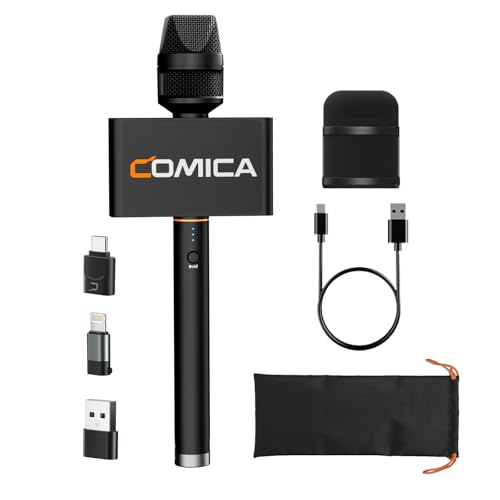
- Cardioid 14 mm condenser capsule
- 48 kHz/24-bit recording with noise reduction
- Up to 15 hours of battery life
Best For: Handheld smartphone interviews and street reporting
Best Mobile Lavalier Setup

- Two lightweight transmitters for interviews
- USB-C mobile receiver with plug-and-play setup
- Noise cancellation and automatic limiting
Best For: Two-person smartphone interviews and mobile content
Best Durable Handheld Reporter Mic
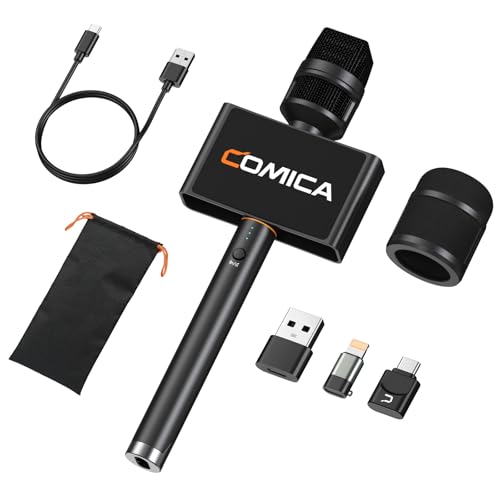
- Full-metal handheld construction
- Cardioid pickup with noise reduction
- Up to 15 hours and multiple device adapters
Best For: Street interviews, reporting, and live presentations
Best Overall
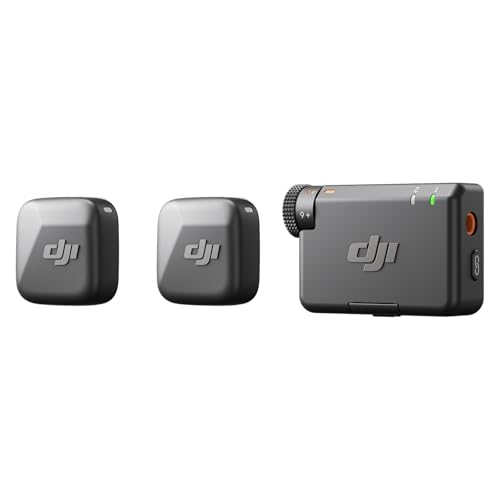
- Two transmitters support two-person interviews
- 400 m transmission range for outdoor flexibility
- Noise cancellation and automatic limiting improve reliability
Best For: Interviewers needing a compact, long-range dual-mic system
Best Budget Flexibility

- 3-in-1 receiver supports phones and cameras
- Dual microphones suit two-person interviews
- Automatic pairing requires no app or Bluetooth
Best For: Creators needing broad compatibility at close range
Best for Street Interviews

- Handheld adapter creates a reporter-style setup
- 164-foot 2.4 GHz wireless range
- Up to 10 hours of battery life
Best For: iPhone users recording mobile street interviews
Best Plug-and-Play Pick

- USB-C and Lightning adapters included
- Two lavalier mics with wind protection
- Up to 6 hours per charge
Best For: Mobile interviews and creator videos
Best Dual-Mic Value
Labstandard K9 Wireless Lavalier

- Two microphones for interview pairs
- Lightning and USB-C compatibility
- About 6 hours of battery life
Best For: Two-person interviews and podcasts
Best for Extended Portability
Mini Mic Pro with Charging Case

- Includes a protective charging case
- Two lavalier microphones and receiver
- USB-C and Lightning adapters included
Best For: Frequent mobile and outdoor recording
Best All-Around Lavalier Kit – DJI Mic Mini
For creators comparing wireless microphones for interviews, the DJI Mic Mini stands out as a lightweight two-transmitter kit with long battery life and useful noise-control features. Its omnidirectional transmitters, automatic limiting, and up to 400 m transmission range make it adaptable for indoor and outdoor recording.
Best For: Interviews, livestreams, and content creation where two speakers, extended battery life, and discreet lavalier transmitters are useful.
Pros:
- Two 10 g transmitters are comfortable and discreet on camera.
- Up to 48 hours of use with the charging case.
- Two noise-cancellation levels and automatic limiting help maintain clear, reliable audio.
- Supports cameras and smartphones, plus direct DJI OsmoAudio connections with compatible devices.
Cons:
- The included transmitters use an omnidirectional pattern, which can capture more surrounding sound than a directional handheld microphone.
- Some direct-connection features depend on compatible DJI devices.
This is a strong choice when interview flexibility matters more than a traditional reporter-style microphone. The charging case and dual transmitters are especially practical for longer shoots or interviews with two people.
Best Handheld Plug-and-Play Option – COMICA Revo S
The COMICA Revo S is a handheld choice for shoppers seeking wireless microphones for interviews with a familiar reporter-style format. Its cardioid condenser capsule focuses on sound from in front, while 48 kHz/24-bit recording, one-key noise reduction, and adjustable gain support clear speech in varied settings.
Best For: Smartphone interviews, podcasting, street reporting, and video production where a handheld microphone is easier to present and position.
Pros:
- Cardioid 14 mm condenser capsule is designed to focus on the speaker in front.
- 48 kHz/24-bit recording supports detailed audio capture.
- One-key CalMix noise reduction and three gain levels simplify recording adjustments.
- Built-in battery provides up to 15 hours of use.
Cons:
- The included USB-C receiver may require an OTG-compatible USB-C-to-Lightning adapter for Lightning devices.
- Its single-microphone design is less suited to recording two interview subjects simultaneously.
Choose the Revo S when you want interview audio that looks and feels like a conventional reporter microphone. It offers straightforward wireless operation and broad device compatibility, with the main connection caveat applying to Lightning phones.
Best Mobile Lavalier Setup – DJI Mic Mini Mobile RX
For mobile creators looking at wireless microphones for interviews, this DJI Mic Mini package pairs two lightweight transmitters with a mobile receiver for direct smartphone use. It offers plug-and-play compatibility with USB-C devices, noise cancellation, automatic limiting, and up to 300 m of transmission range.
Best For: On-the-go interviews, livestreams, and two-person smartphone recordings using compatible iPhone, Android, PC, or tablet devices.
Pros:
- Two 10 g transmitters are lightweight and discreet.
- Mobile USB-C receiver supports plug-and-play recording with compatible devices.
- Basic and Strong noise-cancellation modes help in quiet or noisy environments.
- Automatic limiting helps reduce clipping when input levels become too high.
Cons:
- Maximum operating time is listed at 11.5 hours, shorter than the charging-case DJI Mic Mini package.
- The supplied mobile receiver is oriented toward mobile use rather than a full camera receiver setup.
This package makes sense for creators who record primarily on a phone and want two lavalier transmitters without a complicated setup. It is particularly convenient for mobile interviews, provided the recording device uses a compatible connection.
Best Durable Handheld Reporter Mic – COMICA Revo S
The COMICA Revo S is a practical option for wireless microphones for interviews when a durable handheld design is preferred. It combines a 14 mm cardioid condenser capsule with 48 kHz/24-bit recording, one-key noise reduction, three gain levels, and a stated 65 ft wireless working range.
Best For: Street interviews, reporting, live events, presentations, podcasts, and creators who want a sturdy handheld microphone with smartphone and computer adapters.
Pros:
- Full-metal construction is designed for durability and interference resistance.
- Cardioid pickup helps reduce sound from the sides and rear.
- One-key CalMix noise reduction and three gain settings support changing environments.
- Up to 15 hours of battery life and included USB-C, Lightning, and USB-A adapters improve versatility.
Cons:
- The listed 65 ft working range is more limited than the DJI kits’ stated maximum ranges.
- A single handheld transmitter is less convenient than a two-transmitter system for recording multiple speakers.
Among the supplied options, this Revo S is the better fit for users who value a solid handheld body and flexible adapter bundle. Its directional pickup and gain controls are well suited to face-to-face reporting, while the 15-hour battery supports longer sessions.
Best Overall – DJI Mic Mini
For shoppers comparing wireless microphones for interviews, the DJI Mic Mini is a strong all-around option when you need two transmitters, long range, and dependable audio. Its compact design, noise cancellation, and automatic limiting make it practical for both indoor conversations and busy outdoor shoots.
Best For: Interviewers and creators who need a compact dual-microphone system with extended range and reliable recording.
Pros:
- Includes two lightweight 10 g transmitters for two-person interviews.
- Up to 400 m transmission range helps maintain a stable signal outdoors.
- Two noise-cancellation levels and automatic limiting help produce clearer, less distorted vocals.
- Up to 10 hours of operating time suits long recording sessions.
Cons:
- The included receiver and accessories may be more than needed for solo recording.
- Some ecosystem connection features are specifically designed for compatible DJI devices.
The DJI Mic Mini is the most versatile choice here for interview setups that may move from quiet rooms to noisy streets. Its two-transmitter kit, long range, and safety-focused audio features justify choosing it when consistency matters more than the simplest setup.
Best Budget Flexibility – PQRQP 3-in-1 Lavalier Mic
The PQRQP GT16 is worth considering if you want wireless microphones for interviews that can work across phones, cameras, and other devices. Its 3-in-1 receiver, automatic pairing, and built-in noise reduction make it a straightforward option for casual interviews, livestreams, and outdoor recording.
Best For: Budget-conscious creators who need broad device compatibility and a simple dual-lavalier setup.
Pros:
- 3-in-1 receiver supports iPhone, Android devices, cameras, and more.
- Dual wireless microphones allow two people to record without cables.
- Up to 65 feet of transmission range is suitable for nearby interview setups.
- Up to 7 hours of working time and automatic pairing simplify mobile recording.
Cons:
- The laptop 3.5 mm connector does not support audio input according to the supplied notes.
- Some Android and USB-C devices may require OTG to be enabled manually.
- The stated range is shorter than the range offered by the DJI and Movo systems.
The PQRQP is a flexible value pick for creators who regularly switch between device types. It is especially convenient for close-range interviews, though users should verify connector and OTG compatibility before recording.
Best for Street Interviews – Movo Wireless Mini DI
The Movo Wireless Mini DI is designed for mobile iPhone reporting, making it a focused choice among wireless microphones for interviews. Its included handheld adapter lets you use the mic like a reporter’s microphone, while 2.4 GHz transmission and a 164-foot range support on-the-go recording.
Best For: iPhone users conducting street interviews, presentations, and live events who want a handheld microphone option.
Pros:
- Included WMX-HM adapter supports handheld or stand-mounted use.
- Unidirectional microphone pattern is suited to focused voice capture.
- Up to 10 hours of battery life supports extended recording days.
- Stable 2.4 GHz transmission reaches up to 164 feet.
Cons:
- The Lightning receiver is designed for iPhone rather than a broad range of devices.
- It includes one clip-on transmitter, so it is less suited to recording two interview subjects at once.
- The system is less compact when used with the handheld adapter.
For iPhone-based field reporting, the Movo stands out because the handheld adapter gives interviews a familiar reporter-style format. Choose it when portability, focused pickup, and extended battery life matter more than multi-person recording or cross-platform compatibility.
Best Plug-and-Play Pick – Mini Mic Pro
For creators who want wireless microphones for interviews without complicated setup, the Mini Mic Pro offers a convenient plug-and-play design. It includes both USB-C and Lightning adapters, two lavalier microphones, noise reduction, and wind protection for recording indoors or outdoors.
Best For: iPhone and Android users recording interviews, TikTok videos, YouTube content, and voiceovers.
Pros:
- Works with iPhones, Android devices, tablets, and laptops without an app or Bluetooth pairing.
- Includes two microphones, clips, foam covers, and deadcat wind covers.
- Offers up to 6 hours of recording per charge and allows simultaneous device charging.
- Lightweight design weighs under an ounce and is easy to carry.
Cons:
- The listed system has one channel.
- The advertised warranty is a 90-day refund guarantee and six-month replacement or warranty period.
This is a practical choice for mobile interviews when portability and fast setup matter most. Its included adapters and outdoor wind protection make it especially flexible for creators who record in changing locations.
Best Dual-Mic Value – Labstandard K9 Wireless Lavalier
The Labstandard K9 is a useful option for wireless microphones for interviews when you need two microphones and broad phone compatibility. Its dual-mic kit uses 2.4G transmission, automatic syncing, noise reduction, and adapters for Lightning and USB-C devices.
Best For: Two-person interviews, podcasts, vlogs, livestreams, and recordings made with iPhones, iPads, or USB-C devices.
Pros:
- Includes two wireless lavalier microphones for recording multiple speakers.
- Supports Lightning and USB-C devices with a rechargeable Lightning adapter.
- Provides real-time auto-sync with claimed latency of 0.008 seconds.
- Offers about 6 hours of battery life and includes lifetime customer service.
Cons:
- The product details list Bluetooth connectivity, while the feature description emphasizes 2.4G transmission.
- Its plastic or metal-alloy construction may be less premium than heavier professional systems.
Choose the K9 if your interview setup regularly involves two speakers or switching between device types. The dual-channel design and included adapters provide more flexibility than a single-microphone kit.
Best for Extended Portability – Mini Mic Pro with Charging Case
The Mini Mic Pro with Charging Case is designed for creators who want wireless microphones for interviews that are easy to transport and recharge between shoots. It includes USB-C and Lightning connectivity, two lavalier microphones, noise reduction, and foam and deadcat wind protection.
Best For: Frequent mobile recording, outdoor interviews, YouTube videos, TikTok content, and voiceovers.
Pros:
- Includes a charging case along with two microphones and a receiver.
- Connects to compatible iPhone, Android, tablet, and laptop devices without an app or Bluetooth pairing.
- Provides up to 6 hours of recording per charge.
- Includes clips and two types of wind protection for outdoor use.
Cons:
- The complete kit weighs about 0.2 kg, making it heavier than the version without a case.
- The listed warranty provides a 90-day refund guarantee and six-month replacement or warranty period.
The charging case makes this version a strong fit for creators who record often and want the microphones stored and ready between sessions. It combines the same simple mobile workflow with more convenient kit organization.
How We Picked the Best Wireless Microphones for Interviews
We focused on the features that matter most when recording real conversations: voice clarity, connection reliability, compatibility with common phones and cameras, battery endurance, portability, and setup simplicity. The selection includes both complete two-transmitter kits and compact single-microphone options so you can match the system to your recording style and budget.
We also considered whether each microphone is better suited to a clipped-on lavalier workflow, a handheld interview format, or flexible use across smartphones, computers, and cameras. Claims such as noise cancellation and audio resolution are useful, but practical compatibility and consistent performance should guide the final decision.
Quick Comparison
| Best For | Look For | Recommended Type |
|---|---|---|
| Two-person interviews | Two transmitters and a receiver | Dual-channel wireless kit |
| Street or stand-up interviews | Handheld form factor and secure connection | Wireless handheld microphone |
| Phone-first creators | USB-C or Lightning compatibility | Mobile receiver or plug-in system |
| Quiet, discreet recording | Small transmitter and lavalier clip | Compact lavalier microphone |
| Mixed camera and phone setups | Multiple connectors and analog output | Multi-device wireless system |
Key Buying Factors for Wireless Microphones for Interviews
Device Compatibility
Confirm the connector before buying. USB-C models work with many newer Android phones, tablets, and computers, while iPhone-compatible versions may use a dedicated mobile receiver. Camera users generally need a receiver with a 3.5mm output or the appropriate adapter.
Microphone Style
Lavalier microphones keep both hands free and suit seated interviews, podcasts, and vlogs. Handheld models are easier to pass between speakers and can produce a more deliberate reporter-style presentation. Small clip-on transmitters are convenient, but clothing noise and placement still matter.
Range, Battery, and Recording Safety
Choose enough wireless range for your locations, but remember that walls, crowds, and interference can reduce real-world performance. Check total operating time for both transmitters and the receiver. Built-in recording or backup-track features are valuable if a dropped connection would be costly.
Noise Control and Audio Quality
Noise cancellation can help with traffic, fans, and room ambience, but aggressive processing may make voices sound unnatural. Look for adjustable noise reduction, wind protection, and at least clear digital speech capture. A stable microphone position often improves results more than headline sample-rate numbers.
Who Should Buy Which Wireless Microphones for Interviews?
Choose a dual-transmitter kit if you regularly interview two people or want room to expand. A phone-specific mobile receiver is the simplest choice for creators who publish mainly from a smartphone. Pick a handheld system for moving interviews, events, and reporter-style footage. A compact lavalier is best when discretion, low weight, and fast setup matter most.
Before purchasing, verify the exact included accessories, connector type, charging method, and whether the package contains one or two transmitters. Those details determine how useful the microphone will be once it arrives.