The best USB-C RAID enclosures make it easier to combine multiple SATA drives into faster, safer, or more flexible desktop storage without buying a complete NAS. The right model can support simple drive pooling, hardware RAID, large media libraries, and convenient backups.
This roundup compares 10 USB-C RAID enclosures across two- to five-bay designs, considering connectivity, RAID support, cooling, capacity, drive compatibility, and everyday usability.
Best 10 USB C Raid Enclosures Picks for 2026
Best Expandable DAS
QNAP TR-004 4-Bay RAID Enclosure
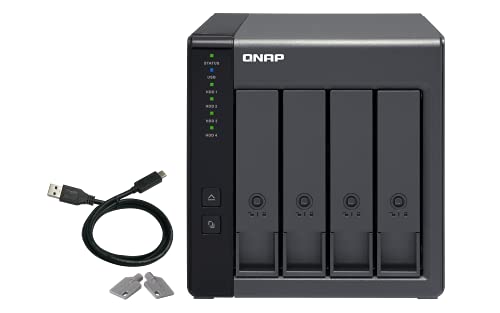
- Four bays with hardware RAID 0, 1, 5, JBOD, and individual-disk modes
- USB Type-C connection for Windows, macOS, and Linux
- Lockable, diskless bays for flexible storage expansion
Best For: Computer or QNAP NAS storage expansion
Best Multimedia Dock
SABRENT DS-2BCR Dual-Bay RAID Dock

- Dual SATA bays support RAID 0, 1, JBOD, and single mode
- Built-in CFast and SD UHS-II card readers
- USB-C, USB-A, and cooling fan included
Best For: Desktop drive docking and media-card transfers
Best Five-Bay RAID Flexibility
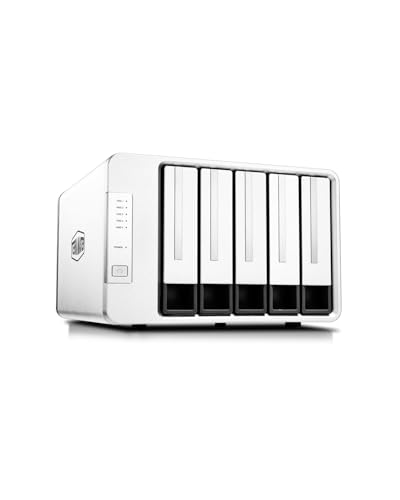
- Five bays and support for RAID 5, 0, 1, 10, or Single mode
- Up to 120TB with compatible drives
- Works with Windows, macOS, and Linux without extra drivers
Best For: High-capacity multi-drive direct-attached storage
Best High-Speed USB-C Enclosure
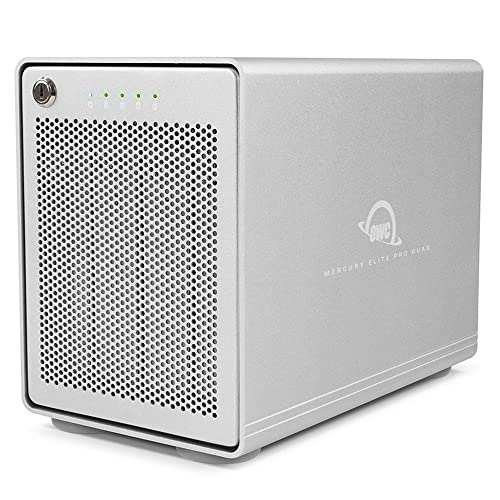
- Four universal bays for 2.5-inch and 3.5-inch SATA drives
- USB 3.2 10Gb/s connection with up to 947MB/s listed performance
- Supports software RAID but does not include SoftRAID
Best For: Fast four-drive Mac or Windows desktop storage
Most Versatile
WAVLINK 4-Bay USB-C RAID Enclosure

- Four SATA bays for up to 88TB
- 10Gbps USB-C and HDMI output
- Cooling fans and independent bay switches
Best For: Flexible multi-drive desktop storage and connectivity
Best Two-Bay RAID Value
TerraMaster D2-320 USB RAID Enclosure

- Two-bay hardware RAID design
- Supports RAID 0, 1, JBOD, and Single
- Tool-free trays with temperature-controlled cooling
Best For: Simple mirrored storage and two-drive DAS setups
Highest Capacity
Yottamaster PS500RC3 5-Bay RAID Enclosure

- Five bays with up to 110TB capacity
- Supports RAID 0/1/3/5/10, JBOD, and Clone
- Aluminum shell with intelligent 80mm fan
Best For: Large media libraries and multi-drive RAID workflows
Compact Hub Pick

- Two-bay 3.5-inch SATA enclosure
- 10Gbps USB-C with added hub
- Tray-less design and quiet cooling
Best For: Simple dual-drive USB-C expansion
High-Capacity Array Pick

- Five SATA bays and up to 160TB
- Eight RAID and storage modes
- Smart temperature-based fan control
Best For: Large desktop arrays and flexible backups
Fast Dual-Bay Value

- 10Gbps USB-C and UASP support
- Fits two 2.5- or 3.5-inch SATA drives
- Four RAID and storage modes
Best For: Flexible two-drive storage with fast connectivity
Best Expandable DAS – QNAP TR-004 4-Bay RAID Enclosure
QNAP TR-004 4 Bay USB Type-C Direct Attached Storage (DAS) with hardware RAID (Diskless)
Check Price On AmazonThe QNAP TR-004 is a practical four-bay choice for shoppers comparing USB C RAID enclosures. It connects directly to Windows, macOS, or Linux systems, supports hardware RAID, and arrives diskless so you can install the SATA drives that fit your capacity needs.
Best For: Expanding computer or QNAP NAS storage with a four-drive hardware RAID enclosure.
Pros:
- Supports RAID 0, 1, 5, JBOD, and individual-disk modes.
- Works with Windows, macOS, and Linux through USB Type-C.
- Lockable bays and included 2.5-inch and 3.5-inch drive screws.
- Can serve as external storage for NAS backups.
Cons:
- Diskless design requires separately purchased drives.
- QNAP NAS compatibility has specific model and QTS version limitations.
- NAS applications cannot be installed on the enclosure.
The TR-004 stands out when you want flexible RAID choices and straightforward direct-attached expansion. Review the stated QNAP compatibility restrictions before purchasing if NAS use is your main goal.
Best Multimedia Dock – SABRENT DS-2BCR Dual-Bay RAID Dock
The SABRENT DS-2BCR combines a dual-bay SATA RAID dock with card readers and a front USB-A port, making it a versatile pick among USB C RAID enclosures. It supports 2.5-inch and 3.5-inch SATA drives in single, RAID 0, RAID 1, or JBOD modes.
Best For: Users who need drive docking plus CFast, SD, and USB-A connectivity in one desktop unit.
Pros:
- Supports RAID 0, RAID 1, JBOD, and single-drive operation.
- Accepts both 2.5-inch and 3.5-inch SATA I, II, and III disks.
- Includes CFast 2.0 and SD UHS-II card readers.
- USB-C interface is rated for transfer speeds up to 1000 MB/s.
Cons:
- Only two SATA drive bays are provided.
- Its ABS enclosure may feel less substantial than metal alternatives.
- Warranty coverage is limited to one year.
This dock is a strong fit for mixed storage and media workflows rather than large multi-bay arrays. The built-in fan, locking key, and extra ports add useful convenience for desktop use.
Best Five-Bay RAID Flexibility – TerraMaster D5-310 Enclosure
The TerraMaster D5-310 is a five-bay hardware RAID enclosure for shoppers seeking high-capacity USB C RAID enclosures. Its dedicated rear RAID control supports RAID 5, 0, 1, 10, and single-disk modes, while the diskless design lets you configure storage separately.
Best For: High-capacity direct-attached storage and multi-drive RAID configurations.
Pros:
- Five bays support up to 120TB according to the supplied specifications.
- Hardware RAID supports RAID 5, 0, 1, 10, and Single modes.
- Compatible with Windows, macOS, and Linux without additional drivers.
- Includes temperature-controlled fans, drive sleep mode, and backup software for Windows.
Cons:
- Diskless setup requires five or fewer compatible SATA drives.
- USB 3.1 Gen 1 is rated at 5Gbps, below newer 10Gbps enclosure interfaces.
- Its larger five-bay design takes more desk space than smaller enclosures.
Choose the D5-310 when bay count, RAID 5 support, and expansion capacity matter most. It also accommodates 2.5-inch drives and SSDs, providing more configuration flexibility than a 3.5-inch-only enclosure.
Best High-Speed USB-C Enclosure – OWC Mercury Elite Pro Quad
The OWC Mercury Elite Pro Quad is a four-bay option for shoppers prioritizing fast USB C RAID enclosures. Its USB 3.2 10Gb/s connection works with USB-C and Thunderbolt 3-equipped Mac or Windows computers, and the enclosure accepts both 2.5-inch and 3.5-inch SATA drives.
Best For: Users building a fast four-drive enclosure for Mac or Windows desktop workflows.
Pros:
- USB-C interface delivers up to 10Gb/s bandwidth.
- Four universal bays accommodate 2.5-inch and 3.5-inch drives.
- Listed performance reaches up to 947MB/s.
- Supports software RAID configurations.
Cons:
- Drives are not included.
- SoftRAID software is not included.
- Warranty coverage is one year.
The Mercury Elite Pro Quad is best suited to users who already have a software RAID plan and want a fast, flexible four-drive enclosure. Confirm your preferred RAID software separately because SoftRAID is explicitly excluded.
Most Versatile – WAVLINK 4-Bay USB-C RAID Enclosure
For shoppers comparing USB C RAID enclosures, the WAVLINK 4-Bay model combines four SATA bays with 10Gbps USB-C connectivity. It supports 3.5-inch and 2.5-inch SATA drives, offers up to 88TB of stated capacity, and adds HDMI output for a more flexible desk setup.
Best For: Users who want four-drive expansion, fast USB-C transfers, and display connectivity in one enclosure.
Pros:
- Four bays support 3.5-inch and 2.5-inch SATA HDDs and SSDs, with capacity up to 4x22TB.
- USB 3.2 Type-C supports transfer rates up to 10Gbps.
- Aluminum construction and temperature-controlled fans help with heat management.
- Independent bay power switches enable convenient drive swapping.
Cons:
- 2.5-inch drives require separate 2.5-to-3.5-inch mounting brackets.
- HDMI output requires a host USB-C port that supports video and a USB-C-to-C cable.
This is a strong all-purpose option when you need more than a basic drive enclosure. Its extra connectivity and four-bay design add flexibility, though buyers should verify host video support and plan for brackets if installing 2.5-inch drives.
Best Two-Bay RAID Value – TerraMaster D2-320 USB RAID Enclosure
The TerraMaster D2-320 is a focused two-bay choice among USB C RAID enclosures. This diskless DAS uses USB 3.2 Gen 2 for up to 10Gbps transmission and supports RAID 0, RAID 1, JBOD, and Single modes for different storage and redundancy needs.
Best For: Home users and professionals seeking a straightforward two-drive RAID enclosure with mirrored-storage support.
Pros:
- Hardware RAID supports RAID 0, RAID 1, JBOD, and Single configurations.
- Supports two 3.5-inch or 2.5-inch SATA HDDs or 2.5-inch SATA SSDs.
- Tool-free trays simplify drive installation and removal.
- Temperature-controlled, low-noise fan adjusts cooling based on drive temperature.
Cons:
- It is a DAS enclosure, not a NAS, so it does not provide network storage by itself.
- Only two drive bays are available.
- The enclosure is diskless, so drives must be purchased separately.
The D2-320 makes sense when two bays are enough and RAID 1 data mirroring is a priority. Its tool-free installation and hardware RAID controls keep setup relatively simple, while the USB 3.2 Gen 2 connection suits high-speed direct-attached storage.
Highest Capacity – Yottamaster PS500RC3 5-Bay RAID Enclosure
For buyers needing substantial direct-attached storage, the Yottamaster PS500RC3 stands out among USB C RAID enclosures with five bays and support for up to 110TB. It accepts 3.5-inch and 2.5-inch SATA drives and offers several RAID modes, including RAID 1, 5, and 10.
Best For: Photographers, video editors, and data-heavy users who need five-drive capacity and flexible RAID configurations.
Pros:
- Five bays support up to 5x22TB for a stated maximum of 110TB.
- Supports RAID 0/1/3/5/10, JBOD, and Clone modes.
- Aluminum-alloy construction and an intelligent 80mm fan aid cooling.
- Removable trays accommodate both 3.5-inch and 2.5-inch SATA drives.
Cons:
- USB 3.1 Type-C transfer speeds are limited to up to 5Gbps.
- Normal operation for five drives requires total drive power consumption under 78W.
- New drives may need formatting and partitioning before recognition.
The PS500RC3 prioritizes capacity and RAID flexibility over maximum interface speed. It is a compelling fit for large libraries and multi-drive workflows, provided your hard drives stay within the stated power limit and 5Gbps connectivity meets your performance needs.
Compact Hub Pick – Oyen Digital Mobius 2C
The Oyen Digital Mobius 2C is a practical choice among usb c raid enclosures when you want two 3.5-inch SATA drives in a compact, tray-less enclosure. Its 10Gbps USB-C connection, included hub, aluminum housing, and quiet fan suit desktop storage expansion and drive access.
Best For: Users who need a simple dual-bay enclosure with USB-C connectivity and daisy-chaining support.
Pros:
- Supports two 3.5-inch SATA hard drives.
- Includes a USB-C hub for daisy-chaining or additional USB devices.
- Tray-less insertion makes drive installation straightforward.
- Aluminum housing and a quiet fan help with heat dissipation.
Cons:
- It has only two drive bays.
- The supplied drive support is focused on 3.5-inch SATA hard drives.
Choose this model if convenience and a clean USB-C setup matter more than maximum bay count. Its included cables and three-year warranty add practicality for a long-term desktop setup.
High-Capacity Array Pick – UGREEN 5-Bay USB-C DAS
The UGREEN 5-Bay USB-C DAS stands out among usb c raid enclosures for users who need several drives and multiple storage configurations. It holds up to five 2.5- or 3.5-inch SATA HDDs or SSDs, supports eight modes, and offers up to 160TB of total capacity.
Best For: Multi-drive desktop storage, backups, and users who want RAID flexibility without adding drives to a NAS storage pool.
Pros:
- Five bays support 2.5- and 3.5-inch SATA HDDs or SSDs.
- Offers PM, RAID 0, RAID 1, RAID 3, RAID 5, RAID 10, Large, and Clone modes.
- Supports up to 32TB per drive and 160TB total.
- Smart cooling adjusts fan speed using drive temperature data.
Cons:
- The USB-C interface is limited to 5Gbps.
- Changing RAID modes requires reformatting, so data must be backed up first.
- Drives cannot be added to or managed as part of a NAS storage pool.
This is the strongest fit for capacity-focused buyers who need five drive bays and a broad selection of RAID modes. Its status LEDs, automatic cooling, and included power adapter make multi-drive operation easier to monitor.
Fast Dual-Bay Value – MAIWO USB-C RAID Enclosure
The MAIWO dual-bay enclosure is a versatile option among usb c raid enclosures, combining a 10Gbps USB-C connection with support for both 2.5- and 3.5-inch SATA drives. Its four modes, aluminum case, cooling fan, and 48TB stated capacity make it useful for flexible external storage.
Best For: Buyers who want fast USB-C transfers, mixed drive-size support, and straightforward RAID 0, RAID 1, JBOD, or independent-drive operation.
Pros:
- Supports two 2.5- or 3.5-inch SATA I, II, or III drives.
- USB 3.1 Gen 2 Type-C provides up to 10Gbps interface speed with UASP support.
- Offers RAID 0, RAID 1, Large/JBOD, and Normal/PM modes.
- Includes two data cables, a power adapter, and a built-in two-speed fan.
Cons:
- A mounting bracket is needed when using 2.5-inch drives.
- Changing RAID modes requires backing up, initializing, and formatting as applicable.
- It has only two drive bays and a one-year warranty.
The MAIWO balances speed and flexibility in a relatively compact dual-bay design. It is a sensible pick when you may use either desktop hard drives or smaller SSDs and want several basic storage modes.
How We Picked the Best USB C Raid Enclosures
We selected these enclosures to represent the most useful options for different storage needs, from compact two-bay units to high-capacity five-bay systems. We considered bay count, support for 2.5-inch and 3.5-inch SATA drives, USB-C speed, hardware RAID availability, maximum stated capacity, cooling, construction, and ease of setup.
We also looked for practical differences between direct-attached storage (DAS) products. Some models focus on straightforward hardware RAID, while others offer several RAID modes, removable drive trays, card readers, temperature-controlled fans, or broad compatibility with both hard drives and SSDs.
Quick Comparison
| Best For | Recommended Bay Count | What to Prioritize |
|---|---|---|
| Basic redundancy and backups | 2 bays | RAID 1, quiet operation, simple controls |
| Growing media libraries | 4 bays | Capacity, cooling, USB 3.2 connectivity |
| Maximum desktop capacity | 5 bays | High drive-size support, RAID flexibility, stable cooling |
| Professional workflows | 4–5 bays | Fast interfaces, hardware RAID, sustained ventilation |
Key Buying Factors for USB-C RAID Enclosures
Bay Count and Drive Compatibility
More bays provide greater capacity and more RAID options, but they also increase size, cost, power use, and noise. Confirm whether the enclosure accepts both 2.5-inch and 3.5-inch SATA drives, and check the manufacturer’s maximum capacity per bay before purchasing high-capacity disks.
RAID Modes and Data Protection
RAID 0 can improve throughput but provides no drive failure protection. RAID 1 mirrors data across two drives, making it a sensible choice for important files. RAID 5 and RAID 10 can offer a better balance of capacity, performance, and redundancy on larger enclosures. RAID is not a substitute for an independent backup.
USB-C Speed and Host Compatibility
USB-C describes the connector, not the performance level. Check whether the enclosure uses USB 3.2 Gen 2 or another faster standard, and verify that your computer supports the same or a compatible connection. Cables, host ports, and installed drives can all limit real-world speeds.
Cooling, Noise, and Reliability
Multiple hard drives generate heat during long transfers. A temperature-controlled fan or well-designed ventilation can help protect sustained performance and drive longevity. If the enclosure will sit on a desk, consider fan noise, vibration control, power management, and the quality of the included adapter.
Who Should Buy Which USB C Raid Enclosures?
Choose a two-bay enclosure if you want a compact backup target, RAID 1 mirror, or small photo and document library. A four-bay model is a stronger all-purpose choice for video editors, photographers, and home users who expect their storage needs to grow. Five-bay systems suit large media collections and users who want more flexibility for RAID 5, expansion, or mixed storage configurations.
Prioritize hardware RAID when you want the enclosure to manage the array independently of your operating system. Choose a model with multiple RAID modes if you expect your needs to change, and consider a card-reader-equipped dock if you regularly move photos or video from removable media. Whichever of these USB-C RAID enclosures you select, format the array carefully, keep a separate backup of irreplaceable data, and use a compatible USB-C cable for the best results.